George “Bud” Day: The Misty Pilot Who Escaped North Vietnam and Refused to Break
On August 26, 1967, Major George “Bud” Day was shot down over North Vietnam. What followed was an extraordinary journey through capture, torture, escape, recapture and more than five years as a prisoner of war.
August 26, 2026


By the time George Everette “Bud” Day climbed into an F-100F Super Sabre over Southeast Asia in 1967, war was hardly new to him. He had already served as an enlisted Marine during World War II and flown combat missions in Korea. At 42 years old, he was considerably older and more experienced than many of the pilots around him, and he had just taken command of one of the most dangerous flying assignments of the Vietnam War.
Day was the first commander of the men who became known as the Misty Forward Air Controllers, an all-volunteer group flying modified two-seat F-100F Super Sabres at low altitude over heavily defended portions of North Vietnam and Laos. Their mission required them to find enemy movement, identify targets, mark them for strike aircraft and assess the results, often while flying directly within range of antiaircraft guns.
The danger was not theoretical. The National Museum of the United States Air Force records that roughly one-quarter of the Misty pilots were eventually shot down during these missions.
On August 26, 1967, Bud Day became one of them.
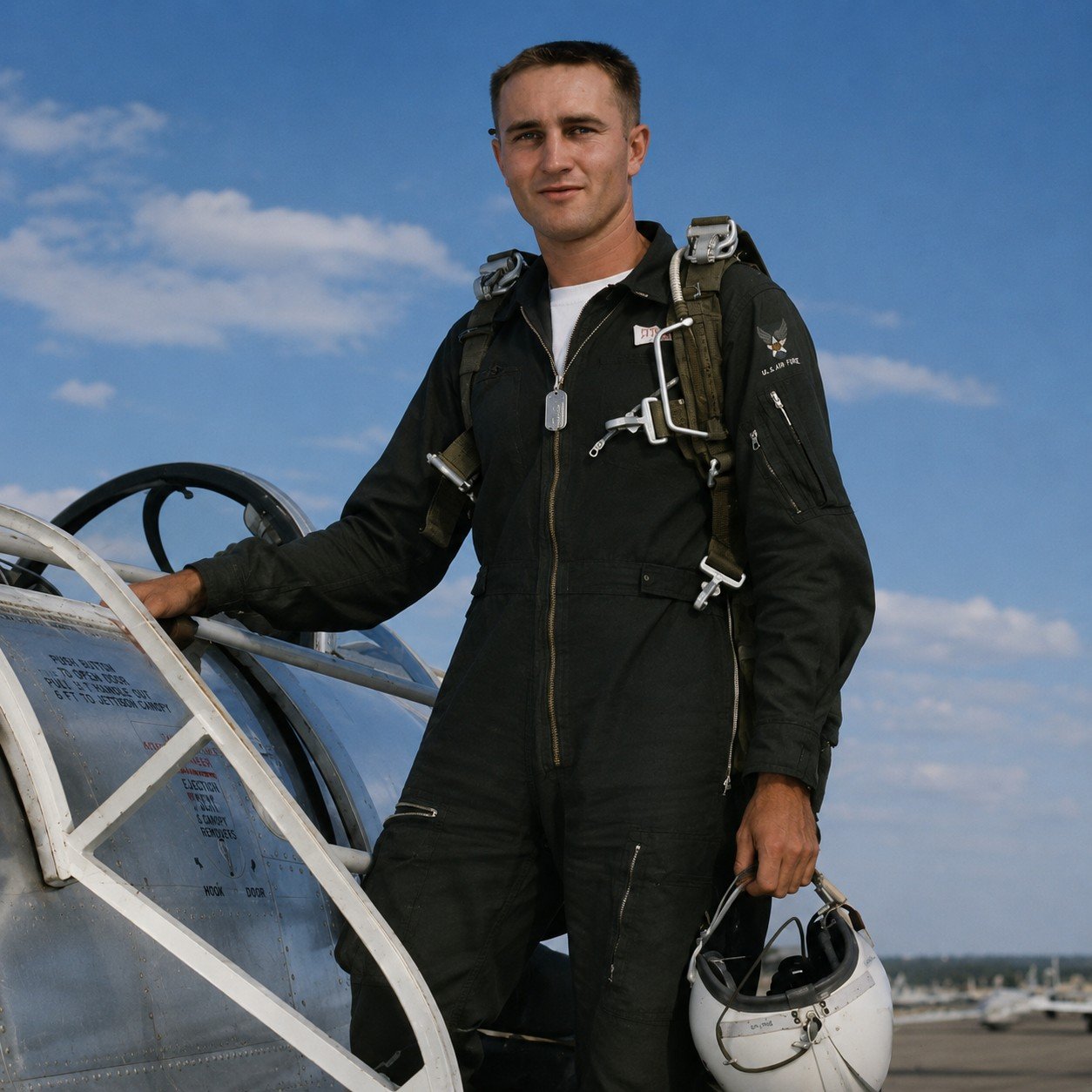 From Marine to Fighter Pilot
 From Marine to Fighter Pilot
George Everette Day was born on February 24, 1925, in Sioux City, Iowa. During World War II he enlisted in the United States Marine Corps and served as an enlisted Marine in the Pacific. After the war he remained connected to military service through the Army Reserve before eventually entering the newly independent United States Air Force.
When the Korean War began, Day returned to active duty and became a fighter-bomber pilot flying the Republic F-84 Thunderjet. Korea gave him his first experience flying combat aircraft against enemy ground targets, a role that demanded many of the same skills he would later use in Vietnam. By the time he reached Southeast Asia, Day was no inexperienced pilot trying to survive his first combat tour. He was a veteran of two previous wars.
His Vietnam assignment would nevertheless prove unlike anything he had encountered before.
The Birth of the Misty FACs
Forward air controllers were essential to the American air war in Southeast Asia. Their job was to locate enemy forces and supplies, direct strike aircraft onto targets and help prevent friendly forces or civilians from being hit. Traditional FAC missions were commonly flown in relatively slow aircraft such as the O-1 Bird Dog.
That approach became extremely dangerous over heavily defended areas of North Vietnam.
The answer was the Fast Forward Air Controller, or Fast FAC.
The Misty program began operations in 1967 using the two-seat F-100F Super Sabre, an aircraft fast enough to reduce the amount of time crews remained exposed to enemy fire but still capable of operating low enough to identify activity on the ground. The pilots flew into some of the most dangerous airspace around the Demilitarized Zone, southern North Vietnam and portions of Laos, searching for trucks, roads, antiaircraft positions, missile sites and other targets.
Day became their first commander and used the radio call sign Misty 01.
The missions demanded aggression and restraint at the same time. Misty crews often descended to low altitude to inspect suspicious activity and then returned repeatedly to mark targets for attacking aircraft. Every pass exposed them to antiaircraft guns and small-arms fire. The pilots needed to see what was on the ground, and the enemy needed only one good shot.
On August 26, 1967, the enemy got one.

Shot Down Over North Vietnam
Day was flying an F-100 on a forward air control mission over North Vietnam when the aircraft was struck by enemy ground fire. The damage forced him to eject.
The ejection itself badly injured him. Day's right arm was broken in three places, and his left knee was severely sprained. He landed in hostile territory unable to properly use one arm and already struggling to move. Enemy forces captured him almost immediately.
He was taken to a prison camp and interrogated.
When he refused to provide the information demanded of him, his captors tortured him.
Day had entered captivity seriously injured, but instead of simply attempting to survive until the war ended, he began watching his guards.
He was looking for a way out.
The Escape
Day eventually noticed that the guards had become less vigilant. He seized the opportunity and escaped into the jungle.
What followed became one of the most extraordinary escape attempts made by an American prisoner during the Vietnam War.
Day still had a badly broken arm and injured knee. He had little food, no proper medical treatment and was moving through enemy-controlled territory. Nevertheless, he began working his way south toward South Vietnam.
According to his Medal of Honor citation, he survived on berries and uncooked frogs while attempting to evade enemy patrols. At one point he was injured again when fragments from a bomb or rocket struck him. Even then, he continued moving south.
He eventually reached the Ben Hai River, the waterway associated with the Demilitarized Zone separating North and South Vietnam.
That alone represented an extraordinary accomplishment. Day had escaped from a prison camp and crossed miles of hostile territory while seriously injured.
But the last portion of the journey would prove almost impossible.

Across the Ben Hai
Day reached the river and constructed a crude flotation device to cross it. On the other side, he was now much closer to friendly territory, but the battlefield itself became another threat. American artillery was falling in the area, and Day found himself trying to survive fire from his own side while continuing to evade enemy forces.
He kept moving.
Eventually, he became close enough to American positions that rescue seemed possible. His Medal of Honor citation records that he attempted to signal U.S. aircraft but was unable to attract their attention.
For a man who had escaped torture, crossed hostile territory and reached the southern side of the Ben Hai, this may have been the cruelest part of the ordeal. Freedom was no longer an abstract hope somewhere hundreds of miles away.
It was close.
Then an enemy patrol found him.
Day attempted to hide, but he was discovered and shot in the hand and thigh during his recapture. After roughly two weeks of freedom, his escape was over.
He was taken back north.
This time, his captors knew exactly what he had done.
Captivity Begins Again
Day's punishment was severe.
He was returned to the prison system and subjected to further interrogation and torture. His injuries were largely untreated, and he endured prolonged confinement while refusing to provide sensitive information.
Eventually he was moved into the network of prisons around Hanoi where American POWs developed an extraordinary system of communication and resistance. The prisoners used tapping codes, whispered messages and other methods to maintain contact despite efforts to isolate them.
Day became one of the senior officers among the prisoners and helped strengthen resistance to enemy interrogation. The Air Force later emphasized not merely his ability to survive captivity but his determination to help other prisoners maintain discipline and resist exploitation.
His own resistance came at tremendous physical cost. Day endured repeated torture and years of inadequate food and medical care. Yet fellow prisoners later remembered him as someone whose refusal to surrender psychologically strengthened the men around him.
John McCain, who was imprisoned with Day, later wrote that Day possessed an indomitable will and that his example strengthened McCain's own determination to survive.
Five Years and Seven Months
Day remained a prisoner for approximately five years and seven months.
The war outside changed dramatically during that time. American troop strength in Vietnam peaked and then began falling. Richard Nixon replaced Lyndon Johnson in the White House. The air war intensified and changed. Negotiations in Paris dragged on.
Inside the prisons, Day and the other POWs measured time differently.
They survived interrogations, illness, hunger and isolation while waiting for an agreement that might finally bring them home.
The Paris Peace Accords signed in January 1973 included provisions for the release of American prisoners. The operation created to bring them home was appropriately named Operation Homecoming. Between February and March, aircraft began collecting prisoners from North Vietnam and returning them to American control.
Bud Day was finally free.

Homecoming
After release, Day eventually returned to the United States and reunited with his wife, Doris.
An Air Force account later recorded one remarkable detail from their reunion. After 67 months apart, Day said he could recognize Doris simply from the sound of her footsteps approaching him at March Air Force Base on March 17, 1973.
The photographs from Operation Homecoming show something statistics cannot convey particularly well. The man coming home was older and physically changed by captivity, but he was alive.
The pilot who had disappeared into North Vietnam in August 1967 had returned nearly six years later.
For many American families whose missing servicemen never came home, there would be no comparable reunion.
The Medal of Honor
Day's actions following his shootdown would eventually earn the nation's highest military decoration.
On March 4, 1976, President Gerald R. Ford presented Colonel George E. Day with the Medal of Honor during a ceremony at the White House. Fellow former prisoner Admiral James Stockdale was present.
The citation began with the events of August 26, 1967, describing Day's shootdown, injuries, immediate capture, torture and subsequent escape. It continued through his journey south, his survival on minimal food, crossing of the Ben Hai River and eventual recapture. It also recognized his continued resistance during more than five years of imprisonment.
The award was not simply for enduring captivity. It recognized a sustained pattern of resistance and courage beginning almost immediately after his aircraft hit the ground.
Read George Day's Medal of Honor Citation
Our separate Medal of Honor profile contains Day's full citation and focuses specifically on the actions for which he received the nation's highest award. This article places those actions within the larger story of the Misty FAC mission, his earlier military service, his escape attempt and the years he spent as a prisoner of war.
The Air Force Cross
The Medal of Honor was not Day's only extraordinary decoration.
He also received the Air Force Cross, the Air Force's second-highest decoration for valor. This combination made Day extraordinarily unusual among American servicemen. Air Force histories frequently identify him as the only individual to have received both the Medal of Honor and the Air Force Cross.
Over the course of his military career, Day accumulated roughly 70 military decorations, with more than 50 associated directly with combat. His awards included the Medal of Honor, Air Force Cross, Distinguished Service Medal, Silver Star, Legion of Merit, Distinguished Flying Cross, multiple Air Medals, Bronze Stars and Purple Hearts.
Numbers like that can become almost meaningless when listed without context. Day accumulated them because his military career stretched across three wars and because much of that service occurred where people were actively attempting to kill or capture him.
Three Wars
Day's career created an unusual bridge across three very different American conflicts.
In World War II, he had been an enlisted Marine during the enormous global mobilization that defeated Germany and Japan. In Korea, he flew the F-84 during the first major jet-age conflict fought by the United States. In Vietnam, he commanded pilots flying supersonic F-100s over one of the most heavily defended air-defense environments American aviators had yet encountered.
Those experiences also illustrate how quickly military aviation had changed during a single career. Day entered military service during an era when piston-engine fighters and bombers still dominated the skies. By Vietnam he was flying a supersonic fighter equipped for missions that would have been technologically unimaginable when he first put on a uniform.
The aircraft changed dramatically.
The risks did not.
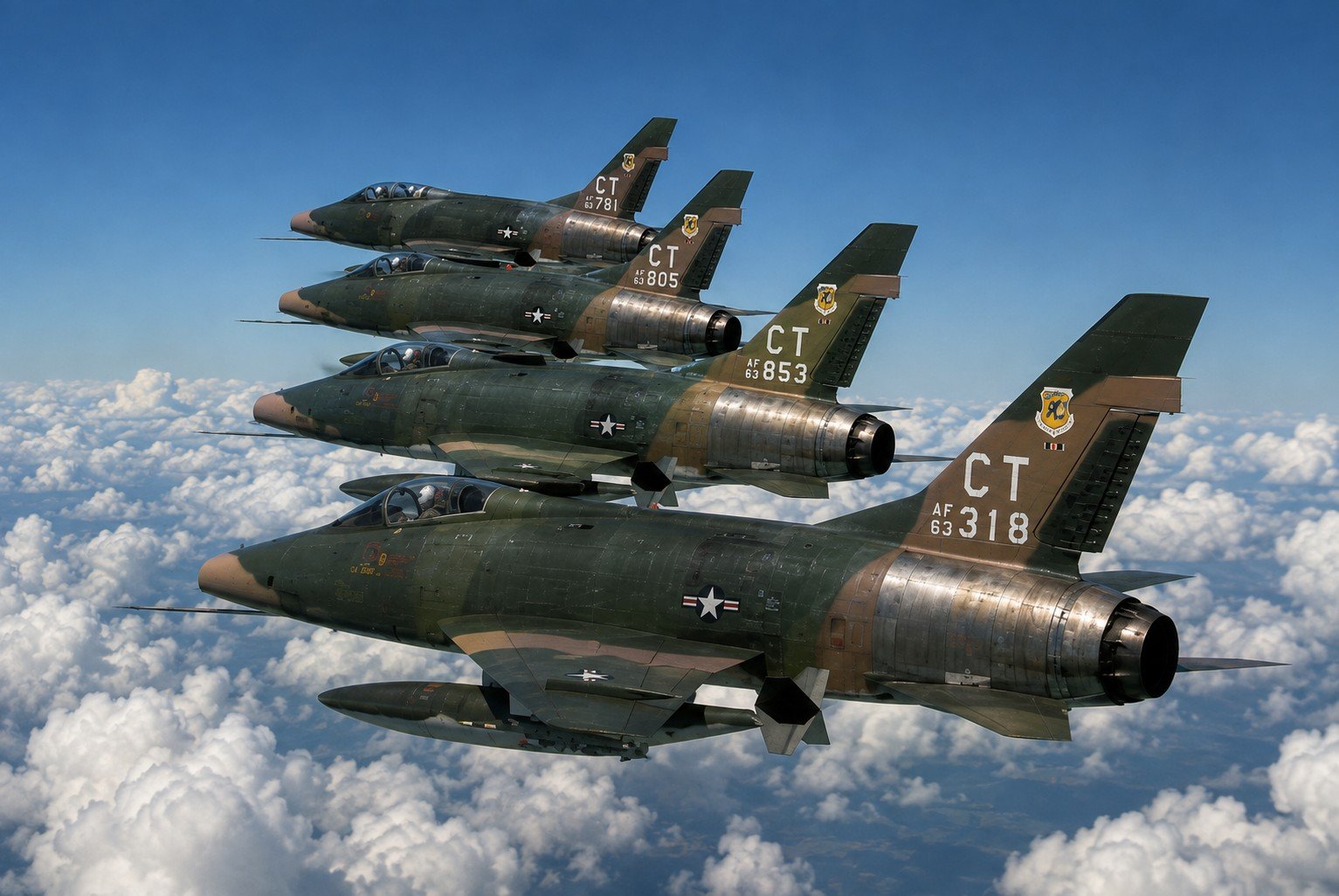 What Made Misty Different
 What Made Misty Different
Understanding Day's story also requires understanding the extraordinary unit he helped create.
Misty FACs were volunteers. They flew F-100Fs at low altitude over areas containing antiaircraft artillery, surface-to-air missile sites and enemy small arms. Their job often required them to deliberately expose themselves long enough to identify what was happening below.
The Mistys searched for truck traffic, supply routes, bridges, gun positions and other targets. When they found something important, they could mark it with smoke rockets and direct strike aircraft against it.
The work demanded experienced fighter pilots because the crews needed to understand both the aircraft and the tactical situation while operating extremely close to the ground. Speed offered some protection, but it also reduced the time available to identify targets. Misty pilots repeatedly returned to dangerous areas because one pass was often insufficient.
The casualty rate says plenty. Roughly a quarter of the Misty pilots were eventually shot down.
The program nevertheless produced an extraordinary group of aviators. Misty alumni later included future Air Force chiefs of staff and general officers, combat leaders and influential figures in American aviation. Day was the first man to command them.
His shootdown did not end the program.
It demonstrated exactly how dangerous the mission really was.
Day After Vietnam
Bud Day returned to Air Force service after his release rather than simply disappearing into retirement, which would have been entirely understandable after nearly six years of captivity.
He eventually served as vice commander of the 33rd Tactical Fighter Wing at Eglin Air Force Base, Florida, before retiring from active duty in 1977.
He also earned a law degree and remained active in issues involving veterans after leaving military service. The years of captivity had not ended his involvement with the military community.
Day died on July 27, 2013, in Fort Walton Beach, Florida, at age 88. He was buried at Barrancas National Cemetery in Pensacola.
The Air Force response to his death reflected the stature he had acquired during more than three decades of military service. Official tributes repeatedly described him as one of the most highly decorated airmen in American history.
That description is accurate, but it still feels incomplete.
The Part the Medals Cannot Explain
There is a temptation when telling Bud Day's story to measure him through awards. Medal of Honor. Air Force Cross. Silver Star. Distinguished Flying Cross. Purple Hearts. More than seventy decorations.
Those things matter.
But medals are ultimately objects created after the events are over. They are an attempt to explain decisions made in moments when nobody knew how the story would end.
On August 26, 1967, Bud Day did not know he would someday stand in the White House receiving the Medal of Honor.
He knew that his airplane had been shot down.
He knew that his arm was broken.
He knew that he had been captured.
Then he decided to escape.
For roughly two weeks, he moved south through enemy territory while seriously injured, living on what little food he could find and trying to reach friendly forces. He crossed the Ben Hai River and reached the edge of freedom before being captured again.
Then came another decision.
He could not escape anymore, so he resisted.
He resisted interrogation. He endured torture. He helped other prisoners resist. He survived for five years and seven months until a war that had consumed much of his adult life finally released him.
Bud Day's story is not remarkable because he was somehow immune to pain, fear or exhaustion.
It is remarkable because none of those things made the decisions for him.
On August 26, we remember the day his F-100 was shot from the sky.
The rest of his life tells us what happened after he hit the ground.
Sources
National Museum of the United States Air Force, “Col. George ‘Bud’ Day: Misty 01,” for Day's military career, role as first commander of the Misty FACs and status as one of the Air Force's most highly decorated aviators.
National Museum of the United States Air Force, “Misty FACs,” for the mission of the Misty forward air controllers and their exceptionally high shootdown rate.
Congressional Medal of Honor Society, George Everette “Bud” Day recipient profile, for his Medal of Honor action date, unit, presentation information and biographical details.
Official Medal of Honor citation for George E. Day, preserved by the United States Army, for the circumstances of his shootdown, injuries, capture, escape, survival, crossing of the Ben Hai River and recapture.
U.S. Air Force, “Former POW recounts 67-month experience,” for Day's imprisonment, Operation Homecoming reunion and recollections of returning to his wife Doris.
U.S. Air Force, “One of AF most decorated heroes passes away,” for Day's Medal of Honor presentation, decorations, POW leadership and later career.
National Museum of the United States Air Force, “Operation Homecoming,” for the return of American prisoners following the Paris Peace Accords.
Air Education and Training Command and Goodfellow Air Force Base historical material, for Day's World War II Marine service, Korean War F-84 combat service and command of the Misty FAC program.
