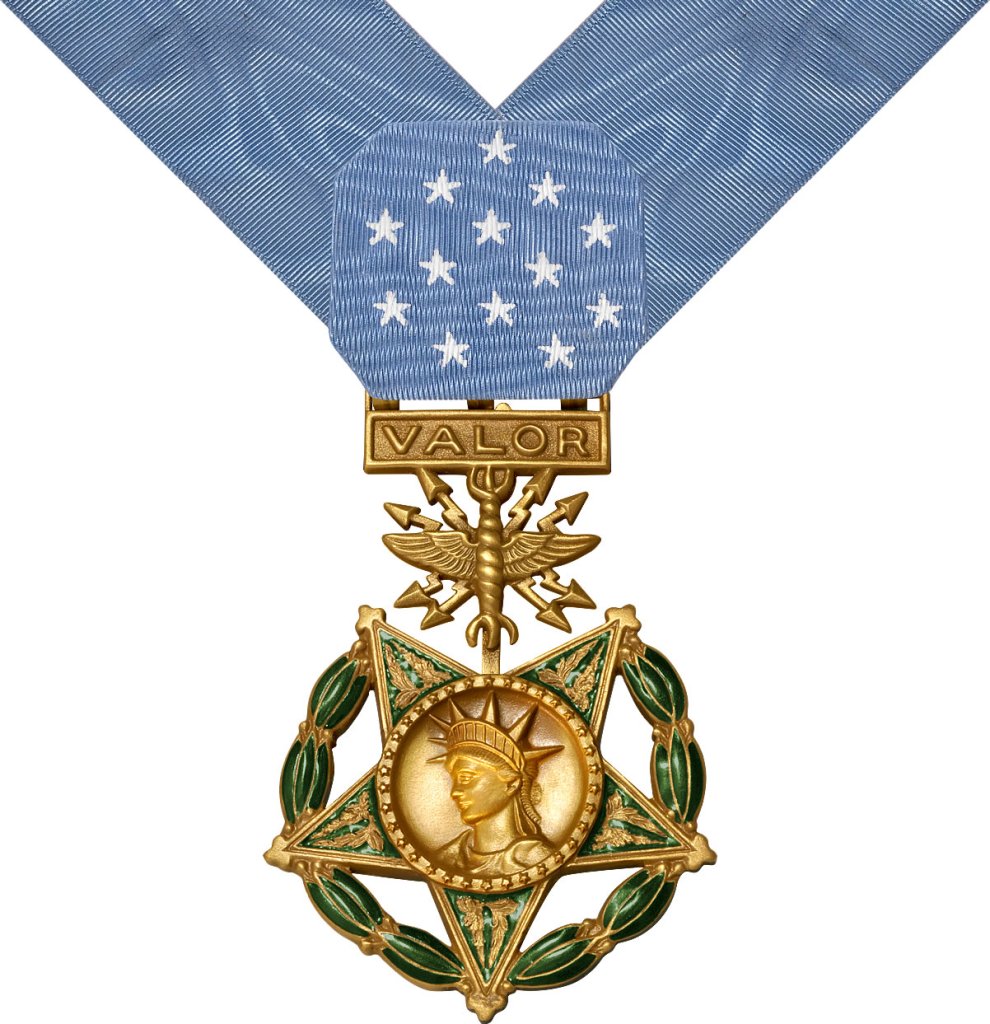
Medal of Honor: George E. Day, Vietnam War, August 26, 1967
“Shot down, crippled, tortured, and left for dead—Bud Day never quit. His escape and defiance under unimaginable conditions made him one of America's most legendary warriors.â€
August 28, 2025

 Name: George E. Day
War: Vietnam War
Date of Action: August 26, 1967
Summary of Action
Colonel George “Bud†Day, an Air Force Forward Air Controller, was flying an F-100 Super Sabre over North Vietnam on August 26, 1967, when his aircraft was struck by ground fire. Forced to eject, he landed with devastating injuries—his right arm broken in three places and his knee severely sprained. Captured by North Vietnamese forces, Day was beaten and tortured before being taken to a prison camp.
Displaying the same grit that had defined his career, Day managed to escape his captors. Despite broken bones, shrapnel wounds from enemy bombs, and the constant risk of discovery, he survived in the jungle for days, living on berries and uncooked frogs. He eluded patrols, floated across the Ben Hai River on a bamboo log, and made it into the Demilitarized Zone. Weak, delirious, and wounded, he still attempted to signal U.S. aircraft for rescue before being ambushed and recaptured by the Viet Cong.
Day endured further torture, including additional wounds to his hand and thigh. Though physically broken, he refused to give valuable information, deliberately misleading his captors instead. His relentless resistance under captivity inspired fellow prisoners and gave hope to American airmen still flying dangerous missions over North Vietnam.
His extraordinary courage, resilience, and refusal to yield made him the most decorated U.S. airman in history and earned him a place among America's greatest military heroes.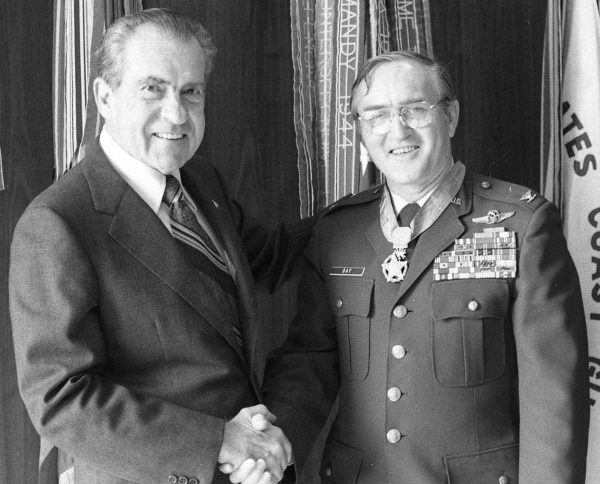
Medal of Honor Citation
On 26 August 1967, Col. Day was forced to eject from his aircraft over North Vietnam when it was hit by ground fire. His right arm was broken in 3 places, and his left knee was badly sprained. He was immediately captured by hostile forces and taken to a prison camp where he was interrogated and severely tortured. After causing the guards to relax their vigilance, Col. Day escaped into the jungle and began the trek toward South Vietnam. Despite injuries inflicted by fragments of a bomb or rocket, he continued southward surviving only on a few berries and uncooked frogs. He successfully evaded enemy patrols and reached the Ben Hai River, where he encountered U.S. artillery barrages. With the aid of a bamboo log float, Col. Day swam across the river and entered the demilitarized zone. Due to delirium, he lost his sense of direction and wandered aimlessly for several days. After several unsuccessful attempts to signal U.S. aircraft, he was ambushed and recaptured by the Viet Cong, sustaining gunshot wounds to his left hand and thigh. He was returned to the prison from which he had escaped and later was moved to Hanoi after giving his captors false information to questions put before him. Physically, Col. Day was totally debilitated and unable to perform even the simplest task for himself. Despite his many injuries, he continued to offer maximum resistance. His personal bravery in the face of deadly enemy pressure was significant in saving the lives of fellow aviators who were still flying against the enemy. Col. Day's conspicuous gallantry and intrepidity at the risk of his life above and beyond the call of duty are in keeping with the highest traditions of the U.S. Air Force and reflect great credit upon himself and the U.S. Armed Forces.