He Gave Away His Parachute: Duane Hackney and the Jolly Green Giants
There are acts of courage that happen in a few violent seconds, moments when a person has almost no time to consider what comes next. Then there are men like Duane Hackney.
August 20, 2026

There are acts of courage that happen in a few violent seconds, moments when a person has almost no time to consider what comes next. Then there are men like Duane Hackney, whose entire combat career seemed to consist of repeatedly stepping into places most people were desperately trying to escape. During the Vietnam War, Hackney flew more than 200 combat search-and-rescue missions, survived helicopters being shot down, was wounded repeatedly, and accumulated twenty-eight decorations for valor. He eventually became recognized as the most decorated enlisted Airman in United States Air Force history. Yet one afternoon over North Vietnam came to define him. Trapped inside a burning HH-3E Jolly Green Giant with a pilot he had just rescued, Hackney had a parachute and the other man did not. Hackney took his parachute off and gave it to him. He was nineteen years old.
 A Young Man Who Chose the Hard Assignment
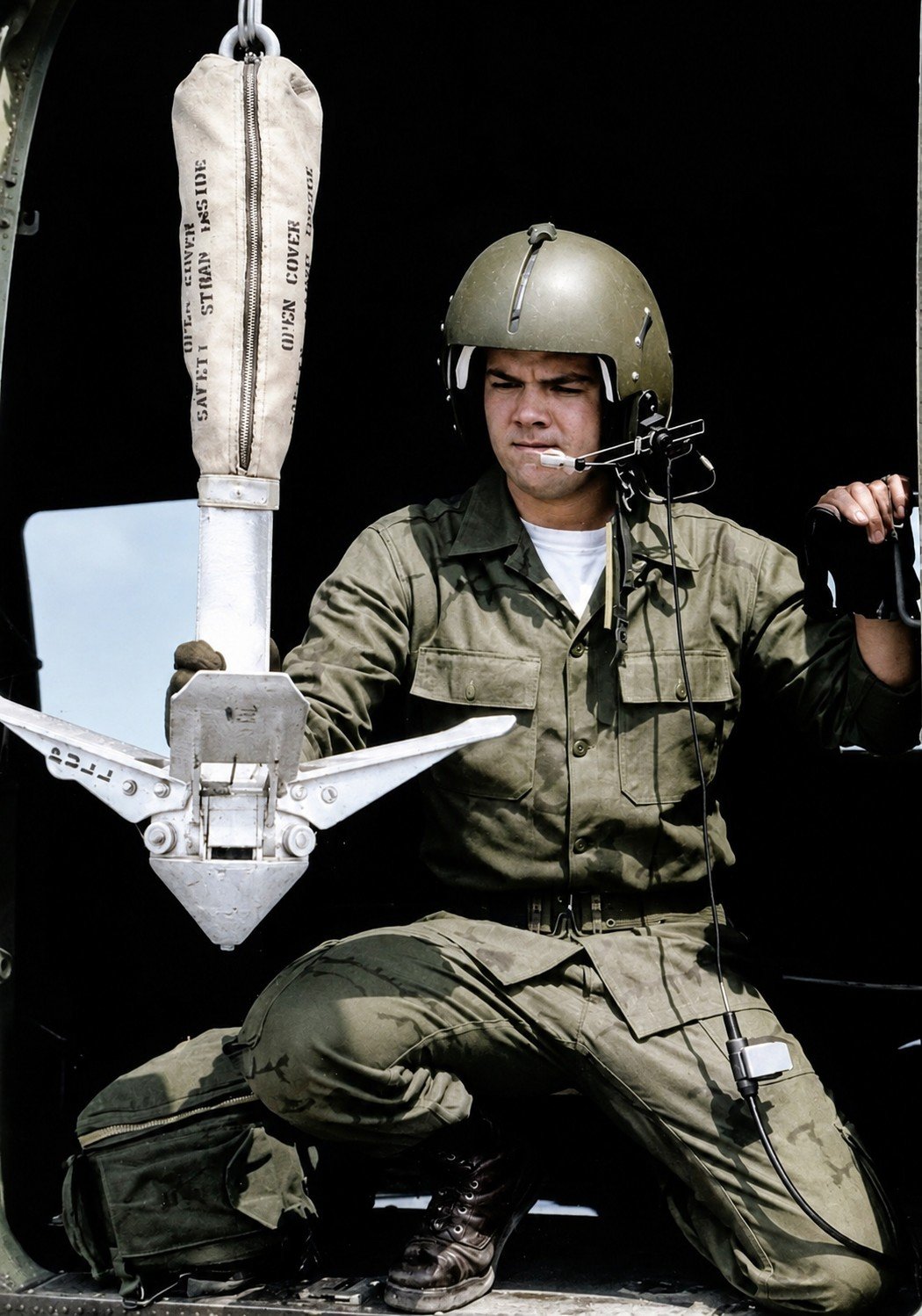
Duane Dale Hackney was born in Flint, Michigan, on June 5, 1947. At Beecher High School he played football and baseball, swam, served as student council president, and had the sort of future that could easily have taken him somewhere other than Southeast Asia. Instead, only days after graduating in June 1965, the eighteen-year-old enlisted in the United States Air Force and volunteered for pararescue. Pararescuemen, eventually universally known as PJs, occupied an unusual place in the Air Force. They were trained not simply to reach men in trouble but to keep them alive once they got there. The training combined parachuting, survival skills, medical instruction, scuba work, fieldcraft, and intense physical conditioning. In Vietnam their job could mean being lowered from a hovering helicopter into jungle controlled by the enemy, finding a wounded pilot, stabilizing him, and somehow getting both men back onto the aircraft while everyone below tried to prevent it.
Hackney excelled. He graduated as an honor student from his pararescue training and earned the opportunity to choose his assignment. Comfortable duty in places such as England or Bermuda was available, but Hackney chose Vietnam. He arrived at Da Nang in September 1966 and served with the 37th Aerospace Rescue and Recovery Squadron. Within days he was flying combat rescue missions. His world became the HH-3E Jolly Green Giant, an ungainly-looking but extraordinarily important helicopter whose crews went looking for Americans who had already experienced the worst day of their lives. The philosophy was brutally simple: if an American went down, someone would try to bring him home, and quite often, that someone was Duane Hackney.
 The Men in the Jolly Greens
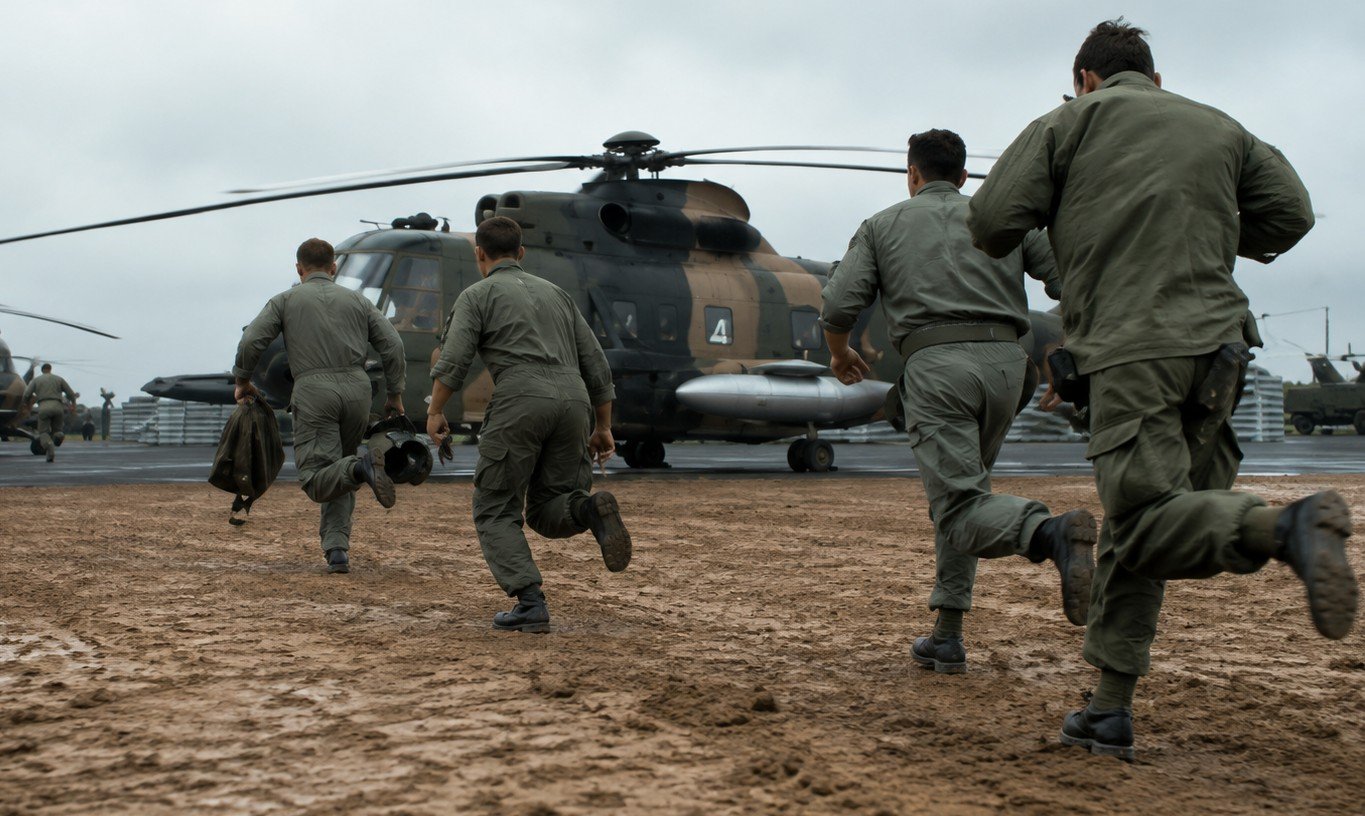
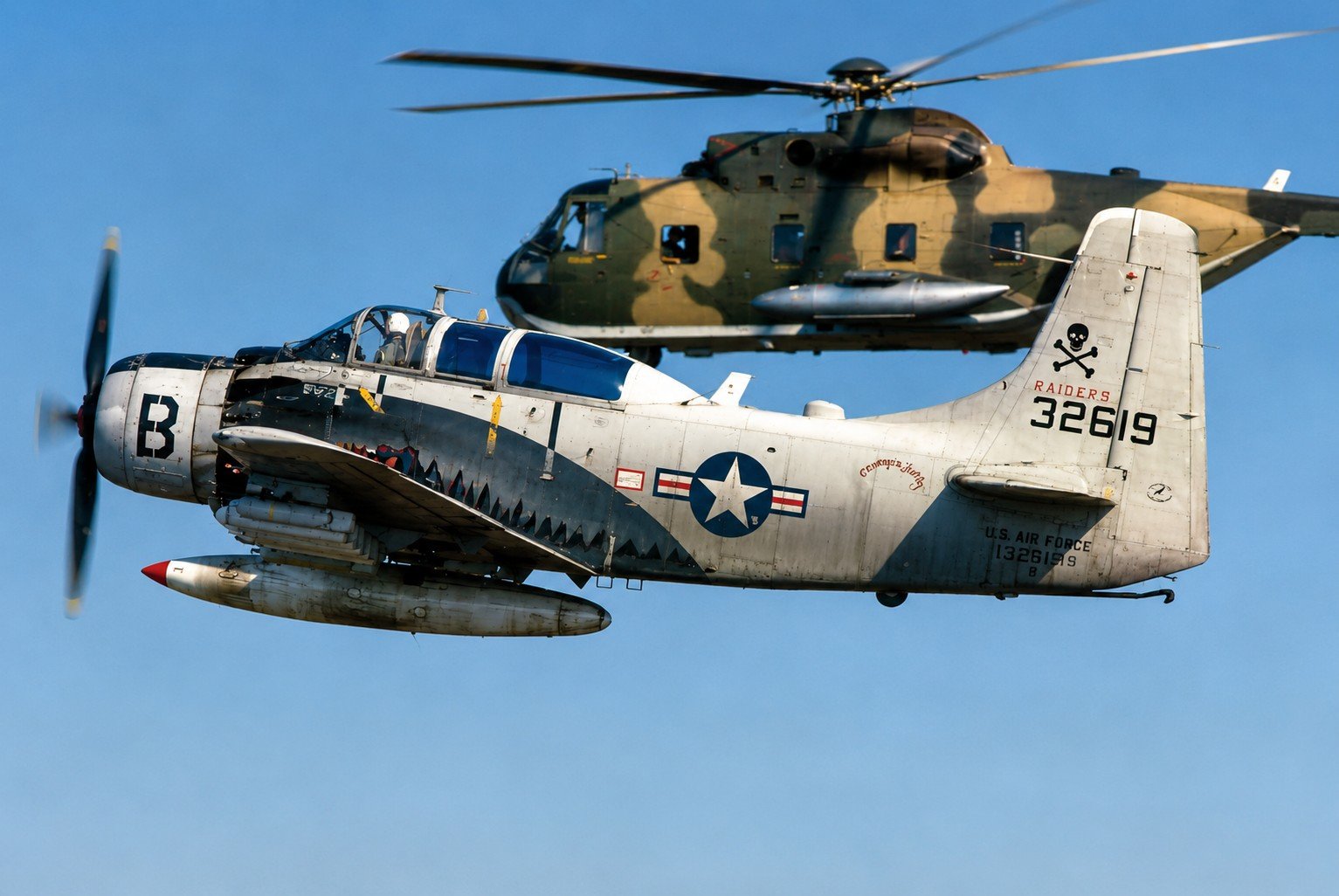
Combat search and rescue in Southeast Asia developed into a carefully coordinated operation. The rescue helicopters normally worked as a pair. One helicopter, called the “low bird,” entered the pickup area and attempted the actual recovery, while a second, the “high bird,” remained nearby as insurance. If the low bird was damaged or shot down, the high bird could become its rescuer. The Jolly Greens were frequently accompanied by A-1 Skyraiders known by the call sign “Sandy.” These propeller-driven attack aircraft could remain over a rescue area far longer than fast jets, suppress enemy positions, mark locations, coordinate the rescue, and escort the relatively slow helicopters into some of the most heavily defended areas of Southeast Asia.
Then there was the PJ. When thick jungle prevented a helicopter from landing, the pararescueman could descend beneath the aircraft on a hoist. One of the tools available to him was the jungle penetrator, a narrow weighted device designed to push downward through dense vegetation. Once beneath the canopy, the PJ might be alone on the ground while the helicopter hovered hundreds of feet above him. It was rescue work performed inside somebody else’s battlefield, and on February 6, 1967, that battlefield was the Mu Gia Pass.
Read More about the Jolly Greens Here!
Nail 65 Goes Down
The Mu Gia Pass was one of the major gateways connecting North Vietnam with the Ho Chi Minh Trail. Roads and supply routes funneled through the mountainous region toward Laos and ultimately southward toward the fighting in South Vietnam. That importance made Mu Gia one of the most heavily defended pieces of terrain in the region. North Vietnamese antiaircraft batteries guarded the approaches, including weapons capable of tearing a helicopter apart.
Early on February 6, Captain Lucius Lamar Heiskell of the 23rd Tactical Air Support Squadron was flying an O-1F Bird Dog forward air control aircraft near the pass. His call sign was Nail 65. The Bird Dog was almost the opposite of the glamorous image of aerial combat. It was small, slow, lightly protected, and normally flown at relatively low altitude. Its pilots searched for targets, directed strike aircraft, and assessed the results. Doing that over a heavily defended transportation corridor required a peculiar sort of nerve. Heiskell’s aircraft was hit. He managed to bail out and descended into rough country near Mu Gia. He initially established contact on his survival radio, but enemy troops were searching for him and he stopped transmitting.
A rescue force launched from Nakhon Phanom Royal Thai Air Force Base shortly after 10:00 that morning. The low bird was HH-3E 65-12779, Jolly Green 05. Major Patrick Hardy Wood commanded the helicopter. Captain Richard Abbott Kibbey was copilot, Staff Sergeant Donald Joe Hall served as flight engineer, and Airman Second Class Duane Hackney was aboard as the pararescueman. Jolly Green 36 followed as the high bird. Wood brought Jolly Green 05 down beneath the weather and into the valley while 37mm antiaircraft guns fired from the surrounding ridges.
Hackney volunteered to go down. Suspended beneath the helicopter, he descended through several levels of jungle canopy until he reached the ground. He found signs that an American had been there, including footprints, but Heiskell was nowhere to be seen. Hackney searched through the vegetation while enemy soldiers were somewhere nearby, but eventually worsening weather forced the rescue force to withdraw. For the moment, Nail 65 remained behind.
 Back Into the Valley
At approximately 4:30 that afternoon, aircraft in the area again heard Heiskell on his radio. There was very little daylight remaining, but Jolly Green 05 and Jolly Green 36 went back. Two A-1H Sandys were present and communicating with the downed pilot, but clouds covered the mountaintops and prevented the attack aircraft from safely following the helicopter into the valley. Going in meant taking Jolly Green 05 into an area known to contain enemy guns without the protection normally provided by the Sandys. Wood and his crew decided to try anyway.
Jolly Green 05 descended into the valley, and Heiskell was able to guide the helicopter toward his location. Once again Hackney went beneath the aircraft, but this time he found him. Heiskell was alive and injured. Hackney secured the pilot and the two men were hauled upward through the jungle canopy toward the hovering HH-3E. At approximately 4:35 p.m., word went out that Nail 65 was aboard. At Nakhon Phanom, men who had been following the rescue celebrated. They had him, and for several minutes one of the most dangerous rescue operations imaginable appeared to have worked. Then the radio came alive. Jolly Green 05 had been hit.
 The Parachute
North Vietnamese gunners had found the helicopter. A burst of 37mm antiaircraft fire ripped into Jolly Green 05 as Wood attempted to escape the valley. The rounds tore through the aircraft and started a violent fire inside the fuselage. Hackney was beside Heiskell, beginning to examine the man he had just brought aboard, when smoke and flame filled the cabin.
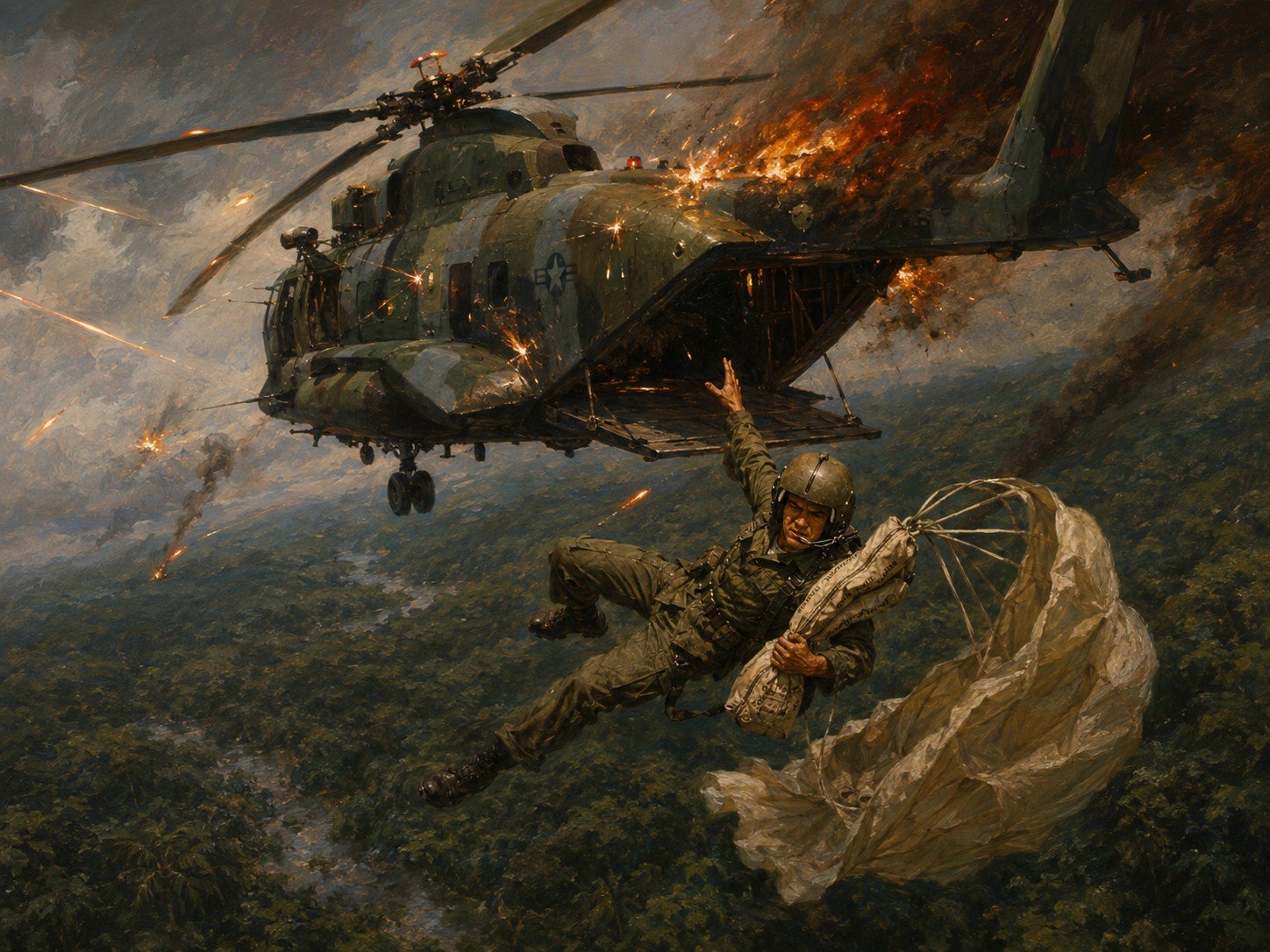
Hackney understood almost immediately what was happening. The helicopter might not remain airborne, and Heiskell did not have a parachute. Hackney did. It was his emergency parachute, his own best chance of surviving what was about to happen, but he took it off and put it on Heiskell. There is something about that decision that can disappear beneath all the medals and citations written afterward. Hackney was not standing safely on the ground deciding what heroism should look like. He was wounded inside a burning helicopter being fired upon over North Vietnam. There was no guarantee another parachute existed and no guarantee he would have enough time to find one. He nevertheless placed the life of the man he had been sent to rescue ahead of his own.
Hackney left Heiskell near the crew entrance and moved toward the rear of the burning helicopter searching through the smoke for another chute. He found one near the ramp and began putting his arms through the harness when another burst of 37mm fire struck Jolly Green 05. The helicopter exploded around him and Hackney was blown through the open rear of the aircraft before he had finished fastening the parachute. For an instant the nineteen-year-old pararescueman was falling toward the jungle with an unsecured parachute hanging from his body and the burning wreckage of Jolly Green 05 above him. Somehow he found the ripcord and pulled it, and somehow he held onto the harness as the canopy began to deploy. The parachute did not have time to open fully, but it opened enough. Hackney crashed through the trees and survived.
Jolly Green 05 did not. The burning helicopter continued forward before smashing into one of the limestone karst formations surrounding the valley. Major Patrick Wood, Captain Richard Kibbey, Staff Sergeant Donald Hall, and Captain Lucius Heiskell were lost. Duane Hackney was the only man aboard Jolly Green 05 who came home.
The Rescuer Becomes the Rescued
Hackney had been burned and struck by fragments from the exploding helicopter. He was alone beneath the jungle canopy in one of the most hostile areas of North Vietnam while the high bird, Jolly Green 36, began searching for survivors. Hackney was eventually located and recovered. The man who had twice descended into the jungle that day to find another American now had to be pulled out himself. He returned to Nakhon Phanom badly burned, wounded, exhausted, and in shock.
The Air Force Cross citation that followed focused on the decision that had separated Hackney’s actions from even the extraordinary risks routinely accepted by pararescuemen. Facing the destruction of his aircraft, he had deliberately placed the life of the rescued pilot ahead of his own. For his actions near Mu Gia Pass on February 6, 1967, Duane Hackney received the Air Force Cross, the nation’s second-highest military decoration for valor. He became its first living enlisted Air Force recipient. Yet February 6 did not end Hackney’s combat career. It barely interrupted it.
Back Into the Helicopter
Within weeks Hackney was flying again. On March 13, 1967, he participated in another rescue near the Demilitarized Zone after a Marine helicopter went down in hostile territory. The jungle was so thick that the HH-3E’s hoist cable had to be extended hundreds of feet toward the ground. Enemy fire hammered the rescue aircraft, and a bullet struck Hackney’s helmet hard enough to knock him unconscious. He woke up and went back to treating the wounded, setting fractures, stopping bleeding, and caring for injured men while the damaged helicopter attempted to escape. The mission earned Hackney another Distinguished Flying Cross.
Four months later, on July 15, rockets struck Da Nang Air Base. While aircraft burned and ammunition exploded around him, Hackney entered the most heavily damaged area and helped rescue wounded men. Six lives were credited to his actions, earning him the Silver Star. His decorations eventually included the Air Force Cross, Silver Star, four Distinguished Flying Crosses, the Airman’s Medal, the Purple Heart, and eighteen Air Medals among more than seventy awards and decorations accumulated during his career. Numbers, however, have a way of making a man like Hackney sound almost fictional. The more revealing detail may be that people who knew him remembered a man who did not particularly want to talk about any of it.
More Than One Tour
Hackney returned to Southeast Asia and continued flying rescue missions. During a later tour, now operating with the larger HH-53 Jolly Green helicopters, he again found himself inside aircraft being torn apart by enemy fire. During an April 1971 rescue in Laos, Hackney and other PJs helped extract South Vietnamese soldiers surrounded by enemy forces. Heavy fire struck the helicopter repeatedly and another pararescueman was grievously wounded. A bullet entered Hackney’s helmet, traveled across the top of his head inside it, and exited the rear. He survived that too.
One of the men who served with him later remembered that Hackney did not want another Purple Heart. Recognition was not what interested him. He wanted to do his share of the work and get the men out. That may explain why his medal rack eventually became almost absurdly large. Hackney was not building it for display. He was simply continuing to go back wherever men needed to be brought home.
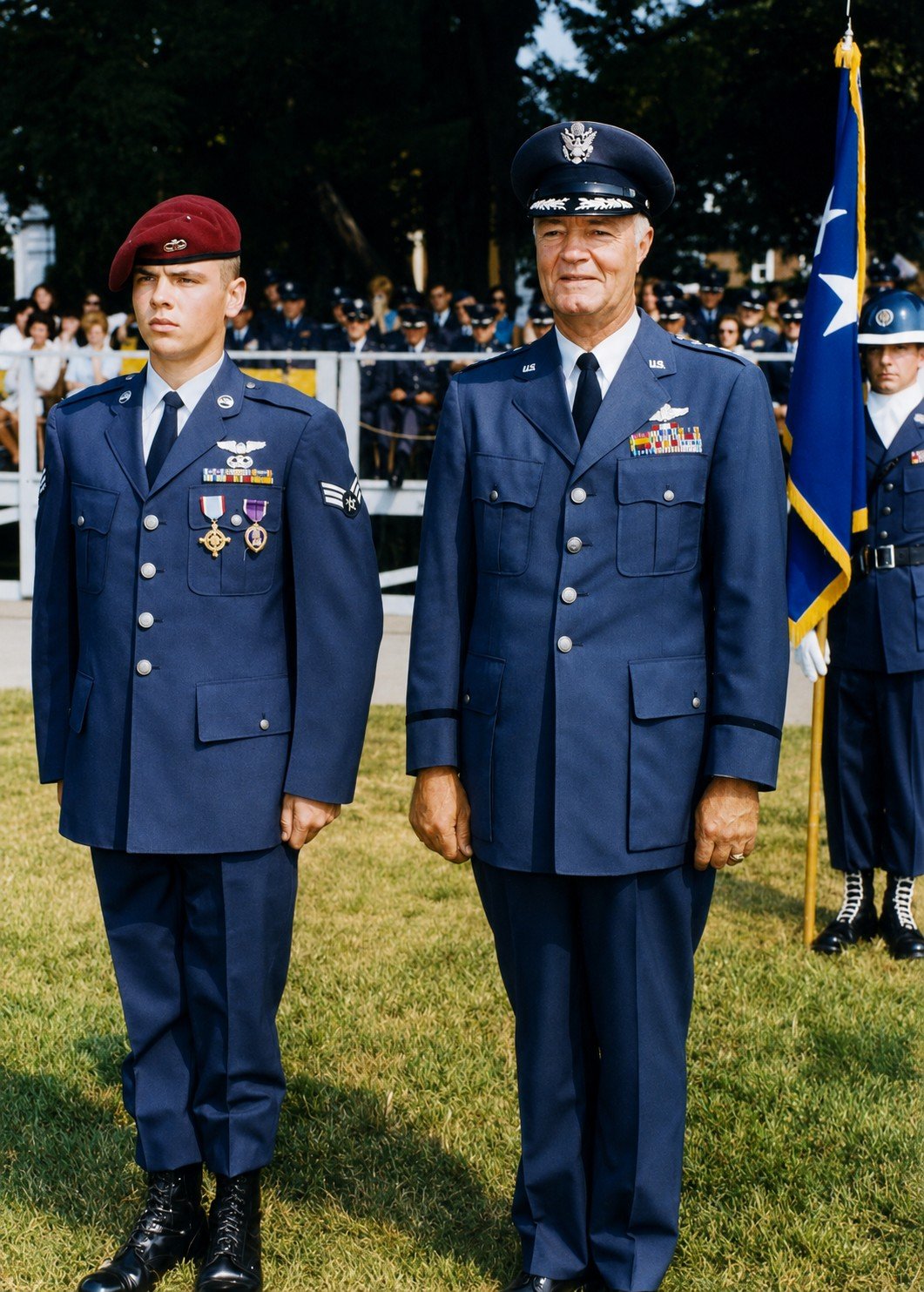 The Man Behind the Ribbons
There was another side to Hackney that makes the story far more interesting than a catalog of combat decorations. He left the Air Force in 1973 and worked for several years as a deputy with the Genesee County Sheriff’s Department in Michigan. In 1977 he discovered that he missed military life badly enough to return, even though doing so required accepting a reduction in rank. He returned to pararescue, became an instructor, and later served in other assignments including security police. A rescue operation involving two civilians in Wales in 1980 resulted in serious injuries, including a fractured skull and broken hip. A heart attack the following year finally ended his days as an operational PJ, but even then he remained in the Air Force.
Hackney eventually became a first sergeant at K.I. Sawyer Air Force Base in Michigan, responsible for hundreds of Airmen. He was named Eighth Air Force First Sergeant of the Year in 1987 and ultimately reached the Air Force’s highest enlisted rank, chief master sergeant. He retired in July 1991 after roughly twenty-two years of active service.
Perhaps the most telling story from those years involves his wife, Carole, whom Hackney married in 1982. He never sat her down and explained that she had married one of the most decorated Airmen in American history. She learned about her husband’s wartime record while studying Air Force history for a promotion examination. That was Duane Hackney. Asked about the Air Force Cross, he dismissed the idea that what he had done made him exceptional, saying that he had simply been doing his job and believing someone else in the same position would have done the same. History suggests otherwise.
The Men Who Did Not Come Home
For Hackney, the story of February 6, 1967, could never simply be about surviving. Four men had died aboard Jolly Green 05: Major Patrick Hardy Wood, Captain Richard Abbott Kibbey, Staff Sergeant Donald Joe Hall, and Captain Lucius Lamar Heiskell. For decades the crash site remained part of the unfinished accounting from the Vietnam War. Wood, Hall, and Kibbey remained missing long after the fighting ended, while the families of all four men lived with the unanswered questions that followed so many American losses in Southeast Asia.
Half a century later, the story began moving again. The remains of Patrick Wood were identified and returned to his family. Donald Hall was subsequently accounted for, and Richard Kibbey was identified in 2018 following excavations in Quang Binh Province and buried at Arlington National Cemetery in 2019. Lucius Heiskell remains unaccounted for. The mission that lasted only a few hours on February 6, 1967, therefore stretched across generations. Children grew up without fathers, families waited decades for answers, and recovery teams eventually returned to the same Vietnamese mountains where Jolly Green 05 had disappeared, searching through earth and wreckage for pieces of men whom another generation of Americans had promised not to forget.
It is difficult to imagine a more appropriate continuation of the principle by which the rescue crews themselves had lived. You went back for them.
That Others May Live
Duane Hackney died of a heart attack on September 3, 1993. He was only forty-six years old and had recently begun studying at Lycoming College with plans to enter the medical profession. His funeral procession in Flint reportedly stretched for miles. He left behind more than seventy awards and decorations, burn scars that he often covered with long-sleeved shirts, and a reputation that had already become legendary within the pararescue community.
His legacy, however, is easier to understand without counting ribbons. On February 6, 1967, an American pilot was alone near the Mu Gia Pass while enemy troops searched for him. Men climbed into two helicopters and went after him. Bad weather forced them out once, so they went back. Enemy guns covered the valley, so they flew beneath them. Fighter cover could not safely follow them in, so the crew of Jolly Green 05 went without it. Hackney descended into the jungle, found the pilot, and brought him aboard. Then their helicopter caught fire.
Duane Hackney had a parachute and the man he had been sent to save did not, so Hackney gave him his. Everything else about Duane Hackney can almost be understood from that single decision. For a pararescueman, “That Others May Live” was never intended to be merely a motto. Duane Hackney proved exactly what the words could cost.
Sources
National Museum of the United States Air Force, “Chief Master Sergeant Duane Hackney: Most Decorated Enlisted Airman.”
Air & Space Forces Magazine, John T. Correll, “The Heroism of Duane Hackney,” January 2010.
Defense POW/MIA Accounting Agency records for Major Patrick Hardy Wood, Captain Richard Abbott Kibbey, Staff Sergeant Donald Joe Hall, and Captain Lucius Lamar Heiskell.
United States Air Force Air Force Cross citation for Airman Second Class Duane D. Hackney.
Arlington National Cemetery and Defense POW/MIA Accounting Agency records concerning the recovery and identification of members of the Jolly Green 05 crew.