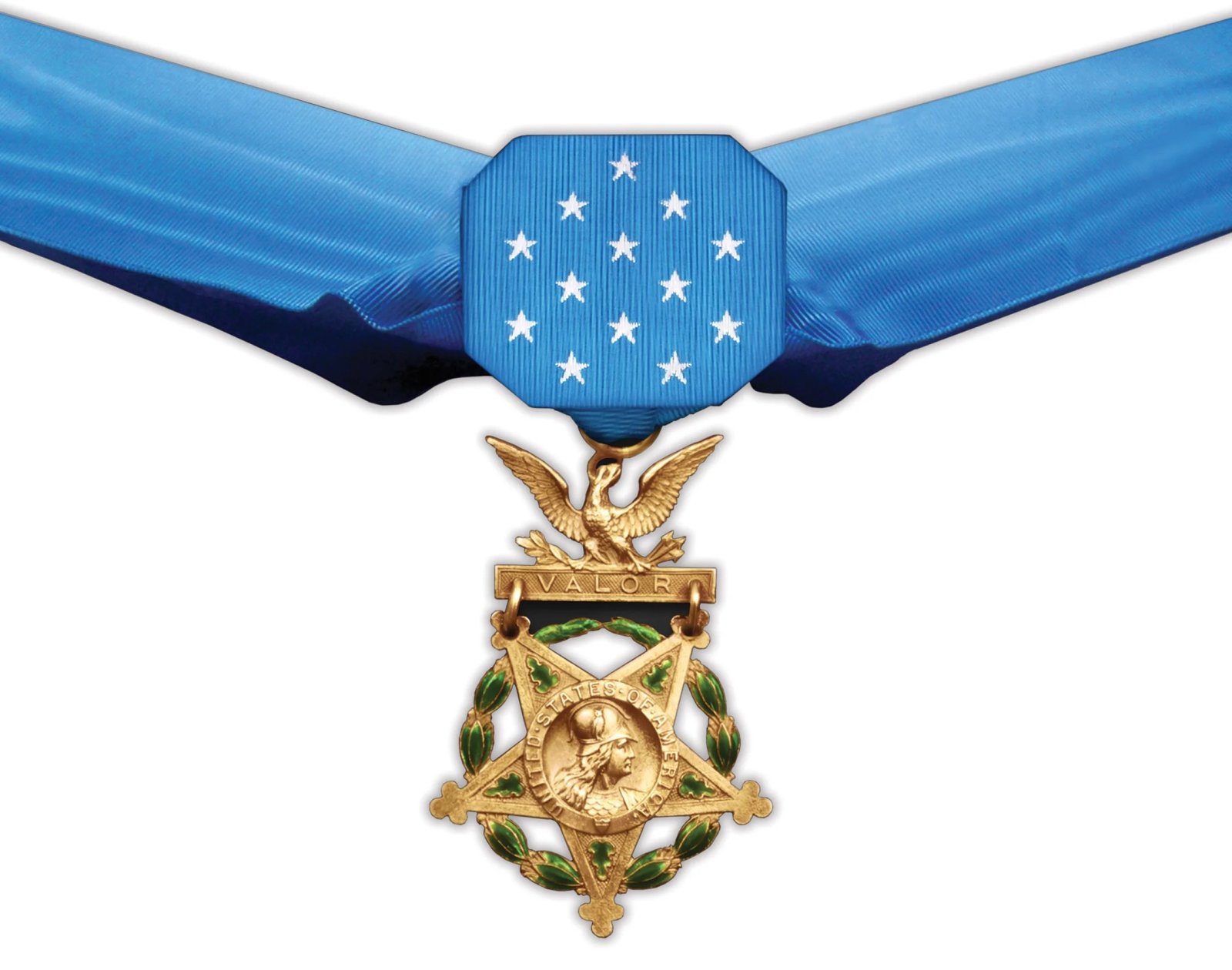
Medal of Honor: Vernon J. Baker – World War II – April 5–6, 1945
Near Castle Aghinolfi, First Lieutenant Vernon J. Baker led from the front, destroying enemy positions at close range. When his force was driven back, he stayed behind under fire to cover the withdrawal and help evacuate the wounded.
August 18, 2026

 Name: Vernon Joseph Baker
Rank: First Lieutenant
Branch: United States Army
War: World War II
Unit: Weapons Platoon, Company C, 370th Infantry Regiment, 92nd Infantry Division
Dates of Action: April 5–6, 1945
Location: Near Castle Aghinolfi, Italy
Summary of Action
On April 5, 1945, First Lieutenant Vernon J. Baker advanced with Company C of the 370th Infantry Regiment toward Castle Aghinolfi, a heavily defended German position overlooking the coastal highway in northern Italy.
Moving faster than the rest of the company, Baker and about twenty-five men reached a draw roughly 250 yards from the castle.
While scouting for a position for one of his machine guns, Baker spotted what appeared to be two cylindrical objects protruding from a slit in an enemy observation post. Crawling beneath the opening, he pushed his M1 rifle into the slit and emptied the clip, killing both German soldiers inside.
Continuing forward, Baker discovered a well-camouflaged enemy machine-gun position whose crew was eating breakfast. He immediately shot and killed both men.
Soon afterward, a German soldier emerged from the draw and threw a grenade toward the Americans. The grenade failed to explode. As the enemy soldier attempted to escape, Baker shot him.
Baker then entered the draw alone.
There he found another concealed dugout. Using a hand grenade, he blasted open the entrance, shot one German soldier who emerged, threw another grenade inside, and then entered the position firing his submachine gun, killing two more enemy soldiers.
By this point, Baker's small force had pushed deep into enemy defenses.
As he climbed back out of the draw, German machine-gun and mortar fire struck the Americans with devastating effect. Roughly two-thirds of the twenty-five-man group were killed or wounded.
When expected reinforcements failed to arrive, Captain John F. Runyon ordered the survivors to withdraw in two groups.
Baker volunteered to remain behind and cover the withdrawal of the first group, which included many of the walking wounded. He then stayed to assist with the evacuation of more seriously wounded soldiers.
During the withdrawal of the second group, Baker and one of his men attacked two enemy machine-gun positions that had been bypassed earlier in the assault. Baker destroyed both with hand grenades.
By the end of the action, he had personally accounted for nine enemy dead and the destruction of three machine-gun positions, an observation post, and a dugout.
His actions did not end there.
The following night, Baker voluntarily led a battalion advance through enemy minefields and heavy fire toward the division objective.
First Lieutenant Vernon J. Baker's courage and leadership near Castle Aghinolfi helped save wounded soldiers, destroy key enemy positions, and inspire the men fighting beside him during the final weeks of the war in Europe.
Medal of Honor Citation
VERNON JOSEPH BAKER
Rank and organization: First Lieutenant, United States Army, Weapons Platoon, Company C, 370th Infantry Regiment, 92nd Infantry Division.
Place and date: Near Castle Aghinolfi, Italy, April 5–6, 1945.
Citation:
For conspicuous gallantry and intrepidity at the risk of his life above and beyond the call of duty:
First Lieutenant Vernon J. Baker distinguished himself by extraordinary heroism in action on 5 and 6 April 1945. At 0500 hours on 5 April 1945, Lieutenant Baker advanced at the head of his weapons platoon, along with Company C's three rifle platoons, towards their objective; Castle Aghinolfi - a German mountain strong point on the high ground just east of the coastal highway and about two miles from the 370th Infantry Regiment's line of departure.
Moving more rapidly than the rest of the company, Lieutenant Baker and about 25 men reached the south side of a draw some 250 yards from the castle within two hours.
In reconnoitering for a suitable position to set up a machine gun, Lieutenant Baker observed two cylindrical objects pointing out of a slit in a mount at the edge of a hill. Crawling up and under the opening, he stuck his M-1 into the slit and emptied the clip, killing the observation post's two occupants.
Moving to another position in the same area, Lieutenant Baker stumbled upon a well-camouflaged machine gun nest, the crew of which was eating breakfast. He shot and killed both enemy soldiers.
After Captain John F. Runyon, Company C's Commander joined the group, a German soldier appeared from the draw and hurled a grenade which failed to explode. Lieutenant Baker shot the enemy soldier twice as he tried to flee.
Lieutenant Baker then went down into the draw alone. There he blasted open the concealed entrance of another dugout with a hand grenade, shot one German soldier who emerged after the explosion, tossed another grenade into the dugout and entered firing his sub-machine gun, killing two more Germans.
As Lieutenant Baker climbed back out of the draw, enemy machine gun and mortar fire began to inflict heavy casualties among the group of 25 soldiers, killing or wounding about two-thirds of them.
When expected reinforcements did not arrive, Captain Runyon ordered a withdrawal in two groups. Lieutenant Baker volunteered to cover the withdrawal of the first group, which consisted mostly of walking wounded, and to remain to assist in the evacuation of the more seriously wounded.
During the second group's withdrawal, Lieutenant Baker, supported by covering fire from one of his platoon members, destroyed two machine gun positions previously bypassed during the assault with hand grenades.
In all, Lieutenant Baker accounted for nine enemy dead soldiers, elimination of three machine gun positions, an observation post, and a dugout.
On the following night, Lieutenant Baker voluntarily led a battalion advance through enemy mine fields and heavy fire toward the division objective.
Lieutenant Baker's fighting spirit and daring leadership were an inspiration to his men and exemplify the highest traditions of the military service.