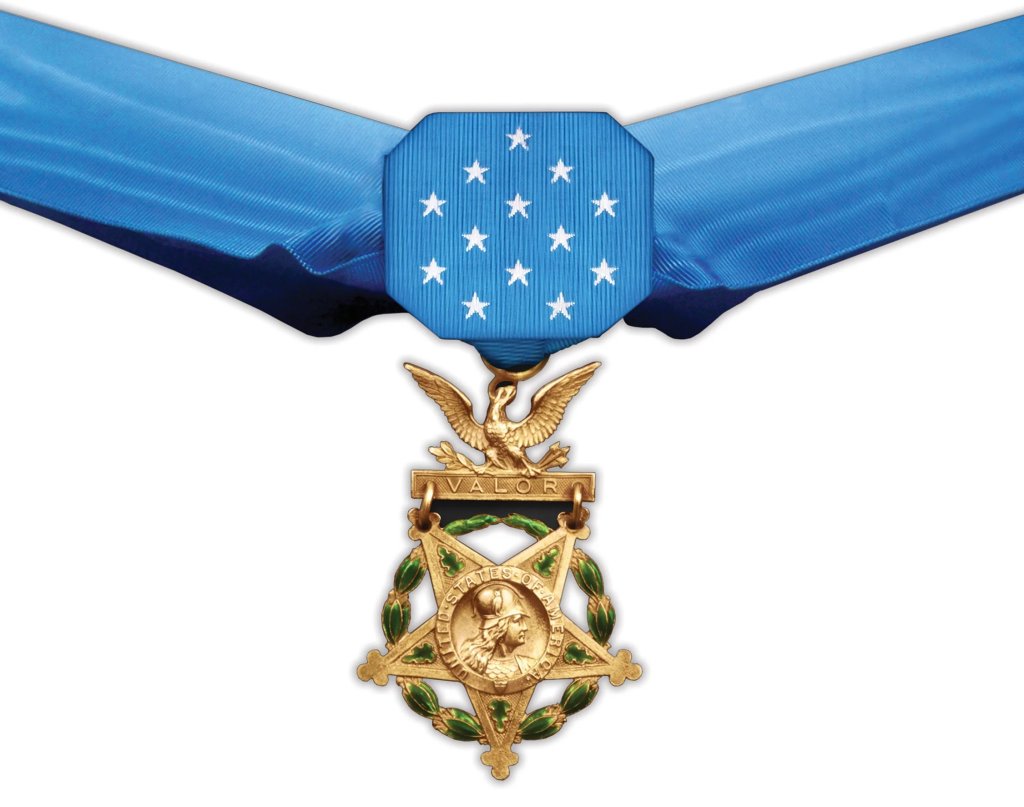
Medal of Honor: Sidney E. Manning – World War I – July 28, 1918
Overlooking the Ourcq River, enemy fire shattered an American platoon and struck down its leaders. Severely wounded, one corporal took command and kept fighting until nine wounds forced him from the field.
June 30, 2026

 Name: Sidney E. Manning
Rank: Corporal
Branch: U.S. Army
War: World War I
Unit: Company G, 167th Infantry Regiment, 42nd Division
Date of Action: July 28, 1918
Location: Near Breuvannes, France
Summary of Action
On 28 July 1918, during the Allied offensive along the Ourcq River in France, Corporal Sidney E. Manning served with Company G, 167th Infantry Regiment, 42nd Division.
As his unit attacked strongly fortified German positions overlooking the river, the platoon came under intense enemy fire. Early in the assault, both the platoon commander and the platoon sergeant became casualties.
With the leadership of the platoon suddenly lost, Manning immediately assumed command.
Although he had already been seriously wounded, he reorganized the surviving soldiers and continued leading the attack.
Advancing against well-defended enemy positions, he inspired the remaining members of the platoon to press forward despite heavy casualties.
The platoon originally numbered thirty-five men.
As the attack continued, Manning received additional wounds while leading the advance, yet he refused to stop.
Eventually, only seven men remained unwounded, but Manning succeeded in leading them onto the enemy position and securing a foothold on the objective.
After reaching the German defenses, he directed the consolidation of the captured ground while enemy forces assembled nearby for a counterattack.
Only fifty yards away, a large body of German soldiers threatened the newly won position.
Using his automatic rifle, Manning personally held off the enemy and protected his surviving men while the defensive line was established.
Although suffering from multiple wounds, he refused to seek shelter until his position had been fully connected with neighboring American units.
Only after the line had been secured did he finally drag himself to cover.
By the end of the battle, he had suffered nine wounds to various parts of his body.
Corporal Sidney E. Manning's extraordinary courage, leadership, and determination under impossible circumstances reflected the highest traditions of the United States Army.
Medal of Honor Citation
MANNING, SIDNEY E.
Rank and organization: Corporal, U.S. Army, Company G, 167th Infantry Regiment, 42nd Division.
Place and date: Near Breuvannes, France, 28 July 1918.
Entered service at: Flomaton, Alabama.
Born: 17 July 1892, Butler County, Alabama.
G.O. No.: 44, War Department, 1919.
Citation:
When his platoon commander and platoon sergeant had both become casualties soon after the beginning of an assault on strongly fortified heights overlooking the Ourcq River, Corporal Manning took command of his platoon, which was near the center of the attacking line.
Though himself severely wounded, he led forward the thirty-five men remaining in the platoon and finally succeeded in gaining a foothold on the enemy position, during which time he had received additional wounds and all but seven of his men had fallen.
Directing the consolidation of the position, he held off a large body of the enemy only fifty yards away by fire from his automatic rifle.
He declined to take cover until his line had been entirely consolidated with the line of the platoon on the front when he dragged himself to shelter, suffering from nine wounds in all parts of the body.