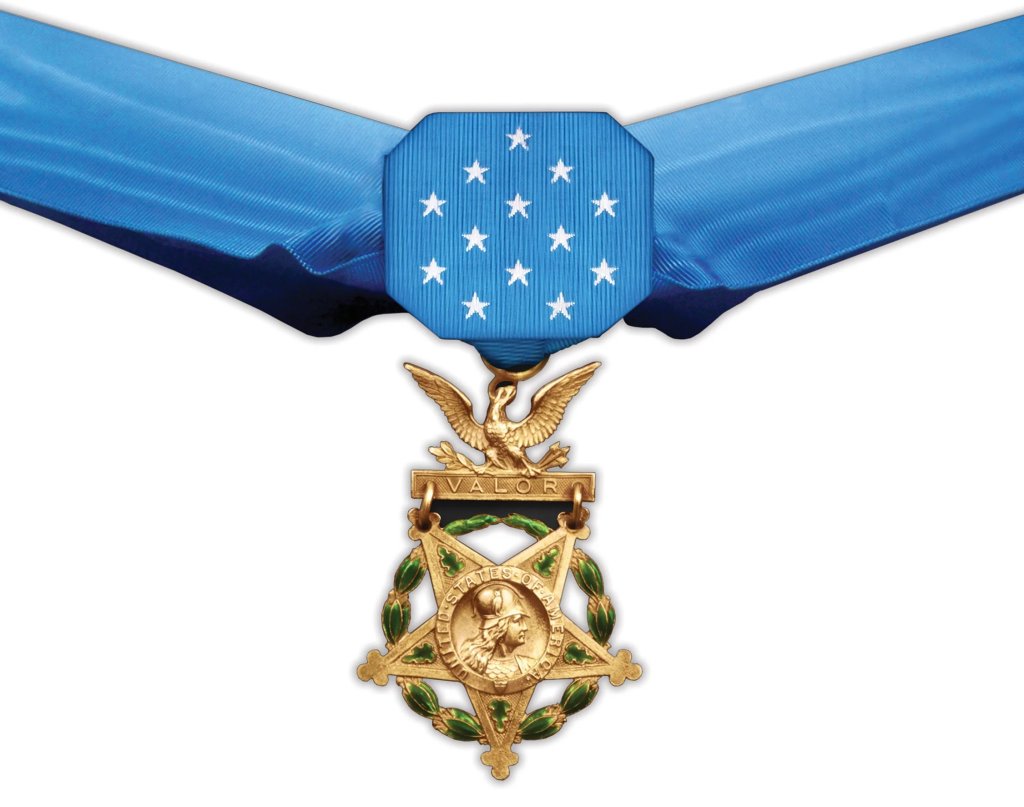
Medal of Honor: Ronald J. Shurer II – War on Terror – April 6, 2008
On Shok Valley’s steep slopes, one Special Forces medic climbed into enemy fire to save his wounded teammates. Under machine guns, snipers, and RPGs, he carried them down the mountain — then returned to the fight.
July 14, 2026

 Name: Ronald James Shurer II
Rank: Staff Sergeant
Branch: U.S. Army
War: War on Terror (Operation Enduring Freedom)
Unit: Operational Detachment Alpha 3336 (ODA-3336), 3rd Special Forces Group (Airborne), Special Operations Task Force-33, Combined Joint Special Operations Task Force-Afghanistan
Date of Action: April 6, 2008
Location: Shok Valley, Nuristan Province, Afghanistan
Summary of Action
On April 6, 2008, Staff Sergeant Ronald J. Shurer II was serving as the Senior Medical Sergeant for Operational Detachment Alpha 3336 during combat operations in Afghanistan's remote and mountainous Shok Valley.
Inserted by helicopter alongside Afghan commandos and fellow Green Berets, the assault force immediately began climbing a near-vertical mountainside toward a heavily defended enemy objective. Before reaching their destination, they came under devastating enemy fire from machine guns, snipers, and rocket-propelled grenades positioned high above their advance.
The lead element of the assault force, including the ground force commander, sustained multiple casualties and became pinned down on the mountainside.
Despite intense enemy fire, Staff Sergeant Shurer immediately moved to an injured soldier and rendered lifesaving medical treatment. Once that casualty had been stabilized, he learned that members of the lead element had suffered additional serious wounds.
Without hesitation, he fought his way up the mountainside through withering enemy fire to reach them.
Upon arriving at the lead element's position, Shurer treated and stabilized two more wounded soldiers before learning that two additional casualties remained exposed to enemy fire farther up the mountain.
As he moved toward one of the wounded men, the same sniper round that struck the casualty also impacted Shurer's helmet.
Ignoring how close he had come to being killed, he continued forward and treated the soldier's severely wounded arm.
Moments later, he again exposed himself to enemy fire to reach another wounded soldier whose lower leg had been nearly severed by a high-caliber sniper round. Working under continuous enemy fire, Shurer stabilized the catastrophic injury and prepared the casualty for evacuation.
With multiple wounded soldiers now scattered across the steep mountainside, Staff Sergeant Shurer undertook the dangerous task of evacuating them himself. Carrying and lowering wounded men down the sheer slopes, he repeatedly used his own body to shield them from enemy fire and debris created by danger-close air strikes called in against enemy positions surrounding them.
Upon reaching the base of the mountain, he established a casualty collection point and continued providing emergency medical care while enemy forces continued engaging friendly positions.
When the medical evacuation helicopter arrived, Staff Sergeant Shurer once again exposed himself to enemy fire while helping load the wounded aboard the aircraft.
Only after personally ensuring that every casualty had been safely evacuated did he turn his attention back to the battle.
Rather than seeking evacuation himself or remaining at the casualty collection point, Staff Sergeant Shurer regained control of his Afghan commando element, rejoined the fight, and continued leading troops and establishing security positions until the operation was complete.
Over the course of the battle, Staff Sergeant Ronald J. Shurer II repeatedly risked his own life to save others. His calm professionalism under fire, relentless courage, and complete disregard for his own safety were directly responsible for saving the lives of numerous wounded soldiers during one of the most difficult and heroic actions of the War on Terror.
Medal of Honor Citation
RONALD JAMES SHURER II
Rank and organization: Staff Sergeant, United States Army.
Unit: Operational Detachment Alpha 3336 (ODA-3336), 3rd Special Forces Group (Airborne), Special Operations Task Force-33, Combined Joint Special Operations Task Force-Afghanistan.
Place and date: Shok Valley, Nuristan Province, Afghanistan, April 6, 2008.
Citation:
Staff Sergeant Ronald J. Shurer II distinguished himself by acts of gallantry and intrepidity above and beyond the call of duty on April 6, 2008, while serving as a Senior Medical Sergeant, Special Forces Operational Detachment Alpha 3336, Special Operations Task Force-33, in support of Operation Enduring Freedom.
Staff Sergeant Shurer was part of an assault element inserted by helicopter into a location in Afghanistan. As the assault element moved up a near vertical mountain toward its objective, it was engaged by fierce enemy machine gun, sniper, and rocket-propelled grenade fire.
The lead portion of the assault element, which included the ground commander, sustained several casualties and became pinned down on the mountainside. Staff Sergeant Shurer and the rest of the trailing portion of the assault element were likewise engaged by enemy machine gun, sniper, and rocket-propelled grenade fire.
As the attack intensified, Staff Sergeant Shurer braved enemy fire to move to an injured Soldier and treat his wounds. Having stabilized the injured Soldier, Staff Sergeant Shurer then learned of the casualties among the lead element. Staff Sergeant Shurer fought his way up the mountainside, under intense enemy fire, to the lead element's location.
Upon reaching the lead element, he treated and stabilized two more Soldiers. Finishing those lifesaving efforts, Staff Sergeant Shurer noticed two additional severely wounded Soldiers under intense enemy fire. The bullet that had wounded one of these Soldiers had also impacted Staff Sergeant Shurer's helmet.
With complete disregard for his own life, Staff Sergeant Shurer again moved through enemy fire to treat and stabilize one Soldier's severely wounded arm. Shortly thereafter, Staff Sergeant Shurer continued to brave withering enemy fire to get to the other Soldier's location in order to treat his lower leg, which had been almost completely severed by a high-caliber sniper round.
After treating the Soldier, Staff Sergeant Shurer began to evacuate the wounded, carrying and lowering them down the sheer mountainside. While moving down the mountain, Staff Sergeant Shurer used his own body to shield the wounded from enemy fire and debris caused by danger-close air strikes.
Reaching the base of the mountain, Staff Sergeant Shurer set up a casualty collection point and continued to treat the wounded. With the arrival of the medical evacuation helicopter, Staff Sergeant Shurer, again under enemy fire, helped load the wounded into the helicopter.
Having ensured the safety of the wounded, Staff Sergeant Shurer then regained control of his commando squad and rejoined the fight. He continued to lead his troops and emplace security elements until it was time to move to the evacuation landing zone for the helicopter.
Staff Sergeant Shurer's actions are in keeping with the finest traditions of military service and reflect great credit upon himself, Combined Joint Special Operations Task Force-Afghanistan, Special Operations Command Central, and the United States Army.