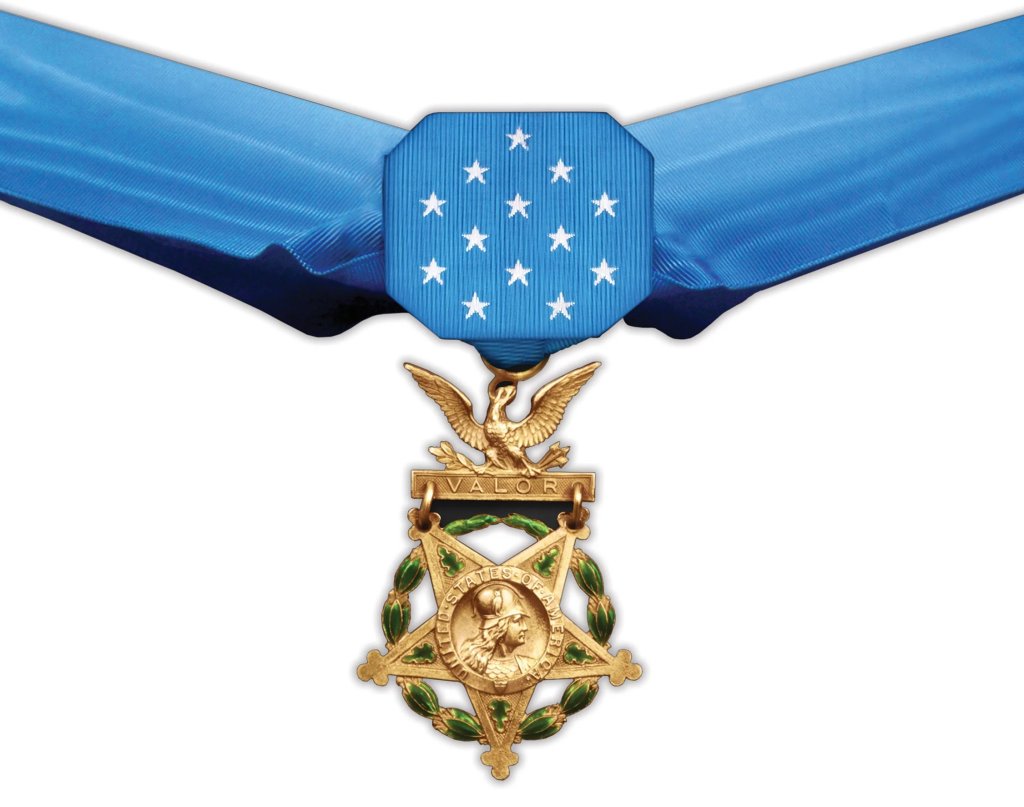
Medal of Honor: Ralph Puckett Jr. – Korean War – November 25-26, 1950
On a frozen Korean hilltop, one wounded Ranger officer ran through enemy fire again and again to expose enemy positions. Through the night, he directed the defense and ordered his Rangers to leave him behind — but they refused.
July 14, 2026

 Name: Ralph Puckett Jr.
Rank: First Lieutenant (Highest Rank: Colonel)
Branch: U.S. Army
War: Korean War
Unit: 8th Ranger Company, 8213th Army Unit, Eighth U.S. Army
Date of Action: November 25-26, 1950
Location: Hill 205, near Unsan, Korea
Summary of Action
On November 25, 1950, First Lieutenant Ralph Puckett Jr. led the 8th U.S. Army Ranger Company in an assault on Hill 205, a strategically important position near Unsan, Korea.
As his Rangers advanced during daylight, enemy machine guns, mortars, and small arms fire swept the attacking force. Determined to coordinate supporting fires, Puckett climbed aboard the nearest tank and deliberately exposed himself to enemy fire while directing the attack.
Once the assault began, one Ranger platoon became pinned down by enemy fire. Recognizing that his men could not destroy enemy positions they could not see, First Lieutenant Puckett made an extraordinary decision.
Three separate times, he intentionally ran across open ground in full view of the enemy to draw their fire.
His selfless actions allowed his Rangers to pinpoint the enemy's locations and destroy their positions, enabling the company to seize Hill 205.
The battle, however, had only begun.
Throughout the night, Chinese forces launched a series of determined counterattacks against the isolated Ranger position. Human wave assaults repeatedly surged up the hill as the Rangers fought desperately to hold their ground.
Over the course of four brutal hours, five battalion-sized enemy attacks crashed against the Ranger defenses.
During the first attack, First Lieutenant Puckett was wounded by grenade fragments. Refusing evacuation, he remained with his men and directed devastating artillery fire against the attacking enemy formations.
Moving from foxhole to foxhole despite his wounds, he distributed ammunition, checked the defensive perimeter, and inspired his Rangers through his calm leadership and complete disregard for his own safety.
Again and again, enemy attacks were repelled.
Finally, as a sixth assault began, the situation became critical. Supporting artillery fire was no longer available, and enemy forces threatened to overwhelm the position.
During the attack, two enemy mortar rounds landed directly in Puckett's foxhole, inflicting grievous wounds that left him unable to move.
Recognizing that Hill 205 could no longer be defended and unwilling to risk the lives of his men, First Lieutenant Puckett ordered his Rangers to withdraw and leave him behind.
The Rangers refused.
Ignoring both enemy fire and their commander's orders, they organized a rescue effort and carried him down the hill while continuing to fight off pursuing enemy forces.
Once safely at the base of Hill 205, Puckett immediately resumed directing artillery fire onto the now enemy-occupied summit, inflicting devastating losses upon the advancing Chinese troops.
For decades, Ralph Puckett's actions were recognized with the Distinguished Service Cross. In 2021, following a review of previously awarded valor decorations, his award was upgraded to the Medal of Honor.
His extraordinary leadership on Hill 205 exemplified the Ranger Creed long before it was formally written—never leaving a fallen comrade and never placing oneself above the mission or the lives of fellow soldiers.
Medal of Honor Citation
RALPH PUCKETT JR.
Rank and organization: First Lieutenant, United States Army.
Unit: 8th Ranger Company, 8213th Army Unit, Eighth U.S. Army.
Place and date: Hill 205, vicinity of Unsan, Korea, November 25-26, 1950.
Citation:
For conspicuous gallantry and intrepidity at the risk of his life above and beyond the call of duty:
First Lieutenant Ralph Puckett, Jr. distinguished himself by acts of gallantry and intrepidity above and beyond the call of duty, while serving as the Commander, 8th U.S. Army Ranger Company during the period of 25 November 1950 through 26 November 1950, in Korea.
As his unit commenced a daylight attack on Hill 205, the enemy directed mortar, machine gun, and small arms fire against the advancing force. To obtain supporting fire, First Lieutenant Puckett mounted the closest tank, exposing himself to the deadly enemy fire. Leaping from the tank, he shouted words of encouragement to his men and began to lead the Rangers in the attack.
Almost immediately, enemy fire threatened the success of the attack by pinning down one platoon. Leaving the safety of his position with full knowledge of the danger, First Lieutenant Puckett intentionally ran across an open area three times to draw enemy fire, thereby allowing the Rangers to locate and destroy the enemy positions and to seize Hill 205.
During the night, the enemy launched a counterattack that lasted four hours. Over the course of the counterattack, the Rangers were inspired and motivated by the extraordinary leadership and courageous example exhibited by First Lieutenant Puckett. As a result, five human wave attacks by a battalion strength enemy element were repulsed.
During the first attack, First Lieutenant Puckett was wounded by grenade fragments, but refused evacuation and continually directed artillery support that decimated attacking enemy formations, repeatedly abandoned positions of relative safety to make his way from foxhole to foxhole to check the company's perimeter, and distribute ammunition amongst the Rangers.
When the enemy launched a sixth attack, it became clear to First Lieutenant Puckett that the position was untenable due to the unavailability of supporting artillery fire. During this attack, two enemy mortar rounds landed in his foxhole, inflicting grievous wounds which limited his mobility.
Knowing his men were in a precarious situation, First Lieutenant Puckett commanded the Rangers to leave him behind and evacuate the area. Feeling a sense of duty to aid him, the Rangers refused the order and staged an effort to retrieve him from the foxhole while still under fire from the enemy.
Ultimately, the Rangers succeeded in retrieving First Lieutenant Puckett and they moved to the bottom of the hill, where First Lieutenant Puckett called for devastating artillery fire on the top of the enemy controlled hill.
First Lieutenant Puckett's extraordinary heroism and selflessness above and beyond the call of duty were in keeping with the highest traditions of military service and reflect great credit upon himself, his unit, and the United States Army.