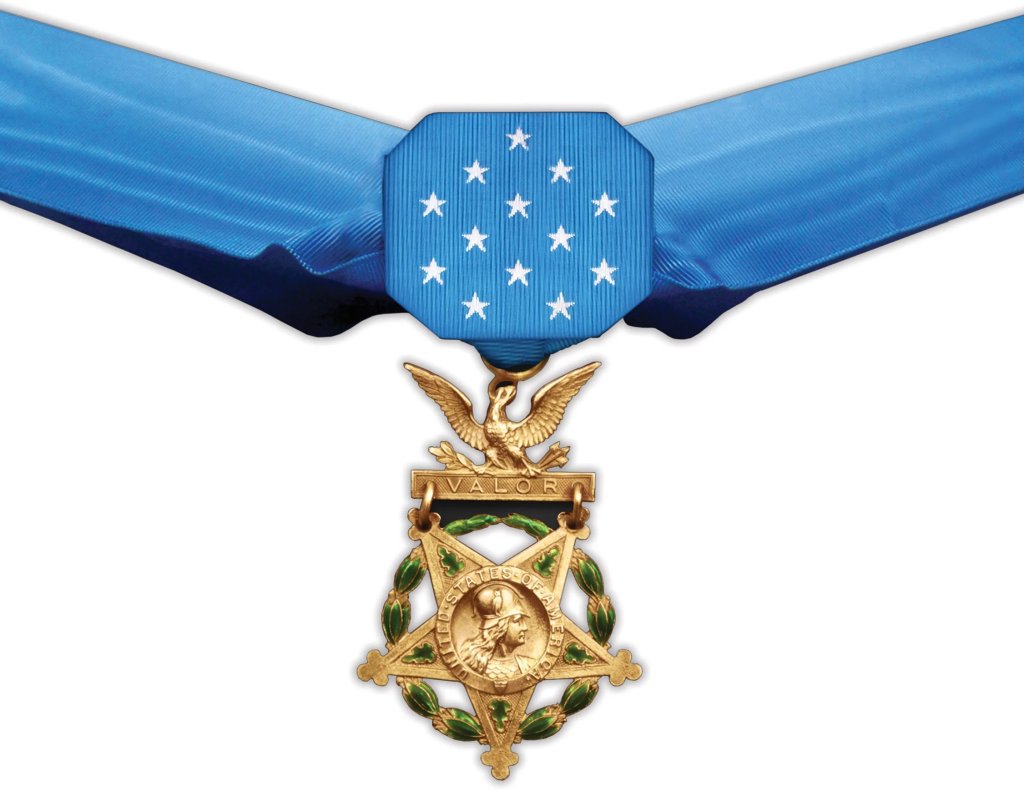
Medal of Honor: Leon R. Vance Jr. - World War II - June 5, 1944
High above the French coast before D-Day, a crippled American bomber lost three engines and its pilot. Gravely wounded, its commander refused to abandon the mission and somehow brought the dying aircraft home.
June 9, 2026

 Name: Leon R. Vance Jr.
Rank: Lieutenant Colonel
Branch: U.S. Army Air Forces
War: World War II
Unit: 489th Bombardment Group
Date of Action: June 5, 1944
Location: Over Wimereux, France
Summary of Action
On 5 June 1944, Lieutenant Colonel Leon R. Vance Jr. led a heavy bombardment group against heavily defended German coastal positions near Wimereux, France, as Allied forces prepared for the invasion of Normandy.
As his formation approached the target, intense German anti-aircraft fire repeatedly struck his B-24 Liberator. The barrage crippled the aircraft, killed the pilot, destroyed three of its four engines, and seriously wounded several crew members.
Among the wounded was Vance himself.
A shell fragment had nearly severed his right foot.
Despite the excruciating injury and the rapidly failing condition of the bomber, Vance refused to abandon the mission. Assisted by the radar operator, he applied a tourniquet to his mangled leg and remained focused on leading his formation.
With only one failing engine still operating, he successfully guided the group over its assigned target and ensured the bombs were released accurately.
Realizing the crippled aircraft was nearing stall speed and could no longer remain airborne, Vance struggled into position beside the copilot and took control.
Unable to use normal power, he feathered the last engine and placed the bomber into a carefully controlled glide, preserving enough airspeed to keep it flying.
Against extraordinary odds, he nursed the aircraft across the English Channel until the coast of England came into view.
Believing the crew could now safely parachute to safety, he ordered everyone to bail out.
Then he received a message indicating that one crew member might be too badly injured to jump.
Without hesitation, Vance chose to remain aboard and attempt an emergency ditching in the Channel to give that airman a chance to survive.
The situation was even more perilous because a 500-pound bomb remained hung in the bomb bay and could detonate on impact.
His own injuries made normal control nearly impossible. His damaged foot had become trapped behind the copilot's seat, preventing him from taking the seat himself.
Lying on the cockpit floor, using only the aircraft's control surfaces and looking out the side window for reference, Vance somehow executed a successful water landing.
When the aircraft struck the sea, it immediately began sinking, trapping him beneath the collapsed upper turret.
Only when an explosion tore through the wreckage was he blown free.
Clinging to floating debris until he could inflate his life vest, he searched for the crew member he believed remained aboard before eventually being rescued by an Air-Sea Rescue vessel approximately fifty minutes later.
His extraordinary flying skill, unwavering leadership, and willingness to sacrifice his own life for another embodied the highest traditions of the United States Army Air Forces.
Medal of Honor Citation
VANCE, LEON R., JR.
Rank and organization: Lieutenant Colonel, U.S. Army Air Corps, 489th Bombardment Group.
Place and date: Over Wimereux, France, 5 June 1944.
Entered service at: Garden City, N.Y.
Born: 11 August 1916, Enid, Okla.
G.O. No. 1, 4 January 1945.
Citation:
For conspicuous gallantry and intrepidity above and beyond the call of duty on 5 June 1944, when he led a Heavy Bombardment Group in an attack against defended enemy coastal positions in the vicinity of Wimereux, France. Approaching the target, his aircraft was hit repeatedly by antiaircraft fire which seriously crippled the ship, killed the pilot, and wounded several members of the crew, including Lt. Col. Vance, whose right foot was practically severed. In spite of his injury, and with three engines lost to the flak, he led his formation over the target, bombing it successfully. After applying a tourniquet to his leg with the aid of the radar operator, Lt. Col. Vance, realizing that the ship was approaching a stall altitude with the one remaining engine failing, struggled to a semi-upright position beside the copilot and took over control of the ship. Cutting the power and feathering the last engine he put the aircraft in a glide sufficiently steep to maintain his airspeed. Gradually losing altitude, he at last reached the English coast, whereupon he ordered all members of the crew to bail out as he knew they would all safely make land. But he received a message over the interphone system which led him to believe one of the crewmembers was unable to jump due to injuries; so he made the decision to ditch the ship in the Channel, thereby giving this man a chance for life. To add further to the danger of ditching the ship in his crippled condition, there was a 500-pound bomb hung up in the bomb bay. Unable to climb into the seat vacated by the copilot, since his foot, hanging on to his leg by a few tendons, had become lodged behind the copilot's seat, he nevertheless made a successful ditching while lying on the floor using only aileron and elevators for control and the side window of the cockpit for visual reference. On coming to rest in the water the aircraft commenced to sink rapidly with Lt. Col. Vance pinned in the cockpit by the upper turret which had crashed in during the landing. As it was settling beneath the waves an explosion occurred which threw Lt. Col. Vance clear of the wreckage. After clinging to a piece of floating wreckage until he could muster enough strength to inflate his life vest he began searching for the crewmember whom he believed to be aboard. Failing to find anyone he began swimming and was found approximately 50 minutes later by an Air-Sea Rescue craft. By his extraordinary flying skill and gallant leadership, despite his grave injury, Lt. Col. Vance led his formation to a successful bombing of the assigned target and returned the crew to a point where they could bail out with safety. His gallant and valorous decision to ditch the aircraft in order to give the crewmember he believed to be aboard a chance for life exemplifies the highest traditions of the U.S. Armed Forces.