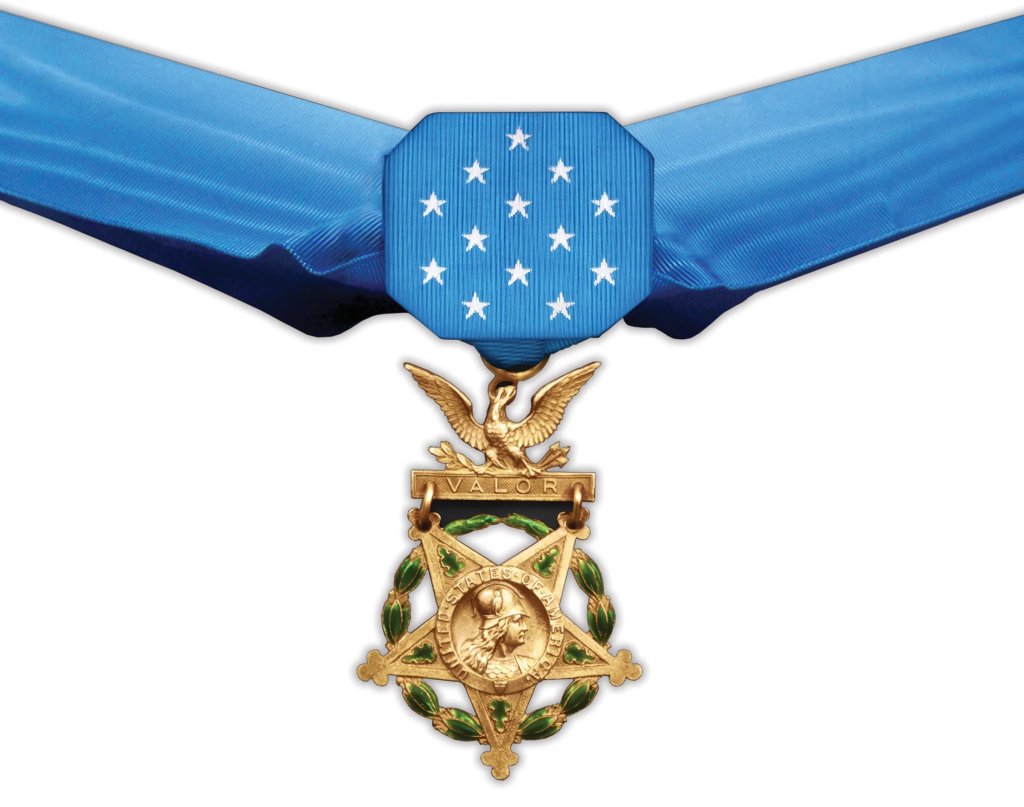
Medal of Honor: Larry L. Taylor – Vietnam War – June 18, 1968
Surrounded in the dark Vietnamese countryside, a four-man patrol was nearly out of options. With no rescue helicopter able to reach them, one Cobra pilot landed in the battlefield and carried them out on his rocket pods and skids.
July 15, 2026

 Name: Larry L. Taylor
Rank: First Lieutenant (Highest Rank: Captain)
Branch: U.S. Army
War: Vietnam War
Unit: Troop D (Air), 1st Squadron, 4th Cavalry, 1st Infantry Division
Date of Action: June 18, 1968
Location: Near Ap Go Cong, Bình Dương Province, Republic of Vietnam
Summary of Action
On the night of June 18, 1968, First Lieutenant Larry L. Taylor was serving as commander of a light fire team consisting of two AH-1G Cobra attack helicopters when an urgent call for help came over the radio.
A four-man long-range patrol operating near the village of Ap Go Cong had been discovered and was completely surrounded by a superior Viet Cong force. Darkness had fallen, enemy soldiers were closing in, and the patrol's ammunition supply was rapidly dwindling.
Taylor immediately launched toward the battle.
Upon arriving over the patrol's position, he found the situation even more desperate than anticipated. The four American soldiers were pinned down and surrounded on all sides. There were no safe landing zones for a conventional rescue helicopter, and enemy fire was steadily increasing.
Flying his Cobra at dangerously low altitude, Taylor called for artillery illumination rounds to light the battlefield and began making repeated attack runs against the enemy positions. Alongside his wingman, he unleashed rockets and mini-gun fire against enemy forces surrounding the patrol.
For approximately forty-five minutes, both Cobra gunships repeatedly conducted danger-close attack runs while taking heavy ground fire.
When enemy resistance intensified from the nearby village of Ap Go Cong, Taylor improvised another solution. He requested lower-altitude illumination artillery rounds directly over the village, causing the burning flares to ignite enemy positions and expose their locations.
Despite their relentless attacks, the enemy continued pressing toward the isolated Americans.
Both Cobra helicopters were nearly out of ammunition.
Taylor briefly left the area to scout a possible ground evacuation route for the patrol but quickly determined that enemy fire made such an escape impossible.
Returning overhead, he continued circling the patrol's position at low altitude. Even after expending most of his ammunition, he used his helicopter's searchlight and simulated attack runs to distract the enemy and buy precious time.
Soon, another problem emerged.
His Cobra was running low on fuel.
The patrol team was nearly out of ammunition.
Time had simply run out.
At that moment, First Lieutenant Taylor made a decision that had never before been attempted in combat.
The AH-1G Cobra was designed as a two-man attack helicopter. It carried no passenger seats and was never intended to perform troop extractions. Yet Taylor realized it represented the only chance the four soldiers had of surviving the night.
After coordinating with his wingman, Taylor ordered him to fire his remaining mini-gun ammunition into enemy positions covering the patrol's eastern flank. Taylor then fired his own remaining rounds to open a narrow avenue of movement.
He instructed the patrol team to move approximately one hundred yards toward a makeshift extraction point.
Still under enemy fire, First Lieutenant Taylor landed his Cobra gunship in the darkness.
He ordered the four soldiers to climb aboard wherever they could.
With no passenger compartment available, the men secured themselves to the helicopter's rocket pods and skids—literally riding on the outside of the aircraft.
With four soldiers clinging to an attack helicopter never designed to carry them, First Lieutenant Taylor lifted off and flew them to the nearest friendly position.
Every member of the patrol survived.
For more than five decades, the rescue remained one of the Vietnam War's most extraordinary aviation stories. Initially awarded the Silver Star, First Lieutenant Taylor's actions were finally recognized with the Medal of Honor in 2023.
His daring rescue demonstrated not only exceptional flying skill and courage, but also an unwavering refusal to leave fellow soldiers behind—even if it required rewriting what was thought possible on the battlefield.
Medal of Honor Citation
LARRY L. TAYLOR
Rank and organization: First Lieutenant (Highest Rank: Captain), United States Army.
Unit: Troop D (Air), 1st Squadron, 4th Cavalry, 1st Infantry Division.
Place and date: Near the village of Ap Go Cong, Bình Dương Province, Republic of Vietnam, June 18, 1968.
Citation:
First Lieutenant Larry L. Taylor distinguished himself by acts of gallantry and intrepidity above and beyond the call of duty while serving with Troop D (Air), 1st Squadron, 4th Cavalry, 1st Infantry Division, on June 18, 1968, near the village of Ap Go Cong, Republic of Vietnam.
On this date, First Lieutenant Taylor commanded a light fire team of two Cobra helicopter gunships scrambled on a nighttime mission in response to an urgent call for aerial fire support from a four-man long range patrol team. Upon arrival, First Lieutenant Taylor found the patrol team surrounded and heavily engaged by a larger Viet Cong force.
He immediately requested illumination rounds from supporting artillery to assist with identifying the enemy positions. Despite intense enemy ground fire, he flew at a perilously low altitude placing a devastating volume of aerial rocket and machine gun fire on the enemy forces encircling the friendly patrol.
For approximately 45 minutes, First Lieutenant Taylor and his wingman continued to make low-level danger-close attack runs on the surrounding enemy positions.
When enemy fire increased from the village of Ap Go Cong, he requested artillery rounds with lower illumination altitudes be fired on that portion of the village so that the burning rounds ignited the enemy positions.
With both Cobra gunships nearly out of ammunition and the enemy still closing in on the patrol team, he flew the patrol team's potential ground evacuation route, finding it unviable based on the heavy enemy fire encountered.
Returning to the patrol team's location, he continued to circle it at a low level under intense enemy fire, employing his search light to make fake gun runs on the enemy positions to distract them from the patrol team.
Running low on fuel and with the patrol team nearly out of ammunition, First Lieutenant Taylor decided to extract the team with his two-man Cobra helicopter gunship, a feat never before accomplished.
He directed his wingman to fire their remaining mini-gun rounds on the patrol team's east flank. First Lieutenant Taylor then fired his own last mini-gun rounds on the enemy positions, opening an avenue of movement to the east for the patrol team.
He directed the patrol team to move 100 yards toward the extraction point where First Lieutenant Taylor, still under enemy fire, landed his helicopter and instructed the patrol team to climb aboard anywhere they could.
With the four-man long-range patrol team seated on rocket-pods and skids, he evacuated them to the nearest friendly location, undoubtedly saving their lives.
First Lieutenant Taylor's conspicuous gallantry, his profound concern for his fellow soldiers, and his intrepidity at the risk of his life above and beyond the call of duty are in keeping with the highest traditions of military service and reflect great credit upon himself and the United States Army.
The ghosts of the battlefield are counting on us to remember them. Help preserve their stories.