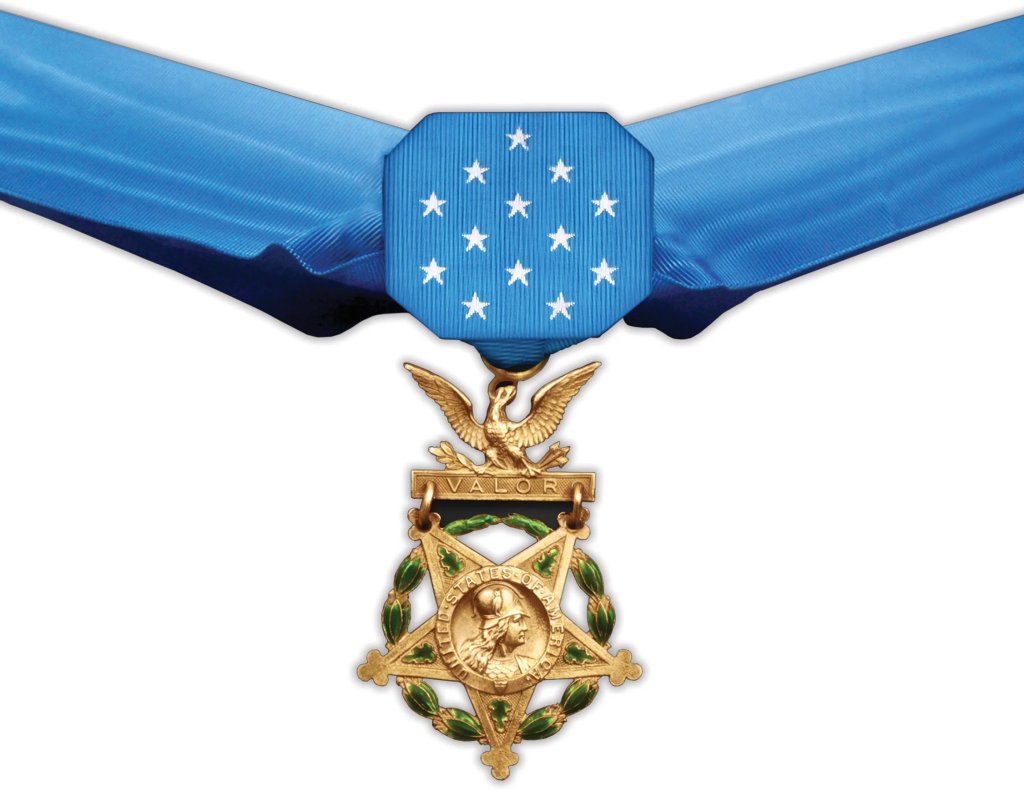
Medal of Honor: Joe P. Martinez - World War II - May 26, 1943
High in the frozen mountains of Attu, American attacks stalled under Japanese machine-gun and mortar fire. One BAR rifleman rose from the snow and charged uphill, inspiring the assault that broke the enemy stronghold.
May 26, 2026

 Name: Joe P. Martinez
Rank: Private
Branch: U.S. Army
War: World War II
Unit: Company K, 32d Infantry Regiment, 7th Infantry Division
Date of Action: May 26, 1943
Location: Attu, Aleutian Islands
Summary of Action
On 26 May 1943, Private Joe P. Martinez displayed extraordinary heroism during the brutal Battle of Attu in the Aleutian Islands.
American forces had spent days attempting to seize a heavily defended Japanese position located high in the snow-covered mountains between East Arm Holtz Bay and Chichagof Harbor.
Repeated assaults had failed against the entrenched enemy defenses.
A reinforced battalion launched another coordinated attack in an effort to break through the Japanese stronghold.
Although the assault initially gained ground, the attack soon stalled under devastating machine-gun, rifle, and mortar fire.
At the critical moment, Martinez, serving as an automatic rifleman, suddenly rose from cover and continued advancing directly into the enemy fire.
As bullets and mortar rounds tore across the mountainside, he repeatedly stopped to encourage the other soldiers to continue climbing with him.
Inspired by his courage, the attack resumed.
After an exhausting climb through deep snow and steep terrain, Martinez attacked enemy positions with his Browning Automatic Rifle and hand grenades, destroying part of the Japanese defensive line and helping clear the way for the advancing Americans.
Ahead still stood the main Holtz-Chichagof Pass, towering another 150 feet above the battlefield.
The narrow approach was choked with snow and completely dominated by enemy fire from trenches and rocky ridgelines.
Knowing the danger, Martinez again led the advance.
Climbing through the exposed defile beneath constant enemy fire, he personally silenced several Japanese trench positions with accurate BAR fire.
Refusing to stop, he fought his way all the way to the crest of the pass itself.
There, just beneath the razor-sharp ridgeline, Martinez encountered a final enemy trench occupied by Japanese defenders.
As he fired directly into the position, he was mortally wounded.
His fearless assault helped secure the pass, a key objective whose capture played a major role in ending organized Japanese resistance on Attu Island.
Medal of Honor Citation
MARTINEZ, JOE P.