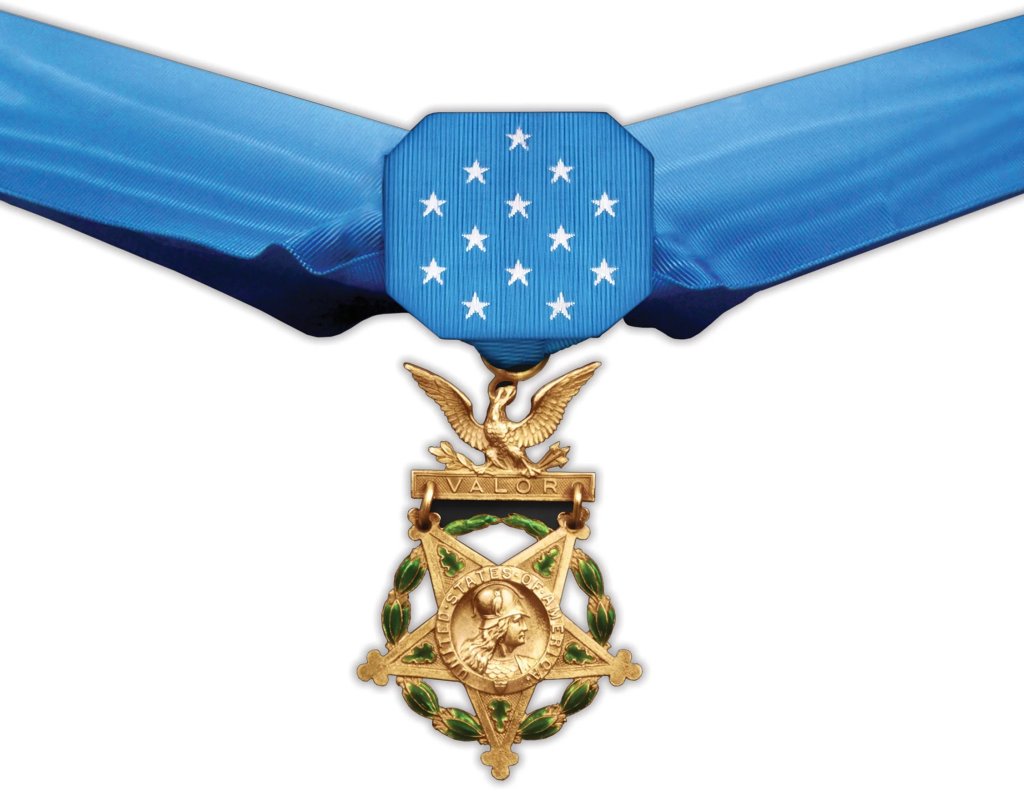
Medal of Honor: Garlin M. Conner – World War II – January 24, 1945
Surrounded by German infantry and armor, one American officer crawled into a ditch just yards from his own lines. For three hours he called in artillery — then ordered the guns onto his own position as the enemy closed in.
July 14, 2026

 Name: Garlin Murl Conner
Rank: First Lieutenant
Branch: U.S. Army
War: World War II
Unit: Company K, 3rd Battalion, 7th Infantry Regiment, 3rd Infantry Division
Date of Action: January 24, 1945
Location: Near Houssen, France
Summary of Action
On the morning of January 24, 1945, German forces launched a massive counterattack against the 7th Infantry Regiment near the town of Houssen, France. More than 600 German infantrymen, supported by six Mark VI Tiger tanks and tank destroyers, threatened to overwhelm the American battalion's position.
First Lieutenant Garlin M. Conner had only recently returned to his unit after recovering from wounds sustained during earlier combat. Serving as the Battalion Intelligence Officer at the command post, he immediately understood that if the German assault broke through, the consequences would be catastrophic.
Without hesitation, Conner volunteered to move forward through the heart of the enemy attack to direct artillery fire against the advancing Germans.
Carrying a field telephone line, he ran more than four hundred yards through exploding artillery shells and flying shrapnel while unrolling communication wire behind him. Enemy artillery blasted trees apart along his route as he pushed toward the front lines.
Upon reaching American positions, Conner moved even farther forward.
Finding only a shallow drainage ditch approximately thirty yards in front of friendly forces, he threw himself into the minimal cover and began directing artillery fire against the advancing enemy.
Machine-gun rounds and rifle fire struck all around him as he calmly adjusted artillery missions with devastating precision.
For three continuous hours, Conner remained alone in his exposed position.
German infantry repeatedly attempted to overrun the American defenses and at one point advanced to within only five yards of his location. Despite being virtually surrounded and fully aware that capture or death was imminent, he refused to withdraw.
As the enemy regrouped for what appeared to be a final assault, Lieutenant Conner made an extraordinary decision.
Determined to stop the attack regardless of the cost, he ordered American artillery batteries to fire directly upon his own position.
Shells exploded only feet away from him as he continued to adjust the barrage while German soldiers attempted to swarm his location.
Ignoring both enemy fire and the devastating effects of friendly artillery raining down around him, Conner remained at his post until the German assault finally collapsed.
His actions shattered the enemy attack, killing approximately fifty German soldiers and wounding an estimated one hundred more. More importantly, his willingness to sacrifice himself prevented what would likely have been devastating casualties among the American defenders.
By placing himself alone between an entire German counterattack and his fellow soldiers, First Lieutenant Garlin M. Conner demonstrated one of the most remarkable acts of battlefield courage of the Second World War.
Medal of Honor Citation
GARLIN MURL CONNER
Rank and organization: First Lieutenant, United States Army.
Unit: Company K, 3rd Battalion, 7th Infantry Regiment, 3rd Infantry Division.
Place and date: Near Houssen, France, January 24, 1945.
Citation:
Garlin M. Conner distinguished himself by acts of gallantry and intrepidity while serving with Company K, 3rd Battalion, 7th Infantry Regiment, 3rd Infantry Division.
On the morning of January 24, 1945, near the town of Houssen, France, German forces ferociously counterattacked the front left flank of the 7th Infantry Regiment with 600 infantry troops, six Mark VI tanks, and tank destroyers.
Lieutenant Conner, having recently returned to his unit after recovering from a wound received in an earlier battle, was working as the Intelligence Officer in the 3rd Battalion Command Post at the time of the attack.
Understanding the devastating effect that the advancing enemy armor could have on the Battalion, Lieutenant Conner immediately volunteered to run straight into the heart of the enemy assault to get to a position from which he could direct friendly artillery on the advancing enemy forces.
With complete disregard for his own safety, Lieutenant Conner maneuvered 400 yards through enemy artillery fire that destroyed trees in his path and rained shrapnel all around him while unrolling telephone wire needed to communicate with the Battalion command post.
Upon reaching the Battalion's front line, he continued to move forward under the enemy assault to a position 30 yards in front of the defending United States forces, where he plunged into a shallow ditch that provided minimal protection from the advancing enemy's heavy machine-gun and small-arms fire.
With rounds impacting all around him, Lieutenant Conner calmly directed multiple fire missions, adjusting round after round of artillery from his prone position until the enemy was forced to halt its advance and seek cover behind a nearby dike.
For three hours, Lieutenant Conner remained in this compromised position, enduring the repeated onslaught of German infantry which, at one point, advanced to within five yards of his position.
As German infantry regrouped and began to mass in an overwhelming assault, Lieutenant Conner ordered friendly artillery to concentrate directly on his own position, having resolved to die if necessary to destroy the enemy advance.
Ignoring the friendly artillery shells blanketing his position and exploding mere feet from him, Lieutenant Conner continued to direct artillery fire on the enemy assault swarming around him until the German attack was finally broken.
By his heroism and disregard for his own life, Lieutenant Conner stopped the enemy advance. The artillery he expertly directed, while under constant enemy fire, killed approximately fifty German soldiers and wounded an estimated one hundred more, preventing what would undoubtedly have been heavy friendly casualties.
His actions are in keeping with the highest traditions of military service and reflect great credit upon himself, the 3rd Infantry Division, and the United States Army.