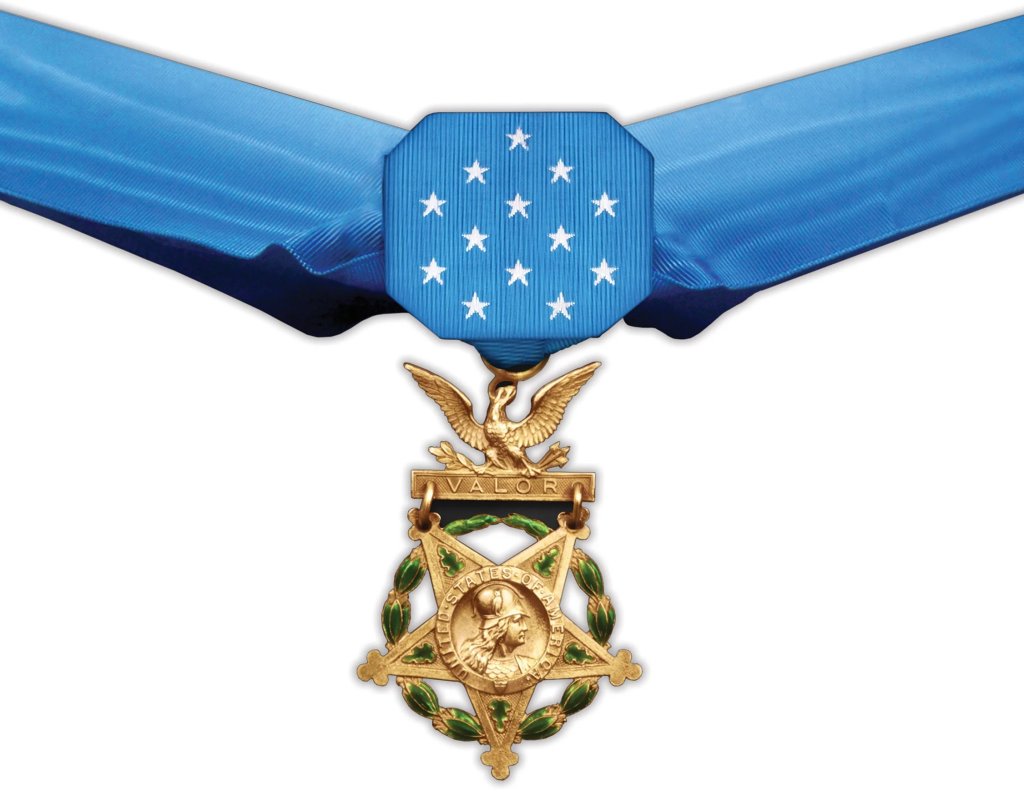
Medal of Honor: Dwight W. Birdwell – Vietnam War – January 31, 1968
During Tet, an American armored column drove into a massive ambush near Tan Son Nhut. Wounded again and again, one cavalryman kept fighting from a crippled tank, finding weapon after weapon until the attack was turned back.
July 15, 2026

 Name: Dwight W. Birdwell
Rank: Specialist Five
Branch: U.S. Army
War: Vietnam War
Unit: Troop C, 3rd Squadron, 4th Cavalry, 25th Infantry Division
Date of Action: January 31, 1968
Location: Tan Son Nhut Air Base, Republic of Vietnam
Summary of Action
On January 31, 1968, as North Vietnamese and Viet Cong forces launched the Tet Offensive across South Vietnam, Troop C, 3rd Squadron, 4th Cavalry was ordered to move south and reinforce the defenses of Tan Son Nhut Air Base near Saigon.
As the armored column approached the western gate of the airfield, it suddenly came under intense enemy fire from concealed positions. Unbeknownst to the American soldiers, they had driven directly into a well-prepared ambush by an enemy force numbering approximately three battalions.
The lead tank was struck by a rocket-propelled grenade and disabled, blocking the road and trapping the column under heavy fire from both sides.
Specialist Five Dwight Birdwell immediately sprang into action.
Seeing that his tank commander had been wounded, Birdwell exposed himself to enemy fire to pull him from the vehicle and move him to safety. Without hesitation, he climbed into the tank commander's position and took control of the fight.
Standing waist-high in the open hatch of the tank and fully exposed to enemy machine-gun and rocket fire, Birdwell began firing the tank's .50 caliber machine gun and directing the devastating fire of the 90mm main gun against enemy positions.
Despite overwhelming enemy numbers, his fire helped prevent the column from being overrun.
When the tank exhausted its supply of 90mm ammunition, Birdwell simply continued firing the .50 caliber machine gun until it overheated and became unusable.
Refusing to abandon his position, he switched to his M-16 rifle and continued engaging enemy forces, often exposing his entire body to obtain better firing angles.
During the battle, a U.S. helicopter crashed nearby under enemy fire. Rather than remain in the relative protection of his tank, Birdwell dismounted and ran through the battlefield to the wreckage. There, he recovered two M-60 machine guns and additional ammunition before returning to the fight.
After providing one machine gun to another soldier, he climbed back onto his tank and resumed firing at the enemy with the second M-60.
Only when enemy fire struck and disabled the machine gun itself was Birdwell finally forced to seek another means of fighting.
By this point, he had suffered multiple gunshot and fragmentation wounds to his face, neck, chest, and arms. Despite his injuries, he refused medical evacuation.
Instead, he gathered fellow soldiers and led them forward to establish a defensive position near a large tree at the head of the armored column. From there, Birdwell and his comrades fought with rifles, grenades, and whatever ammunition they could salvage from disabled vehicles.
Even after the enemy assault began to weaken, Birdwell continued moving through the battlefield collecting ammunition and helping wounded soldiers reach safer positions.
His courage, leadership, and refusal to quit inspired those around him during one of the fiercest battles fought on the first day of the Tet Offensive.
For his actions, Dwight W. Birdwell was originally awarded the Distinguished Service Cross. In 2022, following a review of valor awards presented to minority servicemen, his decoration was upgraded to the Medal of Honor.
A citizen of the Cherokee Nation and one of the few Native American Medal of Honor recipients from the Vietnam War, Specialist Five Dwight Birdwell embodied the fighting spirit of the American cavalryman—remaining in the fight until there were simply no weapons left to fire and no wounded left to help.
Medal of Honor Citation
DWIGHT W. BIRDWELL
Rank and organization: Specialist Five, United States Army.
Unit: Troop C, 3rd Squadron, 4th Cavalry, 25th Infantry Division.
Place and date: Tan Son Nhut Air Base, Republic of Vietnam, January 31, 1968.
Citation:
Specialist Five Dwight W. Birdwell distinguished himself by acts of gallantry and intrepidity above and beyond the call of duty while serving with C Troop, 3d Squadron, 4th Cavalry, 25th Infantry Division in the Republic of Vietnam on 31 January, 1968.
On this date, C Troop was ordered to move south to help repel an enemy attack on Tan Son Nhut Airbase. As the C Troop column of tanks and armored personnel carriers approached the west gate of Tan Son Nhut Airbase, it came under intense enemy fire from a building to its right. Unbeknown to C Troop, it had driven directly into an enemy force consisting of three battalions.
The column tried to push through the initial attack but the lead tank, crippled by a rocket-propelled grenade explosion, was blocking the way forward. C Troop immediately came under heavy enemy fire from both sides of the road.
Specialist Five Birdwell, upon seeing that his tank commander was wounded by enemy fire, immediately went to his aid. Under intense enemy fire, he lowered the injured tank commander to the ground and moved him to safety.
Specialist Five Birdwell then, with complete disregard for his own safety, mounted the tank and assumed the tank commander's position. Standing in the tank commander's hatch with the upper half of his body exposed to heavy enemy fire, Specialist Five Birdwell used the tank's .50 caliber machine gun and 90mm main gun to suppress the enemy attack.
With the ammunition for the 90mm main gun exhausted, he continued to fire the .50 caliber machine gun until it overheated. At this point, Specialist Five Birdwell, rather than abandoning his position, continued to engage the enemy with his M-16 rifle, sometimes exposing his entire body to enemy fire in order to engage the enemy from a better vantage point.
When a U.S. helicopter crashed nearby, Specialist Five Birdwell, under withering enemy fire, dismounted and moved to the helicopter where he retrieved two M-60 machine guns and ammunition. After giving one M-60 and ammunition to a fellow soldier, he remounted his tank and used the other M-60 to again engage the enemy.
Specialist Five Birdwell continued to engage the enemy with complete disregard for his own safety until the M-60 he was firing was hit by enemy fire.
Specialist Five Birdwell, now wounded in the face, neck, chest, and arms, dismounted the tank but refused to be medically evacuated. Instead, Specialist Five Birdwell, under enemy fire, rallied fellow soldiers to advance toward the front of the armored column where they set up a defensive position by a large tree.
From this position, he and the other soldiers engaged the enemy with M-16 fire and grenades. As the enemy fire lessened, Specialist Five Birdwell gathered ammunition from disabled vehicles and helped wounded soldiers move to safer positions.
His leadership and tenacity under fire inspired the other C Troop soldiers to continue fighting against the superior enemy force, and directly contributed to the enemy's ultimate defeat.
Specialist Five Dwight W. Birdwell's extraordinary heroism and selflessness above and beyond the call of duty were in keeping with the highest traditions of military service and reflect great credit upon himself, his unit, and the United States Army.