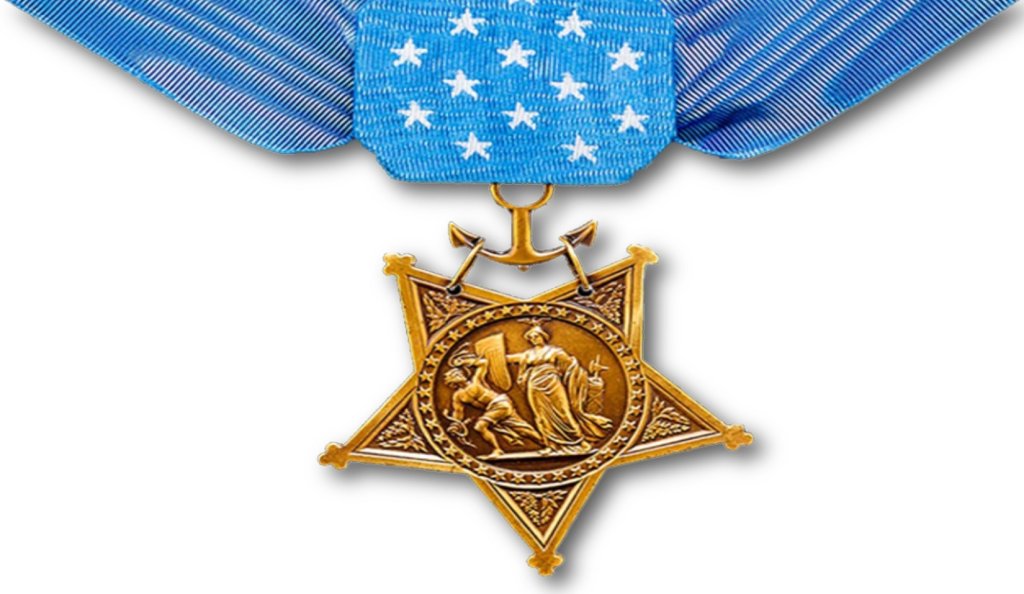
Medal of Honor: Britt K. Slabinski – War on Terror – March 4, 2002
On a 10,000-foot Afghan mountain, a SEAL reconnaissance mission became a desperate fight for survival. Through enemy fire, deep snow, and fourteen hours of combat, one SEAL leader fought to save his team and bring them home.
July 14, 2026

 Name: Britt Kelly Slabinski
Rank: Senior Chief Special Warfare Operator (Highest Rank: Command Master Chief)
Branch: U.S. Navy
War: War on Terror (Operation Enduring Freedom)
Unit: U.S. Navy SEALs, Joint Task Force
Date of Action: March 4, 2002
Location: Takur Ghar, Afghanistan
Summary of Action
During the early morning hours of March 4, 2002, Senior Chief Britt K. Slabinski was leading a Navy SEAL reconnaissance team assigned to establish an observation post atop Takur Ghar, a snow-covered mountain rising more than 10,000 feet above eastern Afghanistan.
As their helicopter approached the summit, it suddenly came under intense enemy fire from previously undetected positions armed with rocket-propelled grenades and small arms. The aircraft was heavily damaged, violently lurched, and one of Slabinski's teammates was thrown from the helicopter onto the mountain before the pilots were forced to crash land in the valley below.
Without hesitation, Slabinski immediately reorganized his remaining team members and coordinated supporting assets to return to the mountain and rescue their stranded teammate.
Upon reinsertion, his team once again came under devastating enemy fire from three separate directions. As one of his teammates began moving uphill toward an enemy bunker, Slabinski charged directly into the enemy fire to join him.
Together, they assaulted and cleared the first enemy fighting position in close-quarters combat.
Moments later, a second fortified bunker only twenty meters away unleashed a torrent of machine-gun fire against the SEALs. Despite the deadly barrage, Slabinski repeatedly exposed himself to enemy fire while personally engaging the bunker and directing his team's fires during the fierce firefight.
The battle quickly became one of the most intense close-range engagements of Operation Enduring Freedom. Friendly forces were so close to enemy positions that air support could not initially be employed. As members of his team became casualties and enemy forces threatened to overwhelm their position, Slabinski maneuvered his men to more defensible ground and coordinated air strikes dangerously close to their location while calling for reinforcements.
As daylight broke over Takur Ghar, enemy mortar fire continued to rain down upon the SEALs, forcing them farther down the steep mountainside.
Despite the freezing temperatures, deep snow, and constant enemy fire, Slabinski carried a seriously wounded teammate across the rugged terrain while simultaneously coordinating supporting fires against enemy forces positioned on the surrounding ridges.
For the next fourteen hours, he remained in the fight.
He stabilized wounded teammates, directed supporting fires, maintained command of his team, and continued fighting until reinforcements secured the mountain and the surviving members of his team were finally extracted.
The Battle of Takur Ghar—later immortalized as Roberts Ridge—became one of the defining battles of the early War on Terror. Senior Chief Britt K. Slabinski's extraordinary leadership and unwavering devotion to his teammates under the most extreme circumstances embodied the highest traditions of the United States Naval Service.
Medal of Honor Citation
BRITT KELLY SLABINSKI
Rank and organization: Senior Chief Special Warfare Operator, United States Navy.
Unit: U.S. Navy SEALs, Joint Task Force.
Place and date: Takur Ghar, Afghanistan, March 4, 2002.
Citation:
For conspicuous gallantry and intrepidity at the risk of his life above and beyond the call of duty while assigned to a Joint Task Force in support of Operation ENDURING FREEDOM.
In the early morning of 4 March 2002, Senior Chief Special Warfare Operator Slabinski led a reconnaissance team to its assigned area atop a 10,000-foot snow-covered mountain. Their insertion helicopter was suddenly riddled with rocket-propelled grenades and small arms fire from previously undetected enemy positions. The crippled helicopter lurched violently and ejected one teammate onto the mountain before the pilots were forced to crash land in the valley far below.
Senior Chief Slabinski boldly rallied his five remaining team members and marshalled supporting assets for an assault to rescue their stranded teammate.
During reinsertion the team came under fire from three directions, and one teammate started moving uphill toward an enemy strongpoint. Without regard for his own safety, Senior Chief Slabinski charged directly toward enemy fire to join his teammate. Together, they fearlessly assaulted and cleared the first bunker they encountered.
The enemy then unleashed a hail of machine-gun fire from a second hardened position only twenty meters away. Senior Chief Slabinski repeatedly exposed himself to deadly fire to personally engage the second enemy bunker and orient his team's fires in the furious, close-quarters firefight.
Proximity made air support impossible, and after several teammates became casualties, the situation became untenable. Senior Chief Slabinski maneuvered his team to a more defensible position, directed air strikes in very close proximity to his team's position, and requested reinforcements.
As daylight approached, accurate enemy mortar fire forced the team further down the sheer mountainside. Senior Chief Slabinski carried a seriously wounded teammate through deep snow and led a difficult trek across precipitous terrain while calling in fire on the enemy, which was engaging the team from the surrounding ridges.
Throughout the next fourteen hours, Senior Chief Slabinski stabilized the casualties and continued the fight against the enemy until the hill was secured and his team was extracted.
By his undaunted courage, bold initiative, leadership, and devotion to duty, Senior Chief Slabinski reflected great credit upon himself and upheld the highest traditions of the United States Naval Service.