Yeiki Kobashigawa: The Quiet Leader of the 100th
Yeiki Kobashigawa went from the sugar fields of Hawaii to the battlefields of Europe, where his leadership with the 100th Infantry Battalion earned a battlefield commission and, decades later, the Medal of Honor.
August 16, 2026

 Yeiki Kobashigawa was born on September 28, 1917, in the Hilo area of Hawaii's Big Island, the son of Japanese immigrants Shintsu and Kame Kobashigawa. When he was still young, the family moved to Waianae on Oahu, where his father worked as a farmer and Yeiki grew up with eight brothers and sisters. His childhood was shaped less by comfort than by responsibility. When his father became ill, Yeiki left school while still very young to help support the family, taking work connected with the sugar plantation. He developed mechanical skills, worked hard, and found one of his few escapes on the baseball diamond, where he became known as a talented player and eventually an outstanding fastball pitcher. Long before anyone associated his name with medals or battlefield heroism, Kobashigawa was simply a young man trying to help keep a large family going.
In November 1941, Kobashigawa was drafted into the United States Army and assigned to the 298th Infantry Regiment of the Hawaii National Guard. His service therefore began before the United States entered World War II. Only weeks later, on December 7, Kobashigawa was home on leave and preparing for a baseball game when the alarms began sounding across Oahu. Japan was attacking Pearl Harbor. He immediately found transportation back to Schofield Barracks, expecting to help defend the island. Instead, after arriving at his post, his rifle was taken from him. The American soldier who had rushed back to duty during an enemy attack suddenly found his own loyalty questioned because his parents had been born in Japan.
The experience was shared by thousands of Nisei, second-generation Japanese Americans who found themselves viewed with suspicion after Pearl Harbor. Japanese American soldiers already serving in Hawaii were removed from their integrated units and concentrated into what became the Hawaiian Provisional Infantry Battalion. In June 1942, more than 1,400 of those men were shipped to the mainland and redesignated the 100th Infantry Battalion (Separate). Kobashigawa became a member of Company B. The word “Separate” reflected the unit's unusual position: it had no parent regiment, and its soldiers were being watched closely while the government decided how Americans of Japanese ancestry would be employed in the war.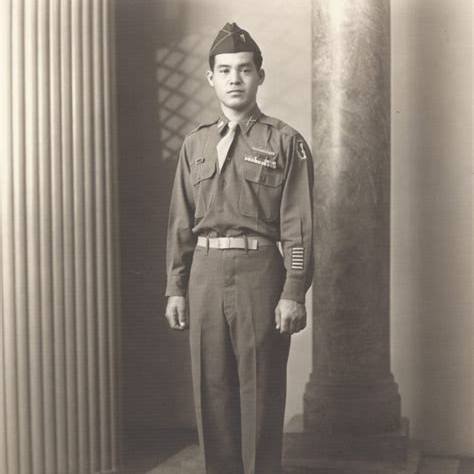
The men trained at Camp McCoy, Wisconsin, and later at Camp Shelby, Mississippi. For Kobashigawa, who had grown up in Hawaii, the climate alone must have been startling, but the larger challenge was proving themselves as infantrymen beneath extraordinary scrutiny. Their performance helped demonstrate that the doubts placed upon them had nothing to do with their ability or commitment as soldiers. The success of the 100th contributed to the formation of the larger 442nd Regimental Combat Team in 1943, but Kobashigawa and the other veterans of the 100th would not wait for that regiment to finish training. Their battalion was ready for combat first.
In August 1943, the 100th deployed overseas, reaching North Africa before moving into Italy as part of the 34th Infantry Division. The battalion entered combat in September and began the long, punishing advance north through the Italian peninsula. Kobashigawa fought through the campaigns from Salerno toward Cassino, where mountains, rivers, mud, artillery, mines, and carefully prepared German defenses made every mile costly. During this fighting he suffered an injury to his chest, recovered, and returned to his unit. The casualty rate within the 100th became so severe that correspondents eventually began calling it the “Purple Heart Battalion,” yet its reputation for determination grew with every battle.
Kobashigawa was not remembered by his fellow soldiers as a man who sought attention. What stood out was his ability to lead. Fellow veteran Saburo Ishitani later recalled watching a group led by Kobashigawa move almost silently against a complex of German positions in Italy. The soldiers approached with such coordination and control that they were able to eliminate enemy positions without immediately alerting neighboring defenses. Ishitani, who had experienced combat from Salerno through the later European campaigns, remembered Kobashigawa's small-unit leadership as some of the finest tactical movement he had witnessed during the war.
That ability would be tested dramatically on June 2, 1944, near Lanuvio, Italy. Kobashigawa, by then a technical sergeant, was leading men of Company B when his platoon encountered a series of mutually supporting German machine-gun positions. The enemy weapons were stopping the American advance. Kobashigawa spotted the first machine gun approximately fifty yards away and crawled forward with another soldier. Once close enough, he threw a grenade into the position and charged with his submachine gun while his companion covered him. One German soldier was killed and two others surrendered.
 Almost immediately, another German machine gun roughly fifty yards farther ahead opened fire on Kobashigawa and his companion. Rather than retreat to the safety of his platoon, Kobashigawa directed a squad to move forward to the position he had just captured. He then advanced again with another soldier toward the second gun. After throwing grenades into the emplacement, Kobashigawa provided covering fire while his comrade charged, capturing four German soldiers. As the Americans continued moving, Kobashigawa discovered four additional machine-gun positions and skillfully directed his men in neutralizing two more of them. What had begun as one dangerous assault became a carefully controlled series of attacks that broke apart the network of German weapons confronting his platoon.
The action demonstrated something more complicated than individual fearlessness. Kobashigawa certainly exposed himself repeatedly to enemy fire, but he also coordinated the movement of other soldiers, positioned his squad to exploit each captured emplacement, and alternated between personally attacking and providing covering fire for his men. His achievement at Lanuvio was therefore as much a story of battlefield leadership as personal courage. The Army awarded him the Distinguished Service Cross, then the nation's second-highest decoration for valor, and his demonstrated ability as a combat leader contributed to his receiving a battlefield commission as a second lieutenant.
There is an important distinction in where this action belongs within the larger history of the 442nd Regimental Combat Team. When Kobashigawa fought near Lanuvio on June 2, 1944, he was serving with Company B of the independent 100th Infantry Battalion (Separate). The newly trained 442nd had not yet entered combat in Italy. The two organizations soon joined forces, and on August 10, 1944, the 100th formally became the first battalion of the 442nd while retaining its historic designation. Kobashigawa continued fighting through the campaigns in Italy and France as the histories of the 100th and 442nd became inseparable. Today he is rightly counted among the twenty-one Medal of Honor recipients associated with the celebrated 100th/442nd legacy, but his own Medal of Honor action belongs to the earlier chapter written by the original 100th.
Kobashigawa survived the war and returned to Hawaii, carrying wounds that would trouble him for the remainder of his life, particularly an injured knee. He married Haruko Miyashiro of Olaa, Hawaii, and together they raised three children, Merle, Floyd, and Jill. He worked first for Gaspro Hawaii and later as a maintenance mechanic for Hawaiian Cement, retiring in 1979. Away from work he returned to the quieter things he enjoyed, including fishing, gardening, fixing things around the house, and spending time with his family. Those who knew him remembered a hardworking, soft-spoken man who rarely complained, spent little on himself, and readily helped relatives and friends when something needed to be repaired or someone needed support.
Perhaps the clearest measure of Kobashigawa's personality is how little his own children knew about his wartime decorations. He rarely spoke about the war, and according to family accounts, they did not fully understand the significance of his Distinguished Service Cross until decades later. To Kobashigawa, military service had been something he was obligated to do as an American and as a representative of his family, not a story from which he needed recognition. Even when the Pentagon contacted him in 2000 to announce that the Distinguished Service Cross he had received for Lanuvio was being upgraded to the Medal of Honor, his reaction was characteristically subdued. His family had to persuade him that traveling from Hawaii to Washington to receive the nation's highest decoration was worth the trouble.
On June 21, 2000, Yeiki Kobashigawa finally stood on the White House lawn as President Bill Clinton presented Medals of Honor to Asian American World War II veterans whose valor awards had been reconsidered after a review of possible racial discrimination in the wartime awards process. Kobashigawa was one of the relatively few recipients still alive to receive his medal personally. Members of his family traveled from across the country to witness the ceremony, and during the events surrounding it Kobashigawa represented the 100th Infantry Battalion in a wreath-laying ceremony at the Tomb of the Unknown Soldier. More than fifty-six years after Lanuvio, the quiet former plantation worker from Waianae was publicly recognized for an action he had never made the center of his life.
The Medal of Honor brought attention that Kobashigawa had never sought, but it also helped preserve the story of the men with whom he had served. Seven veterans of the original 100th Infantry Battalion were among those whose World War II awards were upgraded to the Medal of Honor, and only Shizuya Hayashi and Kobashigawa were still living when the medals were presented in 2000. Their recognition became part of a much larger correction in the way the nation remembered the Nisei soldiers who had fought in Europe while Japanese Americans endured discrimination at home.
Yeiki Kobashigawa died on March 31, 2005, in Waianae at the age of eighty-seven. He was buried at the National Memorial Cemetery of the Pacific at Punchbowl in Honolulu. His Medal of Honor is now preserved at the National WWII Museum, but the decoration tells only part of his story. He was the son who left school when his family needed another wage earner, the plantation worker and baseball player who rushed back to Schofield Barracks when Pearl Harbor was attacked, the American soldier whose rifle was then taken away because of his ancestry, the infantry leader who fought from Italy into France, and the battlefield sergeant whose men trusted him enough to follow him toward German machine guns.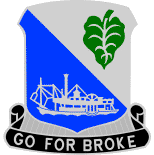
For the history of the 442nd, Kobashigawa represents an important link to what came before it. His heroism at Lanuvio occurred before the 100th formally became part of the regiment, but the battlefield record created by Kobashigawa and the other veterans of the original battalion became part of the foundation upon which the combined 100th/442nd built its extraordinary reputation. When the Medal of Honor was finally placed around his neck in 2000, it recognized one remarkable day in Italy. The men who served beside Yeiki Kobashigawa remembered something broader: a quiet, capable leader who simply did what needed to be done and expected little attention for having done it.