Ted “Tak” Tanouye: From Torrance to Hill 140
Ted “Tak” Tanouye left a family confined behind barbed wire to lead the 442nd in Italy, fighting through severe wounds before returning to combat and giving his life.
August 16, 2026

 Ted Takayuki Tanouye was born on November 14, 1919, in Torrance, California, the eldest of six children born to Nikuma and Momoye Uemura Tanouye. His father had immigrated from Kumamoto Prefecture, Japan, and built a living as a truck farmer in the Gardena area while also teaching the Japanese martial art of kendo. Ted, usually known to his friends as “Tak,” grew up thoroughly rooted in the South Bay community. He attended Torrance Elementary School and Torrance High School, where he was remembered not simply as a good student or a good athlete but as both. He lettered in baseball and football, belonged to the Honor Society, served as sophomore class president, participated in school clubs, and practiced kendo with his brothers at the Shuboyo Kendo Club in Redondo Beach. Before war changed everything, he was the sort of young man whose future seemed firmly tied to the community in which he had grown up.
After graduating from Torrance High School in 1938, Tanouye went to work in the produce business. He worked at Ideal Ranch Family Market and later followed his friend and employer Ray Takayama to another grocery store on Torrance Boulevard. He registered for the draft in July 1941, listing his occupation in the grocery trade and giving his name as Takayuki Ted Tanouye. He stood five feet six inches tall and weighed approximately 165 pounds. There was nothing particularly remarkable about those details at the time. They described a young Californian working, playing sports, helping his family, and beginning an adult life that should have unfolded very differently.
Pearl Harbor changed the world around the Tanouye family. After the Japanese attack on December 7, 1941, Americans of Japanese ancestry on the West Coast increasingly found themselves viewed through the lens of suspicion rather than citizenship. On February 19, 1942, President Franklin Roosevelt signed Executive Order 9066, paving the way for the forced removal and incarceration of Japanese Americans from the West Coast. The following day, February 20, Ted Tanouye entered the United States Army at Fort MacArthur in San Pedro. He enlisted alongside his close friend Akira Shimatsu.
The timing became even more extraordinary the next day. On February 21, federal agents came to the Tanouye home and arrested Ted's father, Nikuma, as a suspected security risk. He was held for approximately two months at the Tuna Canyon Detention Station before eventually rejoining the rest of the family. Ted was beginning service in the United States Army at essentially the same moment that the government was taking his father into custody because of his Japanese ancestry.
The remainder of the family was forced from its home and sent first to the temporary detention center established at the Santa Anita racetrack. In October 1942, Ted's parents and siblings were moved to the Jerome War Relocation Center in Arkansas. When Jerome closed in June 1944, they were transferred again, this time to the Rohwer incarceration center. They would not regain their freedom until October 1945. Ted Tanouye himself was never incarcerated. He was already wearing an American uniform while his parents, brothers, and sister were confined behind barbed wire.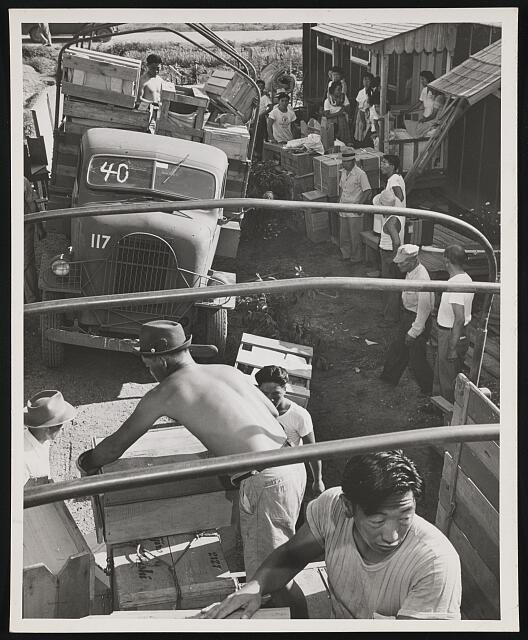
His early Army service did not immediately place him in combat. Tanouye trained and served for a period as a cook at Camp Robinson, Arkansas, before being transferred to Fort Warren, Wyoming. Eventually he reached Camp Shelby, Mississippi, where the newly organized 442nd Regimental Combat Team was preparing for war. There he exchanged kitchen duty for infantry service and was assigned to Company K, 3rd Battalion. His friend Akira Shimatsu also joined the regiment, serving with Headquarters Company of the 3rd Battalion.
The men of the 442nd trained for approximately a year before receiving orders overseas. In April 1944 they left Camp Shelby for Camp Patrick Henry, Virginia, and on May 2 sailed from Hampton Roads as part of a massive convoy bound for the Mediterranean. They arrived at Naples later that month, staged near Bagnoli, then moved by landing ship toward Anzio before preparing for combat north of Rome. On June 26, 1944, the 442nd Regimental Combat Team entered battle near Suvereto during the Rome-Arno Campaign.
Tanouye entered that fighting as a technical sergeant and platoon leader in Company K. The transition from training to combat was immediate and brutal. German forces were withdrawing north through Tuscany but defending strongpoints with artillery, machine guns, mortars, mines, and carefully chosen positions among the hills. During the first weeks of July, the 442nd encountered particularly stubborn resistance around Hill 140, a position so fiercely defended that soldiers came to call it “Little Cassino.” The regiment struggled forward under artillery fire while German troops used the terrain to make every advance costly.
On July 7, 1944, Tanouye led his platoon against the crest of a strategically important hill near Molino a Ventoabbto. The slope offered little protection, and enemy positions covered the approaches. During the advance, Tanouye spotted a German machine-gun crew preparing its weapon. He moved forward and opened fire, killing or wounding three members of the crew and driving two others away. Almost immediately another enemy position engaged him with a machine pistol. Tanouye returned fire and killed or wounded three more German soldiers.
Then grenades exploded near him and severely wounded his left arm.
 The wound did not stop him. Tanouye continued advancing and fired his submachine gun into an enemy-held trench, wounding several Germans. When his ammunition ran out, he crawled approximately twenty yards across exposed ground to reach another soldier and obtain additional magazines. He then returned to the attack. An enemy machine-pistol position had pinned down his men, so Tanouye crawled forward and silenced it with a grenade. He identified another machine gun firing down the slope and knocked that position out as well. When yet another machine-pistol nest above him opened fire, Tanouye engaged it and wounded three of its occupants.
Despite the wound to his arm and the succession of enemy positions confronting the platoon, Tanouye continued leading until his men reached their objective. Only after the crest had been secured did he organize a defensive position on the reverse slope and prepare the platoon to hold the ground it had taken. Only then did he allow medics to treat and evacuate him.
His actions on July 7 earned Tanouye the Distinguished Service Cross, the Army's second-highest decoration for valor. The battle also demonstrated the quality that appears repeatedly in accounts of his service: his first concern was not simply reaching the objective himself but getting his men there with him. Even badly wounded, he continued attacking enemy positions until the platoon's mission had been accomplished and its new ground secured.
Tanouye recovered from his wounds and returned to Company K. The decision is important because nothing compelled him to minimize what had happened on July 7. He had already suffered a serious combat wound and had already performed an action worthy of one of the Army's highest decorations. Yet by late August he was back with his men along the Arno River. In a letter to his parents dated August 27, he tried to reassure the family confined at Rohwer that he was all right despite the artillery and bullets around him. He also wrote that he missed his friend Akira Shimatsu.
Akira was already dead. He had been killed on July 16 while helping evacuate wounded soldiers from the battlefield.
The loss must have struck Tanouye deeply. The two young men had enlisted together in California, trained together, traveled into the Army together, and reached the 442nd together. Tanouye nevertheless continued serving with Company K as the regiment pressed north. The Arno River line was particularly dangerous because German forces had planted thousands of mines along the approaches and both sides conducted frequent patrols.
On September 1, the 3rd Battalion established a bridgehead across the Arno. Company K crossed to the northern side and, guided through the minefields by an Italian partisan, occupied the town of San Mauro. During a patrol, Tanouye knelt to inspect a mine when another soldier accidentally triggered a trip wire. Sergeant Hideo Kuniyoshi, who was beside him, later remembered that Tanouye absorbed most of the blast and believed that Tanouye's position had saved his life.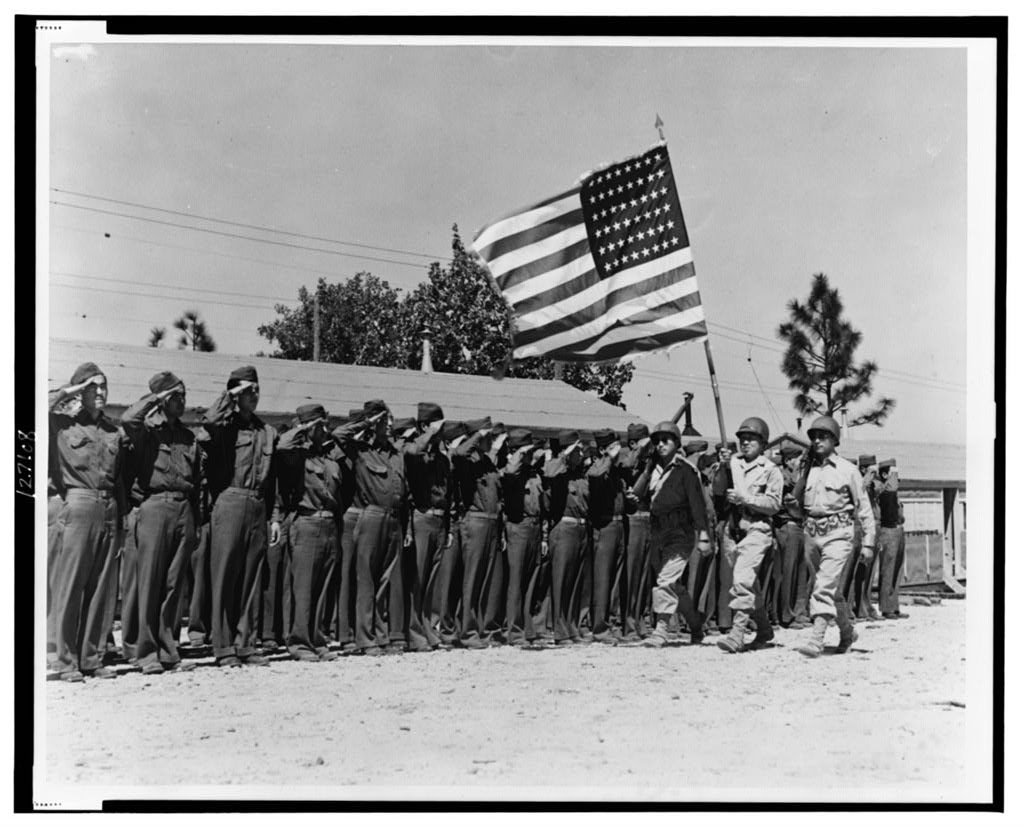
This time the wounds were catastrophic.
As Tanouye was carried from the battlefield on a stretcher, Kuniyoshi remembered him still calling encouragement to his men and invoking the 442nd's famous expression, “Go For Broke.” Tanouye was taken to a hospital, where doctors fought to save him.
He died five days later, on September 6, 1944.
He was twenty-four years old.
The cruel timing of his death is part of what makes Tanouye's story so difficult to forget. The wounds for which he would eventually receive the Medal of Honor had not killed him. He had survived July 7, recovered, and voluntarily returned to combat. Less than two months later, a mine took the life that German machine guns, grenades, and automatic weapons had failed to claim on Hill 140.
Tanouye was initially buried at the U.S. Military Cemetery at Vada, Italy. After the war, when the Army began closing smaller temporary cemeteries, his family chose to bring him home. His remains returned to California in 1948 along with those of his best friend Akira Shimatsu. The two men were honored together at a funeral service at the Buddhist Temple in Los Angeles' Little Tokyo and then buried beside each other at Evergreen Cemetery in the 442nd Nisei Memorial section. The friends who had entered the Army together ultimately came home together.
For decades, Tanouye's Distinguished Service Cross remained the highest official recognition of his actions at Hill 140. By the 1990s, however, the Army began examining whether racial prejudice had affected the level of valor awards given to Asian American servicemen during World War II. Tanouye's case was among those reviewed. Investigators concluded that his actions on July 7, 1944, merited the Medal of Honor.
On June 21, 2000, President Bill Clinton conducted a White House ceremony recognizing Asian American World War II soldiers whose decorations had been upgraded. Ted Tanouye had been dead for nearly fifty-six years. His brother Isao Tanouye accepted the Medal of Honor on his behalf. Ted became one of the twenty-one Medal of Honor recipients associated with the extraordinary combat record of the 100th Infantry Battalion and 442nd Regimental Combat Team.
Unlike several of the earlier 100th Infantry Battalion recipients whose Medal of Honor actions occurred before the 100th formally became part of the regiment, Tanouye's place in the 442nd chronology is straightforward. He trained with the 442nd at Camp Shelby, deployed overseas with it, and was leading soldiers of Company K, 3rd Battalion, when he earned the Medal of Honor during the regiment's first campaign in Italy. His story belongs directly to the original combat history of the 442nd Regimental Combat Team.
Recognition also returned his name to the community where his life had begun. In 2002, the California National Guard armory in Torrance was renamed the Ted Tanouye National Guard Armory, and the Torrance Historical Society created an exhibit in his honor. Two years later, on the sixtieth anniversary of his Medal of Honor action, a stone and bronze memorial was dedicated to him in Triangle Park across from Torrance High School. His name appears on the veterans memorial at Torrance City Hall and on the Go For Broke monument in Los Angeles.
The Tanouye family's military sacrifice did not end with Ted. His younger brother Kiyoyuki later served in the United States military and was killed during the Korean War. He was ultimately buried beside Ted at Evergreen Cemetery. Two sons from the same Japanese American family that had once been removed from its California home and confined by its own government now rest together after dying in American military service.
That fact gives Ted Tanouye's story a weight that cannot be contained within the language of a medal citation. His father was arrested the day after Ted entered the Army. His parents and siblings were confined at Santa Anita, Jerome, and Rohwer while he trained and fought. Yet Tanouye's service should not be reduced to the idea that he needed to prove his loyalty. He had grown up in Torrance, played football and baseball for its high school, worked in its stores, and entered the United States Army before his family was removed from its home. America was already his country.
What the battlefield revealed was something different.
On July 7, 1944, Ted Tanouye was badly wounded while leading his men uphill against German positions. He could have accepted treatment and evacuation. Instead, he continued moving from one enemy weapon to another until his platoon had captured its objective and established a defense. After recovering, he returned to the same war and the same men. When a mine exploded near the Arno less than two months later, another soldier believed Tanouye's body had shielded him from the worst of the blast.
Ted “Tak” Tanouye had been a scholar, athlete, grocery worker, kendo student, cook, infantryman, platoon leader, brother, and son. His Medal of Honor recognizes one day of extraordinary courage, but the larger story is remarkably consistent.
When people around Ted Tanouye needed him, he stayed with them.