Kazuo Otani: From Visalia to the Wheat Fields of Tuscany
Kazuo Otani left California and a family confined at Gila River to serve with the 442nd. In Italy, his devotion to his men cost him his life and ultimately earned him the Medal of Honor.
August 16, 2026

 Kazuo Otani was born on June 2, 1918, in Sanger, California, to Yoichi and Shizuo Otani, Japanese immigrants who had come to the United States in the early years of the twentieth century. The family later moved south to Visalia in California's San Joaquin Valley, where Kazuo grew up with his brothers Ted and Tom. He attended Visalia Union High School and graduated in 1937, then went to work in the agricultural world that surrounded the community, finding employment on a citrus farm. Nothing in that quiet beginning suggested that within only a few years his family would lose its freedom, Kazuo would cross an ocean as a soldier, and his name would become permanently associated with one of the most famous fighting units of World War II.
Pearl Harbor transformed the lives of Japanese Americans throughout California. After the attack of December 7, 1941, suspicion increasingly fell upon people whose ancestry connected them to Japan regardless of their citizenship or loyalty. Executive Order 9066 ultimately led to the forced removal of approximately 122,000 people of Japanese ancestry from their homes, most without accusation or trial. The Otani family was among those uprooted. Yoichi, Shizuo, and members of the family were sent to the Gila River War Relocation Center in Arizona, one of the camps created by the federal government to confine Japanese Americans removed from the West Coast.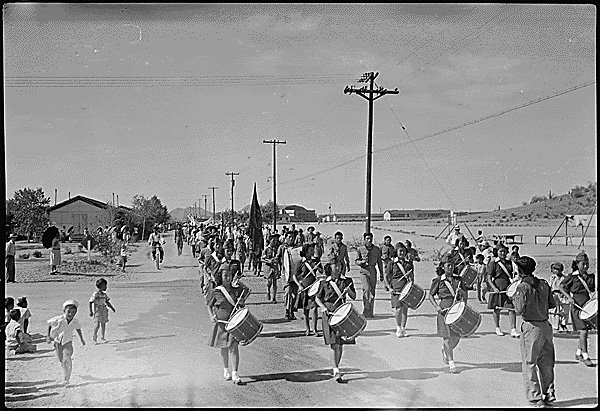
For Kazuo Otani, the government's treatment of his family did not erase his sense of obligation to the United States. When the Army created the 442nd Regimental Combat Team, he volunteered for the new Japanese American combat organization and was assigned to Company G, 2nd Battalion. He trained at Camp Shelby, Mississippi, where Japanese American volunteers from Hawaii and the mainland were brought together and prepared for infantry combat. Many of the mainland soldiers trained while parents and siblings remained in incarceration camps, creating one of the most painful contradictions in the history of the unit: the men were preparing to risk their lives for a country that had imprisoned members of their own families.
Before deploying overseas, Otani was finally able to visit his family at Gila River. His brother Ted later remembered that Kazuo was eager to go to war because he saw himself as fighting for his country. The visit came only about two weeks before Otani left for Europe. Ted never saw his brother again. That brief reunion in Arizona became the family's final memory of Kazuo before the Army carried him across the Atlantic.
The 442nd had spent roughly a year training before deploying to the Mediterranean in the spring of 1944. Its soldiers reached Italy and joined the battle-tested 100th Infantry Battalion, whose extraordinary record in the Italian campaign had helped make the larger Nisei regiment possible. On June 26, 1944, the 442nd entered combat in Tuscany while attached to the 34th Infantry Division. The men who had endured months of training at Camp Shelby were suddenly facing German artillery, mines, machine guns, snipers, and an enemy skilled at using Italy's hills and villages as defensive positions.
Otani entered that fighting as a leader. By the summer of 1944 he was a staff sergeant in Company G. The rank placed responsibilities upon him that went well beyond his own survival. His job was to move men forward, make decisions under fire, and protect the soldiers entrusted to him whenever circumstances allowed. Those responsibilities would define the final minutes of his life.
 By July, the 442nd was pushing north through Tuscany during the Rome-Arno Campaign. The regiment had been in combat for less than three weeks when Company G encountered German resistance near Pieve di Santa Luce on July 15, 1944. Otani's platoon was advancing against a hill objective when concentrated machine-gun and sniper fire swept across an open wheat field and stopped the Americans. Men caught in the field had little protection, and remaining where they were meant continuing to absorb enemy fire.
Otani recognized that the platoon's position was becoming disastrous. Rather than remain under cover, he exposed himself to locate and kill a German sniper whose accurate fire was striking the Americans. Removing the sniper solved only part of the problem. Enemy machine guns still commanded the field, and his soldiers needed to reach better protection at the base of a nearby cliff. Otani dashed across the open ground with machine-gun fire following him and reached the cliff, then began directing his men toward the shelter it offered.
When the Germans shifted their fire toward the soldiers crawling for cover, Otani deliberately moved along the cliff and exposed himself again. By making himself the more obvious target, he drew enemy attention away from the men trying to escape the field. Soldiers reached the cliff while German machine gunners concentrated on the sergeant moving in front of them. Once some of his men were safe, Otani organized them to protect against a possible counterattack. He could have remained there with them. Instead, he went back for the others.
Otani crossed the exposed field again, shouting instructions to the soldiers still trapped there while continuing to attract German fire. Reaching the rear of the platoon's position, he found partial shelter in a shallow ditch and directed covering fire so that more of his men could move forward. By then he had repeatedly placed himself in positions where German soldiers could see and fire upon him, not because doing so offered him any tactical advantage personally, but because every enemy weapon aimed at Otani was one less aimed at the soldiers trying to reach safety.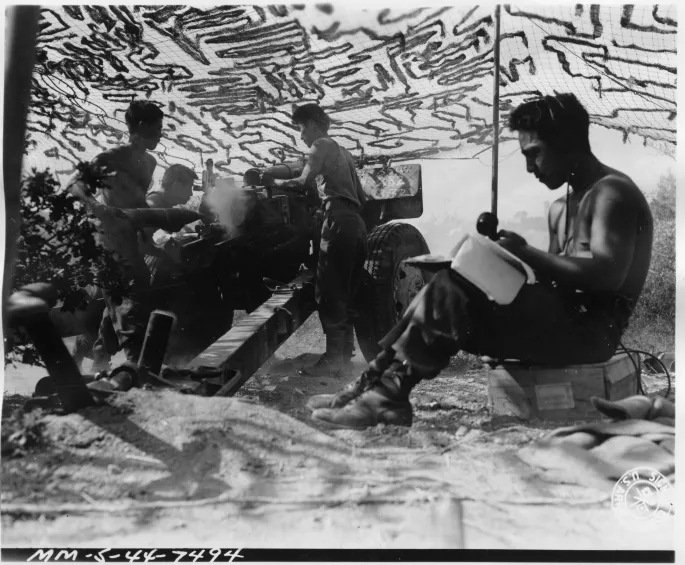
Then one of his men was badly wounded in the open.
Otani ordered the others to remain under cover and crawled toward him. The wounded soldier lay in full view of the enemy positions, meaning anyone trying to reach him would be exposed to the same machine-gun fire that had already pinned down the platoon. Otani reached the soldier, dragged him into a shallow ditch, and began administering first aid. While he was attempting to save the man's life, German machine-gun fire struck Otani. He was mortally wounded there beside the soldier he had refused to leave behind.
Kazuo Otani was twenty-six years old.
There is no dramatic final assault in his story, no enemy bunker overrun in the last seconds of his life. The courage of July 15 was different. Otani repeatedly made himself visible so other men could become less visible. He crossed open ground so they could reach cover, returned into the field when more remained trapped, and finally crawled toward a wounded soldier when every instinct of self-preservation should have told him to remain where he was. His final action was not about destroying the enemy. It was about refusing to abandon one of his men.
Friends who knew Otani before and during his military service later described precisely that kind of character. Ken Miyamoto, who trained with him, remembered that Kazuo would do whatever he could when someone needed help. Decades later, that simple recollection provided an almost perfect explanation for what happened in the wheat field. The battlefield did not suddenly transform Otani into someone willing to risk himself for others. It revealed a quality people around him had apparently known all along.
For his actions near Pieve di Santa Luce, Otani was posthumously awarded the Distinguished Service Cross, the Army's second-highest decoration for valor. The circumstances surrounding the presentation carried their own bitter symbolism. In March 1945, his parents received the medal while they were still confined at Gila River. Their son had died in an American uniform protecting other American soldiers, yet his mother and father remained inside a government incarceration center. They would not be released until several months later.
After the war, Otani's remains were returned to the United States and buried at Veterans Liberty Cemetery in Fresno, California. His family carried the Distinguished Service Cross and his memory forward while the broader history of the 442nd gradually became recognized as one of the most extraordinary records of combat service produced by any American unit during World War II. The 442nd eventually became famous for its enormous number of decorations, including thousands of Purple Hearts and numerous Presidential Unit Citations. Yet for decades, the Medal of Honor record of its Japanese American soldiers did not reflect the extraordinary number of Distinguished Service Crosses they had earned.
In the 1990s, the military reviewed the records of Asian American servicemen who had received the Distinguished Service Cross during World War II to determine whether racial discrimination had influenced decisions about the Medal of Honor. Otani's actions were among those reconsidered. The review concluded that his sacrifice on July 15, 1944, met the standard for the nation's highest military decoration.
On June 21, 2000, President Bill Clinton conducted a White House ceremony recognizing Asian American World War II soldiers whose decorations had been upgraded to the Medal of Honor. Kazuo Otani had been dead for almost fifty-six years. His brother Ted, who had last seen him during that brief visit at Gila River before Kazuo sailed overseas, accepted the Medal of Honor on his behalf. The brother who had watched him leave for war finally stood in Washington representing the man who never came home.
A few months later, a new grave marker recognizing Otani as a Medal of Honor recipient was dedicated at his resting place in Fresno. His family eventually donated his Medal of Honor to the Veterans Memorial Museum in Fresno, allowing the decoration to become part of the public memory of the Japanese American soldiers who served during World War II.
Kazuo Otani's place among the twenty-one Medal of Honor recipients associated with the 100th Infantry Battalion and 442nd Regimental Combat Team is unquestioned. Unlike several of the early 100th Battalion recipients whose actions occurred before the 100th formally joined the regiment, Otani was serving directly with Company G of the 442nd when he earned his Medal of Honor. His action came less than three weeks after the regiment entered combat, while the young organization was still proving itself on the battlefields of Tuscany.
The Medal of Honor necessarily draws attention to the way Kazuo Otani died, but his story deserves to be remembered as more than a description of his final minutes. He was a son of immigrants who grew up among the farms of California, graduated from high school in Visalia, worked in the citrus fields, and watched his family lose its freedom because of its ancestry. He trained with other Nisei soldiers at Camp Shelby and visited his family behind the fences at Gila River before leaving for a war from which he would never return.
Then, in an Italian wheat field on July 15, 1944, the men around him needed help.
Kazuo Otani did what those who knew him said he had always done.
He went to them.