“This Will Be Our Year”: A Postcard Returned Too Late
A returned 1945 postcard preserves Helen Crawford’s hope for her POW husband, who had already died weeks earlier in Japanese captivity.
August 13, 2026

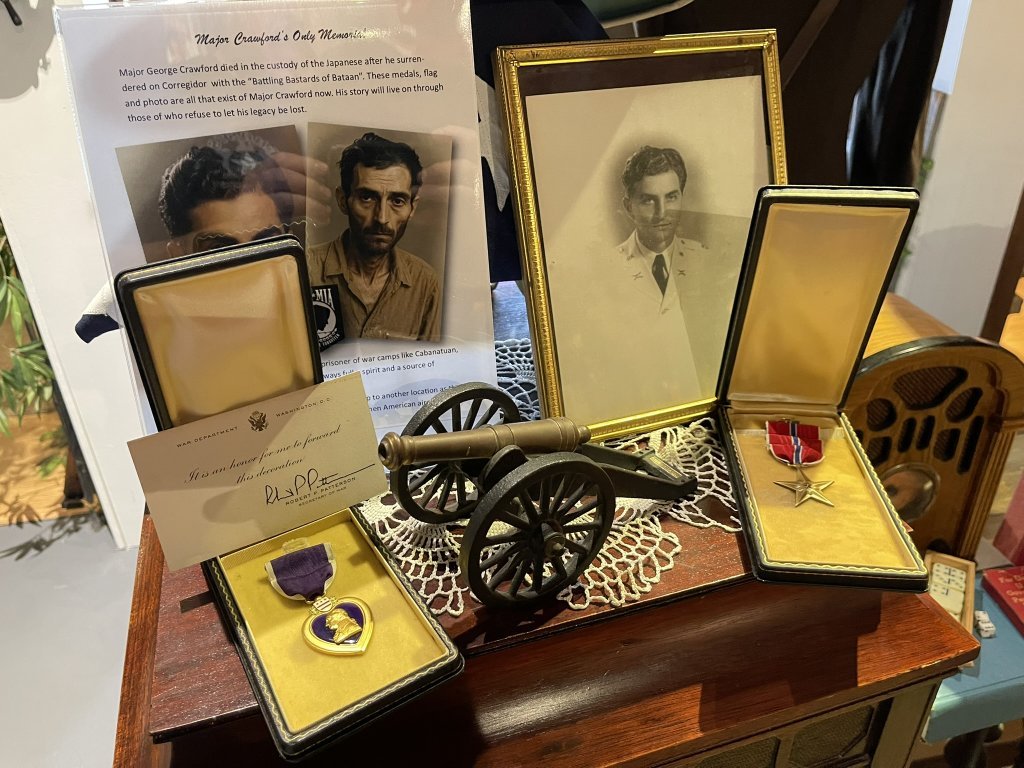
 Some artifacts are powerful not because of their size or rarity, but because of the human moment they preserve. One of the most emotional collections in the care of Ghosts of the Battlefield centers on a postcard sent by Helen Crawford to her husband, Major George H. Crawford, while he was a prisoner of war in the Philippines.
On New Year’s Day 1944, Helen received word that George was alive and being held by the Japanese. The message brought fear and uncertainty, but it also gave her something to hold onto: hope. She waited through another year of war, believing that somewhere across the Pacific her husband was still alive and that the advancing Allied forces might soon bring him home.
On January 1, 1945, Helen mailed George a postcard carrying a simple, hopeful message:
“This will be our year.”
She believed 1945 might finally reunite them. What she did not know was that George had already been dead for more than two weeks.
 In December 1944, Major Crawford was among more than 1,600 Allied prisoners forced aboard the Oryoku Maru, one of the Japanese vessels remembered as “hell ships.” The prisoners were crowded into dark, poorly ventilated holds with little food, water, or sanitation. Because the ship carried Japanese troops and military material and bore no markings identifying the prisoners below deck, American pilots had no way of knowing that Allied servicemen were aboard.
U.S. aircraft attacked the vessel in Subic Bay on December 14 and 15, 1944. Hundreds of prisoners died during the bombing, sinking, and confusion that followed. Major George H. Crawford was among those lost on December 15.
Helen did not receive the truth immediately. Inaccurate information suggested that George had been transferred to another ship and had survived. Her hope returned, only to be taken away again when confirmation of his death finally arrived months later.
Then, on January 14, 1946—more than a year after she mailed it—the postcard came back.
Undeliverable
The words “This will be our year” remained visible beneath the postal markings and official stamps. The card had traveled through a system searching for a prisoner who was no longer alive before eventually returning to the woman who had sent it. A message written with love and confidence had become a heartbreaking record of hope returned too late.
 Today, that postcard is preserved in the Ghosts of the Battlefield collection. It reminds us that war is not experienced only by those on the battlefield. It is also endured by the wives, parents, children, and families who wait at home—often receiving information that is delayed, incomplete, or tragically wrong.
Major Crawford never read Helen’s message, but because the postcard survived, we can read it today. It allows us to remember not only the man who was lost, but also the woman who continued to believe he would return.
Sometimes the most powerful artifacts are not weapons or uniforms. Sometimes they are simply a few handwritten words carrying all the hope one person had left.
Click to learn more about Major Crawford.