For a Minute, It Felt Like Home
A period Pabst can recalls the brief moments of brotherhood, normalcy, and home that helped American troops endure the Vietnam War.
August 17, 2026

 At first glance, it appears to be one of the simplest objects in the Ghosts of the Battlefield collection: an empty can of Pabst Blue Ribbon beer. It is not a weapon, a medal, or a piece of sophisticated military equipment. It was made to be opened, emptied, and thrown away. Yet that ordinary purpose is exactly what makes it so meaningful—and surprisingly difficult to preserve.
During the Vietnam War, American beer brands such as Pabst Blue Ribbon, Budweiser, Schlitz, and Carling Black Label could be found in South Vietnam, although availability varied greatly depending upon a serviceman’s location, assignment, and access to resupply. Beer appeared in clubs and rear areas, but cases also reached some isolated camps and firebases along with food, ammunition, mail, and other supplies. Veterans remembered drinking whatever brand happened to be available rather than holding out for a favorite from home.
Out in the field, preference mattered less than opportunity. A can might arrive warm after spending days or weeks moving through warehouses, trucks, aircraft, and supply lines beneath the tropical sun. It might be shaken from travel, covered in dust, or dented before it ever reached the man who opened it. None of that mattered very much. After a long patrol, a difficult mission, or another day spent surrounded by uncertainty, even a warm can of beer could offer something rare: a moment that felt almost normal.
The surviving photographs show what the can itself cannot fully explain. Men sit close together, tired and shirtless in the heat, raising cans and leaning against one another. In another scene, beer is unpacked and passed among troops. These are not images of grand celebrations. They capture something quieter and perhaps more important—companionship, relief, and the brief lowering of defenses among men who depended upon one another.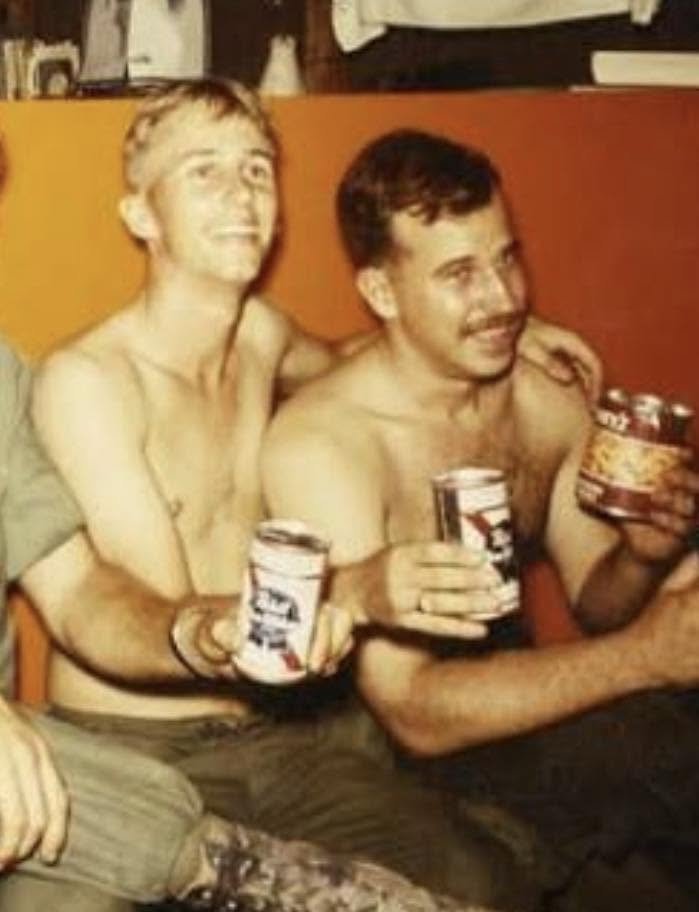
For a few minutes, they could talk, laugh, complain, and remember the lives they had left behind. The sound of a can opening was familiar. The label was familiar. The taste, whether enjoyed cold or tolerated warm, belonged to the world back home. It could recall a neighborhood bar, a family gathering, a weekend with friends, or an ordinary evening before war rearranged everything.
The beer did not erase the danger waiting outside the bunker or beyond the perimeter. It did not remove the exhaustion, grief, fear, or responsibility carried by the men drinking it. What it offered was a pause—a small piece of civilian life held in one hand while a rifle or helmet rested nearby. It allowed men to feel, however briefly, that they were more than soldiers counting the days until they could leave.
That is why this can belongs in a museum.
 Military history is often preserved through the objects designed to survive: rifles built from steel and wood, uniforms carefully stored after service, medals placed in boxes, and documents saved by families. A beer can was never expected to last. Once empty, it had no practical value. Most were crushed, discarded, buried, burned with other trash, or left behind when a unit moved. The very qualities that made it common during the war have made an authentic period example difficult to find decades later.
Its survival allows us to tell a part of the military experience that weapons and campaign maps cannot. War is made up not only of battles and missions, but also of waiting, eating, writing letters, trading jokes, cleaning equipment, and sharing whatever comforts could be found. The smallest objects often bring us closest to the daily lives of those who were there.
Ask a Vietnam veteran, “What was your brand in ’Nam?” and the answer may lead somewhere far beyond beer. It may open a memory of a particular base, a supply run, a friend, a night after patrol, or a moment of laughter in a place where laughter was badly needed.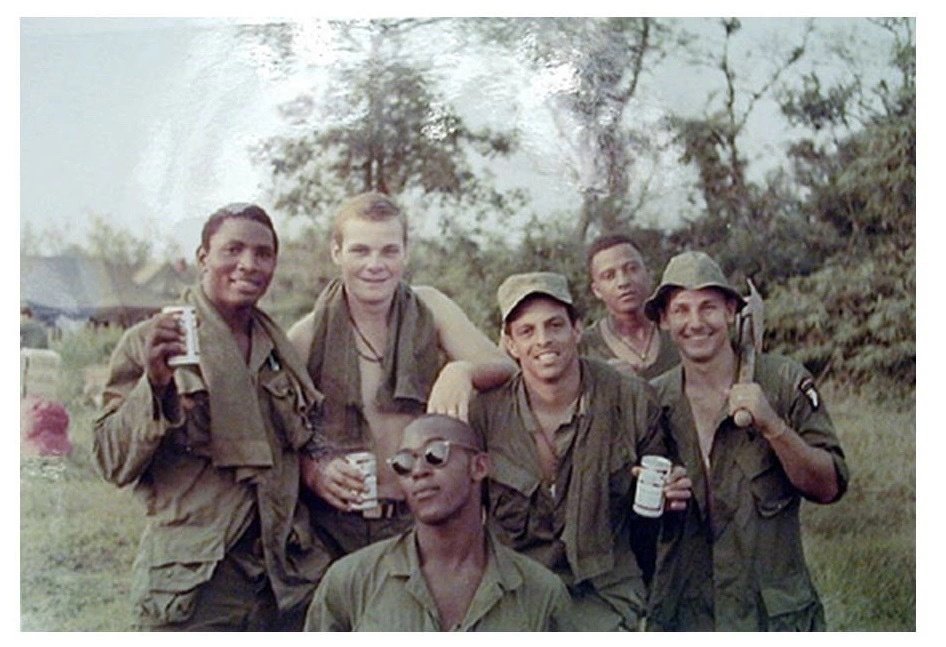
Preserved at Ghosts of the Battlefield, this Pabst Blue Ribbon can represents brotherhood, normalcy, and calm within chaos. It reminds us that history is not found only in the objects men carried into battle. Sometimes it is found in what they passed from hand to hand afterward.
For just a minute, it felt like home.
We remember the small things, too.