Through the Scope: The Human Burden of the Sniper
A look beyond the myth of the sniper, exploring duty, discipline, loyalty, killing, protection, moral burden, and the human being behind the rifle before, during, and long after war.
September 8, 2026

There may be few military roles surrounded by as much mythology as that of the sniper. The word itself seems to carry something beyond its definition. It suggests patience, concealment, extraordinary skill and the ability to kill from a distance. In popular culture, the sniper is often presented as the ultimate lone warrior: independent, dangerous, emotionally detached and somehow different from everyone else wearing the uniform. He is admired when his rifle is pointed toward the enemy and sometimes regarded with uneasiness when the war is over.
 But who is the person behind the scope?
That question deserves more than the easy answers we have attached to it. It would be simple to say that a sniper is a hunter and another human being is his prey. There is truth in that comparison, and it is difficult to escape the discomfort of it. A sniper may conceal himself, observe another person, study his movements, wait for the right opportunity and deliberately fire a shot intended to kill him. Remove the battlefield, the uniforms and the circumstances of war, and those actions become horrifying. But removing the circumstances also removes much of the truth. Military sniping does not exist in a vacuum. There is a mission, a chain of command, rules governing the use of force and, most importantly, other people whose lives may depend upon what the sniper sees and does. A sniper may be watching an enemy machine gun that could tear into a patrol, an observer directing fire, an enemy sniper hunting his own men, or an armed combatant preparing an attack. In those circumstances, the thought behind the rifle may have very little to do with wanting another human being dead. It may be something much more personal. I want my people to live.
That difference may be one of the most important things to understand about the psychology of combat. Soldiers do not experience war only as representatives of governments or participants in enormous geopolitical struggles. They experience it beside particular human beings. They eat with them, sleep beside them, become exhausted with them, complain with them and laugh with them. They learn about wives, husbands, girlfriends, children and parents waiting thousands of miles away. They know who snores, who tells terrible jokes and who always seems to have the last cigarette. Somewhere along the way, military terminology such as platoon, squad and team can become something considerably more intimate.
Family.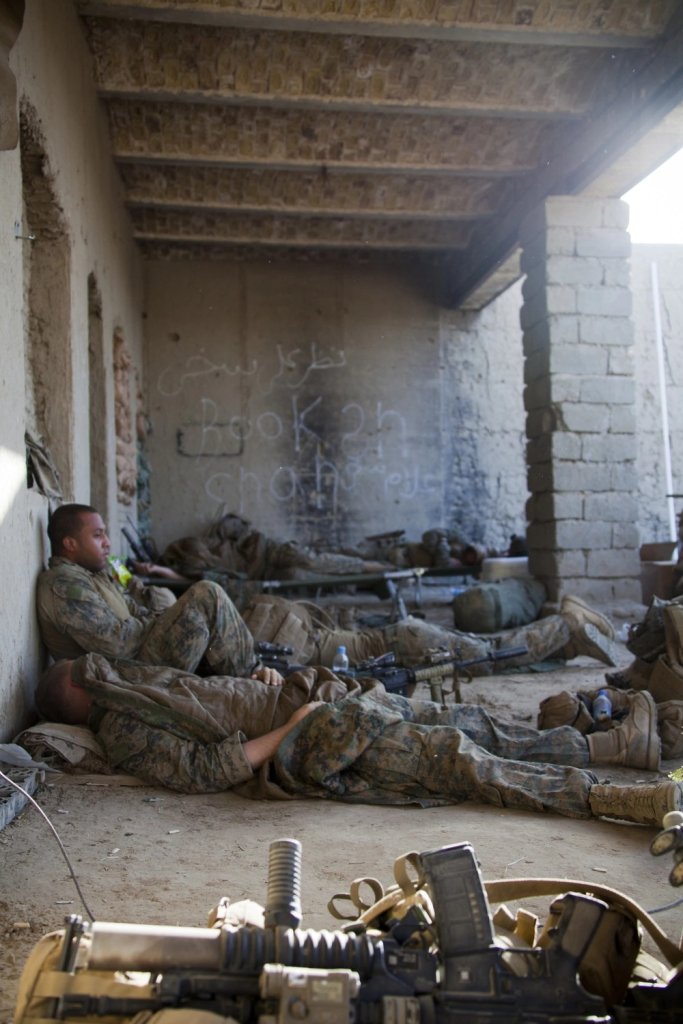
The sniper lying apart from that group may therefore be physically alone while being profoundly connected to the people he is protecting. That complicates the familiar image of the solitary hunter. Perhaps in some moments the sniper is less a hunter pursuing prey than a guardian watching the perimeter from farther away. The outcome can be exactly the same. Another human being dies.
Understanding the motivation does not erase that fact, nor should it. But neither should the death erase the motivation.
This is one of the contradictions we should be willing to confront. A person can take a life because he values life. He can kill one human being because he believes doing so will prevent the deaths of others. War creates circumstances in which actions normally considered irreconcilable can suddenly occupy the same moral space. The military also provides something else that is difficult to overlook: authority and purpose. Outside war, deliberately observing and killing another person is murder. Within legitimate combat, lethal force exists inside a structure of orders, law, rules of engagement, mission and responsibility. That structure does not remove the sniper's individual conscience or responsibility, but it profoundly changes the meaning of the act to the person performing it. He has not simply been told that he is allowed to kill. He has been told that there may be circumstances in which it is his responsibility to do so.
That distinction matters. Most people would probably find it psychologically easier to live with the thought, “I stopped someone who was threatening my friends,” than, “I killed a stranger.” Both statements might describe the same moment. Which one occupies the mind may depend upon the person, the circumstances and what happens in the years that follow.
There is also something unusual about the intimacy of sniping. Distance sounds as though it should make killing less personal, and perhaps sometimes it does. But magnification can create a strange contradiction. The person through the scope is far away, yet the sniper may see him with extraordinary clarity. He may watch him for a long time. He may see him walk, talk, smoke, carry equipment, become tired or interact with the people around him. The enemy can cease being merely a shape in the distance. He becomes an individual human being whose movements are being studied by another individual human being. Then the sniper may have to decide when that life ends. Not every engagement allows long contemplation. Combat rarely behaves as neatly as theory suggests. But the sniper's role can involve something other forms of battlefield killing do not always provide: time. Time to observe. Time to identify. Time to calculate. Time to wait. Sometimes time to decide not to shoot.
That last part may tell us as much about the sniper as the shot itself.
 Our fascination tends to settle on the trigger being pulled. We count confirmed kills, celebrate impossible shots and tell stories about extraordinary marksmanship. We rarely talk about the hours spent observing or the opportunities deliberately allowed to pass. Yet a person trusted with the ability to deliver lethal force from concealment must also possess the discipline not to use it simply because the opportunity exists. That challenges another popular image of the sniper: the unhinged killer who has somehow found the perfect profession. A reckless person with poor judgment would be a liability in a role requiring patience, observation, concealment and restraint. The frightening quality of an effective sniper is not that he lacks control. It may be precisely how much control the job requires. This is where capability can easily become confused with character.
Because someone is exceptionally capable of killing, we may assume that he enjoys killing. Because he can operate with a degree of independence, we may assume that he rejects authority. Because he can remain calm while performing something emotionally difficult, we may assume that he is cold. Because he can hide and observe another person without being seen, we call him a hunter. Because the enemy fears him, we decide there must be something frightening about the man himself. None of those conclusions necessarily follows from the fact that someone served as a sniper.
Certainly, people enter military service with different personalities. Some are attracted to competition, weapons, fieldcraft, hunting, difficult physical challenges or the opportunity to master an exceptionally demanding skill. Some may find aspects of combat exhilarating. Human motivations are rarely pure, and it would be dishonest to romanticize every person who has ever carried a sniper rifle.
But it would be equally dishonest to assume that proficiency in killing proves a desire to kill.
There is a difference between taking satisfaction in mastering a difficult skill and taking pleasure in another person's death. For a sniper, those two things can become painfully close to one another.
Imagine making an extraordinarily difficult shot under terrible conditions. Training, patience, mathematics, fieldcraft and physical control all come together exactly as they were supposed to. Professionally, it may be an extraordinary accomplishment.
But the proof that everything was done correctly is a dead human being.
 How does a person separate pride in the shot from the consequence of the shot? Perhaps some people can do so without difficulty. Perhaps others cannot. Perhaps the answer changes with age. An action that made complete sense to a 22-year-old soldier surrounded by danger may feel different to the same person at 52, sitting safely in a quiet house with decades between himself and the battlefield. That does not mean his earlier decision was wrong. Memory does not require wrongdoing to become painful.
There is an important difference between fear-based trauma and what has come to be described as moral injury. A person may be haunted not because he believed he was going to die, but because something he did, witnessed or failed to prevent collides later with deeply held beliefs about who he is and what is right. Guilt, shame and questions about one's own character can exist even when an action was legal, ordered or believed necessary at the time.
For a sniper, that possibility raises questions that have no universal answer.
What happens if the enemy becomes human again?
During combat, words such as enemy, target and threat have practical meaning. They allow decisions to be made in circumstances where hesitation may have consequences. But decades later, the figure once seen through a scope may be reconsidered differently. He was someone's son. Perhaps someone's husband. Perhaps someone's father. He may have been frightened too. He may have believed he was protecting his own people.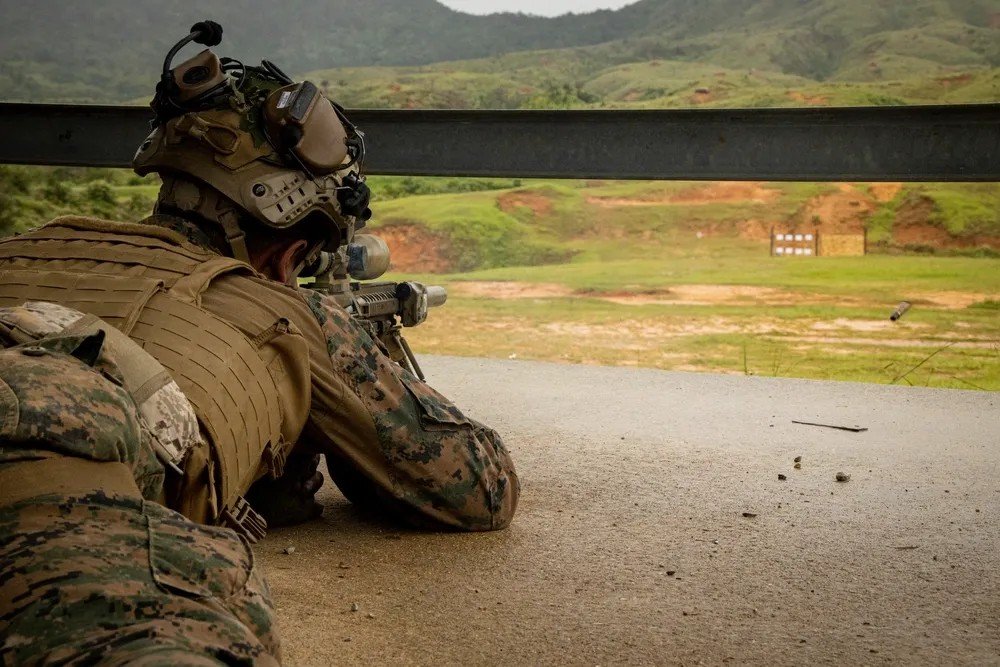
None of this means the sniper should not have fired. Restoring humanity to the enemy does not automatically invalidate the reasons he was fought.
It simply makes the memory more complicated. Perhaps this is where compartmentalization becomes important. It is tempting to use words such as dissociation when discussing people capable of functioning in violent circumstances, but we should be careful not to diagnose from a distance. A person does not have to stop being human in order to perform a violent military task. He may instead learn to separate parts of himself long enough to function.
There is the person. There is the soldier. There is the teammate. There is the marksman. There is the person looking through the scope.
And eventually there is the veteran who remembers being all of them.
During war those identities may coexist because they have to. The greater difficulty for some veterans may come afterward, when the circumstances that once kept everything understandable disappear.
 During combat there was a reason to remain constantly alert. There was a reason to study distant movement. There was a reason to control emotion, distrust what appeared harmless and react quickly to danger. There was a reason to possess the skills necessary to deliberately end another human life.
Then the war ends. The rifle is put away. The uniform comes off. The mission disappears. The people depending upon you scatter back into civilian life. And somehow the human being is expected to cross an invisible line and become whatever society considers normal again.
This is another place where the mythology surrounding snipers can become cruel. Popular culture loves the sniper as the dangerous outsider. He is the lone wolf, the man who can disappear into the landscape, the one person in the room everyone should fear because he knows things ordinary people do not. In fiction, “former military sniper” has become almost shorthand for a person capable of extraordinary violence. Yet that mythology often mistakes capability for intent and adaptation for identity. The military may value patience; civilians can interpret it as coldness. The military may value independence; civilians can see isolation. Constant awareness may once have kept people alive; afterward it can look unsettling.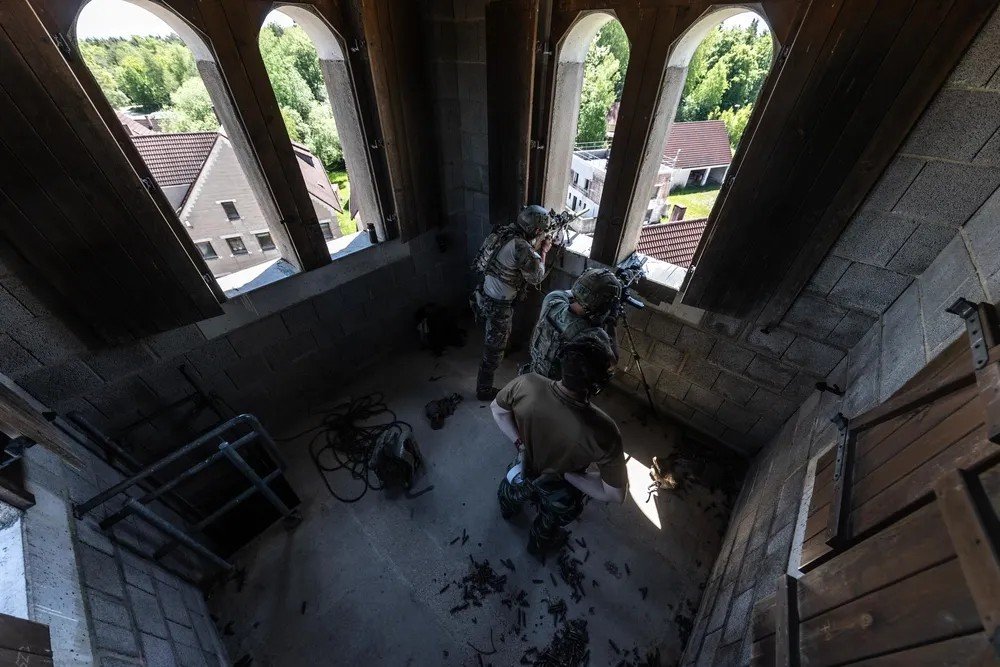
Emotional control may have allowed someone to function through terrible circumstances; later it can be interpreted as emotional detachment.
The very characteristics society once praised can look different when the battlefield is gone. There is something uncomfortable in that. We admire the warrior while we need him. We are considerably less certain what to do with him when he returns carrying parts of the war home.
That does not mean military service excuses violence, abusive behavior or wrongdoing after service. Trauma can help explain behavior, but it cannot automatically excuse it. Respecting veterans should never require pretending they are incapable of making bad choices.
Fairness has to work in both directions.
 We should not romanticize someone simply because he wore a uniform, but neither should we look at a struggling veteran and decide that his struggle proves he was always dangerous. Perhaps the job changed him. Perhaps it did not. Perhaps he was drawn to sniping because certain parts of his personality suited the work. Perhaps training strengthened qualities already present. Perhaps combat left wounds no one could see. Perhaps he returned home completely at peace with what he had done. There is no single answer because there is no single sniper. That may be the most important thing to remember when we talk about them.
We have turned the sniper into an archetype: the hunter, the killer, the protector, the loner, the hero, the damaged veteran, the frightening man with frightening skills. Each label contains a fragment of something we recognize, but none of them contains the entire person.
Even the question “How many did you kill?” reveals something about the way we see them.
A confirmed kill becomes a statistic, almost a measurement of professional success. Yet behind every number is another human being, and behind the rifle is a person who may have an entirely different way of remembering what that number represents.
Perhaps he remembers the men who did not die because an enemy machine gun never opened fire. Perhaps he remembers the patrol that crossed safely. Perhaps he remembers an enemy sniper who never took another shot. Perhaps he remembers a face. Perhaps he remembers nothing at all. We should allow for all of those possibilities.
The deeper question surrounding snipers is therefore not simply how a human being can deliberately kill another human being. Humans have unfortunately demonstrated that ability throughout history.
The more difficult question is how someone can deliberately kill another human being while still caring deeply about human life.
How can a man look through a scope, recognize another person as human and still pull the trigger?
Perhaps sometimes the answer is that the people standing behind him matter more in that moment than the stranger standing in front of him.
That does not make the stranger less human. It does not make the sniper cruel. It does not make the act emotionally simple. It makes war what it has always been: a place where human beings can be forced to choose between things that would never have come into conflict anywhere else.
Maybe that is why we should resist deciding too quickly what kind of person a sniper must be.
The person behind the rifle may be capable of extraordinary violence. He may also be extraordinarily disciplined. He may be frightened, angry, proud, detached, protective, conflicted or completely certain of what must be done. He may carry those moments for the rest of his life, or he may understand them as something that belonged to a particular place and time and leave them there.
 We cannot know simply because we know what his job was.
Perhaps the fairest way to understand the sniper is not to begin with the person he killed. Begin with the person behind the rifle. Ask who he was before someone handed it to him. Ask what the military required him to become while carrying it. Ask who was depending upon him when he looked through the scope. Ask what he believed he was protecting when he pulled the trigger. And finally, ask who he had to become again when there was no longer a rifle, a mission or a battlefield to explain any of it.
Only then are we beginning to see the human being behind the scope.
Support the preservation of America's military history.