They Ran Toward the Wounded: The Human Story of Battlefield Medicine
From the Civil War to Afghanistan, battlefield medicine has relied on those who move toward the wounded to save lives—medics, corpsmen, nurses, and crews carrying fear, exhaustion, and responsibility.
August 17, 2026

 War produces many kinds of courage. There is the courage required to charge an enemy position, to climb into a burning aircraft, to remain at a gun when everyone around you is falling, or to hold a position when retreat might mean survival. Those acts are understood instinctively because they fit the terrible logic of battle. A soldier carries a weapon, the enemy carries a weapon, and each knows why the other is there. But there has always been another kind of courage on the battlefield. For generations, medics, corpsmen, doctors, nurses, surgeons, litter bearers, ambulance crews, flight nurses, and countless other medical personnel have entered the machinery of war for a fundamentally different reason. Their mission was not to take a position or destroy an enemy. Their job began after the bullet struck, after the shell exploded, after the aircraft went down, after the tank burned, or after a frightened voice somewhere in the chaos called for help. They went toward the wounded. Sometimes they went without weapons. Sometimes they carried a pistol or rifle because the battlefield gave them little choice. The circumstances changed from war to war, and even from unit to unit. But the essential difference remained. The weapon was never the purpose of the medical man or woman. The bandage, the litter, the plasma bottle, the aid bag, the surgical instruments, and eventually the helicopter were the tools that defined their mission. Their responsibility was life. And for centuries, they have practiced that responsibility in some of the worst places human beings have ever created.
The wounded have followed armies for as long as armies have existed. Ancient soldiers suffered wounds from arrows, spears, swords, stones, and crushing blows, and wherever men fought, someone eventually attempted to stop the bleeding, remove the injured from danger, or ease the suffering of those who could not be saved. Early battlefield medicine was primitive by modern standards, but the human problem was already recognizable. A wounded soldier lying beyond the protection of his formation still needed someone willing to reach him. A badly injured man still called for his friends. Someone still had to decide who could be moved, who could be treated, and who was beyond the limited abilities of medicine at the time. For most of military history, survival often depended as much upon luck and companionship as medical science. Infection killed men whose original wounds were survivable. Evacuation could be slow, disorganized, or nonexistent. Surgery was performed without the tools, anesthesia, antibiotics, blood supplies, and understanding of trauma that later generations would take for granted. Yet even then, the human relationship at the center of battlefield medicine had already formed. One person was hurt. Another chose to help. Everything that followed was an attempt to become better at that simple act.
 By the American Civil War, the scale of warfare had made the old informal methods of caring for casualties catastrophically inadequate. Battles involving tens of thousands of men could leave fields covered with wounded soldiers, and getting them from the place where they fell to surgeons became an enormous problem of organization as much as medicine. Dr. Jonathan Letterman's work with the Army of the Potomac helped transform that system. Dedicated ambulance organizations, trained personnel, organized evacuation, dressing stations, and field hospitals created a more deliberate chain for moving casualties away from the fighting and toward higher levels of care. But systems can make battlefield medicine sound cleaner than it was. There was nothing clean about it. Civil War surgeons sometimes worked for hours surrounded by wounded men arriving faster than they could be treated. Nurses and attendants dealt not only with terrible injuries but with disease, exhaustion, overcrowding, inadequate supplies, and the emotional burden of caring for men whose families might be hundreds of miles away. For many wounded soldiers, the medical personnel around them became temporary family. Someone gave them water. Someone washed dirt and blood from their face. Someone wrote a letter when their hands could not. Someone sat nearby when nothing more could be done. Military medicine would become vastly more sophisticated over the next century, but that part never really changed.
 World War I industrialized destruction. Artillery could tear apart landscapes before infantrymen ever saw the enemy. Machine guns swept open ground. Gas introduced another form of terror. Trenches became worlds of mud, rats, shattered timber, standing water, disease, and bodies. Into that environment went medical personnel and stretcher bearers. The first challenge was often simply reaching the casualty. A wounded man might be lying in a shell hole exposed to machine-gun or artillery fire. Mud could make a litter almost impossible to carry. Darkness helped conceal rescuers but made finding the wounded more difficult. A journey of several hundred yards could take hours. Once recovered, casualties moved through an increasingly organized chain of care, from forward aid positions toward dressing stations and hospitals farther behind the lines. But again, the terminology conceals the people. Someone had to crawl into that shell hole. Someone had to lift the litter. Someone had to hear a wounded man asking whether he was going to die and decide what to tell him. Doctors learned to make decisions quickly because several men might need the same limited resources. Nurses could spend shift after shift surrounded by suffering and then return the next morning because more trains of wounded had arrived overnight. The war became famous for trenches, artillery, and machine guns. Less visible were the thousands of people trying to repair what those weapons had done.
 By World War II, the medical soldier had become one of the most familiar figures on the battlefield. Army medics moved with infantry units. Navy hospital corpsmen went ashore with Marines. Aid stations followed advancing troops. Surgical teams operated close enough to the fighting that artillery could sometimes be heard from the operating area. Nurses worked in field and evacuation hospitals, on hospital ships, and aboard evacuation aircraft carrying wounded men away from the combat zones. The relationship between an infantry unit and its medic or corpsman was unusually personal. He lived with them. He ate what they ate, slept where they slept, marched where they marched, and endured much of what they endured. He learned who complained about his feet, who hated needles, who had a photograph of his wife tucked into his helmet, and who would insist he was “fine” while bleeding through his uniform. In the Army he might simply become “Doc.” Among Marines, the Navy corpsman occupied a peculiar and beloved position. He was technically a sailor surrounded by Marines, but once he had shared their marches, foxholes, fear, and casualties, such distinctions mattered very little. When someone screamed for a corpsman, he went. That could mean leaving cover while bullets were still coming in. It could mean crawling across open ground. It could mean reaching into a burning vehicle, treating a casualty under artillery fire, or remaining beside a wounded man when the rest of the unit had been forced to move. The bravery required was not theoretical. Army medic Desmond Doss, who refused to carry a weapon because of his religious convictions, repeatedly exposed himself to enemy fire while treating and evacuating wounded soldiers on Okinawa. His actions ultimately brought him the Medal of Honor. He remains perhaps the most famous example of the unarmed combat medic, but thousands of less famous medical personnel faced the same fundamental decision: someone was wounded, and reaching him meant exposing themselves to the same danger that had wounded him.
 The phrase “battlefield medicine” naturally brings to mind the medic kneeling beside a wounded soldier, but that is only the beginning of the story. Behind him stood another army. Nurses received casualties after the first desperate work had been done. They watched wounded men arrive by truck, ambulance, train, aircraft, and ship. Some were conscious and talking. Some were frightened. Some were terribly injured. Some arrived carrying tags indicating what had already been done for them. Others arrived so quickly that there was barely time to learn their names. Military nurses served close enough to war that the distinction between “front” and “rear” could sometimes become meaningless. Hospitals were bombed. Ships carrying wounded men sailed through dangerous waters. Aircraft evacuating casualties flew from active combat zones. Medical facilities followed armies across continents and islands.Their work demanded technical skill, but technical skill alone could not carry a person through it.Imagine caring for a nineteen-year-old with catastrophic wounds while knowing another litter was already waiting outside. Imagine helping a man write to his mother because he knew there might not be another opportunity. Imagine becoming attached to patients, watching some recover, and watching others disappear from an empty bed before the next wounded soldier arrived to fill it. Then imagine doing it again tomorrow. And the day after that.War rarely gave medical personnel time to mourn properly. Their grief had to coexist with the next patient.
 The Korean War added another image to the history of battlefield medicine: the helicopter carrying wounded soldiers away from the front. Helicopters had been used experimentally during the closing period of World War II, but Korea demonstrated their extraordinary value for casualty evacuation in difficult terrain. Medical care also moved closer to the battlefield through organizations that included the Mobile Army Surgical Hospital, better known by the initials MASH. The objective was increasingly clear: shorten the distance between injury and meaningful treatment. Yet faster evacuation did not remove the danger faced by the people at the beginning of that chain. Corpsmen still moved under fire to reach wounded Marines. Medical personnel sometimes carried sidearms for protection while carrying the equipment required to save lives. That detail is important because it complicates the familiar image of the completely unarmed battlefield medic. Medical personnel were not always unarmed. They were always medically committed. A corpsman carrying a pistol was still running toward a wounded Marine because saving that Marine was his job.
 If Korea demonstrated the possibilities of helicopter evacuation, Vietnam made the medical evacuation helicopter one of the defining sounds of the war. The call “Dustoff” became synonymous with getting wounded soldiers out. Helicopter ambulance crews flew into landing zones that could still be under fire, sometimes with little more information than coordinates and the knowledge that casualties were waiting. Medical evacuation increasingly connected battlefield treatment with surgical facilities at a speed previous generations could scarcely have imagined. But the helicopter did not replace the medic. Someone still had to keep the wounded man alive until it arrived. Vietnam combat medics and Navy corpsmen served at the point where battlefield violence and medicine collided. Their aid bags carried bandages, dressings, medications, airway equipment, and whatever else experience taught them might matter in the next few minutes. Some carried weapons. Others depended heavily on the men around them for protection. And those men depended completely on “Doc.” That relationship could become profound because the medic was not an anonymous medical professional who appeared after the fighting. He had often been there before the fighting started. He knew the wounded man. Sometimes he knew him very well. That meant battlefield medicine could come with a terrible emotional price. Treating a stranger is difficult enough. Treating the man whose bunk was beside yours, whose jokes you had heard for six months, or whose family photographs you had seen was something else entirely. The medic could save his friend. He could also be the last person to speak to him. Both memories could last a lifetime.
The mythology of battlefield medicine naturally celebrates the lives saved. The people who practiced it also remembered the ones they could not save. Military doctors and surgeons throughout history have faced decisions most physicians in ordinary circumstances rarely encounter. When casualties arrive faster than they can possibly be treated, medicine becomes an exercise in priorities as well as compassion. Who needs surgery immediately? Who can wait? Who can survive evacuation? And, most terribly, whose wounds are beyond what the available people, equipment, and time can repair? Those choices were not made because battlefield doctors cared less. They were made because they cared for too many people at once. The emotional burden of medicine in war is therefore different from the simple story of heroic rescues. Sometimes the medical team performed brilliantly and the patient still died. Sometimes everything possible was done and it was not enough. Then someone had to wash their hands, prepare the table, and receive the next casualty.
 Modern battlefield medicine would astonish the stretcher bearers of the First World War. Today’s combat medics receive sophisticated trauma training and provide emergency treatment at or near the point of injury. Modern casualty care emphasizes controlling catastrophic bleeding, protecting airways, treating shock, administering blood products where capabilities permit, and moving casualties through a coordinated evacuation system. The equipment changed. The fundamental moment did not. An explosion occurs. Someone goes down. And someone else moves toward him. Modern medical personnel may wear body armor and carry weapons. They may have communications equipment that earlier generations could never have imagined. A helicopter may be minutes away instead of hours or days. But none of those advances eliminate the moment when a medic puts his hands on another human being and realizes that, for the next few minutes, that person’s life may depend upon what he does. Technology has changed battlefield medicine enormously. Responsibility has not.
It is easy to tell the history of military medicine through inventions. Anesthesia. Antisepsis. Blood transfusion. Antibiotics. Ambulances. Helicopters. Tourniquets. Trauma surgery. Each changed survival on the battlefield. But there is another history running alongside them that cannot be measured as easily. It is the history of a nurse remembering the face of a patient she could not save. The corpsman who heard “Doc!” and moved before he had time to think about whether he was afraid. The surgeon who operated until his hands cramped because the wounded kept arriving. The litter bearer who went back onto the battlefield for one more man. The flight nurse who held a patient’s hand during an evacuation because there was nothing else she could do at that moment. The medic who returned home knowing exactly how many friends he had treated and exactly which ones had died beneath his hands. They were specialists, but they were also human beings. They became tired. They became frightened. They became attached. They grieved. And then another wounded person arrived.
 There is a temptation when discussing military medical personnel to separate them from the warriors around them, as though one group fought the war while another merely repaired the consequences. The battlefield never made such a clean distinction. Medics and corpsmen crossed the same ground. Nurses and doctors worked within range of the same enemy. Medical evacuation crews flew into the same weather and gunfire. Hospital ships carried the results of battles fought beyond the horizon. Field hospitals existed because somewhere nearby human beings were trying desperately to kill one another. Medical personnel were part of war. They simply represented a different response to it. Where war destroyed, they tried to repair. Where war separated men from their families, medical personnel often became the human connection beside the bed. Where a wounded soldier might believe he had been abandoned, the arrival of a medic or corpsman meant someone had come for him. That may explain the affection generations of veterans have carried for the people who treated them. The medic was not simply the person with the bandages. He was proof that the wounded had not been left behind.
Across centuries of warfare, battlefield medicine has become faster, more organized, more scientific, and extraordinarily more capable. The faces behind it have remained remarkably familiar. Young men and women carrying equipment into places sensible people were trying to escape. Doctors working past exhaustion. Nurses speaking calmly because the frightened person in front of them needed calm. Corpsmen and medics ignoring the instinct to stay behind cover because someone had called for them. Some went forward without weapons. Others carried them because their war required it. That distinction matters historically, but it does not change what made their service unique. Their primary mission was not to take life. It was to preserve it. They entered wars created by governments and fought by armies, but their battlefield was often only a few feet wide: one wounded human being, one set of hands, and a rapidly disappearing amount of time.
History remembers battles by the ground won, the armies defeated, the ships sunk, the aircraft destroyed, and the commanders whose names appeared on maps. Medical personnel often remembered those same battles differently. A face. A voice. A name written on a casualty tag. A hand squeezing theirs. A soldier who lived. A soldier who did not. And somewhere in nearly every war, while other men sought cover from the violence around them, someone heard a cry for help, picked up an aid bag, and went toward it.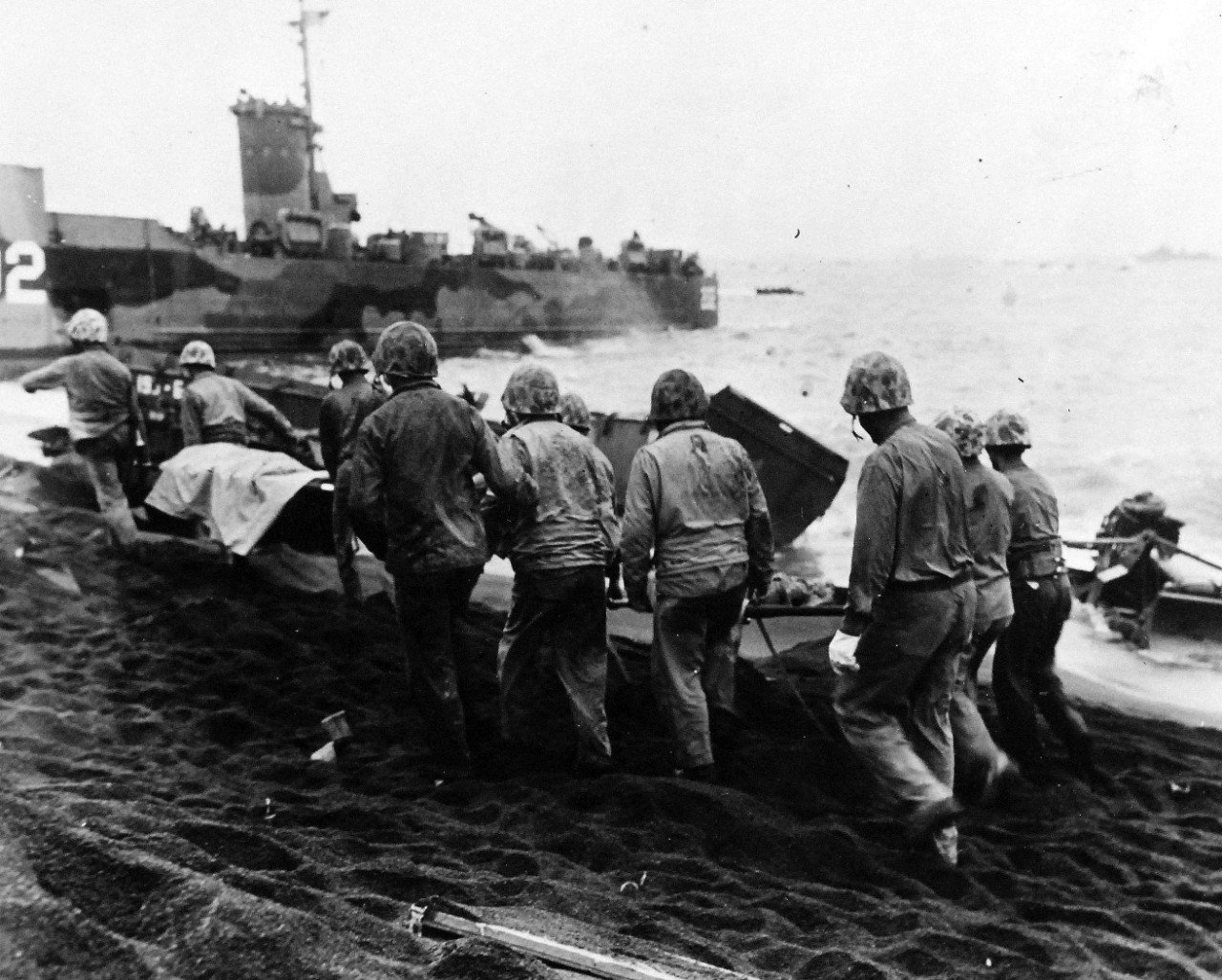
That is the other side of battlefield courage.