The Ambush at Ap Nhi: When the Truck Drivers Became Infantry
On August 25, 1968, an 81-truck convoy drove into a carefully prepared enemy ambush on Route 22. Trapped between burning fuel and ammunition trucks, the men who hauled the war suddenly had to fight it.
August 25, 2026


At approximately 11:45 on the morning of August 25, 1968, an American convoy rolled through the small village of Ap Nhi in Tay Ninh Province. It was misting and raining, with low clouds hanging only a few hundred feet above the ground and limiting the helicopters normally available to protect the road. On one side of Route 22 were the village and surrounding farmland. On the other, the rubber trees of the Ben Cui Rubber Plantation, known to American troops as the “Little Rubber,” grew almost to the edge of the highway.
As the trucks approached, the Americans saw what appeared to be a column of South Vietnamese soldiers walking beside the road. There was little reason at first to consider them a threat, but as the convoy passed, the supposed ARVN soldiers suddenly opened fire. They were enemy troops wearing South Vietnamese uniforms, and their attack was the signal for a much larger force concealed among the rubber trees to begin firing rockets, machine guns and automatic weapons into the convoy.
Within seconds, the road had become a kill zone.
The Road to Tay Ninh
The convoy had begun its journey that morning at Long Binh Post near Saigon and was carrying supplies toward Cu Chi and Tay Ninh, where units of the 25th Infantry Division were operating close to the Cambodian border. Keeping bases such as Tay Ninh supplied required a constant flow of fuel, ammunition, food, replacement parts and nearly everything else necessary to sustain an army in the field. The men of the Army's transportation units drove those supplies along roads where the front line could appear with almost no warning.
That morning the 48th Transportation Group dispatched 81 trucks organized into three serials, accompanied by eight Military Police gun jeeps. Refrigerated and cargo trucks traveled in the column, while fuel and ammunition vehicles were concentrated farther back. Their route carried them northwest through Cu Chi and Go Dau Ha before continuing along Route 22 toward Tay Ninh.
Normally, infantry and armored units from the 25th Infantry Division helped secure the road, but American commanders were preparing for what they believed could be another major Communist offensive against Saigon. Forces normally available for highway security had been shifted elsewhere, leaving Route 22 more vulnerable than usual. The commander of the 1st Brigade had warned that he did not have enough men to protect both his bases and the road adequately, but the supplies still had to move. A fighting division could not remain in the field without the trucks that sustained it.
The enemy understood that just as well.
During the night of August 24, elements of the enemy's 88th Regiment moved into positions around Ap Nhi and the neighboring rubber plantation. The terrain was ideal for an ambush. Rubber trees came to within about fifteen feet of the highway, while drainage ditches and an earthen berm provided concealed firing positions close to the road. Once the long convoy entered the area, its vehicles would have little room to maneuver.
The Trap Closes
The opening deception was particularly effective. Enemy soldiers dressed to resemble ARVN troops positioned themselves along the road, allowing much of the convoy to move directly into the ambush before the shooting began. When they opened fire, troops hidden among the rubber trees joined them almost immediately.
The attackers concentrated their first shots on escort vehicles and communications trucks. A fuel tanker near the front of the ambush zone was struck and erupted in flames, blocking the highway. Drivers who had already passed the burning vehicle accelerated and escaped, but roughly fifty trucks remained trapped. An ammunition vehicle farther back was also hit, helping seal the rear of the column and leaving the stranded men caught along nearly a mile of roadway.
The situation deteriorated rapidly. Burning fuel blocked one end of the road while ammunition began exploding toward the other. Enemy troops fired from the rubber plantation and moved toward the stranded vehicles, using automatic weapons, machine guns, rocket-propelled grenades and hand grenades. The convoy had been designed to carry the war forward, not fight a major battle, but that distinction suddenly meant very little.
The truck drivers dismounted, grabbed their weapons and began fighting from behind wheels, trailers, roadside ditches and anything else that offered protection. Transportation soldiers, mechanics, fuel handlers and drivers found themselves engaged at close range with enemy troops attempting to overrun the convoy. Small groups of Americans fought isolated actions all along the road, sometimes with enemy soldiers only a few yards away.
Among those men was a 19-year-old truck driver named William Wayne Seay.
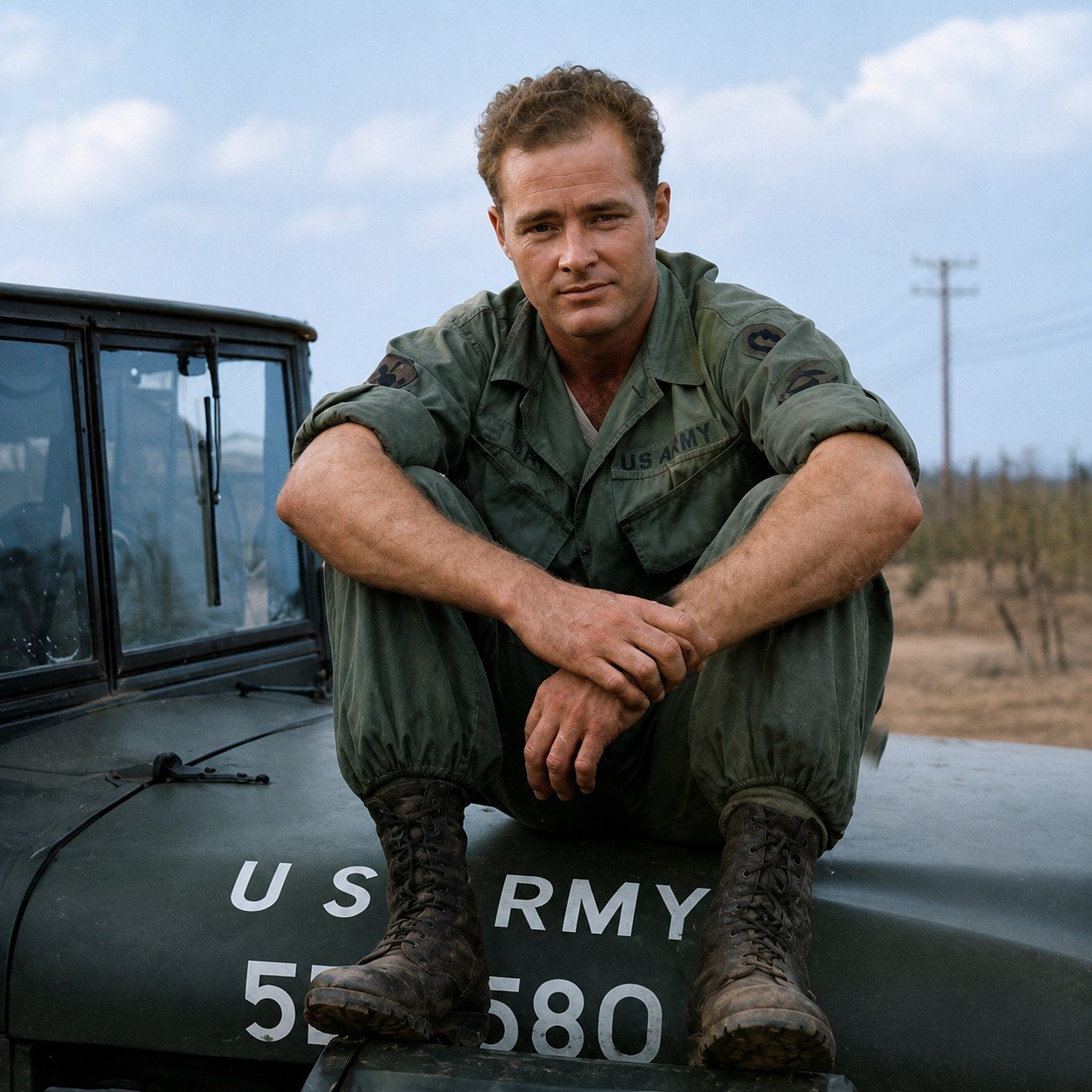 William Wayne Seay
 William Wayne Seay
Seay served with the 62nd Transportation Company, 7th Transportation Battalion, 48th Transportation Group. When the convoy stopped, he took cover behind the rear wheels of a vehicle carrying high-explosive ammunition and began firing as enemy soldiers moved toward the road. According to his Medal of Honor citation, Seay killed two enemy soldiers who advanced to within approximately thirty feet of his position and then spotted and killed a sniper firing from a tree about seventy-five meters away.
An enemy grenade then landed beneath an ammunition trailer near Seay. Rather than remain behind cover and risk the grenade detonating beneath the explosives, he ran into the open, picked it up and threw it back toward the enemy. When another grenade landed only a few yards away, he did the same thing again.
During the fighting, a bullet struck Seay in the right wrist and effectively disabled his shooting hand. Weak from blood loss, he moved into a shallow ditch but continued fighting. When he saw three enemy soldiers who had penetrated the American position and were preparing to fire on other men nearby, Seay rose and fired his rifle with his left hand, killing all three. Moments later, he was struck by a sniper's bullet and mortally wounded.
William Wayne Seay died beside Route 22 at only nineteen years old. For his actions during the ambush, he was posthumously promoted to Sergeant and awarded the Medal of Honor. His extraordinary stand became the best-known individual story from Ap Nhi, but all around him other transportation soldiers were fighting much the same kind of battle.
Read William Seay's Medal of Honor Citation Here:
Reinforcements Fight Their Way In
Help could not reach the convoy immediately. The low cloud ceiling that had hung over the road that morning initially made effective helicopter support extremely difficult, while the ambush site was also beyond the useful range of much of the artillery available to the 1st Brigade. The men trapped on Route 22 therefore had to hold their positions while reaction forces organized and fought their way toward them.
Helicopter gunships eventually entered the battle, although poor weather forced crews to attack at unusually low and shallow angles. From the air, pilots could see enemy troops moving among the vehicles and carrying supplies toward the tree line, but the proximity of friendly troops made targeting difficult.
Ground forces from the 25th Infantry Division also began converging on the ambush. Tanks and armored personnel carriers from Troop B, 3rd Squadron, 4th Cavalry pushed toward the southern end of the plantation. Company C, 3rd Battalion, 22nd Infantry was inserted by helicopter near the northern portion of the ambush zone, while elements of the 4th Battalion, 23rd Infantry fought toward the trapped convoy from the road.
What had begun as an attack on transportation troops developed into a larger battle as the reaction forces pushed into the rubber plantation from several directions. Gradually, the pressure on the convoy began to ease, allowing surviving drivers to climb back into vehicles that could still move and begin getting them out of the kill zone. Even then, the enemy continued fighting, and the battle lasted for nearly nine hours before the attackers finally withdrew after nightfall.
Three Men Taken Prisoner
Not every American missing from the convoy had been killed. Three soldiers were captured during the fighting.
Specialist Fourth Class Thomas Nelson Jones of the 86th Transportation Company became a prisoner of the Viet Cong and was released on January 1, 1969. Staff Sergeant Kenneth Ray Gregory of the 352nd Transportation Company was also captured and later escaped captivity in 1969.
The third man, Bobby Louis Johnson of the 62nd Transportation Company, remained a prisoner for years. He was not released until February 12, 1973, at Loc Ninh during Operation Homecoming. Johnson had climbed into his truck on August 25, 1968 expecting to make another supply run to Tay Ninh. He came home nearly four and a half years later.
The Men Who Hauled the War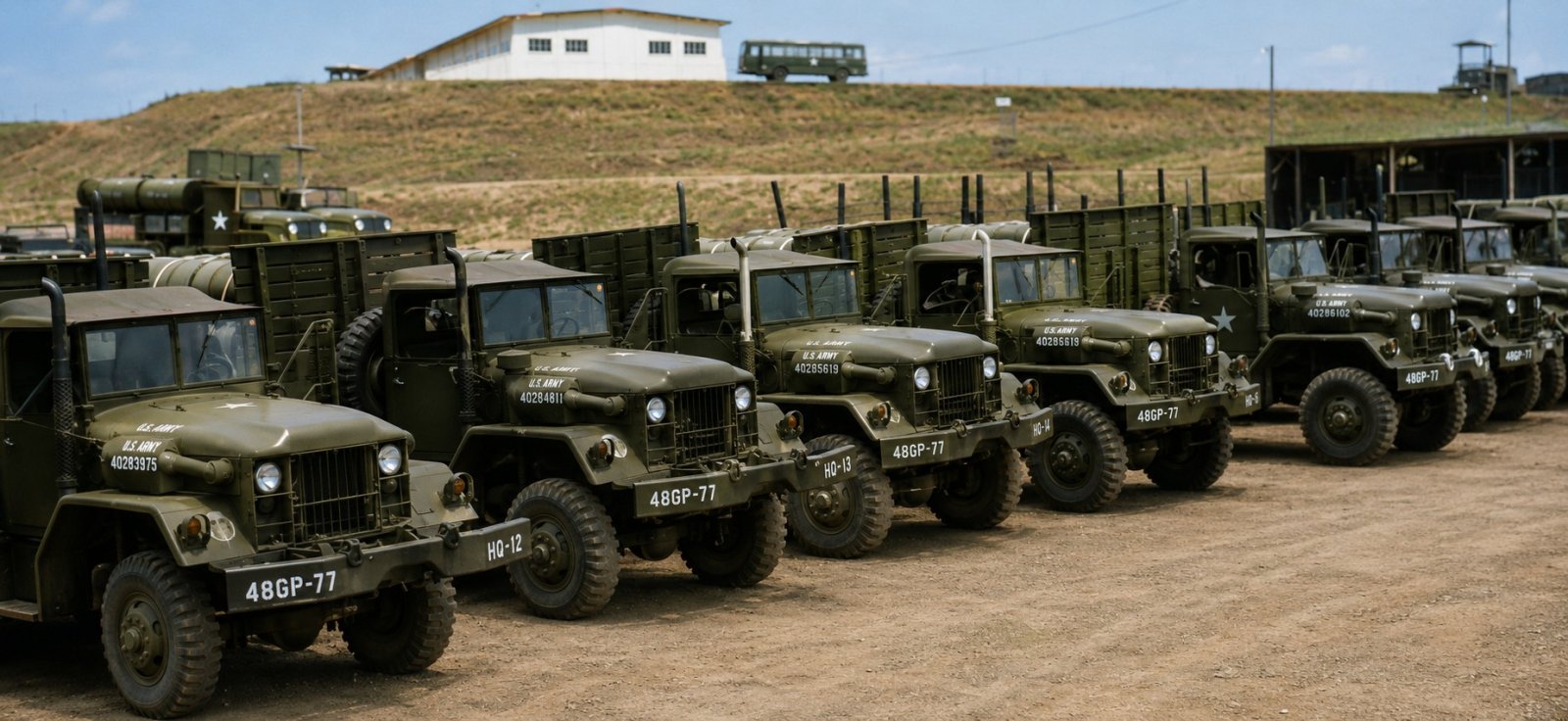
The Battle of Ap Nhi demonstrated something fundamental about the Vietnam War: there were few genuinely safe rear areas. Infantrymen expected to encounter the enemy, but truck drivers hauling food, ammunition and fuel could suddenly find themselves in a battle just as violent as anything being fought by the combat units they supplied.
Those transportation troops performed a mission upon which almost every other part of the war depended. Every gallon of fuel used by an armored vehicle, every artillery shell fired from a firebase, every case of rations eaten by an infantry company and every box of ammunition carried into the field had to reach its destination somehow. Much of it traveled by truck over roads that were vulnerable to mines, snipers and carefully planned ambushes.
The men who drove those routes increasingly improvised their own protection, adding steel plate, sandbags, machine guns and other weapons to vulnerable cargo trucks. Across Vietnam, those experiments eventually produced the heavily armed gun trucks that became one of the most recognizable symbols of the Army's transportation war. Battles such as Ap Nhi made the reason for those vehicles painfully clear.
When outside security failed to reach them quickly enough, the drivers had to defend themselves. On Route 22, they did exactly that.
Remembering Ap Nhi
Surviving historical sources disagree over the exact American casualty total from the battle, particularly over which casualties were counted as members of the convoy and which belonged to the several reaction forces that later entered the fight. The memorial accounting maintained by The Virtual Wall identifies nineteen American servicemen who died in connection with the action, including eleven members of the convoy and its escorts and eight soldiers from the reaction force.
Convoy and Escort Personnel
PFC Arden Gene Sonnenberg
10th Transportation Company
PFC Danny Joe Mitchell
62nd Transportation Company
SGT William Wayne Seay
62nd Transportation Company
Medal of Honor
SP4 Eugene Turner
62nd Transportation Company
CPL Jerry Lee Simmonds
75th Field Service Company
SP4 William Charles Lawson
86th Transportation Company
PFC Paul Henry Pirkola
86th Transportation Company
SP4 Claude Franklin Vaughn
86th Transportation Company
SSG Byron Joseph Mitchell
556th Transportation Company
SFC Thomas Earl Richey
556th Transportation Company
SP4 Guy Allen Davison
Company C, 720th Military Police Battalion
Silver Star
Reaction Force
SSG William Theodore Anderson
Troop B, 3rd Squadron, 4th Cavalry
Silver Star
SP4 Robert Joseph Dorshak
Company C, 3rd Battalion, 22nd Infantry
Silver Star
SP4 Cornelius F. Murphy Jr.
Company C, 3rd Battalion, 22nd Infantry
PFC Leland Eugene Radley
Company C, 3rd Battalion, 22nd Infantry
SP4 Earl Sherman Bazemore
Company C, 4th Battalion, 23rd Infantry
Died of wounds August 26, 1968
CPL Patrick John McCormick
Company C, 4th Battalion, 23rd Infantry
CPL Jeffrey Willis Pohjola
Company C, 4th Battalion, 23rd Infantry
CPT James Barrington Westbrook
Troop B, 3rd Squadron, 4th Cavalry
Silver Star
For most of the men who left Long Binh that morning, August 25 was supposed to be another supply run. They would load the trucks, drive north, unload their cargo and eventually return. Instead, beside a rubber plantation on Route 22, they found themselves trapped between burning fuel, exploding ammunition and enemy soldiers charging from the trees.
They had started the morning as truck drivers, military policemen and transportation soldiers responsible for hauling the war.
Before the day was over, they had been forced to fight it.
Sources
U.S. Army Transportation Corps history of the 7th Transportation Battalion, including the convoy route, weather, enemy preparations, false ARVN column, ambush sequence and response.
Richard E. Killblane, U.S. Army Transportation Branch Historian, “Ambush at Ap Nhi,” for the convoy composition, security situation, battle and account of William Seay.
Official U.S. Army Medal of Honor citation for Sergeant William W. Seay.
U.S. Naval History and Heritage Command, Seay (T-AKR-302), for Seay's service and the action for which the ship was later named.
The Virtual Wall, “Ambush at Ap Nhi,” for the memorial casualty accounting, individual names and prisoner information.
National Archives material concerning Bobby Louis Johnson's capture on August 25, 1968 and release at Loc Ninh on February 12, 1973.