Operation Valkyrie and the July 20 Plot
The Conspirators, Their Fates, and Three Possible Endings to Hitler’s Germany
July 20, 2026

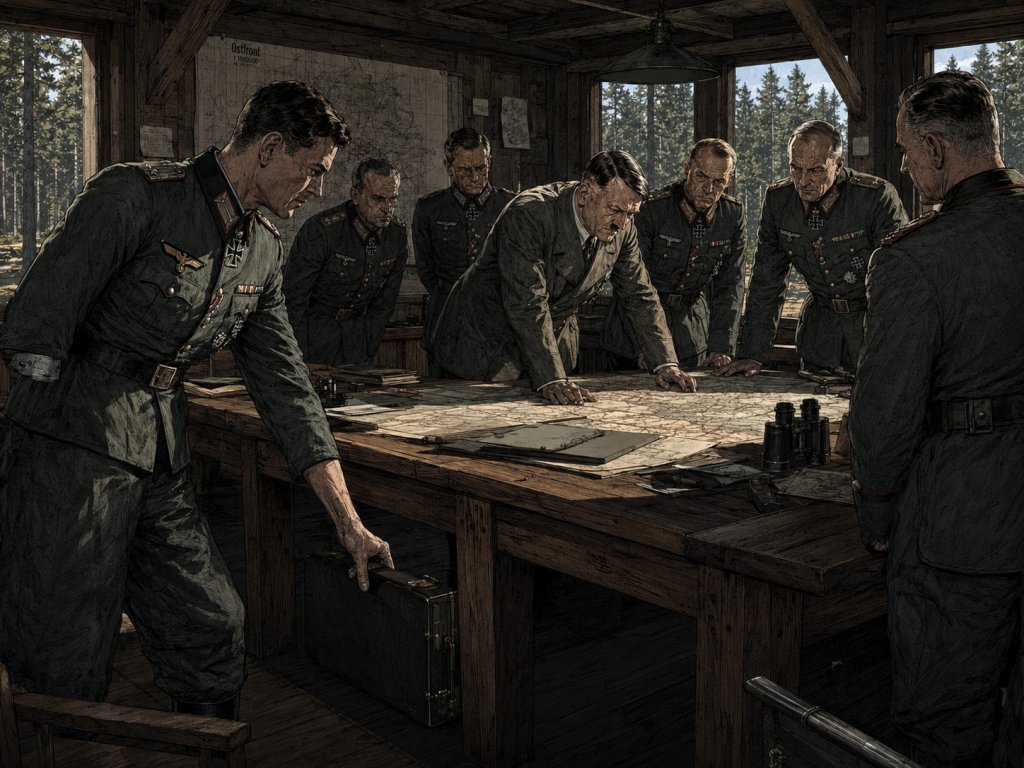
On July 20, 1944, a coalition of German military officers, conservative officials, diplomats, clergy, labor leaders, and political opponents attempted not merely to assassinate Adolf Hitler, but to seize control of Germany itself. Their failure condemned many of them to brutal deaths and left behind one of the most compelling questions of the Second World War: What might have happened if Operation Valkyrie had succeeded?
For a few uncertain hours on July 20, 1944, the fate of Nazi Germany hung on a telephone call, a briefcase bomb, and the willingness of German soldiers to obey orders whose true purpose most of them did not understand.
The assassination attempt carried out by Colonel Claus Schenk Graf von Stauffenberg at Hitler’s Wolf’s Lair headquarters has become one of the best-known episodes of resistance to the Nazi regime. Yet the explosion itself was only one part of a much larger operation.
The conspirators did not intend simply to kill Hitler and hope that the Nazi state collapsed on its own. They planned to use an existing military emergency procedure known as Operation Valkyrie to mobilize Germany’s Replacement Army, occupy government buildings, seize radio and telephone centers, disarm the SS, arrest senior Nazi leaders, and establish a new government before Hitler’s remaining supporters could organize a response.
It was an audacious plan built from desperation.
By July 1944, Germany was losing the war on every major front. Allied armies had landed in Normandy on June 6, while in the east the Soviet Union’s Operation Bagration was tearing apart Germany’s Army Group Centre. Germany’s cities and industries were under relentless air attack. Its armies were suffering losses that could no longer be replaced, and its remaining allies were beginning to look for ways out of the war. The twin blows in France and Belarus made it increasingly clear that Germany’s ultimate military defeat was only a matter of time. (Imperial War Museums)
What remained uncertain was how much longer the war would continue, how many more people would die, how much of Germany would be destroyed, and how far the Soviet Union would advance before the fighting ended.
The men and women behind the July 20 conspiracy believed that Hitler had to be removed before he carried Germany into complete national ruin.
They came extraordinarily close.
But killing Hitler was only the beginning. Even had the bomb succeeded, the conspirators would still have needed to defeat the SS, neutralize the Nazi Party, control Germany’s communications, win the obedience of military commanders across Europe, and convince millions of soldiers and civilians that the orders being issued from Berlin were legitimate.
Operation Valkyrie was therefore both an assassination attempt and a race for control of the German state.
Resistance From Within the German Establishment
German resistance to Hitler never existed as a single, unified movement.
It included communists, Social Democrats, trade unionists, Christian clergy, students, aristocrats, diplomats, intelligence officers, civil servants, and members of the German military. These groups frequently disagreed about Germany’s future and often distrusted one another. Some wanted a democratic republic. Others envisioned a conservative or authoritarian government without Hitler. Some hoped to restore Germany’s pre-Nazi legal traditions, while others remained nationalists who believed Germany should retain territory it had conquered.
The military and conservative opposition that eventually produced the July 20 Plot emerged slowly.
Many German officers had initially welcomed Hitler’s rearmament program, his rejection of the Treaty of Versailles, and his promise to restore German military power. Some supported his early foreign-policy victories. Others disliked the Nazi Party’s vulgarity and brutality but continued serving because they believed loyalty to the state and obedience to military authority were sacred obligations.
Resistance intensified when officers became convinced that Hitler was leading Germany toward a catastrophic war.
General Ludwig Beck, chief of the German General Staff, opposed Hitler’s plans for a confrontation over Czechoslovakia in 1938. Beck believed Germany was not prepared for a general European war and resigned his position. He subsequently became one of the most important figures in the conservative resistance and was intended to serve as Germany’s provisional head of state after Hitler’s removal.
The Munich Agreement temporarily undermined the 1938 opposition. Britain and France accepted Hitler’s annexation of the Sudetenland, Hitler appeared triumphant, and officers who had considered moving against him lost their opportunity.
The war that followed transformed opposition from political discontent into active conspiracy.
Germany’s invasion of Poland in 1939 brought Europe into war. The subsequent occupation of Poland and the Soviet Union exposed German officers and administrators to mass shootings, deportations, starvation policies, the destruction of Jewish communities, and other crimes committed by the SS, police units, and parts of the German military.
For some conspirators, these crimes became a central reason to act. Others were motivated more by Germany’s deteriorating military position, Hitler’s interference with military operations, or fear that defeat would destroy the German nation.
The coalition that eventually formed around July 20 was therefore morally and politically complicated.
Many conspirators displayed genuine courage and knowingly risked not only their own lives but also the lives of their families. Several wanted to end mass murder, restore the rule of law, punish criminal officials, and reconcile Germany with the rest of Europe. At the same time, some had originally supported elements of National Socialism or German expansion. A few had served in commands implicated in war crimes or occupation policies before turning against Hitler.
The conspirators should not be reduced either to flawless democratic heroes or to opportunists trying to save Germany only after defeat became inevitable. They represented a broad and often contradictory coalition united by one immediate conclusion: Hitler had to be removed.
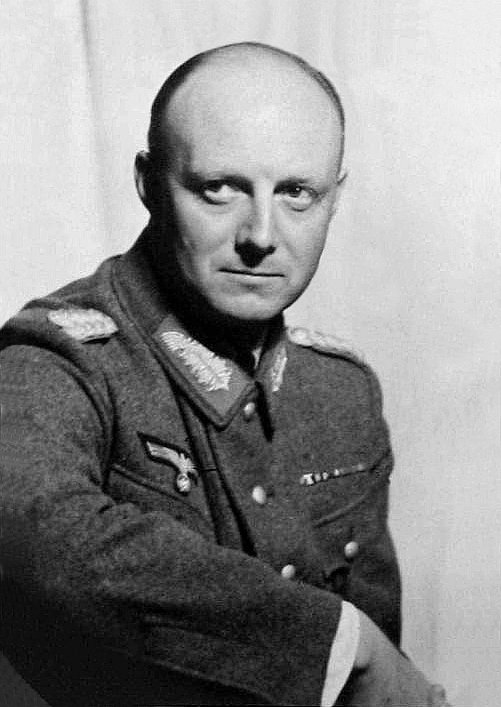 Henning von Tresckow and the Military Resistance
 Henning von Tresckow and the Military Resistance
One of the most determined members of the military opposition was Major General Henning von Tresckow.
Serving on the Eastern Front, Tresckow became a central organizer of resistance within the German Army. He recruited sympathetic officers, created contacts between military and civilian opposition groups, and helped plan several attempts to kill Hitler.
In March 1943, Tresckow and his associates placed explosives disguised as bottles of liquor aboard Hitler’s aircraft. The bomb failed to detonate, apparently because of the cold temperature in the aircraft’s baggage compartment.
Other plans were considered. Officers volunteered to shoot Hitler during inspections. Explosives were prepared for suicide attacks. Opportunities repeatedly disappeared because Hitler changed his schedule, left meetings early, or refused to appear at the expected location.
The difficulty was not simply reaching Hitler. The conspirators believed that Hitler had to be killed in circumstances that would also allow them to seize the government. An assassination without an organized coup could result in Heinrich Himmler, Hermann Göring, Joseph Goebbels, or another Nazi leader inheriting power.
Tresckow became one of the chief architects of the plan to transform Operation Valkyrie into the mechanism for overthrowing the regime. By 1943, he was working closely with Stauffenberg to prepare the military coup.
Tresckow understood the odds against them.
He also understood that failure might be historically important. Even if the conspirators could not save themselves or Germany, he believed they had to demonstrate that not every German had followed Hitler willingly and that some had resisted despite knowing the probable cost.
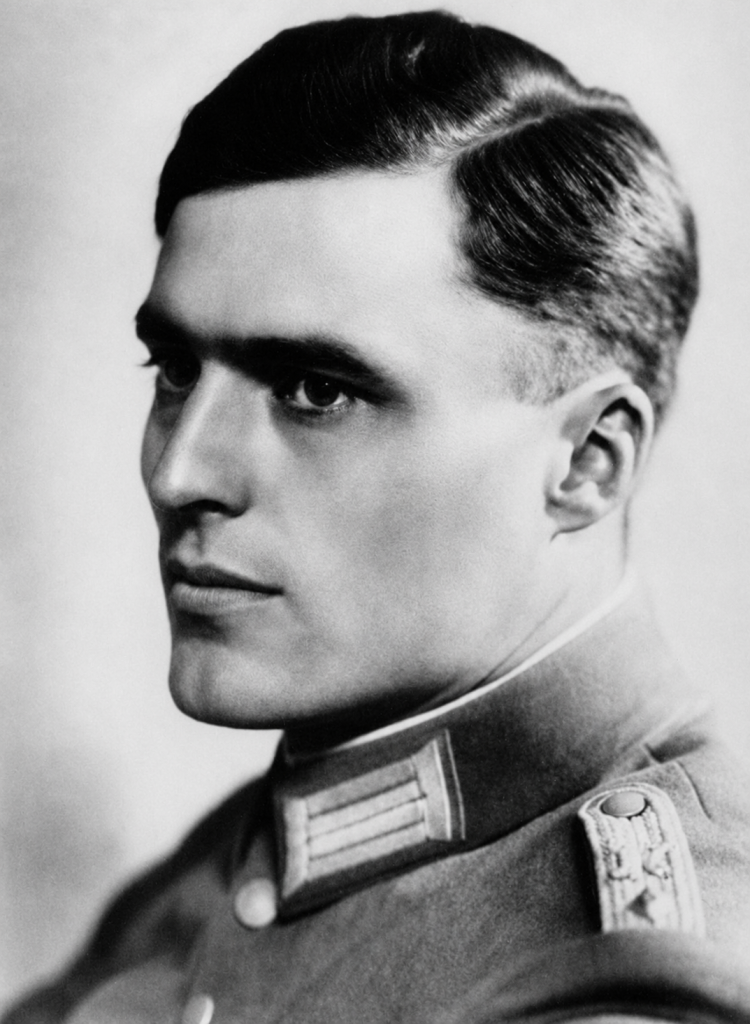 Claus von Stauffenberg
 Claus von Stauffenberg
Claus Schenk Graf von Stauffenberg came from a Catholic aristocratic family with a long tradition of military service.
Like several other conservative officers, Stauffenberg did not begin as a committed opponent of Hitler. He had been attracted to ideas of German national renewal and initially welcomed parts of the transformation that followed Hitler’s rise. Over time, however, his experiences during the war and his growing awareness of Nazi crimes convinced him that the regime was criminal and that Hitler’s continued leadership would destroy Germany.
Stauffenberg served in Poland, France, the Soviet Union, and North Africa. In April 1943, he was severely wounded during an Allied air attack in Tunisia. He lost his right hand, two fingers from his left hand, and his left eye.
Despite his wounds, he returned to duty.
In the autumn of 1943, Stauffenberg joined the General Army Office under General Friedrich Olbricht. His new position brought him into the heart of the Replacement Army command structure and gave him access to senior officials, including Hitler.
He quickly became the driving force behind the conspiracy.
Stauffenberg possessed the energy, determination, position, and personal courage necessary to move the plot forward. He helped revise the Valkyrie orders, coordinated military and civilian participants, and eventually accepted that he would have to perform the assassination himself.
That decision created a serious problem.
Stauffenberg was expected to carry the bomb to Hitler’s headquarters, confirm Hitler’s death, return to Berlin, and then help direct the coup. The success of the entire operation came to depend on one badly wounded officer carrying out several tasks hundreds of miles apart within a matter of hours.
What Operation Valkyrie Really Was
Operation Valkyrie was not originally created to overthrow Hitler.
It was an official contingency plan developed by the German Army to mobilize units of the Replacement Army in the event of serious domestic unrest. German leaders feared that millions of foreign forced laborers, prisoners, or other groups inside the Reich might revolt if Germany’s military position deteriorated.
Under Valkyrie, reserve troops could be ordered into major cities to guard government buildings, maintain order, secure communications, and suppress disturbances.
General Friedrich Olbricht and other conspirators realized that the plan could be rewritten.
Instead of telling soldiers that they were participating in a coup against Hitler, commanders would be informed that Hitler had been assassinated by a treacherous faction within the Nazi leadership. The SS and senior Nazi officials would be accused of attempting to seize control of the state. Replacement Army units would then be ordered to occupy government offices, radio stations, telephone exchanges, railway facilities, Nazi Party headquarters, and SS installations.
Most of the soldiers carrying out Valkyrie would not know they were serving the resistance. They would believe they were protecting the government from an SS coup.
The plan exploited one of the Nazi state’s greatest weaknesses: its overlapping chains of command.
Hitler’s Germany was not a perfectly organized machine. Government ministries, military headquarters, Nazi Party offices, the SS, the police, and regional officials competed for authority. Much of the system depended on personal access to Hitler. If Hitler died and communications with his headquarters were cut, the conspirators hoped that professionally prepared military orders bearing legitimate signatures would be obeyed before the Nazi leadership understood what was happening.
The coup government envisioned Ludwig Beck as provisional head of state and former Leipzig mayor Carl Friedrich Goerdeler as chancellor. Other military and civilian leaders had been selected for important positions. Their broad intentions included ending Nazi lawlessness, stopping political murder, restoring legal government, and seeking an end to the war. (gdw-berlin.de)
The rewritten plan was clever, but it depended on speed.
The conspirators had to convince military commanders that Hitler was dead before Hitler could prove that he was alive.
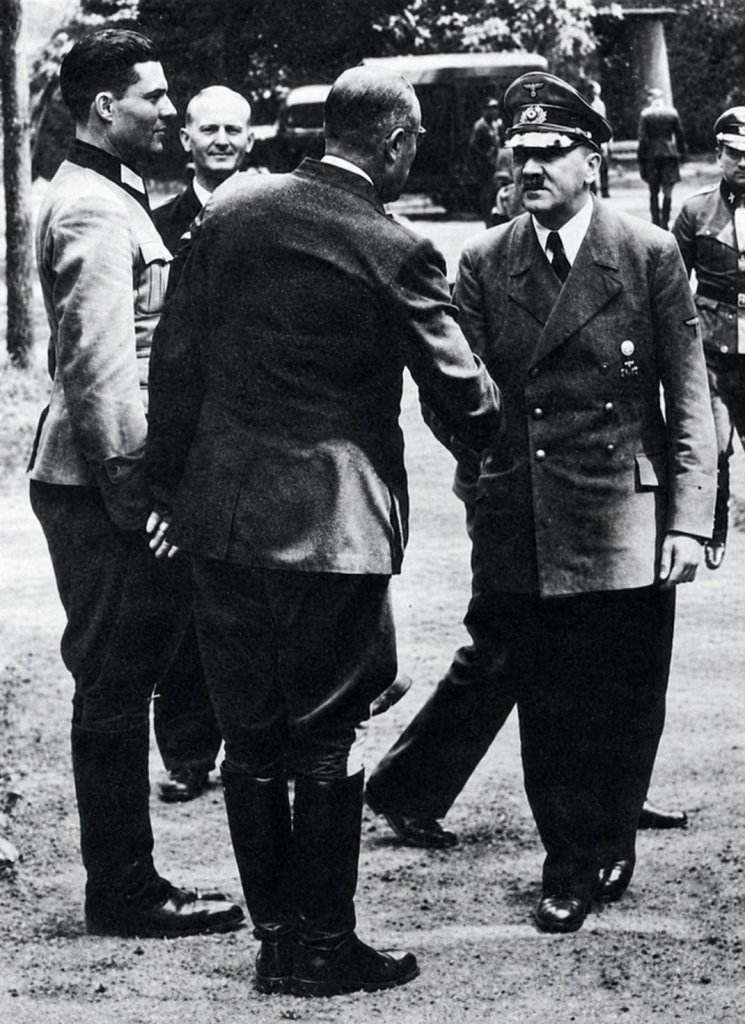 July 20, 1944
On the morning of July 20, Stauffenberg flew from Berlin to Hitler’s Wolf’s Lair headquarters near Rastenburg in East Prussia.
He carried explosives concealed in his briefcase.
The bomb was based on British-made plastic explosive and used a silent chemical time-delay fuse. Stauffenberg had planned to arm two explosive charges, but time, interruptions, and the difficulty of working with only three fingers prevented him from preparing both. He placed the single armed charge in his briefcase and entered the conference area.
The location of the meeting had changed.
Instead of taking place in a reinforced underground bunker, the conference was held in an above-ground wooden barracks because of the summer heat. This gave the blast somewhere to escape and greatly reduced its destructive force.
Stauffenberg placed the briefcase beneath the conference table near Hitler and left the room on the pretext of taking a telephone call.
After his departure, the briefcase was moved.
An officer apparently found it obstructive and shifted it behind one of the table’s heavy wooden supports. That support stood between Hitler and the bomb.
At approximately 12:45 p.m., the explosive detonated.
The blast devastated the conference room. Four people eventually died from their wounds, and many others were injured. Hitler survived with relatively minor injuries, protected by the heavy table support and the open construction of the building. Watching from a distance, Stauffenberg saw the destruction and believed no one could have survived. He left the Wolf’s Lair and began the journey back to Berlin.
This was the moment upon which everything depended.
The Fatal Delay
The Valkyrie orders should have been issued immediately.
Instead, confusion paralyzed the conspiracy.
Reports from the Wolf’s Lair indicated that Hitler had survived. General Olbricht and other conspirators in Berlin hesitated. They feared launching a coup while Hitler remained alive, but every minute of hesitation allowed Hitler’s headquarters to regain control of communications.
Stauffenberg, still traveling back to Berlin, insisted that Hitler was dead.
Only around 4:00 p.m.—more than three hours after the explosion—did Olbricht and Albrecht Mertz von Quirnheim begin issuing the Valkyrie orders in earnest. Reserve Army units moved into parts of Berlin. Government offices were surrounded. Communications centers and military facilities were occupied.
In Paris, conspirators temporarily arrested senior SS and security officials. In other cities, commanders began responding to orders from Berlin.
For a brief period, the plan worked.
The problem was that the conspirators had failed to isolate Hitler’s headquarters. Conflicting orders began arriving from the Wolf’s Lair. Some military commanders were told that Valkyrie was an illegal action. Others learned that Hitler had survived.
The Nazi government also began broadcasting news of Hitler’s survival.
Once officers heard that Hitler was alive, the conspirators’ central claim—that the SS had murdered Hitler and attempted to seize the state—collapsed. Soldiers who had followed the Valkyrie orders began to reconsider their actions. Commanders withdrew their support. Units that had occupied buildings became uncertain whom they were supposed to arrest.
The coup began disintegrating from the inside.
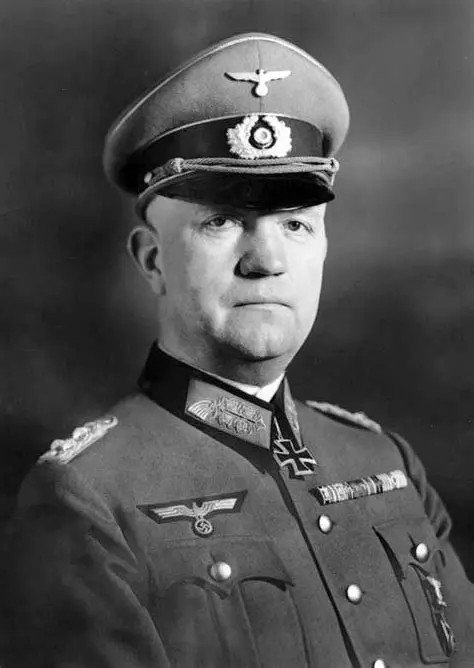 The Bendlerblock Falls
The center of the conspiracy in Berlin was the Bendlerblock, headquarters of the Replacement Army.
General Friedrich Fromm, commander of the Replacement Army, knew enough about the conspiracy to understand what was happening, but he had not committed himself openly. When the coup appeared likely to fail, Fromm attempted to protect himself.
By late evening, loyal officers and soldiers had regained control of the building.
Fromm convened an improvised court-martial and condemned several conspirators to death. His haste was probably intended partly to silence men who could expose his own knowledge of the plot.
Shortly after midnight, in the courtyard of the Bendlerblock, Friedrich Olbricht, Albrecht Mertz von Quirnheim, Claus von Stauffenberg, and Werner von Haeften were executed by firing squad.
As the shots were fired, Stauffenberg reportedly cried out for what has been variously translated as “Long live sacred Germany” or “Long live our sacred Germany.”
Ludwig Beck had been permitted to attempt suicide. After failing to kill himself immediately, he was shot on Fromm’s orders.
Within hours, the principal operation in Berlin was over.
Fromm did not save himself. His attempt to conceal his involvement aroused Nazi suspicion, and he was later arrested, tried, and executed.
Hitler’s Revenge
Hitler treated the assassination attempt as both a personal betrayal and an opportunity to destroy every remaining center of opposition.
The Gestapo investigated military commands, government ministries, aristocratic families, religious circles, diplomatic networks, and civilian resistance groups. Diaries, letters, private conversations, and family connections became evidence. People only loosely connected to the July 20 Plot were arrested along with those directly involved.
The repression extended far beyond the men who had prepared the bomb or issued the Valkyrie orders. The United States Holocaust Memorial Museum records that thousands were arrested in the aftermath and that many were executed, often on extremely limited evidence.
Many defendants were brought before the People’s Court under its notorious president, Roland Freisler.
The proceedings were not genuine trials. Defendants were denied dignity, shouted down, insulted, and presented as traitors for propaganda purposes. Some had their belts and suspenders removed so that they struggled to hold up their trousers before the cameras.
Sentences were generally decided in advance.
Executions were carried out at Berlin-Plötzensee Prison and other locations. Hitler demanded that some victims die slowly and that the executions be filmed for his private viewing and for selected members of the Nazi leadership.
The repression also served a political purpose. It allowed Hitler to purge the military of officers whose loyalty he distrusted and to strengthen Nazi Party and SS control over the armed forces.
The Principal Conspirators and Their Fates
The July 20 conspiracy involved a large and sometimes loosely connected network. The following figures were among its principal military and civilian participants or were closely connected to the attempt.
The Men Killed at the Bendlerblock
Colonel Claus Schenk Graf von Stauffenberg carried the bomb into Hitler’s conference and then returned to Berlin to help direct the coup. He was executed by firing squad shortly after midnight on July 21, 1944.
General Friedrich Olbricht helped transform Valkyrie into a coup plan and ordered its activation on July 20. He was shot beside Stauffenberg.
Colonel Albrecht Mertz von Quirnheim was one of Stauffenberg’s closest collaborators and played a major role in transmitting the Valkyrie orders. He was executed in the Bendlerblock courtyard.
Lieutenant Werner von Haeften served as Stauffenberg’s adjutant and accompanied him to the Wolf’s Lair. At the execution, Haeften reportedly stepped in front of Stauffenberg before being shot himself.
General Ludwig Beck was intended to become provisional head of state. He attempted suicide after the collapse of the coup but failed to die immediately. A soldier then shot him on Fromm’s orders.
The Military Organizers
Major General Henning von Tresckow was one of the intellectual and organizational architects of the military resistance. Learning that the coup had failed, he killed himself near the front on July 21, 1944, using a grenade. His death was intended partly to protect other conspirators by preventing his interrogation.
Field Marshal Erwin von Witzleben was intended to become commander in chief of the German armed forces under the new government. He was arrested, humiliated during his People’s Court trial, and executed at Plötzensee Prison on August 8, 1944.
General Erich Hoepner, a former armored commander who had been dismissed from the army by Hitler, was designated for an important command role in the coup. He was executed on August 8, 1944.
- General Carl-Heinrich von Stülpnagel, military commander in occupied France, ordered the arrest of SS and security officials in Paris. After the coup failed, he attempted suicide and was left blinded. He was returned to Germany, tried, and executed on August 30, 1944. Responsible for using troops to occupy key sites in the capital. He was sentenced to death and executed on August 8, 1944.
The Civilian Leadership
Carl Friedrich Goerdeler, former mayor of Leipzig, was the conspirators’ intended chancellor. He had spent years developing contacts and plans for a post-Hitler government. Already wanted by the Gestapo before July 20, he was captured in August, sentenced to death in September, and kept alive for months while the Gestapo extracted information from him. He was executed on February 2, 1945.
Julius Leber, a Social Democrat, former concentration camp prisoner, and important link between the conservative and labor resistance, was arrested before the assassination attempt, on July 5, 1944. He was executed on January 5, 1945.
Peter Yorck von Wartenburg, a central figure in the Kreisau Circle and a participant in discussions about Germany’s political and moral reconstruction, was executed on August 8, 1944.
Adam von Trott zu Solz, a diplomat who attempted to communicate the resistance’s intentions to foreign governments, was executed on August 26, 1944.
Fritz-Dietlof von der Schulenburg, a former civil servant who had broken with the Nazi regime and joined the resistance, was executed on August 10, 1944.
Ulrich von Hassell, a former German ambassador to Italy and an important conservative opponent of Hitler, was executed on September 8, 1944.
The Stauffenberg Family
Berthold Schenk Graf von Stauffenberg, Claus’s older brother, was a lawyer and active participant in planning Germany’s post-Nazi government. He was tried before the People’s Court and executed on August 10, 1944.
Other members of the Stauffenberg family were arrested under the Nazi practice of punishing relatives of alleged traitors. Claus von Stauffenberg’s pregnant wife, Nina, was imprisoned, and the couple’s children were taken away and placed under another name. They survived the war.
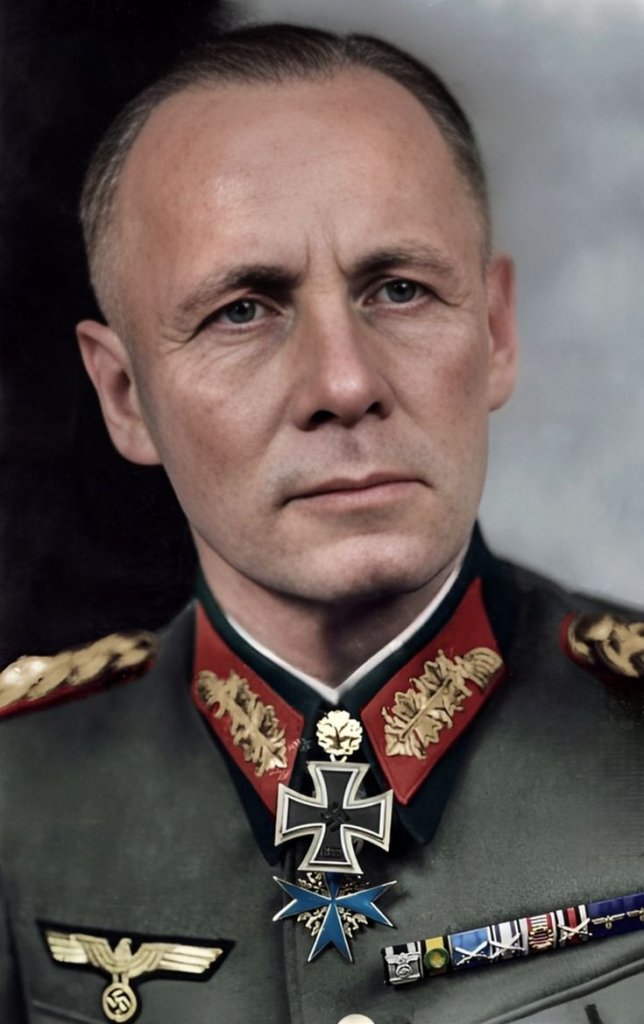 Erwin Rommel
Field Marshal Erwin Rommel’s exact relationship to the assassination plan remains debated.
Rommel had become convinced that Germany had to end the war and that Hitler’s leadership was bringing disaster. Some conspirators believed his prestige could help legitimize a new government. Evidence suggests that Rommel supported removing Hitler from power, although he may have opposed assassination and preferred arrest or forced resignation.
After his name appeared during interrogations, Hitler offered him a choice: face a public trial that would endanger his family and staff or take poison and receive a state funeral.
On October 14, 1944, Rommel committed suicide. The Nazi regime announced that he had died from wounds suffered in an Allied air attack and buried him as a national hero
The Moral Complexity of the Conspiracy
The deaths of the July 20 conspirators were acts of Nazi judicial murder. Their willingness to oppose Hitler, knowing that failure meant torture and death, required extraordinary courage.
Nevertheless, understanding the conspiracy requires honesty.
Not every conspirator had always opposed Hitler. Not every participant supported parliamentary democracy. Some imagined a conservative state dominated by traditional elites. Some hoped Germany might retain parts of its territorial gains. A few had earlier taken part in occupation systems connected to Nazi crimes.
General Stülpnagel, army quartermaster Eduard Wagner, and police official Arthur Nebe, among others associated with the wider resistance, had served within organizations implicated in atrocities.
Other conspirators had opposed Nazi persecution for years. Social Democrats such as Julius Leber brought a different political tradition from conservative soldiers like Beck. Members of the Kreisau Circle discussed federalism, Christian ethics, social responsibility, European cooperation, and the rebuilding of law after dictatorship.
The July 20 coalition was not united by one vision of the future.
It was united by the belief that continuing under Hitler was intolerable.
Why Operation Valkyrie Failed
The most obvious reason was that Hitler survived.
Had the bomb killed him, officers receiving conflicting orders would have been unable to hear Hitler’s voice or receive instructions bearing his personal authority. The conspirators’ claim that a Nazi faction had seized power would have been much harder to disprove.
But Hitler’s survival was not the only cause.
The Bomb Was Too Weak
Only one of the two explosive charges was armed. The second charge, even if merely placed in the briefcase without its own fuse, might have detonated sympathetically and dramatically increased the force of the explosion.
The Meeting Location Changed
The above-ground conference room allowed the force of the explosion to escape. A detonation inside the intended bunker would likely have been far more lethal.
The Briefcase Was Moved
The heavy table support shielded Hitler from much of the blast.
Communications Were Not Seized
The conspirators failed to isolate the Wolf’s Lair immediately. Hitler’s headquarters continued communicating with military commands and Nazi officials throughout Germany.
Valkyrie Was Activated Too Late
The delay of more than three hours was disastrous. The coup depended on creating a completed fact before anyone could organize resistance. Instead, the conspirators allowed uncertainty to spread.
Senior Commanders Hesitated
Many German officers disliked Hitler or believed the war was lost, but that did not mean they were prepared to commit treason. The military oath to Hitler personally remained psychologically powerful. Some commanders waited to see who would win before choosing sides.
The Nazi Leadership Was Not Arrested
Himmler, Göring, Goebbels, and other senior figures remained free. As long as they retained access to the SS, police, radio, telephone system, and loyal military units, the conspiracy faced organized opposition.
The plot therefore failed both mechanically and politically.
The bomb did not kill Hitler, and the conspirators did not seize the state quickly enough to compensate.
What Would “Success” Have Required?
Any serious alternate history must define what a successful Operation Valkyrie actually means.
Hitler’s death alone would not necessarily have meant the success of the conspiracy.
For Valkyrie to succeed completely, several things would have needed to happen almost simultaneously:
Hitler would have had to die in the explosion. Stauffenberg or another reliable witness would have needed to communicate that fact immediately. The conspirators in Berlin would have had to activate Valkyrie without hesitation. Military units would have needed to seize communications centers before the Wolf’s Lair could issue counterorders. Goebbels, Himmler, Göring, Martin Bormann, and other Nazi leaders would have needed to be arrested or killed. The SS would have needed to be disarmed before it could mobilize. Finally, military commanders throughout Germany and occupied Europe would have needed to recognize the authority of Beck, Goerdeler, and the Replacement Army.
Even then, the new government would have inherited an almost impossible situation.
Germany was fighting the United States, the British Empire, the Soviet Union, and their allies. Allied leaders had publicly committed themselves to Germany’s unconditional surrender. The January 1942 Declaration by United Nations pledged the signatories not to make a separate peace, while the Casablanca Conference of January 1943 formally announced the demand for unconditional surrender.
The conspirators hoped that removing Hitler and ending Nazi rule would persuade Britain and the United States to negotiate.
That hope may have been unrealistic.
The Western Allies feared that a negotiated settlement would repeat the aftermath of the First World War, allowing German nationalists to claim that the army had not truly been defeated but had been betrayed by politicians. They also had strategic and political commitments to the Soviet Union and were determined to destroy Germany’s ability to launch another war.
This does not mean that Hitler’s death would have made no difference.
It means that Germany’s future would have depended on who controlled Berlin after the assassination, whether the German armed forces remained intact, and how the Allied governments responded.
Three broad scenarios stand out.
Scenario One: Himmler Crushes the Coup and Takes Power
In this scenario, Stauffenberg’s bomb kills Hitler, but Operation Valkyrie does not fully succeed.
The conspirators hesitate, communications remain open, or the SS avoids disarmament. Heinrich Himmler escapes arrest and moves rapidly to destroy the plot.
Of all the surviving Nazi leaders, Himmler possessed perhaps the most dangerous combination of ideological authority, armed power, intelligence information, and police control.
As Reichsführer-SS and chief of the German police, he controlled the SS, Gestapo, concentration-camp system, security services, and an expanding military force in the Waffen-SS. He had access to files that could expose suspected opponents across the government and armed forces. By the final years of the war, he was generally regarded as one of the most powerful men in Germany after Hitler. (Holocaust Encyclopedia)
Himmler could announce that Hitler had been murdered by reactionary army officers acting in cooperation with Germany’s enemies. The SS could portray itself as the defender of the Reich and the guardian of Hitler’s legacy.
Joseph Goebbels would likely support such a narrative through radio broadcasts and propaganda. Martin Bormann could use the Nazi Party organization to rally regional leaders. Waffen-SS units could be ordered against Replacement Army formations in Berlin and other cities.
Germany might then descend into a brief but violent internal conflict.
In some cities, army units could support the conspirators. In others, SS and police commands might remain loyal to Himmler. Local commanders could change sides as reports arrived. Political prisoners might be murdered in anticipation of defeat. Military prisons, government ministries, railway stations, and radio centers could become battlegrounds.
Himmler would not be guaranteed victory.
Göring had been formally designated as Hitler’s successor under earlier arrangements and still possessed influence within the Luftwaffe. Bormann controlled access to the Nazi Party apparatus. Goebbels possessed propaganda power. Senior army officers might refuse to accept an SS dictatorship. Rivalries among the Nazi leadership could fracture the regime.
However, if Himmler acted first, secured the radio network, controlled Berlin, and captured the Valkyrie leaders, he could plausibly emerge as the dominant figure.
A Himmler Government
A government led by Himmler would almost certainly begin with an enormous purge.
The July 20 repression already demonstrated what the Nazi regime was prepared to do after a failed assassination. With Hitler dead, Himmler would have even greater incentive to eliminate possible rivals. Army officers, conservative politicians, diplomats, aristocrats, clergy, and civil servants could be arrested in numbers far beyond the historical purge.
The Wehrmacht might be placed under even tighter ideological control. SS officers could be inserted into military headquarters. Political reliability might become more important than competence. Himmler could attempt to portray the war as a final racial struggle requiring complete mobilization.
The Holocaust and other systems of persecution would almost certainly continue as long as the SS retained the means to carry them out. Indeed, Himmler might accelerate killings out of fear that camps and evidence would soon fall into Allied hands.
Yet Himmler was not merely an ideological fanatic. He was also capable of secret maneuvering when he believed Germany faced destruction.
Historically, Himmler explored the possibility of negotiating with the Western Allies while continuing the war against the Soviet Union. In the final months of the war, his representatives made surrender approaches that were rejected.
A Himmler regime in July 1944 might therefore pursue two contradictory policies at once: intensify repression inside Germany while secretly offering Britain and the United States a western settlement.
The Western Allies would have had almost no reason to trust him.
Himmler was one of the principal architects of the Holocaust and the Nazi terror system. Any government openly headed by him would represent continuity with Hitler, not a credible break from Nazism. Britain and the United States would almost certainly continue demanding surrender.
The result would probably be continued war.
Without Hitler, military decision-making might change, but Himmler had little ability as a conventional commander. His growing military authority during the final months of the historical war produced disastrous results. A Himmler government could be even more chaotic, more suspicious, and more dependent on terror than Hitler’s final regime.
Germany would still face overwhelming Allied power in the west and Soviet power in the east.
Himmler might survive for weeks or months. He might be overthrown by the army, challenged by Göring or Bormann, or killed in another internal coup. Germany could fragment into rival military and political zones.
But his most immediate legacy would likely be bloodshed: civil conflict inside Germany, expanded purges, continued mass murder, and a war carried on under the banner of avenging Hitler.
In this scenario, Hitler dies, but Nazism survives him.
Scenario Two: The New Government Seeks Peace in the West and Continues the War Against the Soviet Union
This was the outcome many conspirators hoped might be possible.
Under this scenario, Hitler dies, the Valkyrie orders are implemented successfully, and the Beck-Goerdeler government gains control of Berlin. Himmler, Göring, Goebbels, Bormann, and other Nazi leaders are arrested. The SS is disarmed or placed under army control. Military commanders recognize the new government.
The new leaders announce that Hitler and the Nazi Party have been removed.
They promise to end political murder, restore law, close the concentration camps, stop the extermination of Europe’s Jews, release political prisoners, and punish leading criminals through legal proceedings. These aims would broadly reflect goals expressed by major elements of the German resistance.
The government then contacts Britain and the United States.
Its offer is dramatic: German forces will cease fighting in France, Italy, the Low Countries, and perhaps Norway and Denmark. Western Allied troops may occupy agreed areas. German units will withdraw from the west or surrender their heavy weapons.
In exchange, the new government asks to retain control of the German Army in the east and continue fighting the Soviet Union.
The Germans might present the proposal as a choice between two futures.
In the first, the Western Allies reject negotiations and allow the Soviet Union to occupy Central Europe. In the second, Britain and the United States recognize the new German government and permit the Wehrmacht to serve as a barrier against Soviet expansion.
To some British and American anti-communists, such an argument might eventually sound attractive.
In July 1944, however, acceptance would have been extraordinarily difficult.
Britain and the United States were bound politically and strategically to the Soviet Union. The Allied governments had pledged not to conclude a separate peace. Roosevelt, Churchill, and Stalin had publicly committed themselves to Germany’s defeat, while the demand for unconditional surrender was intended to prevent another negotiated conclusion that could later be portrayed as a betrayal of the German Army.
Accepting the German offer would mean abandoning Stalin while the Red Army was destroying German forces on the Eastern Front.
It would also mean trusting German generals who had helped wage wars of conquest and occupation. Western leaders could reasonably suspect that the new government was attempting to save Germany from defeat rather than genuinely dismantle the system that had produced the war.
The Possibility of a Separate Western Surrender
A more plausible development would be a confused or partial surrender.
German commanders in France and Italy might stop fighting before politicians finalized a formal agreement. Western Allied armies could advance rapidly into Germany as German units laid down their weapons.
The new German government could order troops in the west not to resist while directing every available division, aircraft, and train toward the Eastern Front.
This would create an immediate crisis within the Allied coalition.
Stalin would demand that Britain and the United States prevent German forces from being transferred east. He would suspect that the Western powers were deliberately allowing Germany to continue fighting the Soviet Union.
If the Western Allies occupied Germany peacefully while the Wehrmacht continued resisting the Red Army, the physical boundary between the western and Soviet military systems could emerge months earlier and much farther east than it did historically.
The political atmosphere would become poisonous.
Soviet leaders already feared that Britain and the United States might seek a separate arrangement with Germany. A western ceasefire combined with continued German resistance in the east would appear to confirm their worst suspicions.
Could This Have Caused the Third World War?
A direct Western-Soviet war in 1944 or 1945 was possible only through a chain of increasingly dangerous decisions.
The first step would be a successful anti-Hitler government in Berlin.
The second would be a German offer to surrender in the west while continuing in the east.
The third—and least likely—would be the decision by Britain and the United States to accept that arrangement in defiance of their promises to the Soviet Union.
If all three occurred, armed confrontation could follow.
Western troops might enter German territory and secure bridges, railways, factories, and airfields. German forces retreating from France and Italy might be reorganized behind the western occupation line. Soviet armies would continue advancing through Poland and toward Germany.
At some point, the Red Army would demand access to territories occupied by the Western Allies or attempt to disarm German formations sheltering behind them.
A local clash could escalate.
German officers might offer intelligence, transportation networks, and surviving military formations to the Western Allies. British and American commanders would face the question of whether to disarm those Germans or use them as a barrier against Soviet forces.
Such a development could produce something resembling the opening of a third world war before the second had formally ended.
But this was not the most likely result.
The United States and Britain were still deeply engaged against both Germany and Japan. Their populations had not fought for years in order to rescue the German Army from the Soviet Union. The Western Allies also relied on the Red Army to continue destroying German forces and wanted Soviet participation against Japan.
A more realistic outcome would be an earlier and more severe diplomatic crisis rather than immediate war.
The Western powers might accept local German surrenders while refusing to recognize any right to continue fighting the Soviet Union. They could insist that German forces in the east also surrender. The Beck-Goerdeler government might protest, delay, or attempt to negotiate better terms, but it would have little leverage.
If Germany continued fighting only in the east, the Western Allies could halt aid, refuse diplomatic recognition, and threaten renewed military operations. Soviet forces would continue advancing.
The new German government would eventually face the same choice Hitler refused to make: unconditional surrender or national destruction.
An Earlier Cold War
Even without open war, the July 20 coup could profoundly change the postwar world.
If German resistance collapsed in the west during the summer or autumn of 1944, American and British forces could advance farther into Germany and perhaps into Central Europe before Soviet armies arrived.
The eventual occupation boundaries might be different.
Berlin might fall to Western rather than Soviet forces. More of Germany could lie inside the western occupation zone. Czechoslovakia, Austria, or portions of Poland might become flashpoints. Refugees and German military units fleeing west could create enormous political and humanitarian problems.
Stalin would emerge from the war convinced that the Western powers had attempted to deny the Soviet Union the victory it had purchased with millions of lives.
The Cold War might begin before Germany had formally surrendered.
Germany itself might avoid the same form of total collapse experienced in 1945, but it would remain divided, occupied, and distrusted. Its new leaders could be treated not as victorious liberators but as defeated officials attempting to negotiate after removing the dictator who had already lost the war.
This scenario offers the greatest possibility of a radically different geopolitical outcome.
It also carries the greatest risk that the alliance against Hitler would break apart before Hitler’s war had truly ended.
Scenario Three: The New Government Takes Power but Continues the War
The third possibility is less dramatic politically but perhaps more plausible militarily.
Hitler dies. The conspirators successfully seize Berlin. The SS leadership is arrested, and a new government is announced.
The new leaders approach the Allies and ask for negotiations.
The Allies refuse.
They reiterate that Germany must surrender unconditionally on every front.
The conspirators then face a terrible dilemma.
They can surrender immediately and accept occupation, disarmament, territorial losses, and the possibility of prosecution—or they can continue fighting in the hope of gaining better terms.
National pride, fear of Soviet occupation, concern for German civilians, and pressure from military commanders could all push the new government toward continuing the war.
The language from Berlin would change.
The new government would no longer claim to be fighting for Hitler, National Socialism, or racial conquest. It would announce that it was defending the German homeland, protecting civilians, preserving national unity, and preventing the Soviet occupation of Central Europe.
But on the battlefield, German soldiers would continue fighting many of the same enemies in many of the same places.
A More Rational German War Effort
Removing Hitler might improve some German military decisions.
Hitler frequently ordered armies to hold indefensible positions, rejected withdrawals until it was too late, and treated retreat as betrayal. A professional military government might abandon exposed territories, shorten defensive lines, evacuate threatened formations, and preserve manpower.
German forces in France might withdraw more quickly toward the Rhine rather than being destroyed in encirclements. In the east, commanders could retreat to more defensible lines without waiting for permission from Hitler’s headquarters.
Production could be concentrated on practical weapons rather than prestige projects. Resources might be redirected toward fighters, antitank weapons, fuel conservation, and territorial defense.
These changes could make German resistance more efficient.
Paradoxically, the removal of Hitler might allow Germany to fight better.
However, improved command could not correct Germany’s strategic situation.
The Allies possessed overwhelming air superiority, industrial capacity, fuel supplies, naval control, and access to global resources. Germany had lost enormous territories and millions of soldiers. Its oil supply was collapsing. Its rail network and cities were under constant attack. Soviet forces were advancing with enormous strength, while American, British, Canadian, French, and other Allied troops were firmly established in Western Europe.
A new government might avoid some of Hitler’s most catastrophic mistakes, but it could not reverse the outcome of the war.
Would the War Last Longer?
It is possible.
A more rational withdrawal from France and the Soviet Union could preserve German divisions that were historically destroyed. Better-prepared defenses along the Rhine, the Vistula, or the Oder might impose heavier casualties on the Allies.
The German population might rally around a government that could claim to have removed the criminals responsible for the war while continuing to defend the country from invasion.
Without Hitler’s increasingly irrational interference, the Wehrmacht could perhaps prolong organized resistance.
Yet the opposite is also possible.
The new government could authorize local surrenders, evacuate cities instead of declaring them fortresses, and abandon militarily hopeless positions. It could stop executing German soldiers and civilians accused of defeatism. It might open concentration camps, halt deportations, and permit humanitarian aid.
Even while continuing formal military resistance, it could remove many of the policies that made the final months of the war so destructive.
The war might therefore last almost as long while killing fewer civilians and prisoners.
Alternatively, the new government could discover within weeks that no negotiated peace was available and surrender before the end of 1944.
Fighting Without Hitler
The central question would be whether German soldiers continued to obey.
Millions had sworn a personal oath to Hitler. His death and the revelation of Nazi crimes could weaken the psychological hold of the regime. Some units might surrender immediately. Others—particularly formations in the east—might continue fighting out of fear of Soviet captivity.
Waffen-SS units could refuse to recognize the new government. Even if Himmler were arrested, local SS commanders might continue resistance or form independent strongholds.
Germany could experience a divided collapse rather than an orderly continuation of the war.
The regular army might obey Berlin. Fanatical Nazi units might fight against both the new government and the Allies. Regional leaders could attempt to maintain their own authority. Civil war, military resistance, and Allied invasion could overlap.
In the end, the new government would almost certainly lose.
Its achievement would not be military victory but the possibility of ending Nazi mass murder, reducing the destruction of German cities, and surrendering before the battles of 1945 consumed hundreds of thousands of additional lives.
In this scenario, Germany’s flag and government change, but the war continues until its strategic reality becomes impossible to deny.
Which Scenario Was Most Likely?
Had Hitler died but the conspirators failed to capture the Nazi leadership immediately, some form of struggle between the army and SS would have been highly probable.
Himmler possessed the police and security machinery necessary to challenge the conspirators. The Nazi Party still had millions of members and an established regional organization. The Waffen-SS remained heavily armed. A clean and uncontested transfer of power was unlikely.
If the conspirators gained firm control, their hope of negotiating a western peace would encounter the Allied demand for unconditional surrender.
The most likely response from Britain and the United States would have been to welcome the destruction of the Nazi leadership while still demanding Germany’s complete surrender. A new government might receive somewhat more diplomatic consideration, but it would not automatically receive favorable peace terms.
The possibility of a Western alliance with Germany against the Soviet Union is fascinating, especially in light of the Cold War that followed. In July 1944, however, it would require Britain and the United States to abandon their existing alliance while Germany still occupied foreign territory and the war against Japan remained unfinished.
An immediate Third World War was therefore possible but improbable.
An earlier Cold War was considerably more plausible.
The most realistic overall outcome may have been a combination of the second and third scenarios: the new government would seek a western settlement, the Allies would refuse a separate peace, and Germany would continue fighting briefly while attempting to improve the terms or geography of its eventual surrender.
Could Valkyrie Have Shortened the War?
Yes—but not necessarily in the way its planners expected.
The Western Allies might not have negotiated. The Soviet Union might not have paused its advance. Germany might still have been occupied and divided.
But Hitler’s death in July 1944 could have removed the man most determined to fight until Germany itself was destroyed.
A new government might have abandoned the demand that every town become a fortress. It might have permitted armies to surrender before encirclement. It could have stopped the execution of political prisoners and concentration-camp inmates. It might have ended the deportation and murder of Europe’s remaining Jews.
It could have prevented the Ardennes offensive, the destruction of additional German cities, the battles in East Prussia, the siege of Budapest, the fighting along the Oder, and the final Battle of Berlin.
Even if the war continued for several months, millions of people might have experienced a very different ending.
That does not mean every conspirator’s political vision would have produced a democratic or just Germany. Nor does it erase the earlier compromises, service, or crimes associated with some participants.
It means that time mattered.
Every week that Hitler remained in power brought more executions, more death marches, more bombings, more destroyed cities, and more soldiers and civilians killed in battles whose result was no longer seriously in doubt.
The Legacy of July 20
Operation Valkyrie failed as an assassination and as a coup.
Hitler survived. The Nazi regime remained in power for more than nine additional months. The war continued until Germany lay in ruins, Soviet soldiers occupied Berlin, and Hitler killed himself in his bunker on April 30, 1945.
Many of the July 20 conspirators were executed as traitors.
For years after the war, their reputation remained contested. Some Germans initially viewed them through the language created by Nazi propaganda. Others questioned why they had waited until 1944 or emphasized the conservative and nationalist beliefs of many participants.
Over time, July 20 became a central symbol of German resistance.
Its meaning does not depend on pretending that every conspirator was perfect.
The importance of the plot lies partly in its contradictions. Men who had served the German state turned against its leader. Officers trained to obey concluded that obedience had become criminal. Conservatives worked alongside Social Democrats. Aristocrats, civil servants, clergy, diplomats, and soldiers accepted that legality could not be restored without first breaking the law of a dictatorship.
They acted late.
They acted imperfectly.
They failed.
But they acted knowing almost exactly what failure would mean.
The bomb at the Wolf’s Lair did not end Hitler’s rule. The orders issued from the Bendlerblock did not bring down the Nazi state. The men standing before the firing squad in the courtyard did not live to see Germany liberated from the regime they had attempted to overthrow.
Their deaths nevertheless demonstrated that Hitler never possessed the unquestioned loyalty of every German officer, official, or citizen.
Operation Valkyrie remains a story of courage, hesitation, compromise, miscalculation, and lost possibilities.
Had the bomb been slightly closer, had the second explosive charge been armed, had the briefcase not been moved, or had the orders gone out three hours earlier, the Second World War might have reached a very different conclusion.
Perhaps Himmler would have inherited the ruins of Hitler’s empire.
Perhaps a new German government would have split the Allied coalition and brought the Western powers and the Soviet Union to the edge of another world war.
Perhaps Germany would simply have continued fighting under different leaders until the same inevitable defeat.
No alternate outcome can be known with certainty.
What can be known is that, for a few hours on July 20, 1944, Hitler’s government was vulnerable—and a small group of people decided that the danger of doing nothing had finally become greater than the almost certain cost of resistance.
The historical narrative and speculative scenarios are separated so readers can clearly distinguish documented events from informed alternate-history analysis.
Every artifact has a story. Click here to help us save the next one.