Michigan State, the CIA, and South Vietnam: When Education and Intelligence Became Entangled
Michigan State’s Vietnam mission mixed education, police reform and CIA secrecy, raising lasting questions about trust, power and Cold War ethics too.
September 3, 2026

 Long before large numbers of American combat troops entered Vietnam, the United States was already trying to build South Vietnam into a stable, anti-communist nation. That effort involved diplomats, military advisers and intelligence officers, but it also drew in an unexpected participant: Michigan State University.
After Vietnam was divided in 1954, Ngo Dinh Diem became the leader of South Vietnam. His new government faced enormous difficulties. Its institutions were weak, hundreds of thousands of refugees were arriving from the communist North, political and religious factions competed for power, and underground communist networks were already active. American officials believed South Vietnam needed more than weapons. It needed trained civil servants, functioning government departments and an effective police system.
Michigan State became involved largely through political scientist Wesley Fishel, who had met Diem before he came to power and developed a close relationship with him. In 1955, the Michigan State University Group, commonly called MSUG, began working in South Vietnam under agreements with Diem’s government and the American foreign-aid mission.
Much of its work was legitimate and understandable. Michigan State advisers trained government employees, helped improve administrative procedures and strengthened the school responsible for educating South Vietnamese civil servants. Some Vietnamese officials were also brought to Michigan for additional training. The goal was to help a young and unstable country develop the institutions necessary to govern itself.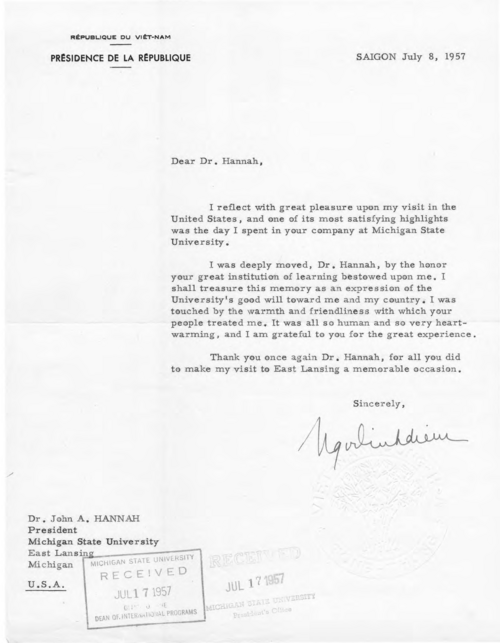
The most controversial part of the program involved the police. South Vietnam had inherited several law-enforcement and security organizations from the French colonial period. These agencies did not operate like one modern American police department. Some handled ordinary crime, while others were responsible for intelligence, political security and investigating threats to the government.
Because South Vietnam was confronting communist infiltration and an emerging insurgency, its police were expected to do more than patrol streets and investigate robberies. They were also supposed to uncover underground organizations, gather intelligence and combat political subversion. Michigan State advisers assisted with police administration, communications, recordkeeping and training.
In that setting, the presence of American intelligence specialists was not entirely unreasonable. A conventional police adviser could teach investigative procedures, but identifying secret political networks and enemy agents required counterintelligence experience. The CIA therefore had an understandable reason to be involved.
The deeper issue was how that involvement was handled.
 Several CIA officers were placed inside the Michigan State police program and operated beneath university cover. They appeared to be associated with MSU while working with South Vietnam’s investigative and internal-security services. Their purpose was broader than simply observing from a distance. They helped guide and train organizations responsible for counter-subversion and intelligence work.
Exactly who at Michigan State knew the full truth remains difficult to determine. Evidence suggests that some senior university and project officials understood that intelligence personnel were attached to the police mission. They knew the general purpose involved security and counter-subversion. Many ordinary professors and staff members, however, may have known little or nothing about the arrangement.
Even senior officials may not have known every detail of what the CIA officers were doing. Intelligence work is deliberately compartmentalized. A university administrator might know that intelligence specialists were present without being told their specific assignments, contacts or methods. Michigan State was therefore probably neither completely deceived nor completely informed.
That uncertainty is important. It would be unfair to describe every member of the program as a willing participant in a covert operation. Most were genuine educators and advisers performing the work they had been sent to do. At the same time, it would also be inaccurate to portray the university as entirely unaware of the intelligence connection.
The greatest ethical problem was the use of a university as cover. Universities depend upon openness and trust. Professors travel, conduct research and interview people because they are understood to be scholars rather than secret government agents. Once CIA officers operated beneath an academic identity, people had reason to wonder whether other American professors might also be gathering intelligence.
Had the United States openly stated that government security advisers were helping South Vietnam reorganize its police and investigative services, the arrangement probably would have caused far less controversy. Countries routinely receive foreign police and military assistance. The advisers could have worked through the American embassy, the foreign-aid mission or another government agency without borrowing the reputation of a university.
The identities of individual CIA officers could not realistically have been publicly announced, but secrecy did not require disguising them as university personnel. Protecting an intelligence officer’s identity is one thing. Allowing that officer to appear as an educator is something more troubling because it compromises the independence and credibility of legitimate scholars.
The nature of Diem’s government made the situation even more serious. At first, many Americans believed Diem offered South Vietnam its best chance for stability. He faced a genuine communist threat, and strengthening the government’s institutions appeared both logical and necessary.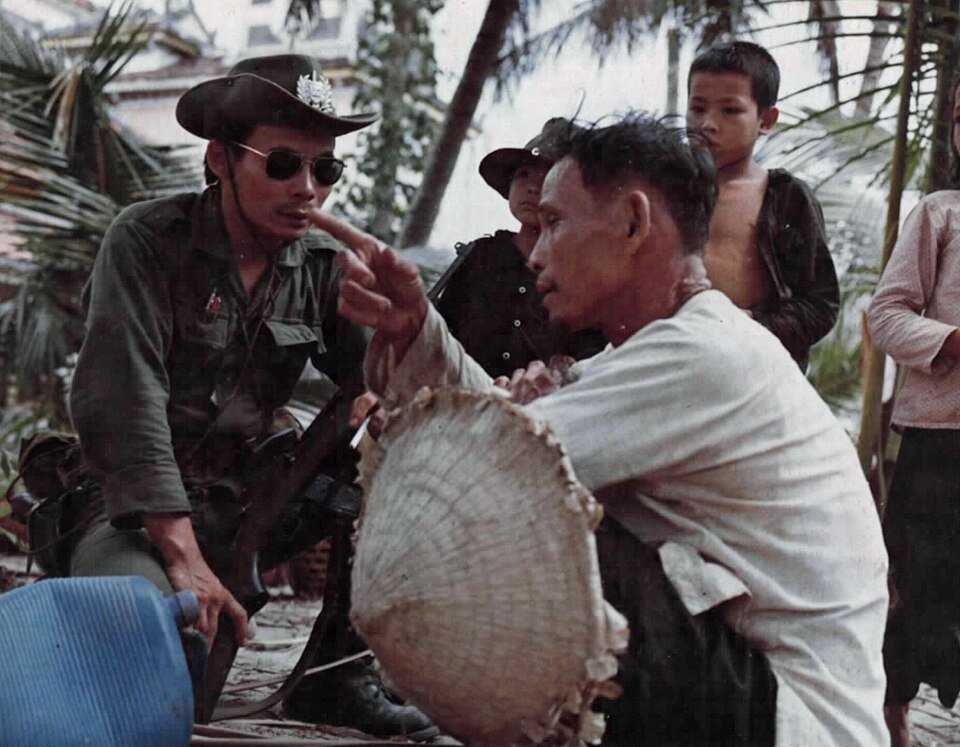
Over time, however, Diem became increasingly authoritarian. His government concentrated power, restricted political opposition and used police and security forces against critics as well as communist organizers. The line between defending the country from insurgency and defending Diem’s personal rule became increasingly difficult to see.
That changed how Michigan State’s assistance was judged. Teaching police officers how to maintain records, communicate efficiently and investigate crimes can serve a legitimate public purpose. Strengthening organizations that may also watch, arrest or silence political opponents is far more troubling. The same tools can protect a society or help control it, depending on who uses them and for what purpose.
Michigan State did not suddenly discover the CIA presence and immediately end its entire Vietnam program. There appears to have been no single moment of revelation. Instead, the university gradually reduced its direct involvement in police and security work during the late 1950s. By 1960, the American foreign-aid mission had taken control of the police program.
Michigan State continued its public-administration and educational work until 1962. The larger project ended after its relationship with Diem deteriorated and his government refused to renew the contract. The university’s police involvement had already been transferred elsewhere, but its academic work continued for several more years.
The controversy became public in 1966 when Ramparts magazine accused Michigan State of assisting Diem’s security forces and providing cover for CIA officers. University officials disputed many of the article’s more dramatic accusations, but the central revelation that intelligence personnel had operated beneath an MSU identity became the part of the story that endured.
The fairest interpretation lies somewhere between the extremes. Michigan State was not simply a fake CIA front, and most of its employees were not spies. The university performed real educational and administrative work that South Vietnam genuinely needed. Intelligence expertise also had a logical purpose in a country confronting communist infiltration.
 The lasting problem was the way those activities became intertwined. CIA officers operated beneath an academic identity, knowledge of the arrangement was uneven, and the university became connected to a security system that could be used for both national defense and political repression.
Had the intelligence assistance been handled openly through an American government agency, the program might be remembered as a complicated but understandable Cold War effort. Instead, the CIA’s use of Michigan State’s academic identity turned it into a much larger controversy about secrecy, trust and the danger of blurring the line between education and covert operations.
 I first approached this story with the natural curiosity—and perhaps a little amusement—of a University of Michigan fan uncovering an uncomfortable chapter in Michigan State’s history. But the deeper I looked, the less it felt like material for a rivalry joke. Some people understood the CIA connection, others may have known only part of it, and many were simply trying to help an unstable country build functioning institutions. It does not leave Michigan State entirely blameless, but neither does it prove that everyone involved acted dishonorably. Instead, it shows how easily good intentions, Cold War fears and government secrecy can become tangled together.
So, while the Michigan rivalry may have led me to this unexpected piece of history, the story ultimately deserves more thought than teasing. Still, some loyalties remain safely uncomplicated.
Go Blue
Support the preservation of America's military history