Little Boy: The Weapon Who's Shadow We Have Never Escaped
Most histories of Hiroshima begin at 8:15 on the morning of August 6, 1945. They begin with the open bomb-bay doors of the Enola Gay, the falling shape of Little Boy, and the flash that transformed a city into the first battlefield of the atomic age.
August 6, 2026

Most histories of Hiroshima begin at 8:15 on the morning of August 6, 1945. They begin with the open bomb-bay doors of the Enola Gay, the falling shape of Little Boy, and the flash that transformed a living city into the first battlefield of the atomic age.
That is understandable—but it also hides what may be the most revealing part of the story.
Little Boy was not simply a bomb carried by an airplane. It was the final product of an enormous human and industrial chain stretching across the United States: physicists working behind fences in New Mexico, young women operating mysterious machines in Tennessee, engineers modifying aircraft in Nebraska and Utah, sailors transporting uranium components across the Pacific, and airmen training for a mission whose true purpose most of them were not permitted to know.
It was also a weapon unlike nearly every important weapon that came before it. No complete Little Boy had ever been detonated. There had been no full-scale rehearsal of its nuclear mechanism and no second uranium weapon waiting on Tinian in case the first failed. The United States possessed enough highly enriched uranium for essentially one combat bomb. On August 6, the theory, the machinery, the aircraft, the crew and the accumulated labor of entire secret cities would either work together—or fail over Hiroshima.
The story of Little Boy, therefore, is not only the story of destruction. It is the story of confidence: scientific confidence, military confidence, industrial confidence and, ultimately, the terrible confidence required to use an untested weapon over a populated city.
A Bomb Built by an Invisible Nation
The Manhattan Project is often reduced to a handful of famous men: General Leslie Groves, J. Robert Oppenheimer, Enrico Fermi and the scientists gathered at Los Alamos. But the weapon dropped on Hiroshima was created by a much larger and less visible nation.
Natural uranium contains only a very small proportion of uranium-235, the isotope capable of sustaining the rapid chain reaction required for a weapon. The overwhelming majority is uranium-238. Separating those nearly identical isotopes was one of the most difficult industrial problems of the war. The United States pursued several methods simultaneously rather than trusting a single process. At Oak Ridge, Tennessee, enormous facilities used electromagnetic separation, gaseous diffusion and liquid thermal diffusion to enrich uranium for the Hiroshima bomb. The K-25 gaseous-diffusion building alone was approximately half a mile long and larger in floor area than the Pentagon.
Many of the people operating those plants did not know what they were producing. Workers were trained to watch gauges, adjust controls and keep needles within prescribed limits. The project was compartmentalized so thoroughly that a person could perform a crucial step in manufacturing the first atomic weapon without understanding the final purpose of the material passing through the machinery. Some of the uranium processed at Oak Ridge moved from one enrichment method to another until it reached the concentration required by Los Alamos.
This is one of the most important ways to understand Little Boy: the bomb was not merely assembled at Los Alamos or Tinian. It was assembled socially and geographically across America. Its components were factories, railroad lines, laboratories, military bases, mines, power plants and communities hidden behind security fences. Before it became a weapon, it was an industrial system.
That system consumed immense resources to produce a comparatively small quantity of usable material. The Manhattan Project built cities and employed tens of thousands of people to create enough highly enriched uranium for one gun-type bomb. The rarity of the material explains both the weapon’s importance and the decision not to conduct a full nuclear test of the design before combat.
 Oppenheimer and the Two Roads to an Atomic Bomb
 Oppenheimer and the Two Roads to an Atomic Bomb
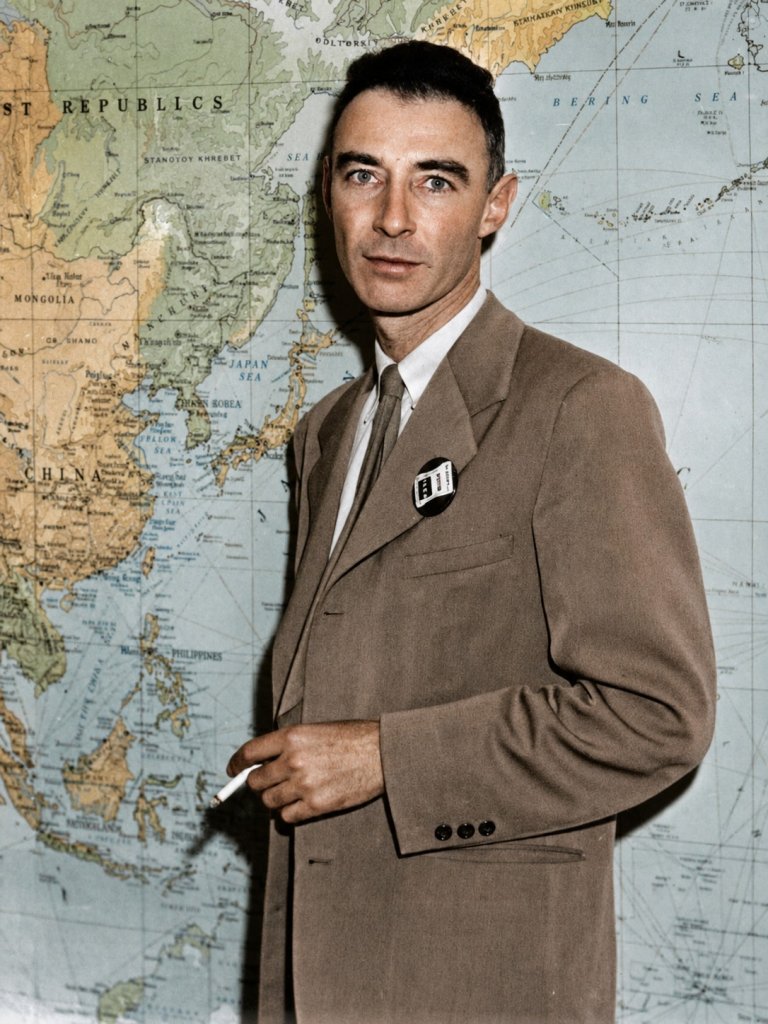
J. Robert Oppenheimer did not personally invent Little Boy. His more important achievement was creating and directing the scientific organization capable of turning nuclear theory into deliverable weapons.
When Los Alamos was established in 1943, Oppenheimer became its scientific director. The choice was not obvious. He had never managed an institution remotely comparable to the laboratory he was being asked to build. Yet he possessed an unusual ability to understand different areas of physics, communicate across specialties and keep extraordinarily talented personalities focused on a common objective. Under his direction, Los Alamos brought together physicists, chemists, engineers, explosives specialists, machinists, metallurgists and military personnel.
The laboratory pursued two fundamentally different weapon designs.
The first was the gun-type weapon. In simplified terms, it used an internal gun mechanism to drive one subcritical mass of uranium-235 into another. When joined rapidly enough, the separate masses formed a supercritical assembly and produced an uncontrolled fission chain reaction.
The second was the implosion weapon. Instead of firing one piece of fissile material into another, carefully arranged high explosives compressed a plutonium core inward from all directions. Implosion was a much more complicated engineering problem, demanding extraordinarily precise timing and symmetry.
The original expectation had been that a gun-type method might work with either uranium or plutonium. That plan collapsed when reactor-produced plutonium was found to contain enough plutonium-240 to create an unacceptable risk of premature detonation. The plutonium bomb therefore had to use implosion, while the gun-type design was retained for uranium.
This produced a strange reversal in the history of the atomic bomb. The weapon most closely associated with Oppenheimer’s dramatic scientific triumph at Trinity was not the weapon dropped on Hiroshima. Trinity tested the plutonium implosion system that became Fat Man. Little Boy, the uranium weapon, was considered so mechanically straightforward and scientifically dependable that its complete nuclear design was never tested before use.
There had been component tests, calculations and experiments involving gun assemblies and nonnuclear materials. Scientists had studied critical masses, neutron behavior, timing and the mechanical performance of the design. But the full weapon—the actual combination of enriched uranium, gun mechanism and bomb assembly—was not detonated until it exploded over Hiroshima. There was not enough enriched uranium to expend one bomb in a test and still guarantee another for combat.
Oppenheimer stood at the center of this entire undertaking, but his relationship with its result became increasingly difficult. When news of Hiroshima reached Los Alamos, he spoke to assembled workers and expressed pride in what the laboratory had accomplished. Accounts indicate that he regretted the bomb had not been completed in time for use against Nazi Germany. After Nagasaki, however, observers described a darker atmosphere at the laboratory, and Oppenheimer himself became increasingly troubled by the consequences of the weapon he had helped create.
The familiar image of Oppenheimer as either triumphant creator or tormented prophet is too simple. In August 1945, he was both. He understood the scientific accomplishment, believed defeating the Axis powers had justified the project, and also recognized that humanity had crossed into a world where cities could be destroyed by individual weapons.
 The Weapon Called Little Boy
 The Weapon Called Little Boy
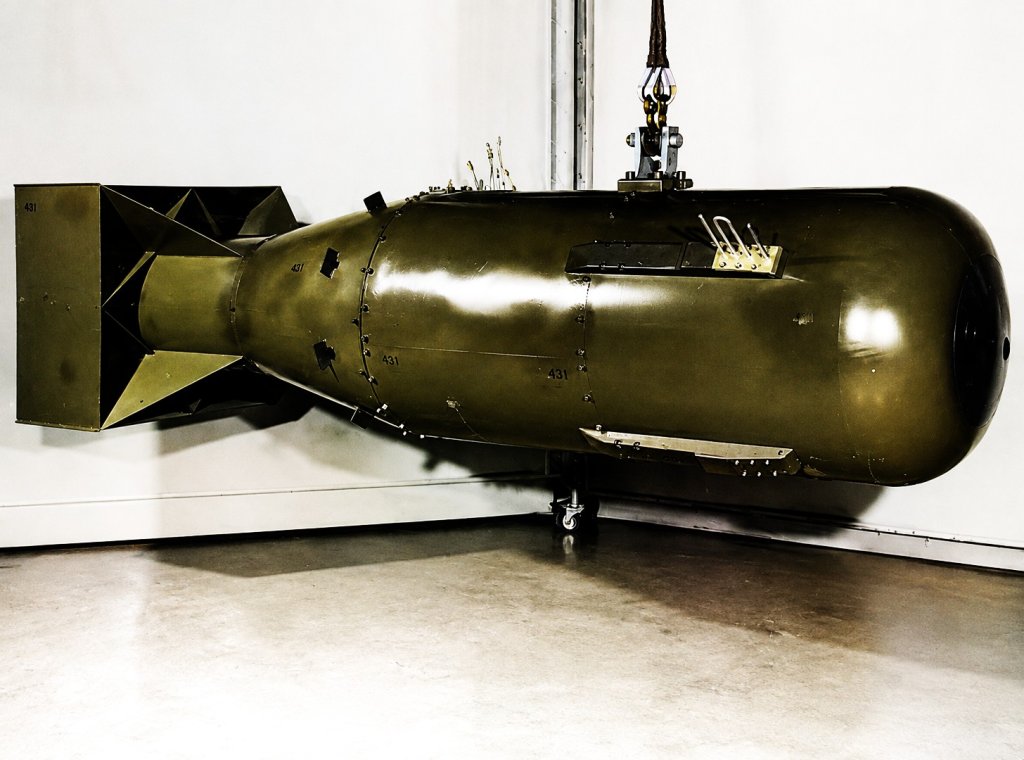
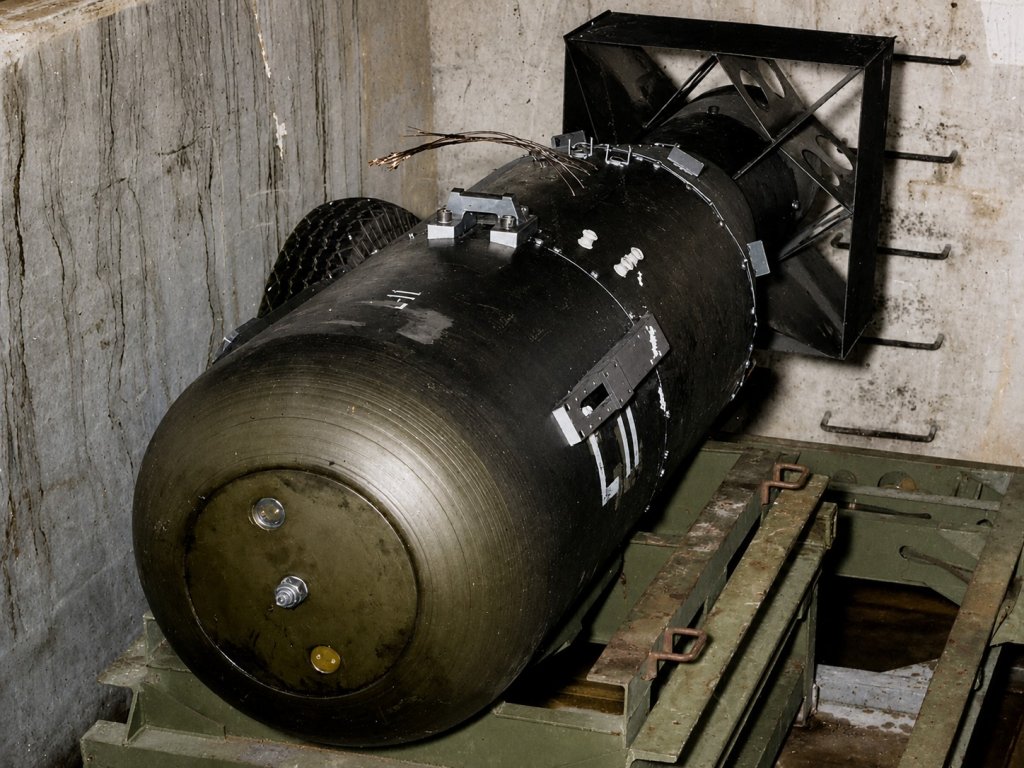
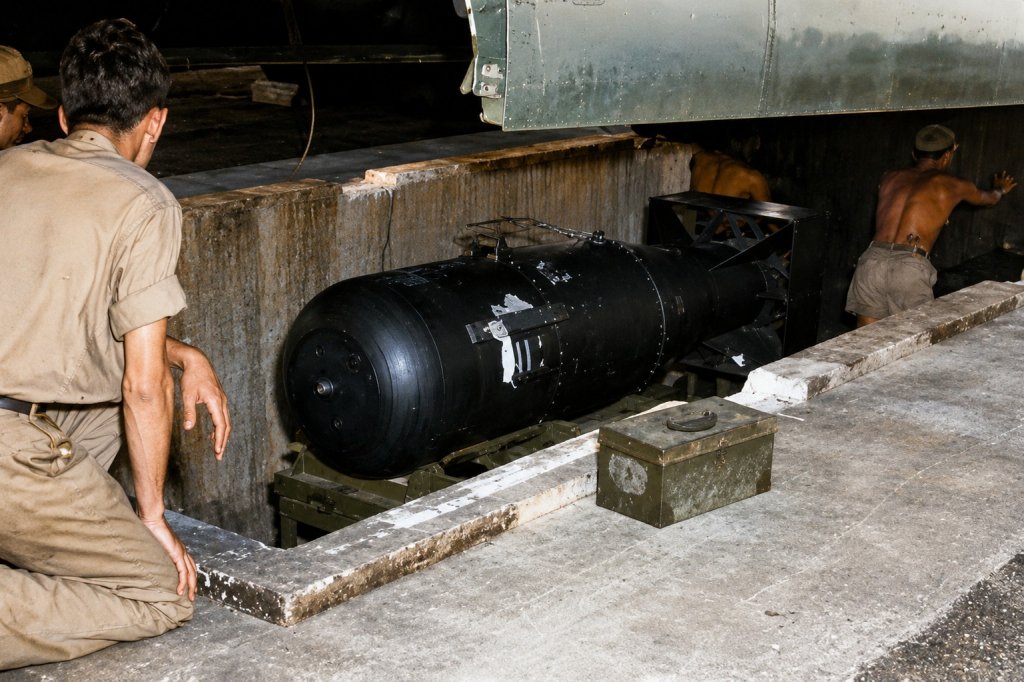
The name Little Boy was deceptively gentle. It was reportedly derived from the bomb’s relatively narrow shape, in contrast to the rounder plutonium weapon called Fat Man. It was approximately ten feet long and weighed about 9,700 pounds. Its body contained the gun assembly, uranium components, conventional propellant, fuzing equipment and safety devices necessary to transform a heavy metal object into a nuclear weapon. The generally accepted yield is approximately 15 kilotons of TNT, although historical estimates have varied.
The operating principle was conceptually simpler than that of Fat Man. A conventional explosive charge propelled a uranium projectile through a barrel into a uranium target assembly. The sudden union created a supercritical mass. Neutrons released by fission struck other uranium nuclei, causing further fissions and an exponentially growing chain reaction.
Yet “simple” is a relative word.
The mechanism had to remain safely subcritical during manufacturing, transportation, loading, takeoff and flight. It then had to arm correctly, determine altitude, initiate the gun mechanism and assemble the uranium rapidly enough for the nuclear reaction to develop before the weapon disrupted itself. The bomb used redundant altitude-sensing arrangements so that it would explode in the air rather than on impact with the ground.
The selected burst altitude was intended to spread blast effects across a broad urban area. A surface detonation would have excavated a crater and absorbed more energy into the earth. An airburst allowed the shock wave to move outward over the city, striking buildings from above and from the side.
Despite its enormous destructive power, Little Boy was not especially efficient. Only a fraction of its uranium underwent fission before the explosion blew the remaining material apart. The weapon’s historical significance did not arise from elegance or efficiency. It arose because it worked reliably enough, could fit into a modified B-29, and was ready in August 1945.
From Los Alamos to the Pacific
The bomb’s journey to Hiroshima was itself a military operation.
Major components left Los Alamos in July 1945 under heavy security. The combat assembly and uranium projectile were transported first to Kirtland Army Air Field. Components then moved west for shipment to Tinian in the Mariana Islands, where special facilities had been constructed for the atomic missions.
Part of the uranium and bomb equipment traveled by sea aboard the heavy cruiser USS Indianapolis. The ship reached Tinian after a high-speed voyage from San Francisco. After delivering its cargo, Indianapolis departed for the Philippines and was sunk by the Japanese submarine I-58 on July 30, producing one of the worst disasters in United States naval history. The atomic-bomb mission and the tragedy of the Indianapolis became permanently linked, though most of her crew had no knowledge of the importance of the cargo they had carried.
Read About the USS Indianapolis Here
On Tinian, technicians worked inside secured assembly buildings while the 509th Composite Group prepared for combat. The bomb was not simply rolled from storage and placed aboard an ordinary bomber. Its components required inspection, assembly and electrical testing. The aircraft needed special equipment, and the bomb had to be raised into the bomb bay from a loading pit because of its size.
There was also a serious safety concern. A B-29 carrying nearly 10,000 pounds of weapon and fuel faced the possibility of crashing during takeoff. The fissionable material was therefore kept from completing the weapon’s final armed configuration until the aircraft was safely airborne.
That duty belonged primarily to Navy Captain William “Deak” Parsons, the mission’s weaponeer. During the flight to Hiroshima, Parsons entered the bomb bay and completed the final assembly steps. His assistant, Second Lieutenant Morris Jeppson, later inserted the arming plugs as the aircraft approached Japan.
The first atomic bomb used in war was therefore armed not in a laboratory, but inside a pressurized bomber flying over the Pacific.
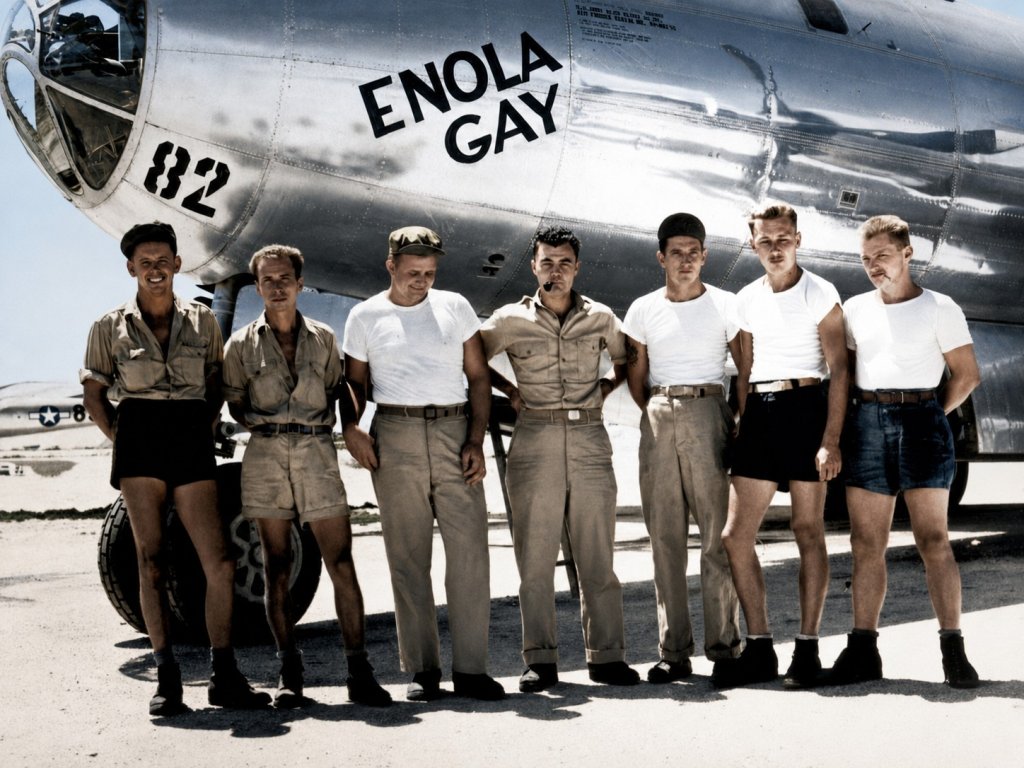
Paul Tibbets and the Creation of an Atomic Air Force
Paul Warfield Tibbets Jr. was more than the pilot of the Enola Gay. He was the officer chosen to build the organization that would deliver the atomic bomb.
Tibbets already possessed extensive combat experience. He had flown B-17 missions in Europe and had taken part in operations connected with the Allied landings in North Africa. He had also been involved in testing and developing the B-29, a sophisticated but initially troublesome aircraft whose new engines, pressurization system and enormous size created serious operational challenges.
In late 1944, Tibbets was selected to command the 509th Composite Group, the world’s first operational atomic-strike organization. The term “composite” reflected the unusual mixture of aircraft and functions assigned to it. The group included B-29 bombers as well as transport and support aircraft. Its members had to train not merely for strategic bombing, but for isolated single-aircraft attacks using unusually heavy weapons and unfamiliar procedures.
At Wendover Field in Utah, the 509th practiced dropping large bomb shapes designed to reproduce the weight and handling characteristics of the atomic weapons. These test bombs were known as “pumpkins.” Crews trained to make sharp escape turns after release, giving the aircraft the best chance of putting distance between itself and the explosion.
Secrecy shaped nearly every aspect of the unit. Airmen understood that they had been selected for an important mission, but few knew its full purpose. Tibbets enforced strict security and demanded precision. The group was being prepared to deliver a weapon that had no combat precedent, against a target that might be defended, through weather that could change the mission at the last moment.
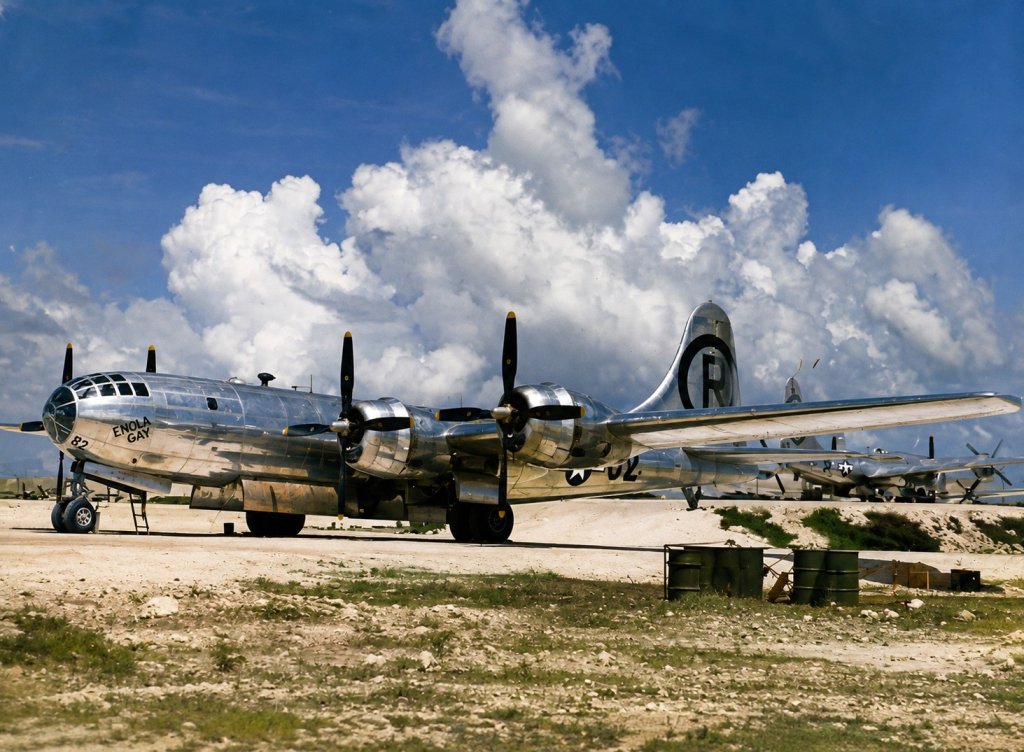
The aircraft that became the Enola Gay was a Martin-built B-29-45-MO, serial number 44-86292. It was one of the specially modified “Silverplate” B-29s assigned to the atomic mission. Silverplate aircraft incorporated changes that included modified bomb bays, removal of some defensive equipment, special propellers and engines, and rapidly operating pneumatic bomb-bay doors. These alterations allowed them to carry and release weapons unlike any conventional bomb in the American arsenal.
On August 5, only hours before the mission, Tibbets selected aircraft 44-86292 and had the name Enola Gay painted beneath the pilot’s window. He named it for his mother, Enola Gay Tibbets. The decision reportedly surprised and irritated the aircraft’s regularly assigned commander, but Tibbets was commanding the mission and chose the airplane he trusted.
The result was one of the most famous aircraft names in history—painted only the day before the flight that made it famous.
The Aircraft Was Only One Part of the Mission
The popular image of the Hiroshima mission is a lone B-29 crossing the sky above Japan. Operationally, it was more complicated.
Weather aircraft departed ahead of the strike force to inspect Hiroshima and the alternate targets, Kokura and Nagasaki. The bombing aircraft was accompanied by The Great Artiste, carrying instruments to measure the explosion, and Necessary Evil, which carried observers and photographic personnel.
The Enola Gay took off from Tinian at approximately 2:45 a.m. on August 6. Tibbets sat in the left pilot’s seat. Captain Robert Lewis served as copilot. Major Thomas Ferebee was the bombardier, and Captain Theodore “Dutch” Van Kirk was the navigator. Parsons served as weaponeer. The complete crew numbered twelve men.
Van Kirk plotted the roughly 1,500-mile route from Tinian to Japan. The aircraft rendezvoused with the accompanying B-29s near Iwo Jima and continued toward Hiroshima. Weather reports indicated that the city was visible.
The bombing had been ordered as a visual attack. The crew was not simply to release the weapon through cloud using radar unless circumstances forced a change. The intention was to identify the aiming point and produce the greatest possible accuracy.
Ferebee used the Aioi Bridge as his primary aiming reference. Its distinctive T shape made it easily recognizable from the air. At 8:15 a.m. local time, Little Boy fell from the bomb bay.
The release instantly changed the handling of the aircraft. Nearly five tons of weight had disappeared. The Enola Gay rose sharply, and Tibbets initiated the practiced diving turn intended to carry the aircraft away from the detonation area.
The bomb fell for approximately 43 seconds.
Then the sky over Hiroshima turned white.
The Moment the Weapon Became Something Else
Until detonation, Little Boy remained a military object: steel, uranium, wires, explosives, switches and machinery.
After detonation, it became an environment.
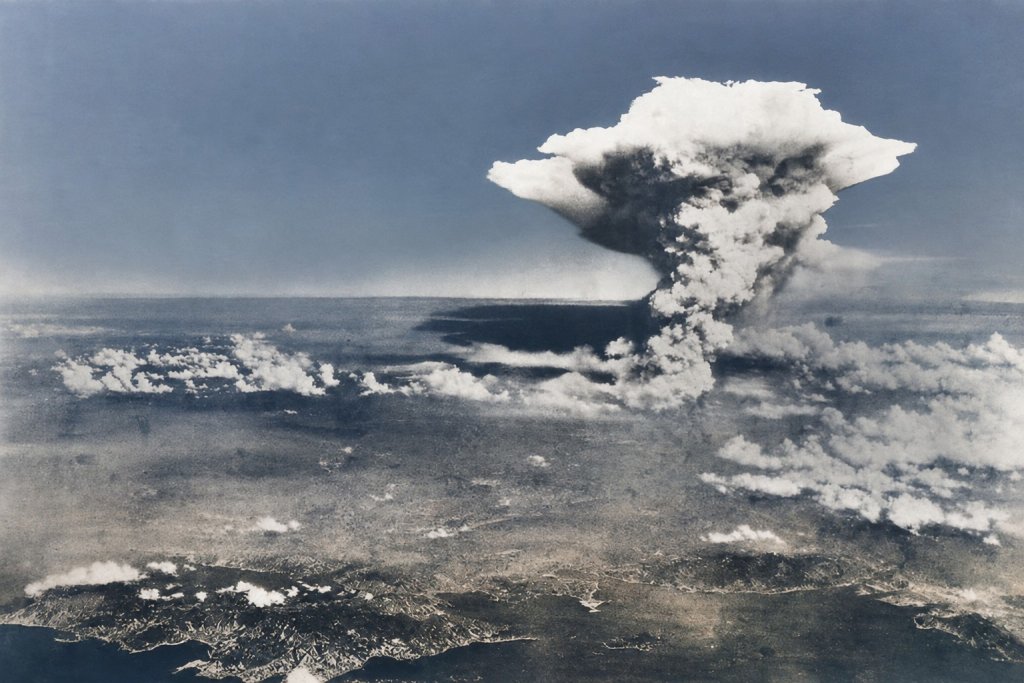
The initial nuclear reaction released energy as blast, heat and radiation. A fireball formed above the city. The expanding shock wave struck buildings, shattered windows, overturned objects and crushed structures. Thermal radiation ignited combustible materials and burned exposed skin. Fires spread through neighborhoods filled with wooden construction, damaged utilities and debris.
The weapon had been released over a city containing military headquarters, communications facilities, industrial sites, soldiers, laborers, schoolchildren, medical personnel, families and thousands of people whose individual circumstances could not be distinguished from 31,000 feet.
Precise casualty figures remain difficult because records, families and entire districts were destroyed. Estimates differ according to the date counted and the treatment of later deaths from burns, trauma and radiation. The National Museum of American History notes contemporary U.S. estimates of 60,000 to 70,000 dead or missing and approximately 140,000 injured, while other historical estimates place the number who had died by the end of 1945 considerably higher.
The difficulty of counting the dead is itself part of the weapon’s history. Atomic destruction did not produce a clean boundary between those killed immediately and those who survived. Some died beneath collapsing buildings. Some were consumed by fire. Others lived for hours, days, months or years with burns, injuries, radiation sickness and later illnesses.
The bomb’s effects continued after the mushroom cloud disappeared.
The Decision and the Larger War
No serious history of Little Boy can avoid the debate over why it was used.
By the summer of 1945, the United States had fought a brutal Pacific war marked by Guadalcanal, Tarawa, Saipan, Iwo Jima, Okinawa, kamikaze attacks, mass civilian deaths and intense Japanese military resistance. American leaders anticipated that an invasion of the home islands could produce enormous casualties, although estimates varied and later became subjects of political argument.
Japan’s position was deteriorating rapidly. Its navy had been devastated, its cities were being burned by conventional bombing, its shipping system was collapsing and its ability to resist depended increasingly upon mobilizing the homeland. Yet elements within the Japanese government still hoped to obtain surrender terms that would preserve key institutions and avoid occupation.
American leaders also knew that the Soviet Union was preparing to enter the war against Japan. The Soviet declaration of war on August 8 and the subsequent invasion of Japanese-held territory in Manchuria shocked Japanese decision-makers. Modern historical interpretations differ over the relative influence of the atomic bombings, Soviet intervention, conventional military collapse and internal political developments. The National Park Service summarizes the outcome as the combined pressure of the atomic attacks and Soviet entry pushing Emperor Hirohito toward announcing surrender.
President Harry Truman was responsible for authorizing use of the new weapon within an existing military process. He understood it as a means of forcing a rapid Japanese surrender and avoiding further American casualties. But the target was a city, and the weapon had been designed to devastate an urban area. The distinction between military target and civilian population became largely meaningless once the bomb detonated over Hiroshima.
The debate therefore persists because several statements can be true at the same time. American leaders wanted to end the war quickly. They feared the casualties of continued fighting. Japan had not yet accepted unconditional surrender. The Soviet entry transformed the strategic situation. Hiroshima contained military targets. Hiroshima was also a city filled with civilians. The bomb contributed to ending the war. Its use also killed people on a scale and by a mechanism the world had never experienced.
History becomes distorted when any one of those truths is used to erase the others.
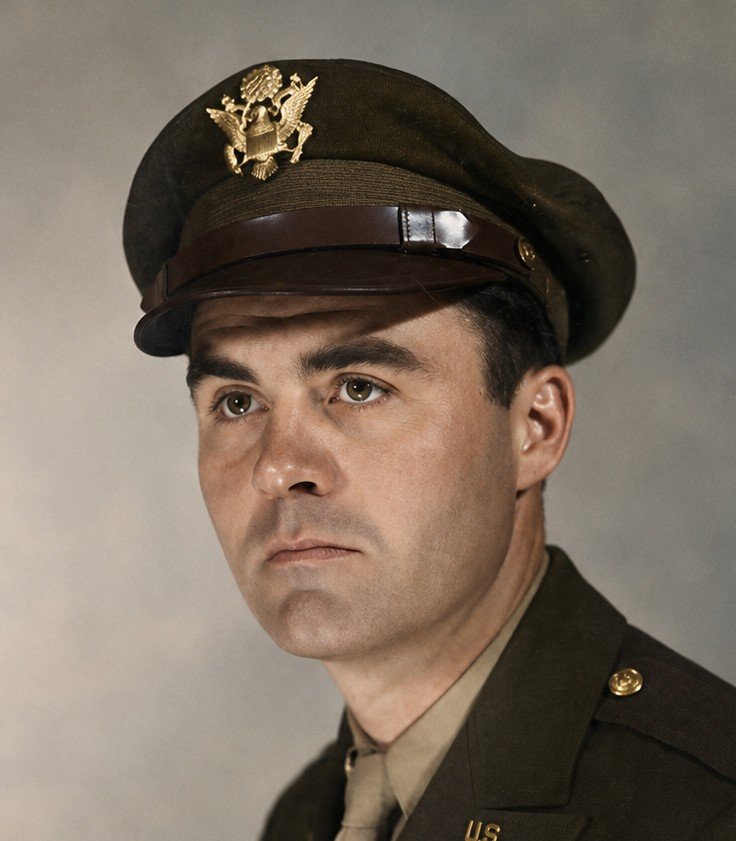 Tibbets After Hiroshima
 Tibbets After Hiroshima
Paul Tibbets never publicly expressed regret for carrying out the mission. He maintained that he had been given a military assignment and had executed it successfully. He rejected the idea that the crew should be judged as though it had independently decided national policy.
His position is important because it reveals the difference between responsibility and authority. Tibbets possessed enormous operational responsibility. He trained the unit, selected the aircraft, commanded the mission and piloted the bomber. But he did not decide whether the United States would build the atomic bomb, whether it would be used, or which cities would appear on the target list.
That does not make the crew irrelevant to the moral history of the attack. It places them within a chain of command.
Tibbets later rose to the rank of brigadier general. For the remainder of his life, he remained associated with the Enola Gay. He became both a symbol of American military competence and a focal point for arguments about Hiroshima. To some, he represented the mission that ended the war. To others, he personified the use of nuclear weapons against a city.
The man himself remained more straightforward than the symbol. He viewed the mission as necessary, believed it shortened the war and insisted that hesitation would have endangered the operation.
Oppenheimer After the Bomb
Oppenheimer’s postwar path moved in a different direction.
He became one of the most visible public authorities on atomic energy and argued that nuclear weapons had created political problems that could not be solved by technical superiority alone. He supported international control of atomic energy and later opposed or questioned aspects of the drive toward vastly more powerful thermonuclear weapons.
His growing discomfort did not amount to a simple repudiation of the Manhattan Project. He continued to believe that the wartime work had been undertaken for compelling reasons. But he also recognized that the atomic bomb had changed the relationship between science, government and warfare.
In 1954, during the anticommunist tensions of the early Cold War, Oppenheimer’s security clearance was revoked after a highly controversial hearing. The scientist once celebrated as the central figure of Los Alamos became politically isolated. His destruction was not caused solely by Hiroshima, but the hearing reflected the new world created by the project: a world of permanent secrecy, nuclear strategy, loyalty investigations and fear.
Oppenheimer had helped create the institution of the national weapons laboratory as much as he helped create an individual bomb. That institution survived him. The machinery of nuclear research, production and planning continued to grow long after Little Boy became obsolete.
The Enola Gay After the Mission
The Enola Gay did not retire immediately after Hiroshima. Three days later, during the Nagasaki mission, it served as an advance weather-reconnaissance aircraft while another B-29, Bockscar, carried Fat Man.
After the war, the aircraft passed through several assignments and storage locations. The Smithsonian eventually received it from the U.S. Air Force. Restoration became a massive undertaking. Years of exposure and disassembly had left the aircraft requiring extensive conservation work. Specialists restored its aluminum skin, engines, cockpit and structural components.
The aircraft then became the center of another battle—not a military battle, but a battle over public memory.
Plans for a Smithsonian exhibition during the 1990s generated intense controversy. Veterans’ organizations, historians, politicians and museum officials disagreed about how the aircraft should be presented. Should it be displayed primarily as an extraordinary technological artifact? Should the exhibit emphasize the Pacific War and the argument that the bomb accelerated surrender? Should it show photographs, artifacts and casualty accounts from Hiroshima? Could it do all of these things without appearing either to glorify or condemn the mission?
The dispute demonstrated that the Enola Gay had become more than an airplane. It had become a contested object through which Americans argued about victory, suffering, technology, national identity and historical responsibility.
Today, the restored aircraft is displayed at the Smithsonian’s Steven F. Udvar-Hazy Center. The museum describes it as the Martin-built B-29 that dropped the first atomic weapon used in combat. Its polished aluminum surface remains impressive, even beautiful. That beauty is unsettling because the aircraft’s appearance gives no indication of what it carried.
That is part of its power as an artifact.
A Weapon with No Descendants
In one sense, Little Boy began the nuclear age. In another, it was already nearly obsolete when it exploded.
The United States did not build a large arsenal of identical gun-type uranium bombs. Uranium-235 was expensive and difficult to produce, and the gun-type design used its material inefficiently. Implosion offered a more practical route for future nuclear weapons. Postwar arsenals evolved toward more compact, efficient and vastly more powerful designs.
Little Boy therefore occupies an unusual place in weapons history. It was not the mature beginning of a long-lived family. It was an emergency wartime design made possible by an industrial effort that could scarcely be repeated for every bomb.
Its very crudeness is historically important. The first nuclear weapon used in combat was not a sleek product of decades of nuclear engineering. It was a heavy, specialized device created at the boundary between theory and practice, assembled by hand, transported across an ocean and armed in flight.
The bomb had no electronics comparable to those in later weapons, no long history of proof testing and no stockpile of identical replacements. It belonged to a moment when the atomic bomb was still less a standardized weapon than a secret national experiment.
The Part of the Story That Has Not Been Talked to Death
The familiar version of Hiroshima often divides its participants into a small cast: Oppenheimer creates the bomb, Tibbets flies the airplane, Truman gives the order and Hiroshima disappears beneath the cloud.
But Little Boy was made possible by people whose names rarely appear in that version.
It was made possible by miners who extracted uranium ore; construction workers who built Oak Ridge; women who operated calutrons without being told what they were separating; chemists who purified materials; machinists who produced components to secret specifications; railroad workers and military drivers who moved guarded cargo; sailors who carried bomb parts across the Pacific; ground crews who modified and maintained the B-29s; meteorologists who selected the clearest target; technicians who assembled the weapon; and medical personnel who would later confront injuries for which almost no one was prepared.
The different approach to this story is to stop treating Little Boy as a single object.
It was a chain.
Oppenheimer occupied one link, translating theory into an organized weapons laboratory. Tibbets occupied another, translating the laboratory’s creation into an operational air mission. The Enola Gay became the physical bridge between American industrial power and a Japanese city. The bomb itself joined enriched uranium produced in Tennessee with engineering developed in New Mexico, military planning conducted in Washington and the Marianas, and a decision made at the highest level of government.
At 8:15 on August 6, 1945, every link held.
That is why Hiroshima happened.
And that may be the most disturbing lesson of Little Boy. The atomic age did not begin because one madman invented a terrible machine. It began because an advanced society successfully coordinated science, industry, bureaucracy and military power toward a single objective.
The bomb worked because the system worked.
The Meaning of Little Boy
Little Boy helped force the end of the most destructive war in human history. It also demonstrated that a single aircraft and a single weapon could destroy a city.
Those two meanings cannot be separated.
For the crew of the Enola Gay, the mission represented the completion of months of training and the execution of an order intended to end the war. For Oppenheimer and the scientists of Los Alamos, it proved that their calculations had become reality. For American leaders, it offered a weapon capable of producing immediate strategic shock. For the people beneath it, it was heat, pressure, darkness, fire, injury and death.
The weapon’s legacy is not found only in Hiroshima’s ruins. It is found in every nuclear arsenal constructed afterward, every emergency bunker, every arms-control treaty, every false warning and every generation that has lived with the possibility that another government might again decide that the use of such a weapon is necessary.
Little Boy was used once.
Its shadow has never stopped falling.