Let Me Tell You About MAJ Joseph E. Bower
The final minutes of his life make for a remarkable story, but they make more sense when we remember that Joseph Bower was much more than the pilot of an aircraft listed on a Vietnam War loss report.
August 21, 2026

Let me tell you about Major Joseph Edward Bower.
On August 3, 1965, Bower was flying an F-105D Thunderchief over North Vietnam when something went terribly wrong with his aircraft. Official records would later describe the Thunderchief as having been hit by enemy ground fire, but another F-105 pilot who was there that day remembered the incident somewhat differently. William “Will” Koenitzer flew close enough to Bower's crippled aircraft to see what was happening, watched him eject, circled him as he descended toward the Gulf of Tonkin, and remained over the area until dwindling fuel finally forced him to leave. More than sixty years later, the differences between the official account and Koenitzer's eyewitness recollection have never been completely resolved. What is certain is that Bower survived the initial emergency long enough to get his damaged aircraft out over the water, escaped from it seconds before it broke apart, and then disappeared into the Gulf. His remains have never been recovered.
The final minutes of his life make for a remarkable story, but they make more sense when we remember that Joseph Bower was much more than the pilot of an aircraft listed on a Vietnam War loss report. He was thirty-six years old, a husband and father, a former enlisted soldier, a graduate of the United States Naval Academy, an Air Force fighter pilot, a graduate student and instructor, and a man whose career had carried him from Nevada to Fort Knox, Annapolis, Okinawa, Colorado and eventually the skies over North Vietnam. His journey to that August afternoon had begun far from Southeast Asia.
 From Nevada to Annapolis
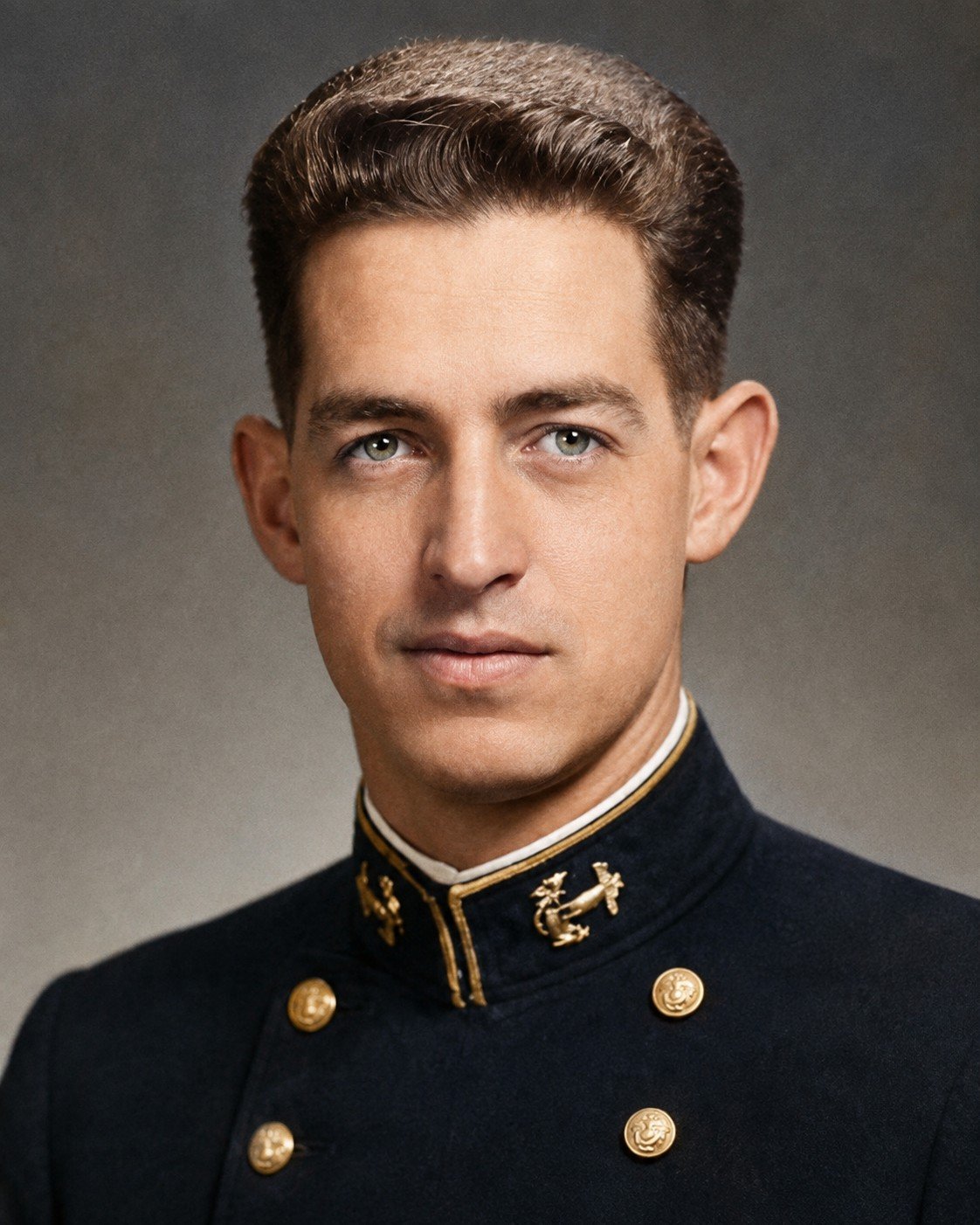
Joseph Edward Bower was born in Ely, Nevada, on June 21, 1929. His 1952 Naval Academy yearbook remembered an outdoorsman who had grown up hunting in the Nevada hills and playing football at White Pine High School, where his team won a state championship during his senior year. He also played basketball and was remembered as a serious student as well as an athlete. Rather than going directly to college after high school, Bower enlisted in the United States Army on June 30, 1947. He attended Universal Military Training at Fort Knox, Kentucky, and later served as secretary to a commanding officer at Bainbridge, Maryland. After additional schooling at Fort Meade, Bower received a congressional appointment to the United States Naval Academy from Nevada Representative Charles H. Russell.
Bower entered Annapolis as a former enlisted soldier and graduated with the Class of 1952. Although he had attended the Naval Academy, he chose the relatively young United States Air Force for his commissioned service. The Congressional Record from 1952 lists Joseph Edward Bower among the Naval Academy graduates appointed as second lieutenants in the Regular Air Force. That decision placed him near the beginning of an extraordinary transformation in American military aviation. The independent Air Force had existed for less than five years, piston-engine fighters were rapidly giving way to jets, nuclear weapons were reshaping military planning, and aircraft performance was increasing almost faster than doctrine could keep pace. Bower's professional life would unfold directly inside that transformation. That same summer, Bower married Patricia Ann Baysinger of Indianapolis. Their daughter, Jillaine, was born in 1954. Meanwhile, Bower began the demanding process of becoming an Air Force pilot. He underwent primary pilot training at Malden Air Base in Missouri and graduated from basic jet pilot school at Bryan Air Force Base, Texas, in August 1953. By June 1957, he was flying the swept-wing F-84F and serving with the 15th Tactical Reconnaissance Squadron at Kadena Air Base on Okinawa. Surviving photographs show a young Air Force officer standing beside the aircraft, already part of the first generation of American pilots whose careers would be built almost entirely around jet aircraft.
Bower's career was unusual in another respect. He did not confine himself to the cockpit. He earned a master's degree in psychology from Colorado State University, became a member of Phi Delta Kappa, and spent four years from 1959 through 1963 teaching while assigned to Air Force ROTC duty at the university. Photographs survive of him instructing students in the Department of Air Science during those years. In May 1964, at age thirty-four, he completed the U.S. Army's Airborne School at Fort Benning, Georgia, and earned his parachutist badge. By July of that year he was assigned to the 421st Tactical Fighter Squadron at McConnell Air Force Base, Kansas, and had moved into the aircraft that would dominate the final chapter of his life: the Republic F-105 Thunderchief.
The Thunderchief Goes to War
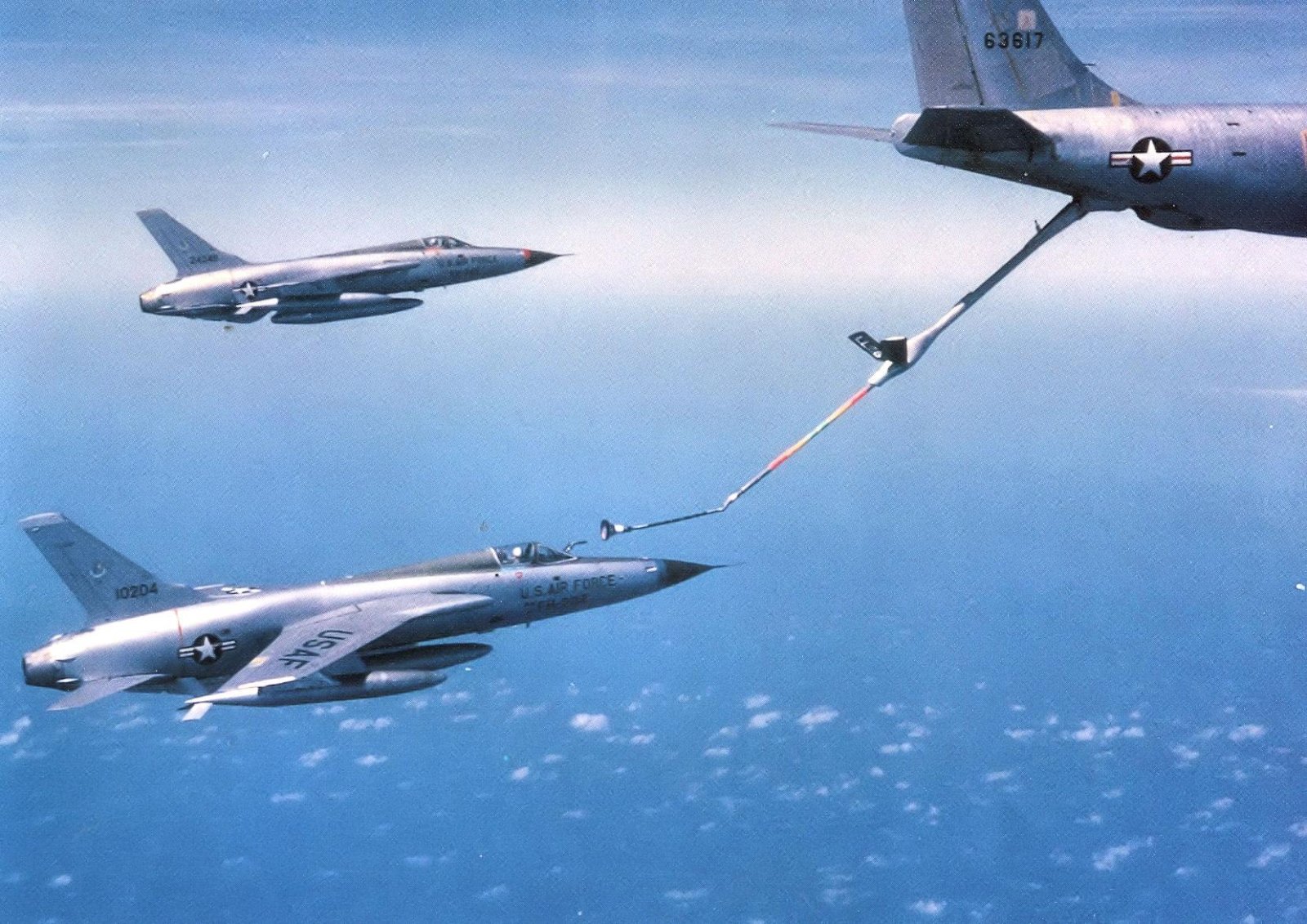
The F-105 was an imposing airplane. More than sixty-four feet long and powered by a single Pratt & Whitney J75 turbojet producing approximately 24,500 pounds of thrust, the F-105D could exceed 1,300 miles per hour. It carried an internal 20mm M61 Vulcan cannon and could lift more than 12,000 pounds of conventional ordnance. The National Museum of the United States Air Force notes that its conventional bomb load exceeded that carried by a World War II B-17. Yet the Thunderchief had been designed primarily around a very different mission. Its original purpose was to penetrate enemy territory at high speed and deliver a tactical nuclear weapon. Vietnam would require it to become a conventional bomber instead.
When Operation Rolling Thunder began in March 1965, the F-105 quickly became one of the principal American strike aircraft attacking North Vietnam. This meant repeatedly flying a large single-engine aircraft into an increasingly dense system of antiaircraft guns, radar-controlled defenses, MiG fighters and eventually surface-to-air missiles. The terrible loss rate that made the Thunderchief famous was not simply the result of some inherent flaw in the airplane. F-105 crews were being sent again and again against some of the most heavily defended targets on earth. By the end of the Southeast Asia War, the Air Force had lost 334 F-105s in combat and another 63 through accidents and malfunctions. More than half of the F-105D, F and G models produced were ultimately lost in Southeast Asia.
Bower arrived at the beginning of the period when those defenses were becoming dramatically more dangerous. Only ten days before his final mission, on July 24, 1965, a Soviet-built SA-2 surface-to-air missile destroyed an Air Force F-4C over North Vietnam, the first USAF aircraft lost to an SA-2 in Southeast Asia. Three days later, forty-six F-105s were sent against two suspected missile sites; six Thunderchiefs were shot down and many others damaged, only for the attackers to discover that the missiles and radars had already been moved. The Wild Weasel system created specifically to hunt those missile batteries was still months away from its first combat success. When Bower flew over North Vietnam on August 3, the American air war was therefore entering a particularly dangerous period in which the threat was growing faster than the countermeasures designed to defeat it.
 Bower at Korat
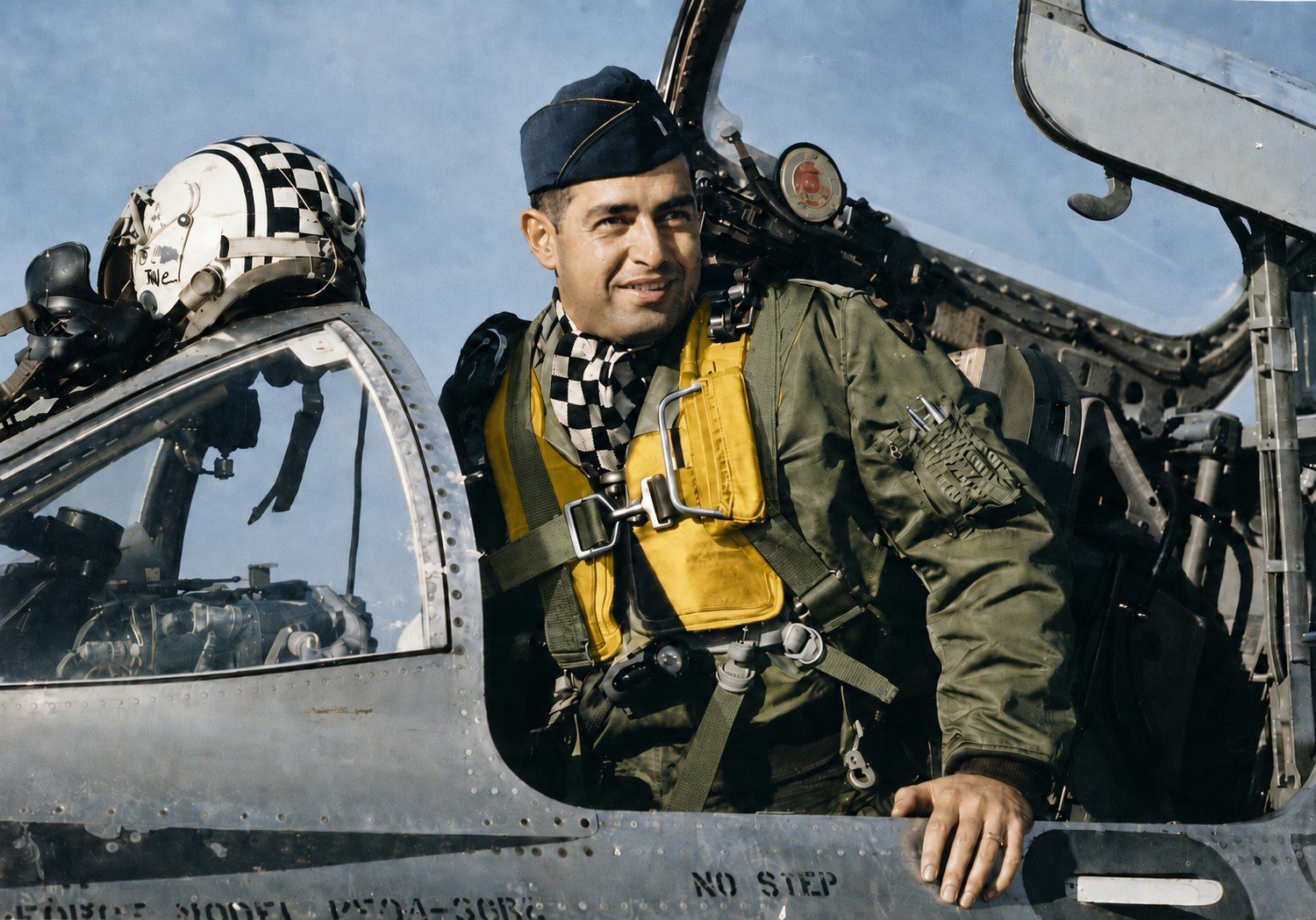
Bower's unit history during this period requires a little explanation because the Air Force's rapid buildup in Southeast Asia produced a maze of permanent assignments, temporary duty deployments and operational attachments. Bower belonged to the 421st Tactical Fighter Squadron, which had been based at McConnell Air Force Base and deployed personnel into the Pacific during 1965. The 421st itself would not be permanently assigned to Korat Royal Thai Air Force Base until November. At the time of Bower's death, however, the 357th Tactical Fighter Squadron had already arrived at Korat from McConnell with F-105Ds on June 12 and was operating under the 6234th Tactical Fighter Wing.
Will Koenitzer later explained where Bower fit into this organizational shuffle. He remembered that both he and Bower had been assigned to the 421st beginning in late 1963. Koenitzer subsequently moved through other F-105 units before returning to Korat with the 357th in mid-1965. When he arrived, Bower and another pilot, Frank O'Neil, were working in the command post. According to Koenitzer, both remained associated with the 421st but were attached to the 357th so that they could fly combat missions. This eyewitness account neatly explains why surviving records can make Bower's unit affiliation look contradictory. DPAA today identifies him with the 421st Tactical Fighter Squadron and 6234th Tactical Fighter Wing, while the pilot who flew beside him remembered Bower actually conducting combat operations with the 357th at Korat.
By August 1965, Korat had become one of the major American strike bases in Thailand. Its F-105 units were flying interdiction, armed reconnaissance and bombing missions into North Vietnam, while fighters and support aircraft cycled through the base as the United States rapidly expanded its air campaign. The temporary nature of much of this organization can make the records look confusing decades later, but the operational reality was straightforward enough: pilots such as Bower were being put into available Thunderchiefs and sent north.
August 3, 1965
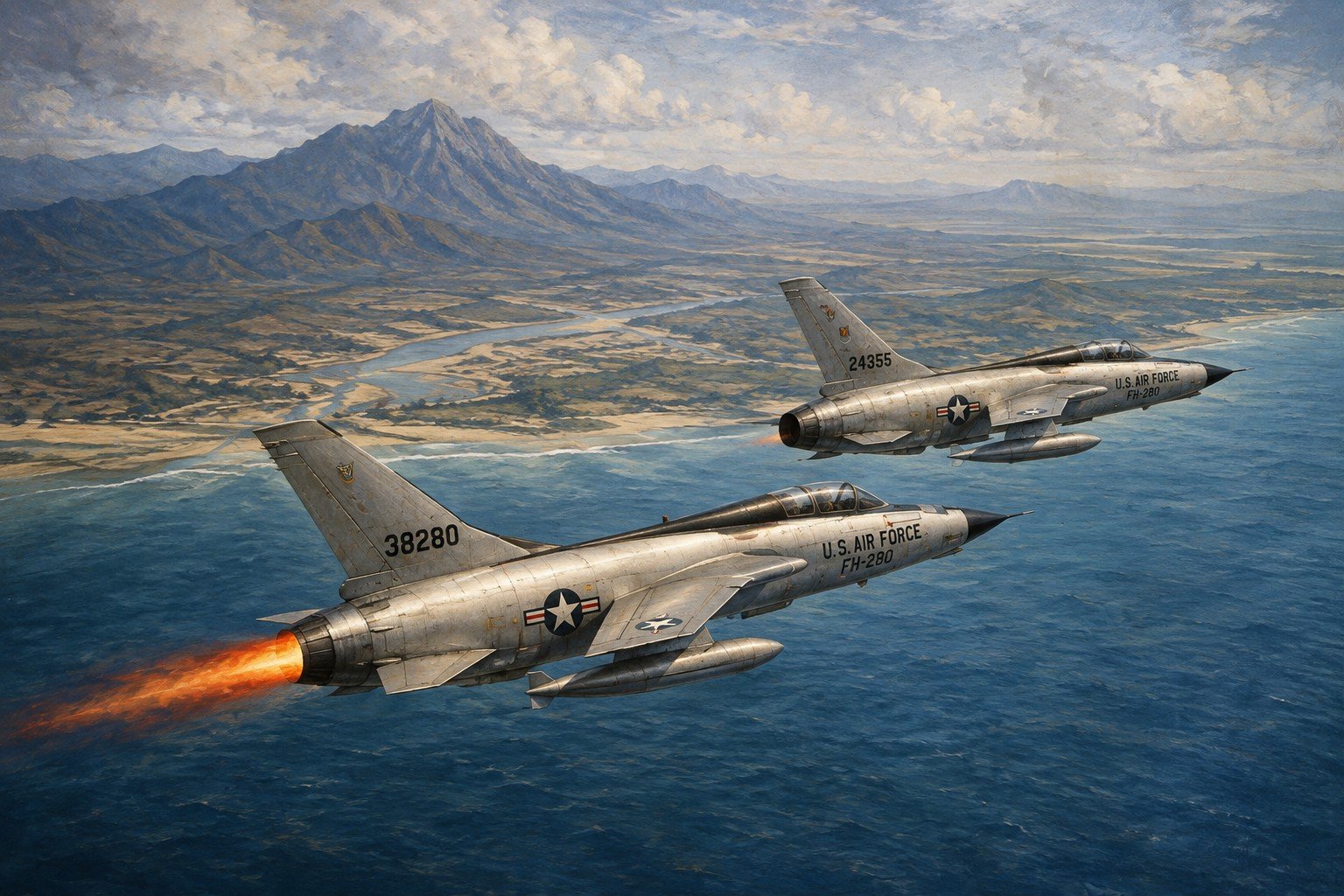
On August 3, Bower led a flight of four F-105Ds on an armed reconnaissance mission along a short section of the North Vietnamese coast bordering the Gulf of Tonkin. Frank O'Neil flew as Bower's number two and wingman. Koenitzer led the second element as number three, with Gilbert “Bruce” Holmes flying number four. Their mission was to scout the coastal area for targets of opportunity, the sort of routine-sounding assignment that concealed how dangerous armed reconnaissance over North Vietnam had already become.
At some point during the mission, Bower reported that his aircraft was in trouble. The official casualty account states that F-105D serial number 61-0098 had been struck by enemy ground fire. Koenitzer remembered Bower reporting what might have been a hit, but he was less certain about the cause. Bower's Thunderchief still remained controllable, and he began heading east toward the Gulf of Tonkin. That decision was important. An ejection over enemy territory could mean capture or death before rescue forces ever reached a downed pilot. If Bower could keep the aircraft flying long enough to reach open water, American air-sea rescue forces would have a much better chance of recovering him.
Koenitzer took his element toward Bower and eventually maneuvered his own F-105 alongside the damaged aircraft, approximately a thousand feet off Bower's left wing. At first, the Thunderchief appeared to be flying relatively normally despite whatever problem had developed. Then Koenitzer saw a long orange flame streaming from its tailpipe. He later estimated the flame at roughly fifty feet and believed it resembled the kind of fire that could accompany a failure of turbine components inside the engine. That was the judgment of an experienced F-105 pilot watching the event as it happened, not the conclusion of an accident investigation. No wreckage would ever be recovered that could determine whether Bower's aircraft had been damaged by enemy fire, suffered a catastrophic engine failure, or experienced some combination of damage and mechanical failure.
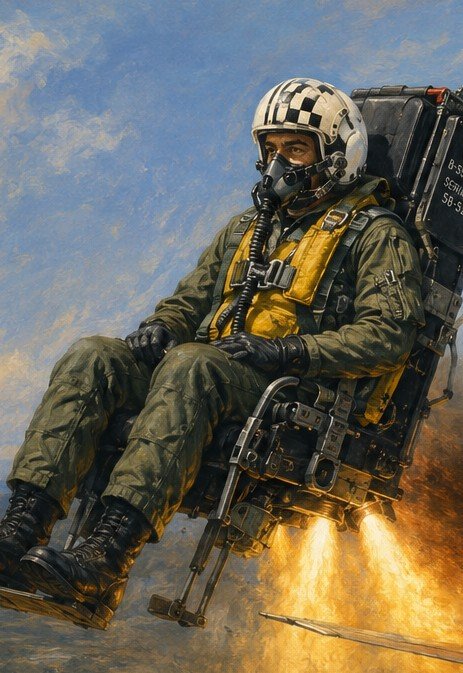
Whatever caused it, Koenitzer could see that the aircraft was now burning badly. He radioed Bower and told him to eject. Bower responded immediately. Koenitzer watched the ejection seat leave the Thunderchief, and almost before Bower had completely separated from the seat, the F-105 broke apart into burning pieces. Bower had gotten out with very little time to spare.
 A Parachute That Wasn't Right
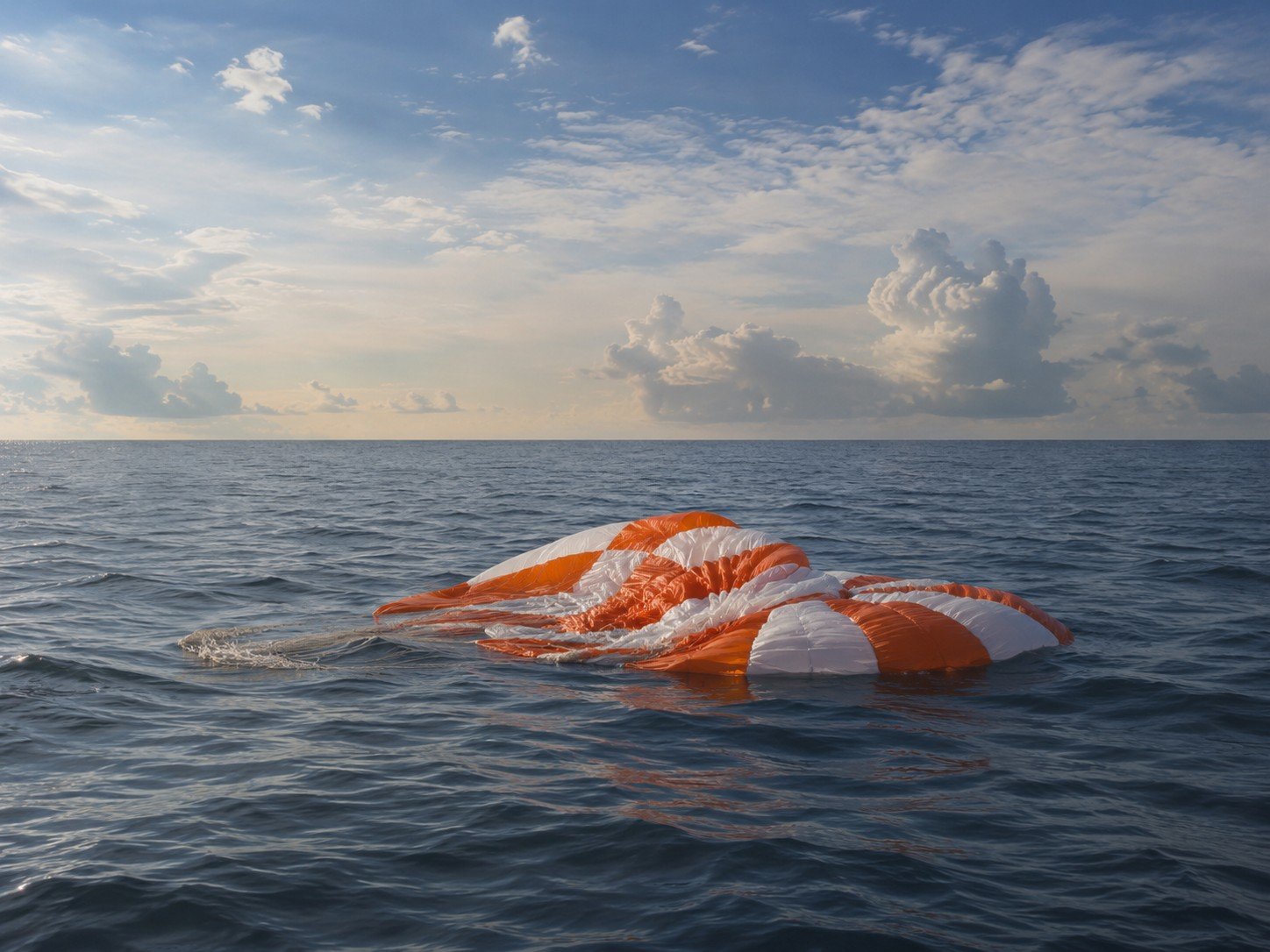
The next part of the story is where the eyewitness account differs significantly from the older official narrative. The casualty synopsis preserved by DPAA states that witnesses reported Bower's parachute did not open until shortly before he struck the water. Koenitzer, however, specifically corrected that version when he supplied his detailed recollection of the loss. He said Bower's parachute opened promptly after he separated from the ejection seat. The problem was not that the parachute opened too late. The problem was that it opened incorrectly.
Koenitzer could see that one of the parachute's suspension lines had crossed over the top of the canopy. Instead of forming one properly inflated parachute, the line effectively divided the canopy into two sections. Bower was descending much faster than he should have been. Koenitzer later believed that a conscious parachutist might have been able to cut the offending line and improve the canopy's performance, but no one circling above could know whether Bower was capable of doing so. He had just experienced a violent emergency, an ejection and the breakup of his aircraft within a matter of seconds. Whether he was injured or unconscious before reaching the water remains unknown.
Koenitzer slowed his Thunderchief to about 220 knots, lowered his flaps and began circling Bower as he descended. That detail gives the scene an almost unbearable clarity. One F-105 pilot was hanging beneath a damaged parachute while another tried to keep a sixty-four-foot supersonic fighter in a slow orbit around him. Holmes remained nearby protecting Koenitzer from the possibility of MiG attack, while O'Neil climbed to an altitude from which he could help coordinate air-sea rescue. The original four-ship combat formation had effectively reorganized itself in seconds around the survival of its flight leader.
Koenitzer remained with Bower all the way to the surface. When Bower struck the Gulf, Koenitzer saw an unusually pronounced disturbance in the water, which led him to believe Bower's descent rate had been much too high. There was no radio transmission from Bower after impact, no life raft appeared, and there was no visible movement suggesting that he was conscious. His parachute settled over him on the surface and then rapidly disappeared beneath the water. From everything Koenitzer could see, Bower had probably not survived the impact.
There were small boats in the area, although Koenitzer remembered that none was immediately beside Bower when he entered the water. The pilots made passes toward the vessels and fired their 20mm cannon across their bows in an attempt to keep them from approaching the spot where Bower had gone down. It was an improvised effort to protect a man they could no longer see. Eventually, however, another unavoidable problem took over: fuel. Koenitzer and the other pilots could not orbit indefinitely off the coast of North Vietnam. They remained as long as they could and then had to leave. Koenitzer later acknowledged that they never learned whether their warning passes kept the boats away, whether Bower was alive after the ejection, or exactly what had happened to his aircraft and parachute.
 What Happened to Joseph Bower?
For several days after the loss, Bower was carried as missing. On August 9, U.S. intelligence received information indicating that he had died at the time of the incident, and his status was changed to Killed in Action, Body Not Recovered. The surviving public records do not explain the intelligence that produced that determination. His body was never recovered, and the Defense POW/MIA Accounting Agency continues to list Joseph Edward Bower among the Americans unaccounted for from the Vietnam War. DPAA has classified his case for active pursuit and records his loss as occurring on August 3, 1965, in North Vietnam.
The question of what actually brought down F-105D 61-0098 remains open. The official account says enemy ground fire. That is entirely plausible considering where Bower was flying and the enormous amount of antiaircraft fire encountered by American aircraft over North Vietnam. Koenitzer's recollection, however, preserves a second possibility. He remembered the aircraft continuing to fly normally until the great orange flame appeared from the tail and knew that F-105 engines had experienced turbine-related problems. He therefore questioned whether the initial problem might have been mechanical rather than the direct result of hostile fire. Without the aircraft, there is no responsible way to choose one account simply because it makes for a cleaner story. The correct historical answer is that the official record attributes the loss to enemy fire, while an experienced pilot who witnessed the final moments believed a catastrophic engine failure was also possible.
There is a similar conflict concerning Bower's parachute. The official narrative describes a canopy opening only shortly before impact, while Koenitzer, who was circling close enough to observe Bower's descent, remembered the parachute opening immediately but malfunctioning because a line had crossed the canopy. Again, the eyewitness account deserves to remain beside the official record rather than being erased in favor of a single tidy version. History is sometimes uncomfortable that way. The people who were actually there occasionally leave us with details that do not fit neatly into the paperwork created afterward.
The Man Behind the Loss Report
The statistics surrounding the F-105 can easily swallow the individuals who flew it. Three hundred thirty-four Thunderchiefs were lost in combat in Southeast Asia. Another sixty-three were lost to accidents and malfunctions. Ninety-nine downed F-105 airmen were rescued, while another 214 were killed, became prisoners of war, or remained missing. Numbers of that size explain the terrible cost of the F-105 war, but they also make it dangerously easy for one aircraft and one pilot to disappear into a column of totals.
Joseph Bower should not disappear there. Before Vietnam he had already spent nearly eighteen years in uniform. He had begun as an Army private, earned his way to the Naval Academy, chosen the newly independent Air Force, become a jet pilot, served overseas, earned an advanced degree, taught future officers, completed airborne training and moved into one of the most demanding combat aircraft of his generation. Nevada Governor Grant Sawyer, speaking after Bower's death in 1965, remembered him as a man who demanded excellence of himself and described him as a skilled pilot, respected leader, scholar, teacher and devoted family man. Those words matter because they restore dimensions that a line reading KIA, Body Not Recovered cannot possibly contain.
There is also something deeply human in what happened after Bower pulled the ejection handle. Koenitzer could not repair Bower's parachute. Holmes could not reach him. O'Neil could not make the rescue forces arrive faster. None of them could make an F-105 remain over the Gulf after its fuel was gone. What they could do was stay with him, and that is what they did. Holmes watched for enemy fighters. O'Neil worked the rescue effort. Koenitzer slowed his Thunderchief, lowered his flaps and circled his friend all the way to the water. Then the three men tried to keep nearby boats away until their fuel gauges finally forced them home. More than half a century later, Bower's nephew publicly thanked Koenitzer, Holmes and O'Neil for what they had done and expressed the family's hope that one day Joseph Bower would no longer be among America's missing.
That may be the most important way to remember August 3, 1965. Not simply as the day another F-105 was lost over North Vietnam, and not merely as another entry in the long accounting of aircraft and men consumed by Rolling Thunder. It was the day four pilots went north together and only three returned. One of them fought his damaged Thunderchief toward the Gulf because the sea offered hope of rescue. Another pulled alongside and discovered the airplane was burning. Bower ejected seconds before it came apart, but his parachute failed him in a different way. His friends circled helplessly above while he descended, watched him strike the water, and stayed until staying any longer risked losing still more aircraft and men.
Joseph Edward Bower was thirty-six years old. He left behind his wife Patricia and their daughter Jillaine. His name appears on Panel 5E, Line 32 of the Vietnam Veterans Memorial, and he is memorialized on the Courts of the Missing at the National Memorial Cemetery of the Pacific in Honolulu. His remains have never been returned home.
There are parts of his final flight we will probably never know with certainty. We may never know whether enemy fire or mechanical failure first crippled F-105D 61-0098. We cannot know whether Joseph Bower was conscious beneath the damaged parachute or whether he survived even briefly after striking the Gulf of Tonkin. What we do know is considerably more personal. Another pilot watched his airplane burn, warned him to get out, watched his parachute fail to function properly, and then circled him for as long as his fuel allowed.
Joseph Bower did not simply vanish into a casualty report over North Vietnam. There were men there who saw him, stayed with him and tried to bring him home.
MAJ Joseph Edward Bower, June 21, 1929 – August 3, 1965. United States Air Force. F-105D Thunderchief pilot. Killed in Action, Body Not Recovered.
We remember.