Into the Lion’s Den: The Night the U.S. Navy Went After Haiphong Harbor
On the night of August 27, 1972, four American warships deliberately steamed toward the most heavily defended harbor in North Vietnam. Their orders were to get close enough to hit Haiphong hard, survive the coastal guns, and get back out again.
August 27, 2026

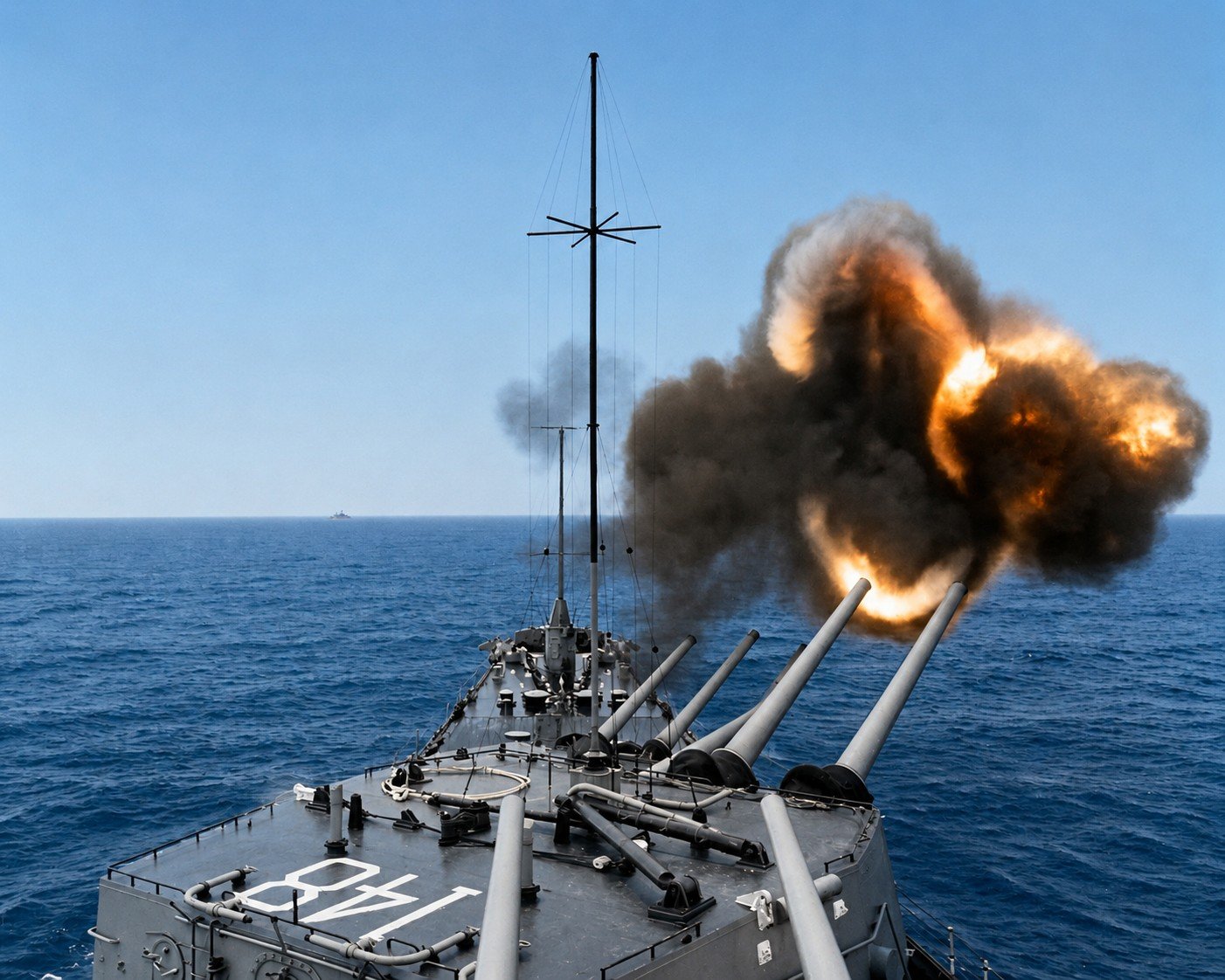
By the summer of 1972, the war in Vietnam had entered another violent phase. North Vietnam's Easter Offensive had sent conventional forces pouring south across the Demilitarized Zone, while American aircraft and warships responded with an intensity not seen for years. Operation Linebacker carried the air war deep into North Vietnam, Haiphong Harbor had been mined during Operation Pocket Money, and U.S. Navy cruisers and destroyers were firing thousands of rounds against enemy positions along the coast. On August 27, however, the Navy was ordered to do something more aggressive than routine naval gunfire support. Four surface ships would deliberately penetrate the approaches to Haiphong Harbor, North Vietnam's largest port and one of the most heavily defended places in the country, and attack military targets at close range.
The operation was called Lion's Den, and the name was unusually appropriate.
 At the center of the force was USS Newport News, CA-148, a 17,000-ton Des Moines-class heavy cruiser whose nine rapid-firing 8-inch guns made her the most heavily armed conventional gun cruiser still serving in the United States Navy. With the battleship USS New Jersey no longer on active service, Newport News carried the largest naval guns available to American commanders in Vietnam. Her sailors called her the “Gray Ghost from the East Coast,” and by 1972 the nickname was well earned. She had already fought off Vietnam during earlier deployments and had returned to the gun line during the Easter Offensive under the command of Captain Walter F. Zartman.
Zartman was no ceremonial figure standing on the bridge while somebody else fought the ship. He was responsible for Newport News, her crew, and the decisions that would keep a large cruiser alive while deliberately taking her within range of North Vietnamese coastal artillery. Earlier in the deployment, after Rear Admiral Rembrandt Robinson was killed in a helicopter crash, Zartman briefly found himself the senior officer present in the combat area. Rather than automatically assume control simply because regulations allowed it, he reportedly declined because he had only just arrived and believed the officer already directing operations had the better situational understanding. It was a small episode, but it revealed a commander who valued judgment over ceremony.
By August, Newport News and her crew were thoroughly accustomed to combat. The cruiser had been operating repeatedly against targets in North Vietnam and supporting South Vietnamese forces ashore. Her gun crews had already fired enormous quantities of ammunition, and the ship had settled into the brutal rhythm of naval gunfire support: move into position, receive target information, fire, maneuver, replenish, and do it again. The mission arriving on August 25, however, was different because Haiphong itself was the target area.
The port was protected by coastal-defense guns, radar sites, surface-to-air missile installations, fire-control systems, and observers positioned along the shoreline. American aircraft had attacked the region many times, but sending major surface combatants directly toward it meant voluntarily placing them within range of weapons specifically intended to destroy ships. Vice Admiral James L. Holloway III, commander of the Seventh Fleet, later described Lion's Den as one of the most audacious surface actions undertaken by the U.S. Navy since World War II.
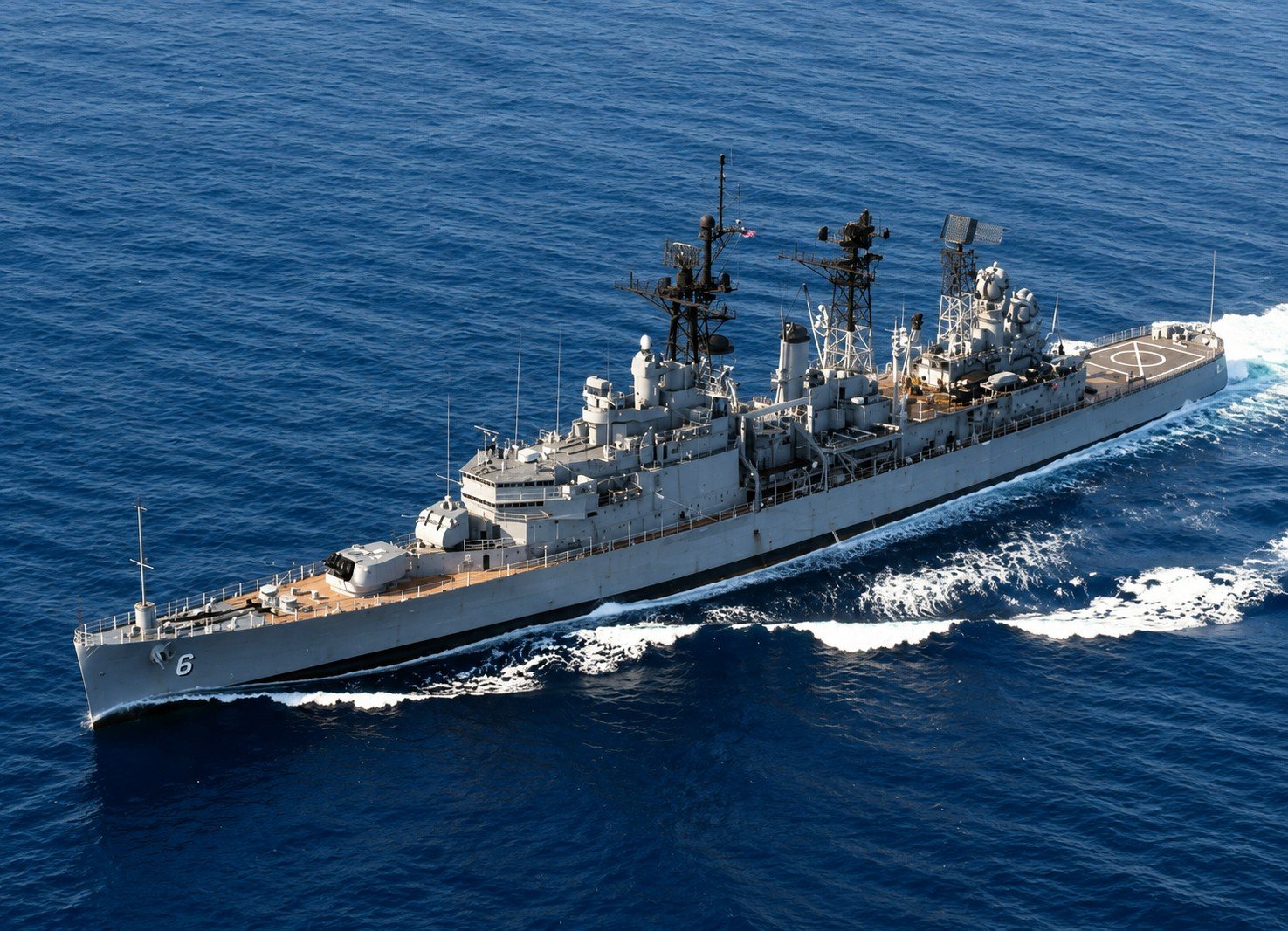
Four ships were selected for the mission. Newport News would provide the heaviest firepower with her 8-inch guns. USS Providence, CLG-6, brought 6-inch guns and guided missiles. USS Robison, DDG-12, was a guided-missile destroyer, while USS Rowan, DD-782, carried 5-inch guns and one of the strangest weapons modifications of the war. Rowan had been adapted to fire AGM-45 Shrike anti-radiation missiles from her ASROC launcher. Shrike was normally carried by aircraft and designed to home on enemy radar emissions, but Navy engineers had created a shipboard system that allowed Rowan to attack North Vietnamese radar installations directly from the sea.
Captain John Renn, Commander Destroyer Squadron 25, embarked aboard Robison and served as officer in tactical command of the four-ship force. Then Vice Admiral Holloway decided that he wanted to see the operation himself.
At approximately 2:00 in the afternoon on August 27, Holloway boarded a helicopter with his aide and flew to Newport News. Captain Zartman met him aboard and briefed him on the plan and the relevant message traffic. Holloway later recalled telling Zartman that he intended only to observe. That was technically true, although there is something faintly absurd about the Commander Seventh Fleet standing aboard the largest ship in the formation while insisting everyone should carry on as though he were simply another passenger.
To Zartman's credit, the operation remained where it belonged. He was still captain of Newport News, responsible for fighting his ship, while Captain Renn remained tactical commander of the force. The four ships spent the afternoon making final preparations, replenishing ammunition and checking equipment. As darkness approached, they began moving north toward Haiphong.
The sailors understood where they were going. Chuck Packer, an electrician's mate third class aboard Rowan, later remembered Captain Robert Comer using the ship's announcing system that afternoon to tell the crew they might be taking part in a raid against Haiphong. The possibility immediately produced the usual mixture of rumors, nervous conversation, and speculation throughout the ship. A few hours later Comer came back over the announcing system and confirmed it. Rowan was going in.
The danger was obvious even to sailors who had spent months on the gun line. Haiphong was protected by coastal artillery and radar-directed weapons, and the ships would be operating close to waters already mined by the United States. There was also a practical concern that Holloway later emphasized. North Vietnamese coastal guns were not especially well suited to tracking fast-moving warships, which gave the Americans an advantage while they remained underway. If one of the ships suffered machinery damage and stopped within range, however, the enemy could gradually correct its fire until rounds began landing on target.
That possibility mattered especially aboard Newport News. The cruiser was heavily built and capable of absorbing punishment, but no captain wanted to discover how much punishment by sitting motionless near Haiphong while shore batteries walked artillery rounds onto his ship.
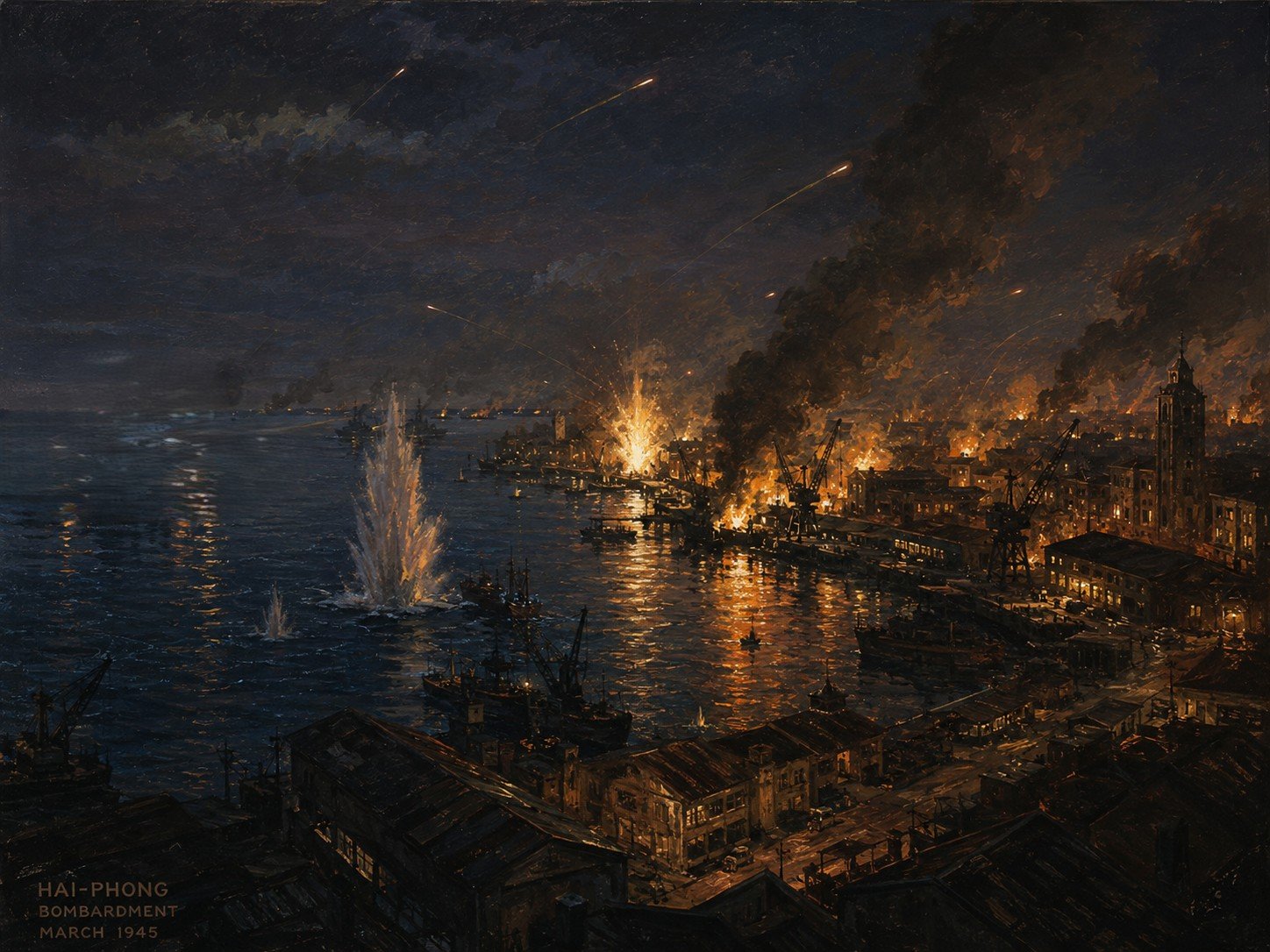
Darkness covered the Gulf of Tonkin as the force approached the coast. Newport News and Rowan were assigned the northern portion of the attack, while Providence and Robison would strike targets farther south around Cat Ba and the Do Son Peninsula. The ships moved quickly, maintaining roughly twenty-five knots as they entered the firing area. At 11:21 p.m., Newport News was approximately two and a half miles southeast of Do Son Light when Captain Zartman ordered the cruiser onto a course of 070 degrees true.
Then the guns opened.
Newport News' forward 8-inch turrets swung toward the coast and began firing into North Vietnam. Rowan joined the attack with her 5-inch guns and launched Shrike missiles against radar sites, while Providence and Robison struck their assigned targets farther south. The entire force was now operating close enough to Haiphong that North Vietnamese coastal batteries could answer.
And they did.
During the approximately thirty-three-minute engagement, North Vietnamese guns fired roughly 300 rounds at the American ships. Shells splashed into the sea close enough to throw water and fragments across decks, with some rounds reportedly landing only fifteen or twenty yards from Newport News. The cruiser was struck by fragments from near misses, but no direct hit was scored on any of the four ships and no American sailors were killed.
The enemy had one serious disadvantage. Their coastal guns produced visible muzzle flashes when they fired, particularly at night, allowing American lookouts and fire-control teams to identify the batteries revealing themselves along the shoreline. Each North Vietnamese gun that opened fire risked becoming a target for Newport News' 8-inch batteries or the other ships' guns.
The effect aboard the cruiser was spectacular and violent. Newport News could fire her 8-inch guns at a rate that made her very different from older heavy cruisers, and the rapid sequence of muzzle flashes lit the night around the ship. Blast from the forward turrets rolled across the deck while empty shell cases, propellant gases, shouted orders, and fire-control reports turned the cruiser into a machinery-driven assault on the shoreline.
 Holloway, meanwhile, did what senior admirals occasionally do when surrounded by people whose primary concern is keeping them alive. He went outside.
He later recalled moving to a position where he could personally watch the firing and observe the North Vietnamese response. Captain Zartman reportedly was less enthusiastic about having the Commander Seventh Fleet standing exposed while enemy artillery was landing around the ship. It is easy to understand why. Zartman already had responsibility for more than a thousand sailors, a 17,000-ton cruiser, and an enemy coastline. Keeping a vice admiral from collecting artillery fragments was an unnecessary addition to the evening's workload.
The ships continued firing as they moved through the attack area, striking coastal-defense positions, radar sites, ammunition storage areas, and other military targets. Rowan's Shrike missiles added another dimension to the assault by forcing North Vietnamese radar operators to choose between using their equipment and advertising its position to a missile designed specifically to attack radar emissions.
The raid did not last long. It was never intended to. The purpose was to enter quickly, strike hard, disrupt the defenses, and leave before the enemy could concentrate enough fire to trap one of the ships. Once the assigned targets had been engaged, the formation turned away from the coast and accelerated back toward safer waters.
None of the four ships had been hit directly.
No American sailor had been killed.
The Navy had driven a surface force toward Haiphong Harbor, exchanged fire with North Vietnamese coastal batteries, attacked heavily defended targets, and come back out intact.
For Newport News, however, the summer of 1972 was not finished with her yet.
Only a little more than a month later, on October 1, 1972, while again firing against targets in North Vietnam, an 8-inch shell exploded prematurely inside the center gun of Turret Two. The catastrophic explosion killed twenty sailors and injured dozens more. The ship that had gone into Lion's Den and survived hundreds of rounds fired from the enemy coast would suffer her greatest wartime loss from an accident inside one of her own gunhouses.
That later tragedy gives the August raid a different weight. Lion's Den was not a clean adventure in which danger conveniently remained outside the hull. The sailors aboard Newport News understood how much destructive energy surrounded them every time the ship went into action, whether it came from enemy artillery or the enormous guns directly beneath their feet.
Operation Lion's Den lasted only a fraction of one night, but it represented something unusual in the Vietnam War. Much of the conflict at sea involved aircraft carriers operating far offshore, mines, patrol craft, and ships providing gunfire support from positions where the enemy was often beyond visual range. On August 27, 1972, four American surface combatants deliberately drove toward the North Vietnamese coast and challenged the defenses around the country's principal harbor.
Captain Walter Zartman took Newport News in close enough to use her guns effectively and kept the ship moving while enemy artillery fell around her. Captain John Renn coordinated the four-ship force. Robert Comer took Rowan into the attack with an improvised anti-radar missile system. James Holloway stood aboard Newport News and watched the operation he had helped set in motion unfold at almost uncomfortable proximity.
The official histories call Lion's Den audacious.
The sailors who were there probably needed fewer adjectives.
They had simply gone into Haiphong, fired the mission, and come back out.
Sources
U.S. Naval History and Heritage Command, Vice Admiral James L. Holloway III oral history and biographical material, for Holloway's recollections of Operation Lion's Den, his embarkation aboard Newport News, the tactical situation, and his assessment of the operation.
U.S. Naval History and Heritage Command, H-Gram 074 and associated Vietnam naval warfare material, for the composition of the task force, the August 27, 1972 attack, North Vietnamese coastal-defense fire, and the broader operational significance of Lion's Den.
USS Newport News historical records for Captain Walter F. Zartman's command of CA-148 during the 1972 deployment and the ship's operational chronology.
Naval Historical Foundation material concerning the 1972 Easter Offensive for Zartman's role aboard Newport News and contemporary recollections of command arrangements during the deployment.
USS Rowan veteran recollections, including Chuck Packer's account of Captain Robert Comer's announcements before the Haiphong raid and the crew's reaction to learning their destination.
U.S. Navy and Naval History and Heritage Command records concerning USS Rowan's shipboard AGM-45 Shrike installation and the use of anti-radiation missiles during Operation Lion's Den.
U.S. Naval History and Heritage Command records concerning the October 1, 1972 USS Newport News Turret Two explosion, included here to place the ship's 1972 combat deployment in its larger historical context.