“Easy Rider”: The CH-47 Chinook in Vietnam
The CH-47 Chinook, known as “Easy Rider,” became a vital Vietnam War workhorse, carrying troops, supplies, and hope into danger.
July 21, 2026

 Among the many aircraft that served in Vietnam, few became as respected or as indispensable as the CH-47 Chinook. Known to many of the men who flew and rode aboard it as “Easy Rider,” the twin-rotor helicopter earned a reputation as one of the true workhorses of the war.
Large, powerful, and instantly recognizable, the Chinook performed missions that were critical to the success of American operations throughout Vietnam. It transported troops into combat zones, carried artillery pieces to remote firebases, delivered ammunition, fuel, food, and supplies, recovered damaged aircraft, and evacuated wounded servicemen from some of the most dangerous areas of the battlefield.
The helicopter's ability to carry heavy loads made it invaluable in a country where rugged terrain and dense jungle often limited ground transportation. Remote hilltops and isolated outposts frequently depended on helicopters for survival, and the Chinook was often the aircraft that made those missions possible.
Its crews routinely flew into hazardous conditions. Landing zones were often under enemy observation or direct fire. Mountain positions offered little room for error, while muddy hilltops and jungle clearings tested both pilots and machines. Loaded with cargo, artillery, or troops, the Chinook could appear almost impossibly heavy as it lifted from the ground, yet its powerful twin rotors carried it where it was needed most.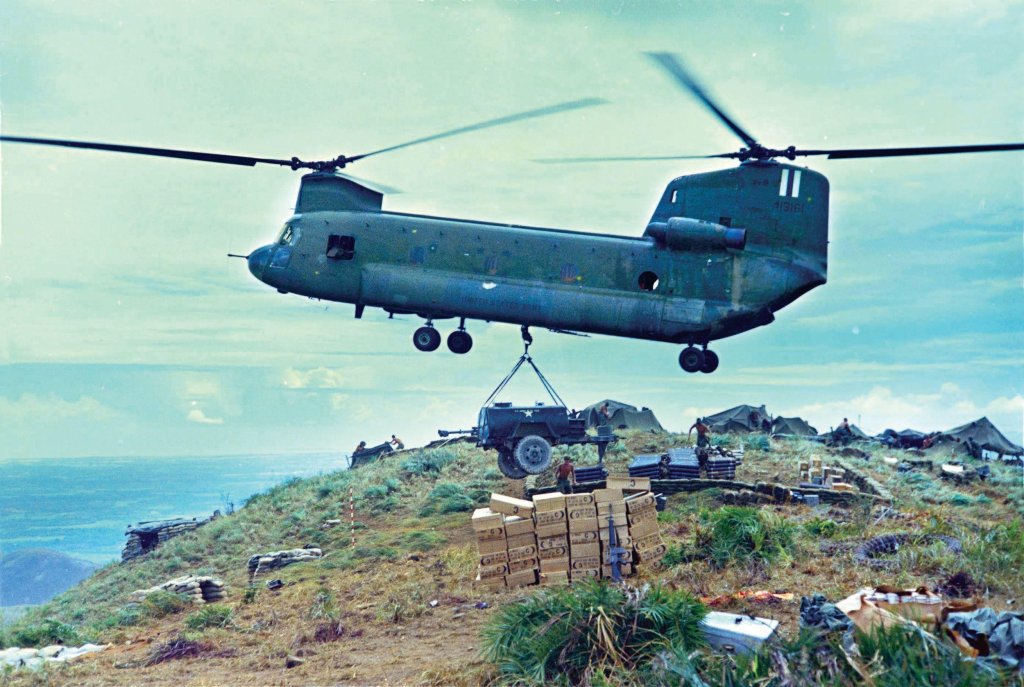
For infantrymen in the field, the sound of an approaching Chinook often brought hope. It could mean desperately needed supplies, reinforcements, artillery support, or transport away from a dangerous position. In many cases, the arrival of a Chinook meant that a unit could continue fighting, hold its position, or evacuate casualties who urgently required medical care.
The aircraft's importance also made it a frequent target. Enemy forces understood the vital role the Chinook played in sustaining American operations and often directed fire toward the large helicopters whenever they appeared. Despite the risks, crews continued flying mission after mission, knowing that soldiers on the ground depended upon them.
By the end of the war, the CH-47 had become more than simply a transport helicopter. It had become a symbol of the immense logistical effort required to fight in Vietnam and a testament to the skill and courage of the crews who flew it.
 Today, the nickname “Easy Rider” remains tied to memories of the Vietnam War. For many veterans, it recalls the unmistakable thunder of twin rotor blades echoing across jungle valleys, remote firebases, and mountain outposts. It is the sound of a helicopter that carried not only men and equipment, but also the burden of a war.
Help preserve the stories behind the artifacts. Click here to support Ghosts of the Battlefield.