Cut in Two in the Moonlight: The USS Frank E. Evans Disaster
On a calm, moonlit night in June 1969, the Australian aircraft carrier HMAS Melbourne struck USS Frank E. Evans and cut the American destroyer in two. Seventy-four sailors were killed, including three brothers from Nebraska.
August 19, 2026

In the early morning hours of June 3, 1969, two allied warships were moving through the South China Sea as part of a multinational naval exercise. The weather gave no warning of what was coming. The sea was described as glassy calm, there was virtually no wind, visibility was excellent, and bright moonlight lay across the water. Shortly after 3:00 a.m., the Australian aircraft carrier HMAS Melbourne ordered the American destroyer USS Frank E. Evans to move into plane-guard position astern of the carrier. It was a routine maneuver, one Evans had performed before. Within minutes, however, a chain of misunderstandings on the American destroyer's bridge placed her directly across Melbourne's bow. At approximately 3:15 a.m., the carrier struck Evans amidships and cut her completely in two.
The forward half of the destroyer sank within minutes. Men who had been sleeping below decks were thrown from their bunks as compartments rolled violently onto their sides, passageways disappeared beneath water, and steel twisted around them. Others were hurled into the sea. The surviving stern remained afloat and was eventually secured alongside Melbourne. Seventy-four American sailors were killed, most of them trapped in the section that disappeared beneath the South China Sea. Among the dead were three brothers from Niobrara, Nebraska, who had specifically wanted to serve aboard the same ship.
Their names were Gary, Gregory and Kelly Sage.
The loss of Frank E. Evans is sometimes remembered simply as a navigational accident, but reducing it to that description strips away much of what happened that night. Evans was a veteran destroyer that had served through World War II, Korea and Vietnam. Melbourne was Australia's most important aircraft carrier and a ship already haunted by another fatal collision. The disaster involved inexperienced watch officers, misunderstood courses, missed opportunities, courageous rescue attempts, bitter arguments over responsibility and families whose lives changed in a matter of minutes. For the survivors, June 3, 1969 became the dividing line between the lives they had known before the collision and everything that followed.
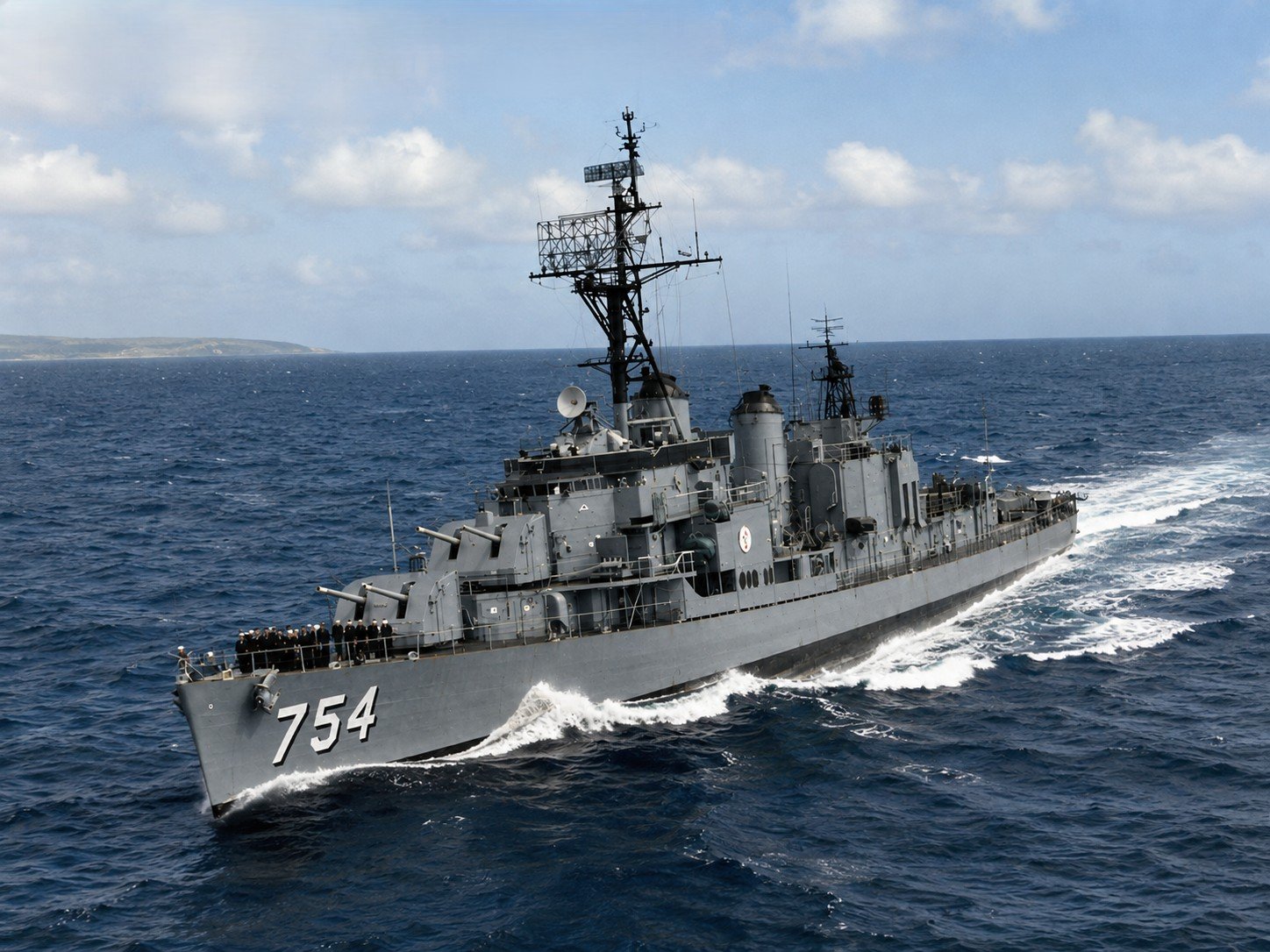 USS Frank E. Evans: A Destroyer Built for War
USS Frank E. Evans, DD-754, was an Allen M. Sumner-class destroyer built during World War II. She was laid down at Bethlehem Steel's Staten Island shipyard on April 21, 1944, launched that October and commissioned on February 3, 1945. At roughly 376 feet long and more than 3,000 tons at full load, Evans was heavily armed for a destroyer of her generation. Her principal battery consisted of six 5-inch guns mounted in three twin turrets, backed by antiaircraft weapons, torpedo tubes and antisubmarine equipment.
The destroyer reached the Pacific during the final months of World War II and operated around Okinawa, where destroyers faced some of the most dangerous duty in the fleet. Radar-picket stations and escort assignments placed small ships in exposed positions where Japanese aircraft, including kamikazes, could attack with little warning. Evans survived the campaign and later participated in occupation operations following Japan's surrender. After returning to the United States, she was placed out of commission in 1949, but her time in service was far from over.
The outbreak of the Korean War brought Evans back. Recommissioned in September 1950, she returned to the western Pacific and spent much of the conflict performing shore bombardment, escort and rescue missions. During operations near Wonsan on June 18, 1951, Communist shore batteries bracketed the destroyer and showered her with shell fragments, slightly wounding several sailors. Evans remained in the engagement and helped suppress the enemy positions. Through repeated Korean deployments she developed a reputation as a hard-used and dependable ship, earning nicknames such as the "Lucky Evans" and the "Gray Ghost."
Vietnam added another chapter. Beginning in the mid-1960s, Evans repeatedly deployed to Southeast Asia, providing carrier escort and naval gunfire support. Her 5-inch guns fired against targets ashore, including missions supporting American and allied troops during some of the most intense periods of the war. In February 1968, during the Tet Offensive, Evans provided naval gunfire support near Phan Thiết. She returned to Southeast Asia again in 1969 and had only recently been operating in support of the war before joining the exercise in which she would be lost.
For the crew, however, Evans was not a list of deployments or battle stars. She was home. Destroyer life meant cramped berthing compartments, watches at all hours, boiler rooms where temperatures became oppressive, constant maintenance, the vibration of machinery and the peculiar closeness that develops among several hundred people living inside a steel hull. Every sailor had a station, and during an emergency every second depended on people knowing exactly where to go and what to do.
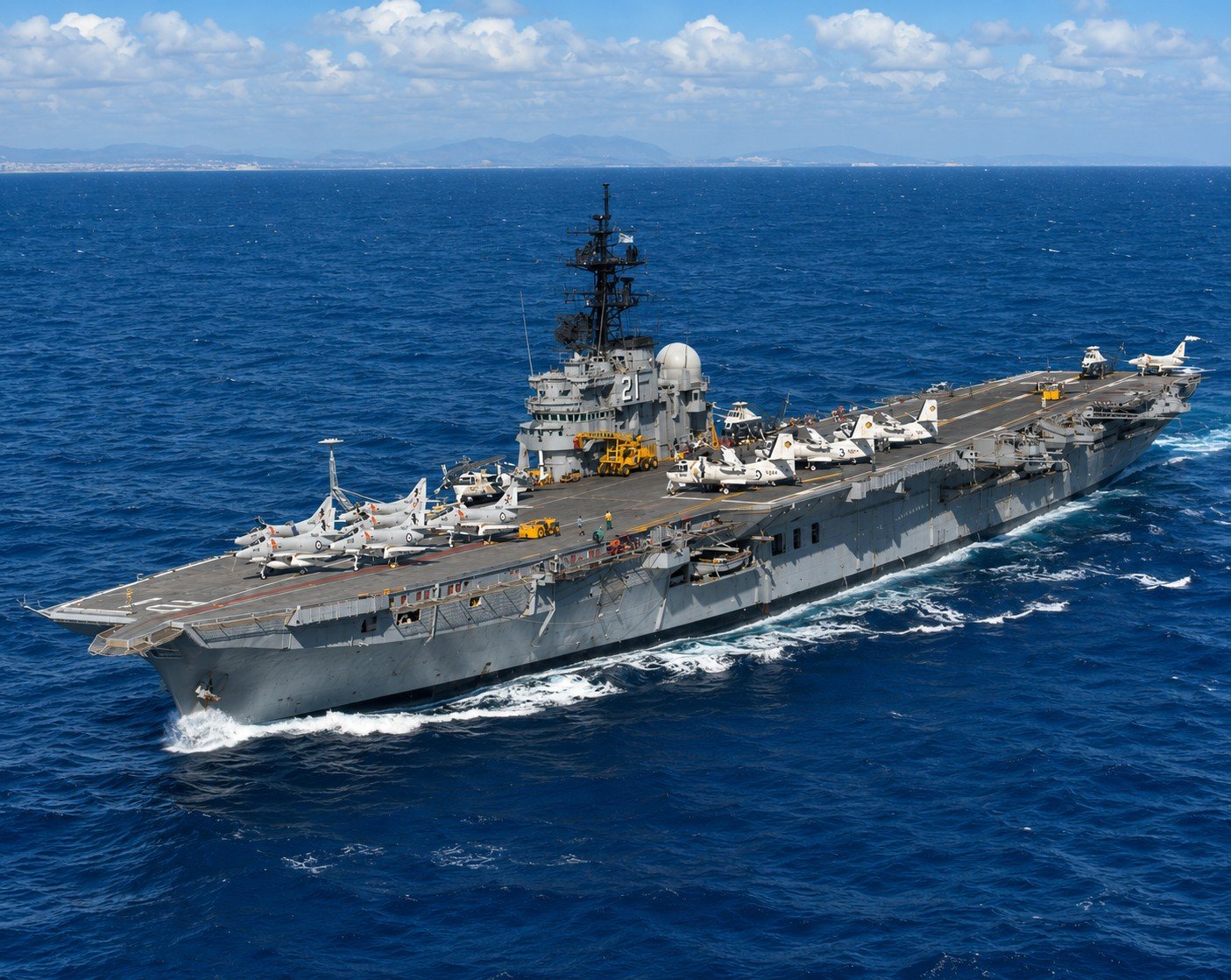 HMAS Melbourne: Australia's Carrier
HMAS Melbourne, R21, came from a very different world of naval warfare. Construction of the light fleet carrier had begun in Britain during World War II, but the ship was not completed before the conflict ended. Australia acquired her and had the design extensively modernized before commissioning her into the Royal Australian Navy on October 28, 1955. At more than 700 feet long and around 20,000 tons at full load, Melbourne was several times the displacement of Evans and towered above the American destroyer.
By 1969 Melbourne operated a mixed air group that included A-4G Skyhawk attack aircraft, S-2 Tracker antisubmarine aircraft and Westland Wessex helicopters. She represented Australia's principal fixed-wing naval aviation capability and regularly exercised with American, British, New Zealand and other allied forces throughout the Pacific.
There was, however, a grim history attached to her bow. On the night of February 10, 1964, Melbourne collided with the Australian destroyer HMAS Voyager during exercises off the coast of New South Wales. Voyager crossed ahead of the carrier and was struck amidships. Melbourne cut the destroyer in two, and 82 men aboard Voyager were killed.
The similarity to what happened five years later is impossible to ignore. Even more remarkably, Captain John Philip Stevenson, who commanded Melbourne in 1969, had previously served in connection with the inquiry into the Voyager disaster. He knew what could happen when destroyers maneuvered too closely around a carrier and had reportedly emphasized those dangers when discussing formation procedures with officers of the ships participating in the 1969 exercise. Two nights before the collision with Evans, another American destroyer, USS Everett F. Larson, had experienced a near miss while maneuvering around Melbourne. The risks were known. That did not prevent history from repeating itself.
Exercise Sea Spirit
In June 1969, Melbourne and Evans were participating in Exercise Sea Spirit, a multinational Southeast Asia Treaty Organization naval exercise involving warships from several allied nations. Melbourne operated as the carrier at the center of a screen that included the American destroyers Frank E. Evans, James E. Kyes and Everett F. Larson, along with British and New Zealand warships.
During carrier flight operations, a destroyer would often be assigned to "plane guard" station behind the carrier. Its purpose was simple and potentially lifesaving. If an aircraft crashed into the sea during takeoff or landing, the destroyer was positioned to reach the pilot quickly. Evans had performed the maneuver with Melbourne before, and nothing about the order itself should have been especially dangerous.
Shortly after 3:00 a.m. on June 3, Melbourne altered course to approximately 260 degrees. Evans was then ordered to take station about 1,000 yards astern of the carrier. The American destroyer was positioned forward and to Melbourne's port side, meaning Evans needed to maneuver clear of the carrier before coming around into position behind her.
Instead, Evans began turning toward Melbourne.
Confusion on the Bridge
Commander Albert S. McLemore, commanding officer of Frank E. Evans, was asleep in his sea cabin when the order arrived. A captain cannot remain physically on the bridge every hour a ship is underway, and warships routinely operate under qualified officers of the deck while the commanding officer rests. McLemore's standing instructions, however, required him to be called for significant changes in formation or circumstances. He was not awakened.
Lieutenant junior grade Ronald Ramsey was serving as officer of the deck, while Lieutenant junior grade James Hopson, acting as junior officer of the deck, was conning the ship. The subsequent investigation revealed that the young officers did not share the same understanding of the tactical picture. Hopson believed the formation's base course was approximately 185 degrees. Melbourne was actually steering 260 degrees. That enormous difference affected how he interpreted the carrier's movement and what maneuver he believed Evans needed to make.
The destroyer's Combat Information Center should have provided an independent check. Radar information could have resolved the confusion, but communication between the bridge and CIC was inadequate. As Evans began moving across Melbourne's path, officers aboard the carrier realized the situation was becoming dangerous. Melbourne signaled her course and warned Evans that the two ships were developing a collision situation.
Captain Stevenson was on Melbourne's bridge and watching the destroyer carefully. Through binoculars he could see that Evans was turning in a way that made no sense if she intended to take station astern. Melbourne's navigation lights were brought to full brilliance in an effort to make the carrier's heading unmistakable. The warning came again.
Evans was on a collision course.
By then, the officers aboard Evans were also beginning to understand that something was terribly wrong. Hopson later recalled the growing realization that Melbourne was not where he believed she should be. Orders were given, counterorders followed, and both ships began evasive maneuvers. Evans attempted to reverse engines. One sailor reportedly grabbed the engine-order telegraph himself in an effort to make sure the backing order was carried out immediately.
There was almost no time left.
At approximately 3:15 a.m., Melbourne's bow struck the port side of Frank E. Evans.
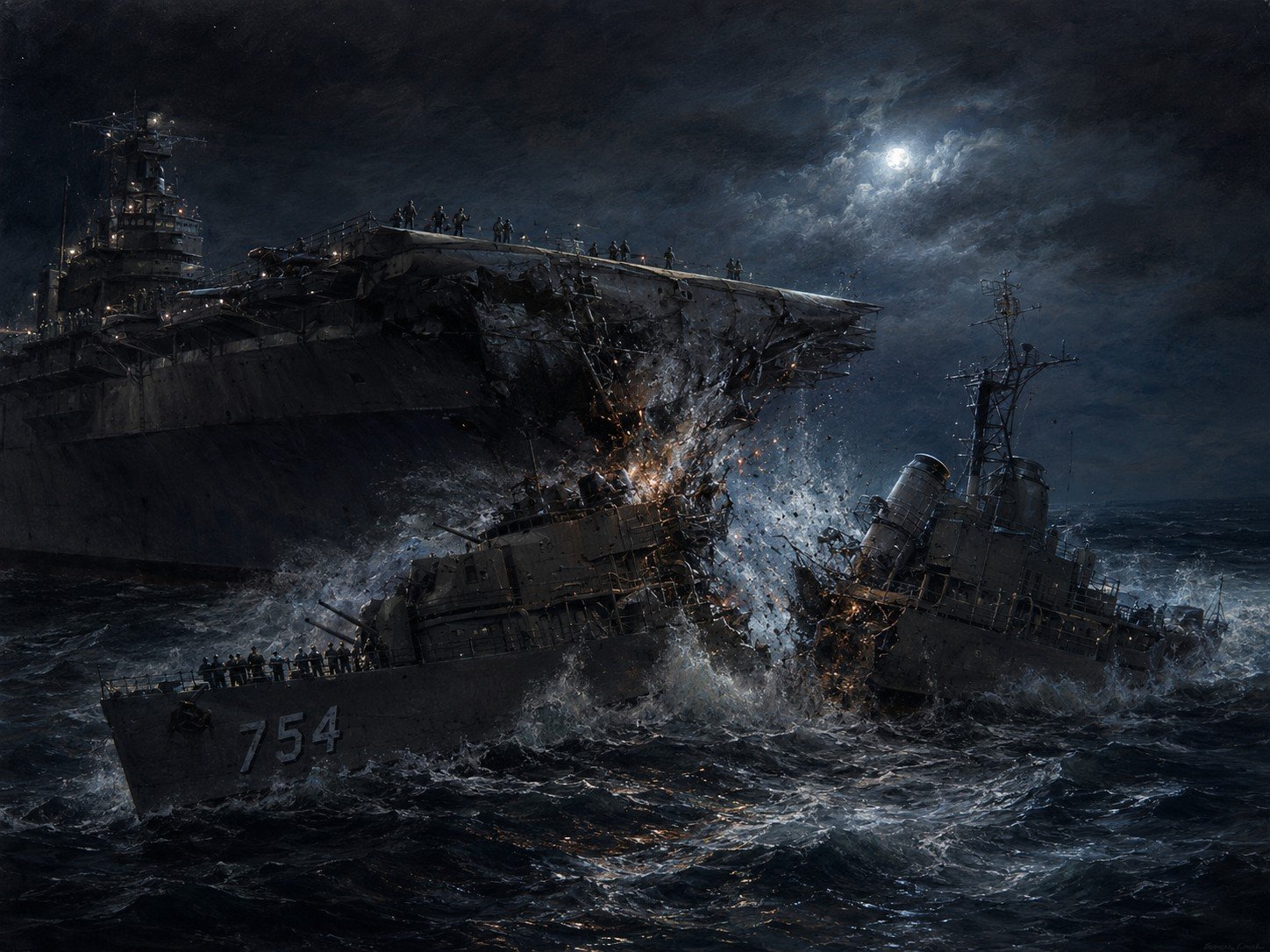 The Destroyer Breaks Apart
The difference in size between the two ships became brutally apparent at the moment of impact. Melbourne's massive bow drove into Evans near the middle of the destroyer. Steel plating buckled, decks collapsed and internal compartments were ripped open. Pipes, electrical cables and structural members tore apart as the carrier continued forward.
Then Evans broke in two.
The forward section swung away toward Melbourne's port side while the stern scraped along the carrier's starboard side. For sailors sleeping forward, the world changed almost instantly. Compartments that had been level rotated violently. Bunks became obstacles suspended overhead or hanging sideways. Lights failed, seawater began entering damaged spaces, and escape routes that men had practiced using during drills suddenly bore little resemblance to the passageways they knew.
Seaman Apprentice Chris Dewey was asleep in a forward berthing compartment when the collision threw him across the space. As the bow section rolled, Dewey found that the normal route out was now far above him. He climbed upward using fixtures and whatever handholds he could find until he reached an escape hatch. Approximately 40 men had been sleeping in the compartment. Dewey later recalled that only four escaped.
That account illustrates why the casualty toll was so severe. Most of the men who died were not standing on deck watching the collision unfold. They were asleep below the waterline in the section that was about to sink.
On the bridge, Hopson ran from the port side as Melbourne's enormous bow filled his view. He remembered a flash and then being struck hard in the back. When he became aware of his surroundings again, he was in the water. Another sailor, Seaman Apprentice Marcus Rodriguez, experienced something almost unbelievable. The force of the collision threw him from Evans onto Melbourne's flight deck. In the space of a few seconds, he had gone from standing aboard an American destroyer to lying aboard an Australian aircraft carrier.
What the Australians Experienced
Many sailors aboard Melbourne initially had no idea what had happened. Petty Officer Ron Baker, working inside the carrier's radio room, later described a violent vibration running through the ship, almost as though a bicycle were being ridden across corrugated metal. For a moment, some men wondered whether Melbourne had somehow run aground, an impossibility in the deep water where the exercise was taking place. Others briefly wondered whether the carrier had struck a submarine.
Leading Seaman David Robertson had been asleep when the emergency alarm sounded shortly before the collision. The impact knocked men down inside the ship. When Robertson made his way toward his emergency station on the flight deck, he encountered a scene almost impossible to comprehend: part of an American destroyer was lying beside the carrier in the moonlight.
Australian Sub-Lieutenant Graham Winterflood was airborne in a Westland Wessex helicopter when the accident occurred. His crew had been conducting antisubmarine operations and was recalled urgently to the carrier. Approaching Melbourne, Winterflood saw what appeared to be half a destroyer secured alongside the ship. The Wessex helicopters that had been hunting submarines minutes earlier now became rescue aircraft, searching the water for American sailors.
 The Bow Goes Down
The forward section of Frank E. Evans remained afloat only briefly. Within minutes it slipped beneath the surface of the South China Sea, carrying most of the 74 dead with it. Only one body among the fatalities was recovered. The other men remained with the wreck or were lost at sea.
The stern section survived. Australian sailors managed to get lines aboard it as the shattered remains of Evans drifted past Melbourne. Rescue boats were launched, helicopters searched overhead and sailors threw lines and flotation gear toward men struggling in the water. Australians and Americans worked together without hesitation. Whatever arguments would later erupt over responsibility, none mattered during the rescue.
The conduct of individual sailors in those minutes became one of the most powerful parts of the Evans story. Some survivors in the water reportedly directed rescuers toward shipmates they believed were in greater danger before accepting help themselves. Hospital Corpsman Chief Charles Cannington was trapped with others in the chiefs' quarters and helped men find their way out. He handed a penlight to another sailor so those escaping could see their route and allowed others to move ahead of him. Cannington did not survive.
Machinery Repairman First Class Donald Bakken and Signalman First Class Byron Pruden were unable to reach their normal general quarters stations, so they returned toward the berthing spaces and began helping other sailors escape. In a disaster created by confusion and human error, survival often depended upon men who immediately chose to help somebody else.
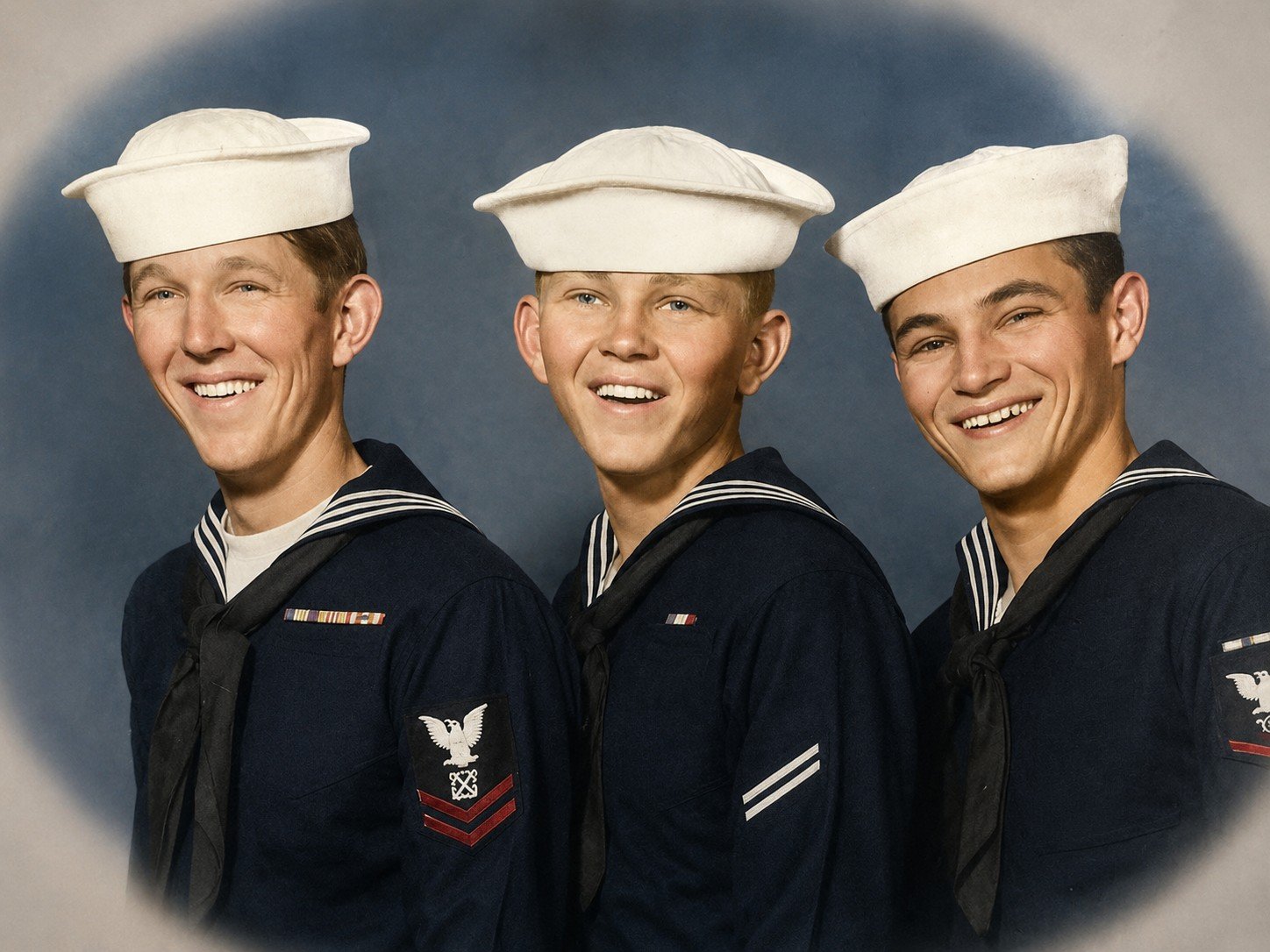 The Sage Brothers
No family suffered a more concentrated loss aboard Frank E. Evans than Ernest and Eunice Sage of Niobrara, Nebraska. Three of their sons were aboard the destroyer: Gary Sage, Gregory Sage and Kelly Sage. All three died.
Gary was 22 years old and the oldest of the brothers serving aboard Evans. A Boatswain's Mate Second Class, he had previously served aboard USS Merrick before transferring to Evans in September 1968. Surviving family and association accounts describe a young man who enjoyed singing, working with animals and hoped eventually to attend school and become a veterinarian.
Gregory was 21 and had joined the Navy in 1966. He trained as a radarman and reported aboard Evans in July 1967. He was married and had a young son at home. By 1969 he was serving as a Radarman Third Class. Unlike Gary and Kelly, Gregory was awake when the collision occurred. He was on watch in the destroyer's Combat Information Center, one of the spaces located in the forward portion of the ship.
Kelly was the youngest. He was 19 years old and had only recently joined his brothers aboard Evans. He enjoyed football and motorcycles, but accounts of his life repeatedly return to how much he wanted to be with his older brothers. Because of his age, parental permission was needed for him to serve aboard the same ship. Permission was granted, and Kelly reported aboard Evans in March 1969.
For roughly two and a half months, the three brothers served together. Gary and Kelly were assigned forward and were sleeping when Melbourne struck. Gregory was in CIC. All three were in the section that sank.
The loss inevitably recalled the five Sullivan brothers, who had died together aboard USS Juneau during World War II. The Sullivan tragedy had made the Navy much more cautious about assigning siblings to the same ship, but it did not create an absolute prohibition. The Sage brothers wanted to serve together, and their family supported that decision.
On June 3, 1969, Ernest and Eunice Sage lost three sons in a matter of minutes.
Their community lost three young men at once. Gregory's wife lost her husband, and his small son lost his father. Unlike families whose dead could be returned home for burial, the Sages had no three flag-draped coffins to receive. Their sons remained somewhere beneath the South China Sea with the forward section of Frank E. Evans.
A memorial service was held in Niobrara on June 11. The three brothers became enduring symbols of the Evans disaster, not because their lives were more valuable than those of the other 71 men who died, but because their loss captured something almost unbearable about the tragedy. A mother and father had allowed their sons to remain together because the brothers wanted to serve together. They did, right up until the end.
Commander Albert S. McLemore
Commander Albert S. McLemore would spend the rest of his career associated with the fact that he was asleep when his ship was struck. That description, while technically true, can easily distort the realities of commanding a naval vessel. Captains routinely sleep while ships are underway, relying upon qualified watch officers and standing orders to keep them informed whenever circumstances require their presence.
The critical issue was not that McLemore had been sleeping. It was that he was not called.
His standing orders required notification when significant changes occurred in formation or when circumstances became unusual. The order to move Evans into plane-guard station involved maneuvering around a large aircraft carrier at night, yet McLemore remained unaware of the developing situation until the collision occurred.
The investigation exposed failures that went well beyond a single missed telephone call. The officers on the bridge did not have a common understanding of the ships' courses. The tactical picture was misinterpreted. Information from CIC was not used effectively. The relative movement of Melbourne was misunderstood, and the officers did not recognize their own confusion until the ships were dangerously close.
McLemore eventually faced court-martial proceedings. He pleaded not guilty to charges of dereliction in the performance of duty and negligently hazarding his vessel but was convicted and received a reprimand. Ramsey also faced disciplinary action and pleaded guilty to charges stemming from his role on the bridge.
It is tempting to search a disaster for one person to blame because a single villain makes history easier to understand. Evans does not provide that convenience. The ship was lost through a chain of failures in which mistaken assumptions, poor communication, inexperience and failure to call the commanding officer reinforced one another until there was no time left to recover.
That chain is one reason the collision became an important naval training case. A ship does not need to be under enemy fire for complacency or confusion on the bridge to become deadly.
Captain John Philip Stevenson
Captain John Philip Stevenson stood at the center of an entirely different controversy. He was an experienced Royal Australian Navy officer and a veteran of World War II who had spent decades at sea. More significantly, he understood the danger of destroyers maneuvering around Melbourne better than almost anyone. He had lived through the consequences of the Voyager collision and had been involved in its aftermath.
On June 3, Stevenson was on Melbourne's bridge as Evans began moving toward the carrier. He watched the destroyer through binoculars, recognized the danger and attempted to warn the American ship. Melbourne's navigation lights were illuminated brightly, signals were sent, and Stevenson eventually ordered evasive action. The carrier's size and momentum, however, meant she could not turn or stop like a destroyer. By the time Evans crossed directly ahead of her, the collision was unavoidable.
Stevenson later remembered the impact as a tremendous blow that caused Melbourne to shudder and heave upward as the carrier passed through the smaller ship. When the destroyer's halves emerged on opposite sides of Melbourne, Stevenson and his crew immediately turned from avoiding disaster to rescuing survivors.
The official investigation placed some responsibility on Stevenson, arguing that he might have taken stronger evasive action earlier. That conclusion became extremely controversial in Australia. Stevenson was court-martialed on charges of negligence, but the case against him collapsed. Evidence showed that some of the actions critics claimed he should have taken would not have prevented the collision, while the court accepted that Evans had received adequate warning.
Stevenson was acquitted, but the damage to his career was not undone. He believed he had been made a scapegoat, and his subsequent posting was widely viewed as a professional demotion. He eventually resigned from the Royal Australian Navy.
Decades later the Australian government formally acknowledged that Stevenson had been treated unfairly. By then, however, the career that might have followed Melbourne had long since disappeared. Like the survivors aboard both ships, Stevenson carried June 3, 1969 with him for the rest of his life.
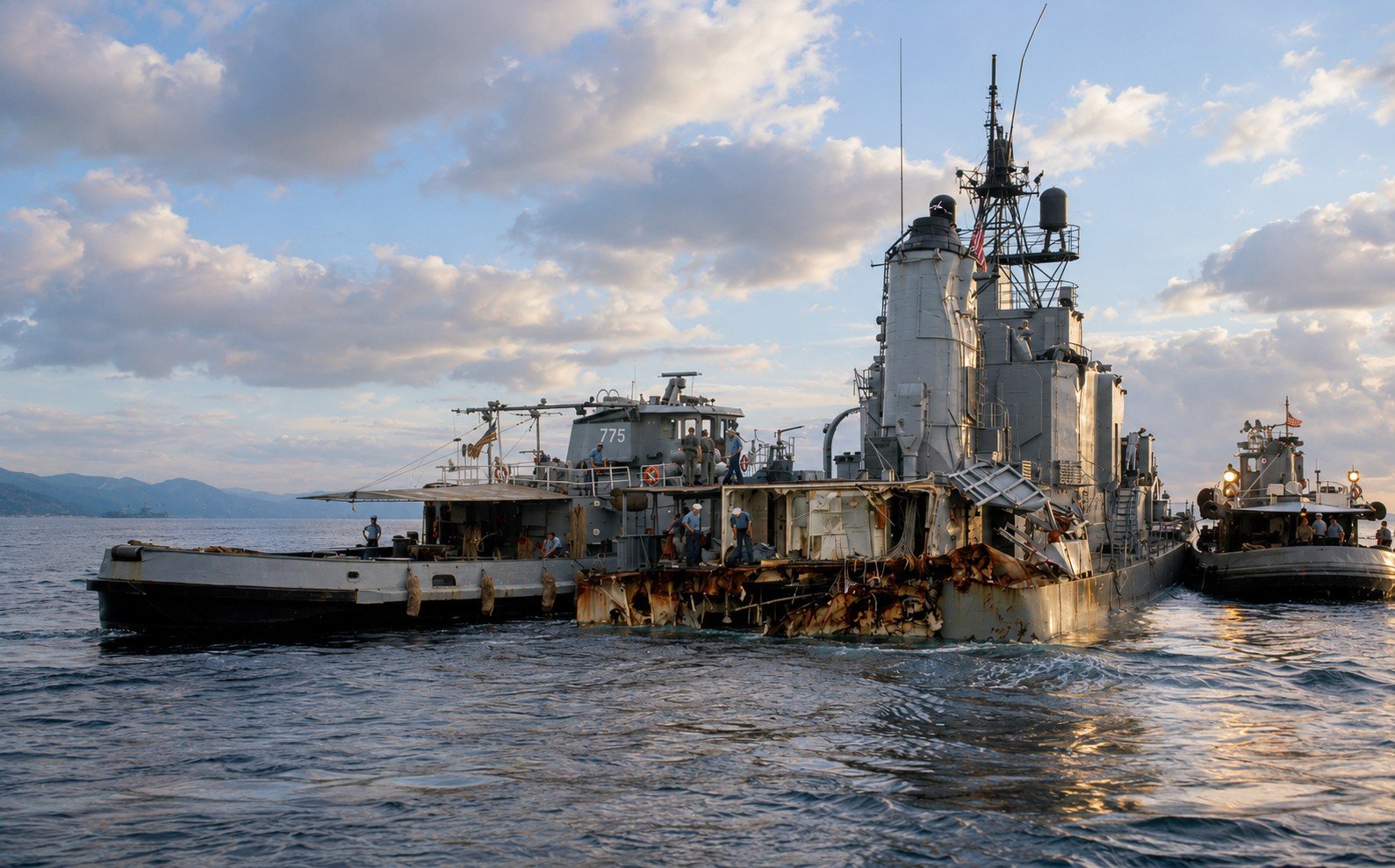 Saving What Remained of Evans
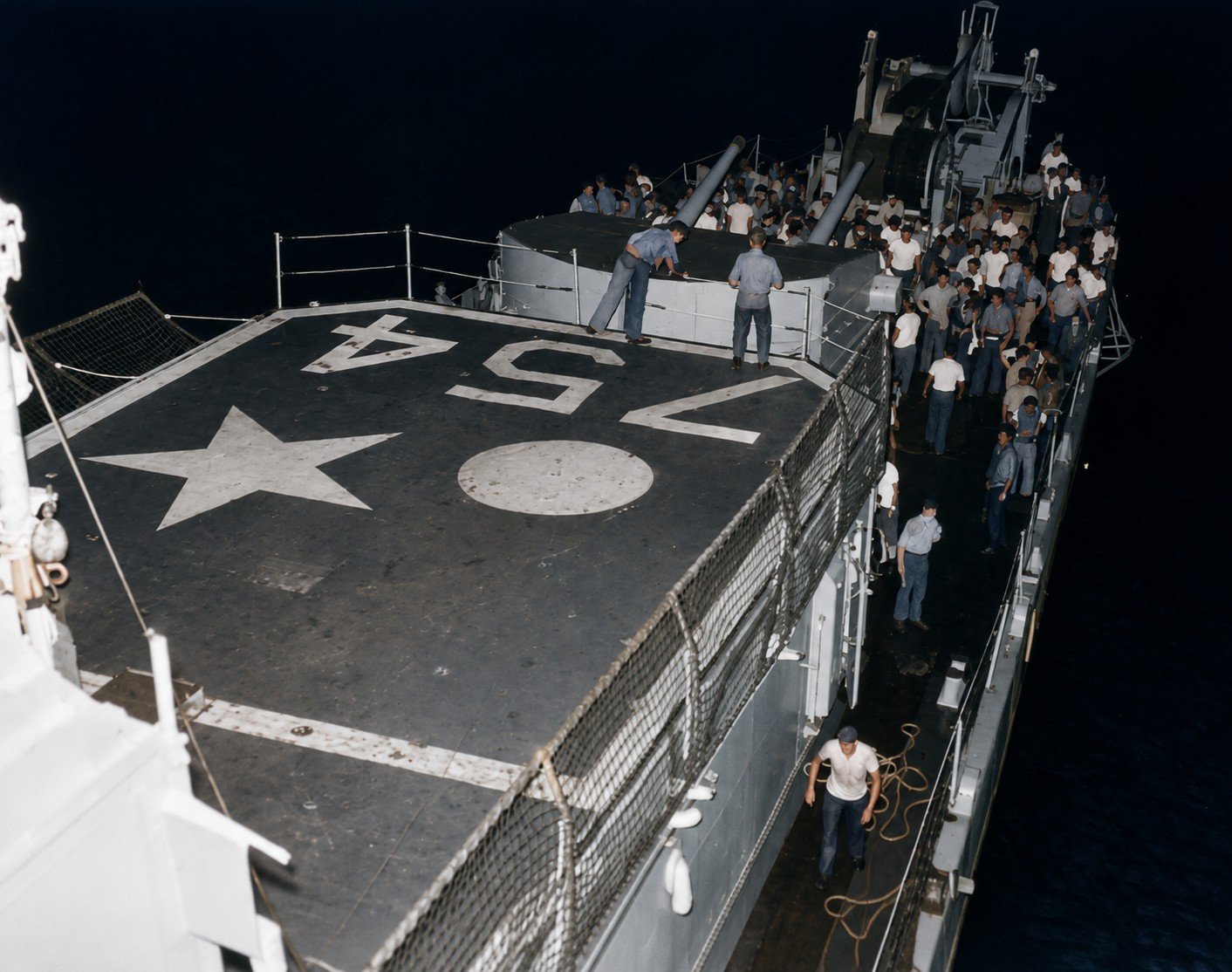
Once the immediate rescue ended, attention turned to the surviving stern section of Frank E. Evans. The wreck remained afloat and was eventually towed to Subic Bay in the Philippines. Photographs taken afterward are among the most haunting images of the disaster. At first glance the stern still looks like part of a functioning destroyer, complete with guns, superstructure and mast. Then the eye reaches the forward end and finds nothing but a wall of crushed and torn steel where half the ship used to be.
Evans was formally decommissioned and struck from the Naval Vessel Register on July 1, 1969. Equipment that could still be used was removed from the surviving section. On October 10, what remained of the destroyer was sunk as a target.
There was something especially cruel about the manner of her loss. Frank E. Evans had survived kamikaze-era operations around Okinawa, Communist shore batteries during the Korean War, repeated deployments to Vietnam and nearly a quarter century of naval service. She was not lost to an enemy submarine, missile, mine or artillery battery. She was destroyed in calm water by an allied ship during a training exercise.
The bow remained on the bottom with most of the Lost 74.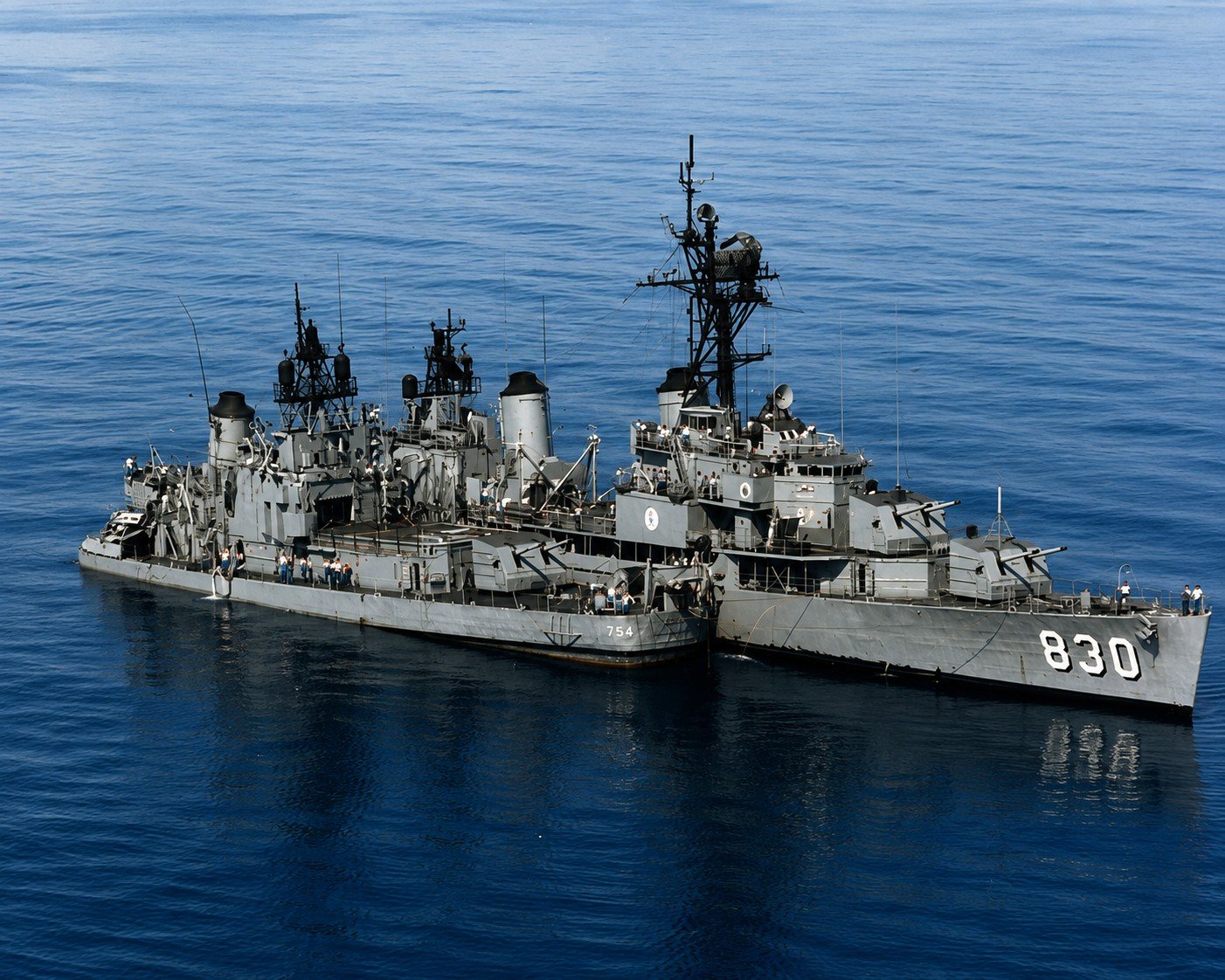
Melbourne Returns to Sea
HMAS Melbourne survived the collision despite serious damage to her bow. Temporary repairs were made before the carrier returned to Australia for more extensive work. For the second time in five years, Melbourne's bow had to be repaired after cutting a destroyer in two.
The carrier nevertheless returned to active service and remained the centerpiece of Australian naval aviation throughout the 1970s. Her Skyhawks, Trackers and helicopters continued operating from her flight deck, and Melbourne participated in exercises across the Pacific. Following Cyclone Tracy in 1974, the carrier took part in Australia's massive relief effort for Darwin. In 1981, near the end of her career, Melbourne rescued 99 Vietnamese refugees from an overcrowded vessel in the South China Sea, a humanitarian mission remembered with particular pride by members of her crew.
 Melbourne was decommissioned on June 30, 1982 after nearly 27 years of Australian service. Plans to replace her with the British carrier HMS Invincible collapsed following the Falklands War and changes in Australian defense policy, effectively ending conventional fixed-wing carrier aviation in the Royal Australian Navy.
The old carrier remained in Sydney for several years before being sold for scrap in 1985 and towed to China. Her story took one final unexpected turn there. Chinese naval engineers were able to examine portions of the surviving carrier and its aviation systems before dismantling her. A ship designed in Britain during World War II and operated by Australia during the Cold War therefore ended its existence providing another navy with an opportunity to study Western aircraft-carrier technology.
The Men Who Lived
For the survivors, the destruction of the ship did not end when the stern reached Subic Bay.
Bill Thibeault was only 18 years old. His friend Dick Messier was 19. Both had joined Evans while the destroyer was in dry dock in 1968. Messier was killed in the collision. Thibeault survived because he happened to be in the stern half of the ship.
Another survivor, Terry Vejr, was saved for essentially the same reason. The difference between life and death aboard Evans could be measured in a few feet of steel. Men whose bunks were located aft lived while friends sleeping farther forward disappeared with the bow.
Years later, Thibeault acknowledged that he still thought about June 3 every day.
That may be the most revealing description of what it meant to survive Frank E. Evans. The collision lasted only moments. For many of the men who lived through it, those moments never completely ended.
The Lost 74 and the Vietnam Veterans Memorial
The Evans disaster developed another painful legacy after the war.
Only weeks before the collision, Evans and her crew had been operating directly in support of combat operations in Vietnam. The destroyer had deployed to Southeast Asia because of the war, and her sailors were still serving in the region when she joined Exercise Sea Spirit.
Yet the collision occurred outside the geographical boundary used to determine eligibility for inclusion on the Vietnam Veterans Memorial in Washington. Because of that technical distinction, the names of the 74 men lost aboard Frank E. Evans were not included on the Wall.
For survivors and families, the distinction has never made much sense. These sailors had deployed from the United States during the Vietnam War. Their ship had fired missions supporting troops ashore. They remained in Southeast Asian waters as part of the larger American and allied military presence created by that war. Then 74 of them died while serving aboard that ship.
For decades, veterans and relatives have worked to have the names added to the Vietnam Veterans Memorial. The USS Frank E. Evans Association and its Project 74 campaign have kept the issue alive, arguing that geography should not erase the circumstances under which the men were serving.
The debate has lasted longer than many of the sailors themselves lived.
Remembering Frank E. Evans
 Military history often becomes a collection of machines, dates and statistics. USS Frank E. Evans was 376 feet long. Melbourne displaced many times her tonnage. The ships collided at approximately 3:15 in the morning. Seventy-four men died.
Every one of those numbers conceals a person.
Gary Sage hoped to become a veterinarian. Gregory Sage had a wife and young son waiting at home. Kelly Sage was 19 and wanted to serve beside his brothers. Chris Dewey climbed through a berthing compartment that had turned sideways while dozens of sailors around him never escaped. Charles Cannington helped other men find their way out and did not make it himself. Marcus Rodriguez was thrown from one ship onto another. Australian sailors who had never met the Americans before that night launched boats, flew helicopters, threw lines and pulled strangers from the sea.
Commander Albert McLemore awakened to discover that the destroyer entrusted to him had been torn in half. Captain John Stevenson watched the disaster develop from Melbourne's bridge, tried unsuccessfully to prevent it and spent decades dealing with accusations surrounding his actions. Survivors such as Bill Thibeault went home carrying memories that did not fade simply because the Navy closed its investigation.
USS Frank E. Evans had survived three wars when she entered the South China Sea on June 3, 1969. There was no enemy waiting for her that night and no storm hiding beyond the horizon. The sea was calm, visibility was good and moonlight illuminated the water.
A routine maneuver went wrong.
By the time the men on the bridges understood how badly wrong it had gone, two large warships were only seconds apart.
Melbourne's bow entered Evans' port side and drove through her.
The destroyer broke in two.
The forward section sank.
Seventy-four sailors went with it.
Among them were three brothers who had asked for nothing more unusual than the chance to serve together.
More than half a century later, the wreck of Frank E. Evans remains beneath the South China Sea, the Sage brothers remain with their shipmates, and survivors and families continue working to ensure that the Lost 74 are remembered not merely as casualties of an accident, but as American servicemen whose lives ended while their ship and their country were still deeply involved in the Vietnam War.
That is why the story of USS Frank E. Evans is not simply the story of two ships colliding in the darkness. It is the story of the people aboard them, the decisions that placed them there, the men who saved one another when everything went wrong, and 74 sailors who never came home.