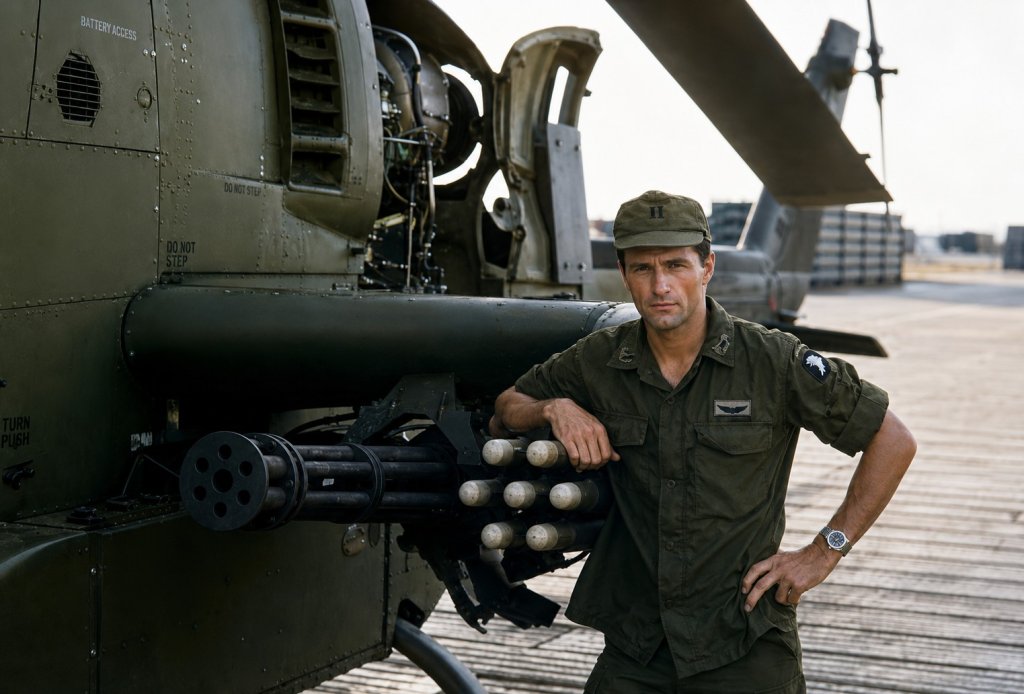
Captain William Lee Whitmore: Flying Into the Fire
On July 6, 1970, Captain William Lee Whitmore deliberately flew his small OH-6A Cayuse into enemy fire to save the life of a wounded Ranger. Twenty-two days later, Whitmore himself would be shot down over the jungles of Quang Tri Province
August 11, 2026

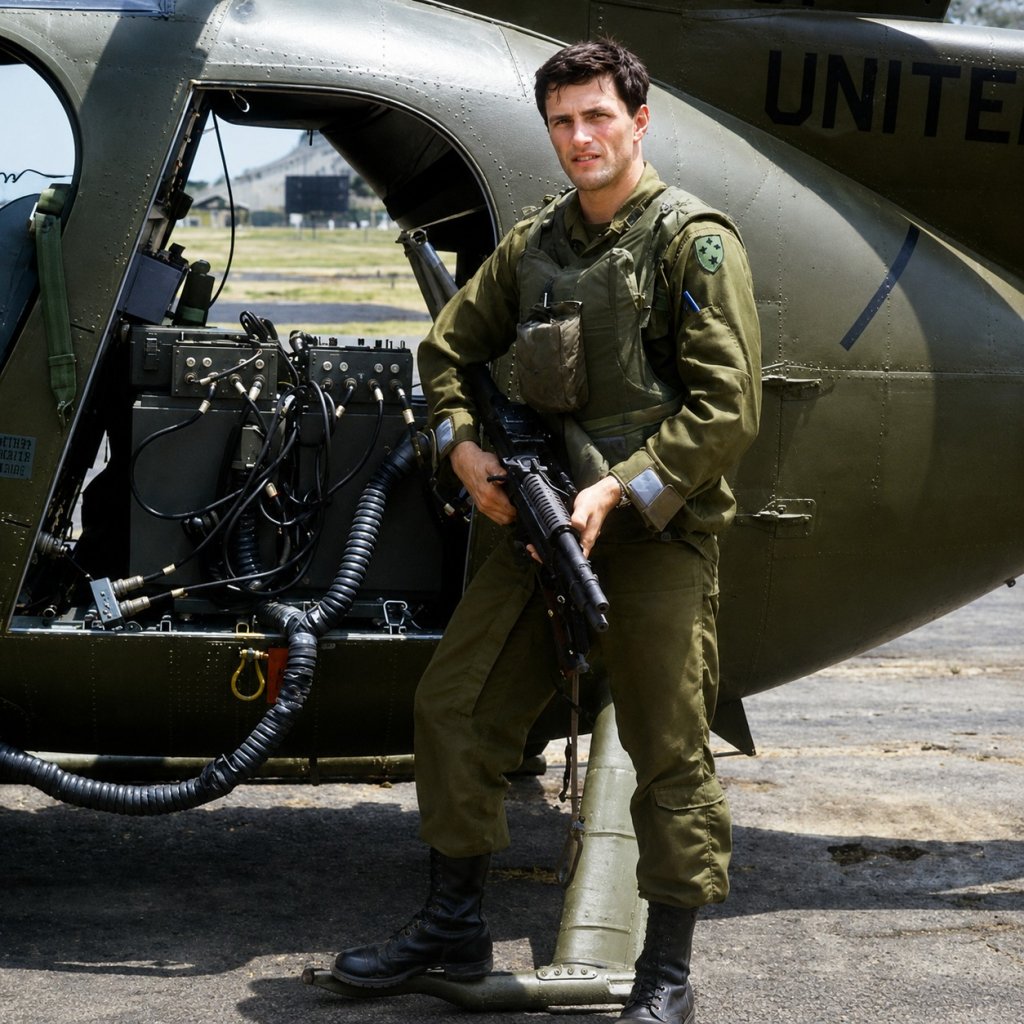
On July 6, 1970, Captain William Lee Whitmore deliberately flew his small OH-6A Cayuse into enemy fire to save the life of a wounded Ranger. Twenty-two days later, Whitmore himself would be shot down over the jungles of Quang Tri Province. He survived the fiery crash, was pulled from the battlefield alive, and fought for nearly two weeks before dying of his wounds on August 10, 1970. He was only twenty-two years old.
William Lee Whitmore was born on September 18, 1947, and called Sherwood, Oregon, home. He began his Vietnam tour on March 6, 1969, and eventually served as a pilot with Troop A, 2nd Squadron, 17th Cavalry Regiment, 101st Airborne Division. The 2/17th Cavalry was the division’s airborne cavalry element, using helicopters to scout ahead of friendly forces, locate enemy positions, direct supporting fire, and rapidly insert or extract troops. For pilots of the small OH-6A light observation helicopter, commonly called the Loach, that often meant flying frighteningly close to the ground.
The OH-6A was ideally suited for reconnaissance. Small, fast, and highly maneuverable, it could skim over treetops and probe terrain where larger aircraft could not operate as effectively. Those same qualities also placed its crews in extraordinary danger. Scout pilots deliberately flew low enough to see trails, bunkers, fresh movement, weapons positions, and other signs of enemy activity. At times, finding the enemy meant provoking him into revealing himself by opening fire. The scout helicopter was often the most exposed aircraft in the formation, operating beneath armed helicopters that waited above to strike once enemy positions had been identified.
Whitmore demonstrated the risks of that mission on July 6, 1970, while supporting a Ranger team that had become heavily engaged with an enemy force. Flying his OH-6A above the fighting, he attempted to locate and mark hostile positions so supporting armed helicopters could attack them. Enemy soldiers fired directly at his aircraft, but Whitmore continued his low-level passes over the battlefield. When the Ranger team leader was seriously wounded, Whitmore did more than continue directing the fight from the air. He descended through the hostile fire and brought the OH-6 into the team’s position.
Enemy fire continued to pour toward the helicopter as Whitmore hovered in the landing zone and waited for the wounded Ranger to be placed aboard. Only after the injured man was inside did Whitmore pull away from the battlefield and fly him to medical treatment. For that action, he was awarded the Silver Star. His citation emphasized his willingness to remain over the embattled Rangers despite intense enemy fire and his decision to descend into the position when their wounded leader needed evacuation. The decoration would ultimately be awarded posthumously.
The events that followed give Whitmore’s story an almost painful symmetry. Only twenty-two days after he risked his life to bring a wounded soldier out of the battlefield, another group of American soldiers would have to do the same for him.
 On July 28, 1970, Whitmore was flying OH-6A Cayuse serial number 67-16168 under the call sign “Assault 16.” His observer was Staff Sergeant Gerald Michael Vetrano. The two men were conducting reconnaissance in Quang Tri Province southeast of Khe Sanh, an area where North Vietnamese forces remained active and well armed. Their scout helicopter was operating at extremely low altitude, reportedly around one hundred feet above the terrain, when enemy gunners opened fire.
The OH-6 was struck by 12.7mm automatic-weapons fire, the heavy machine-gun fire American troops often referred to as .51 caliber. Against a lightly built observation helicopter flying close to the ground, hits from a weapon of that size could be devastating. Whitmore’s aircraft erupted in smoke and flame and crashed into the jungle, where it burned. Vetrano was killed.
From the air, the wreck appeared so violent that there was little reason to believe anyone aboard could have survived. Armed helicopters worked over the enemy positions before the cavalry’s ground troops, known as the Blues, could be inserted to reach the crash site. When they finally arrived, however, they discovered that Whitmore was still alive.
Despite the gunfire, impact, and burning aircraft, Whitmore had somehow escaped the wreckage. A later recollection from a fellow veteran described him dragging himself away from the helicopter and reaching a small stream. He had suffered devastating burns. The men who reached him now faced the same task Whitmore himself had faced only three weeks earlier: get a critically wounded man out of the battlefield.
 Whitmore was evacuated from the jungle and entered the military medical system. His wounds were severe enough that he was eventually transported out of Vietnam to the U.S. Army hospital at Camp Zama, Japan, where some of the most seriously injured casualties from Southeast Asia were treated. He remained alive for thirteen days after the shootdown before dying from his wounds on August 10, 1970.
This sequence explains a detail that can otherwise make Whitmore’s casualty record confusing. His official date of death is August 10, while the helicopter loss occurred on July 28. Some records reduce the incident to phrases such as “air loss,” “crash-land,” or “helicopter pilot,” descriptions that hide the violence of what actually happened. Whitmore did not die in an ordinary aviation accident. His OH-6 had been shot down by hostile heavy machine-gun fire during a combat reconnaissance mission. He survived the crash and lived for nearly two weeks before succumbing to his wounds.
By the summer of 1970, Whitmore was flying one of the most dangerous missions in Army aviation. Air cavalry scouts frequently worked in teams that paired the little OH-6 with heavily armed AH-1 Cobra gunships. The Loach went low and searched for the enemy while the Cobras remained above, ready to attack once hostile positions were identified. The system was effective, but it depended upon someone flying close enough to the ground to expose himself first. Whitmore repeatedly entered that world.
His Silver Star mission provides a clear window into the kind of pilot he had become. When the Rangers below him were in trouble on July 6, he did not simply call for another aircraft to attempt the rescue. He took the OH-6 down himself, remained in an exposed landing zone under fire long enough for the wounded team leader to be loaded aboard, and carried him to safety. There was no way Whitmore could have known that twenty-two days later he would become the wounded man waiting for someone else to come through the fire.
The cavalry ground troops reached him after the shootdown and got him out of the jungle. Medical personnel kept him alive for almost two weeks. For a time, despite the burns and injuries sustained inside the destroyed OH-6, Whitmore was still fighting his way home. His wounds ultimately proved too severe. Five days after his death, orders were issued awarding him the Silver Star for the rescue he had performed on July 6.
Military citations describe courage in formal language. Whitmore’s citation records hostile fire, a wounded Ranger, an exposed landing zone, and a pilot who refused to abandon the men below him. Behind those words was a small helicopter descending toward men who were deliberately trying to shoot it from the sky, a pilot holding the aircraft in place long enough for a wounded soldier to be loaded aboard, and the decision to remain there because another man needed him.
Whitmore’s story also illustrates something often lost when discussing helicopter warfare in Vietnam. Aircraft such as the Huey, Cobra, Chinook, and Loach have become icons of the war, so recognizable that the machines themselves can sometimes dominate the stories. Yet those helicopters did not descend into hostile fire on their own. Men made the decision to take them there.
OH-6A serial number 67-16168 can be recorded as another aircraft lost in combat. It was struck by enemy fire, crashed, burned, and disappeared from the Army inventory. The man flying it cannot be reduced as easily. Captain William Lee Whitmore had already demonstrated extraordinary courage before his final mission. He flew into enemy fire to save another soldier, continued returning to dangerous low-level reconnaissance work afterward, survived being shot from the sky by a heavy machine gun, escaped a burning helicopter, and remained alive for thirteen more days.
Whitmore’s name is inscribed on the Vietnam Veterans Memorial, but there is far more behind that name than a casualty classification and a date. On July 6, 1970, he refused to leave a wounded Ranger behind. On July 28, his own aircraft was shot from the sky, and his fellow soldiers refused to leave him behind. On August 10, after thirteen days fighting to survive, Captain William Lee Whitmore died from his wounds.
Fifty-six years later, the most important part of his story is not simply how he died. It is the kind of man and pilot he had already proven himself to be.