Wendell Fertig was an American civil engineer and U.S. Army officer who became a significant figure during World War II due to his role in organizing and leading a guerrilla resistance movement in the Philippines. After the Japanese invaded the Philippines in 1942, Fertig, who had been a reserve officer in the U.S. Army Corps of Engineers, refused to surrender when American and Filipino forces were ordered to do so.
Instead, Fertig escaped into the mountains of the island of Mindanao and began organizing local Filipino resistance fighters. He declared himself a brigadier general of a guerrilla army, despite having no official appointment to that rank, and began coordinating with other local guerrilla leaders to conduct sabotage, intelligence gathering, and guerrilla warfare against Japanese forces. Under his leadership, the resistance controlled large parts of Mindanao and helped prepare for the eventual liberation of the Philippines by American forces.
Fertig's operations became vital to the U.S. military, which began supplying him with equipment and communications support as the war progressed. His resistance network was one of the most successful in the Philippines, contributing significantly to disrupting Japanese operations and aiding U.S. forces during General Douglas MacArthur's return to the islands.
Another prominent figure was Lt. Col. Ruperto Kangleón, who led the resistance in Leyte and later supported General Douglas MacArthur's return to the Philippines in 1944. The Hukbalahap (Hukbong Bayan Laban sa Hapon), a communist-led guerrilla group, operated in Central Luzon and grew to around 30,000 fighters by the end of the war. Major Marcos V. Agustin, leader of the Hunter's ROTC, also led operations in Luzon, conducting sabotage and ambushes.
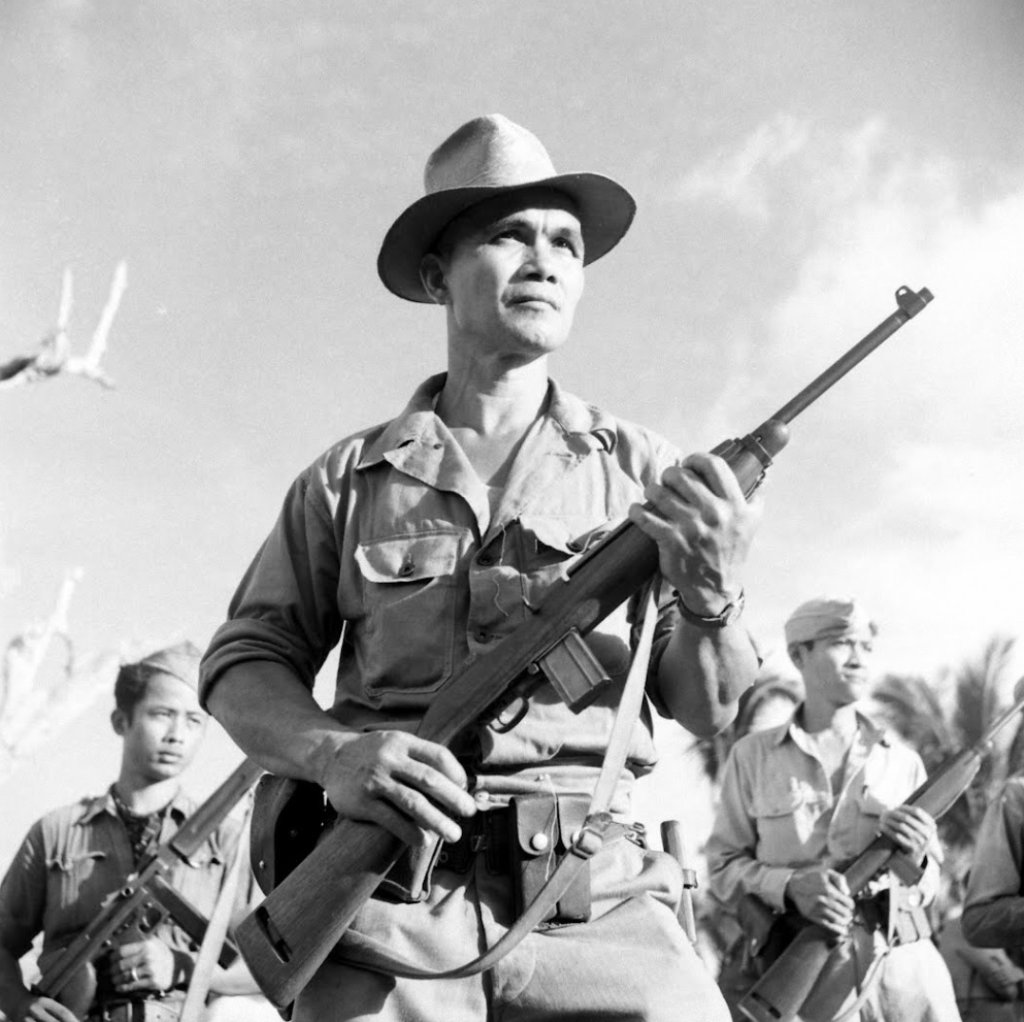
Guerrilla forces were instrumental in gathering intelligence for U.S. forces, which aided in the liberation of the Philippines. They conducted sabotage operations against Japanese supply lines, ambushed Japanese patrols, and carried out hit-and-run attacks, keeping Japanese forces tied down and unable to fully focus on larger battles. By the time of MacArthur's return in 1944, over 260,000 guerrillas were actively fighting or involved in resistance efforts. Filipino guerrillas, along with soldiers from the 6th Ranger Battalion and Alamo Scouts were responsible for the rescue of over 500 American POWs from the Japanese at Cabanatuan. Highlighting their importance to the war effort.

 During World War II, Filipino guerrilla operations were crucial in resisting the Japanese occupation of the Philippines, which lasted from 1942 to 1945. After the fall of Bataan and Corregidor in 1942, many Filipino and American soldiers who had escaped capture took to the hills and jungles to continue the fight as guerrillas. These resistance fighters were highly decentralized, with various groups spread across the Philippine archipelago. The guerrillas operated under harsh conditions, often lacking weapons and supplies, but they managed to disrupt Japanese operations significantly.
 One of the most notable guerrilla leaders was Col. Wendell Fertig, an American who established a major resistance movement on the island of Mindanao.
