We Remember Sergeant Robert Nel Carter: More Than a Name on the Wall
Sergeant Robert Nel Carter was only 20 when he was killed in Vietnam. Behind the casualty record was a son, father, mechanic, and trusted leader whose story deserves to be remembered.
August 7, 2026

 Robert Nel Carter was born on August 7, 1947, in Camden, New Jersey. He lived only twenty years, but the surviving pieces of his story reveal a young man who had already carried more responsibility than his age would suggest.
Robert was forced to grow up early. After his father died, he left Pyne Poynt Junior High School in 1962 to help support his mother, Clara. He was only about fourteen or fifteen years old when he went to work as a mechanic.
By the time Robert entered the Army, he had also become a father. He had a young son named Billy. That simple fact changes how we see the twenty-year-old Sergeant whose name appears today among the thousands lost in Vietnam. Robert was not only someone's son. He was someone's father.
Robert was drafted into the United States Army through Selective Service and trained as a Light Weapons Infantryman. He arrived in Vietnam on October 4, 1967, and was assigned to Company C, 1st Battalion, 46th Infantry, 198th Light Infantry Brigade of the Americal Division.
By February 1968, Robert had been in Vietnam for only a little more than four months. Yet in that short time, he had risen to the rank of Sergeant.
We do not have to guess what kind of soldier he was.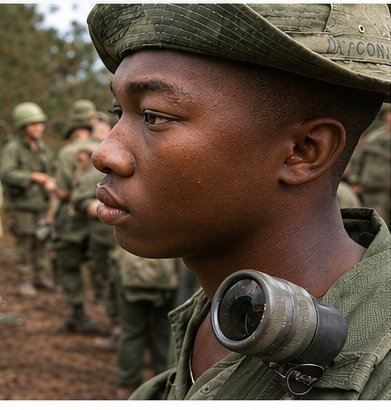
Lieutenant Robert W. Nadolski, Carter's platoon leader, remembered him many years later as someone who could be depended upon when something needed to be done. Robert was the man others counted on. Nadolski believed he would have accomplished a great deal had he survived Vietnam and said that, even decades later, he continued to think about him.
Then came Tet.
The Tet Offensive began at the end of January 1968, throwing American and allied forces into some of the most widespread fighting of the Vietnam War. Robert's 1st Battalion, 46th Infantry was among the units fighting in Quang Tin and Quang Ngai Provinces during the offensive.
For Robert and the men of Charlie Company, however, Tet was not something happening on maps or appearing in newspaper headlines. It was happening on the ground directly in front of them.
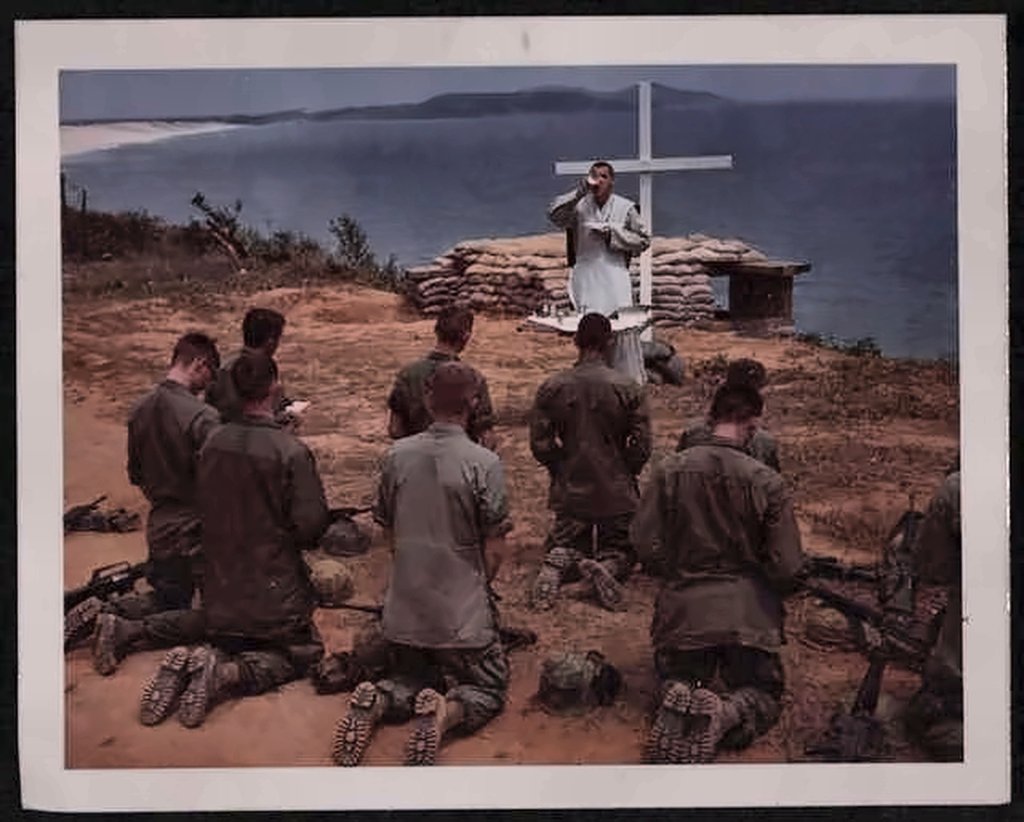
The Army's operational journal for February 9, 1968, allows us to follow part of Charlie Company's day.
At approximately 10:28 that morning, Company C was moving through the area when an enlisted soldier triggered a booby trap. The man was seriously wounded and required a Dustoff medical evacuation.
Charlie Company continued its mission.
Shortly after one o'clock that afternoon, the company was conducting a search-and-destroy operation when the soldiers discovered an enemy cache. Among the items found were an SKS rifle, small-arms ammunition, an M79 grenade-launcher round, cooking equipment and medical supplies.
The discoveries showed that enemy troops had been using the area, and Charlie Company continued its sweep.
At approximately 3:30 that afternoon, another entry appeared in the Army journal.
Company C was conducting a sweep when another booby trap exploded. The report recorded one American noncommissioned officer killed, one officer wounded and one enlisted soldier wounded.
The Army journal did not record their names.
Lieutenant Nadolski did.
Years later, Nadolski remembered moving at the point with Sergeant Robert Carter and another soldier, Rocco Pannicia, when the explosion occurred. Nadolski later understood that the device had been a Claymore mine positioned along their flank.
Nadolski was wounded.
Pannicia was wounded.
Robert Carter was killed.
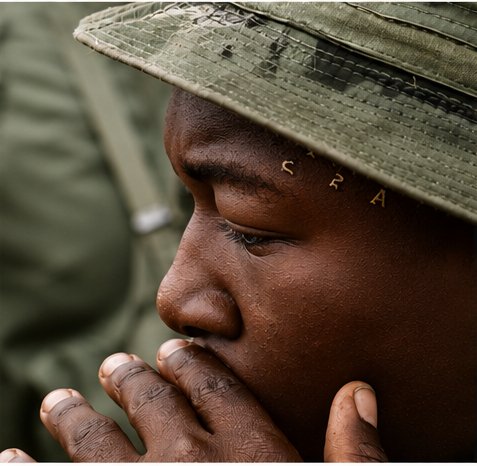
The two accounts fit together remarkably well. The Army recorded one NCO killed, one officer wounded and one enlisted man wounded. Nadolski remembered Carter being killed while he and Pannicia were wounded.
The contemporary Army report simply described the explosive as a booby trap. Nadolski later remembered being told that it had been a Claymore. Robert's casualty record states that he died from multiple fragmentation wounds.
It would be easy to compress all of that into a single sentence: Sergeant Robert Carter was killed by hostile action in Quang Tin Province on February 9, 1968.
But doing so would erase almost everything that happened around him.
Robert had begun that morning moving through country where another soldier from his company had already been badly wounded by a booby trap. He continued with his unit. They searched the area, located enemy weapons and supplies, and kept moving.
Then came the explosion.
One of the men who survived it would still be remembering Robert decades later.
His age makes the story even more difficult to ignore.
At twenty, Robert had already lost his father. He had left school to help support his mother. He had worked as a mechanic. He had become a father himself. He had been drafted, trained as an infantryman, sent halfway around the world and promoted to Sergeant in a combat infantry unit.
Other soldiers depended upon him.
We know that because one of them remembered him.
Robert's entire Vietnam tour lasted only 128 days.
 After his death, his remains were returned home. Sergeant Robert Nel Carter was laid to rest at Beverly National Cemetery in New Jersey. His name is also engraved on the Vietnam Veterans Memorial in Washington, D.C., on Panel 38E, Line 46.
There may still be more of Robert's story waiting to be found.
Lieutenant Nadolski recalled that Parade magazine had visited or photographed members of their unit shortly before Robert was killed. Researchers later attempted to locate the material, raising the possibility that additional photographs or accounts of Robert and the men with whom he served may still survive somewhere in an archive.
For now, the records we have tell us considerably more than the bare casualty report ever could.
Robert was the boy from Camden who left school after his father died because his mother needed his help.
He was a mechanic.
He was Clara's son.
He was Billy's father.
He was a twenty-year-old Sergeant whose platoon leader remembered him as the man who could be
counted upon.
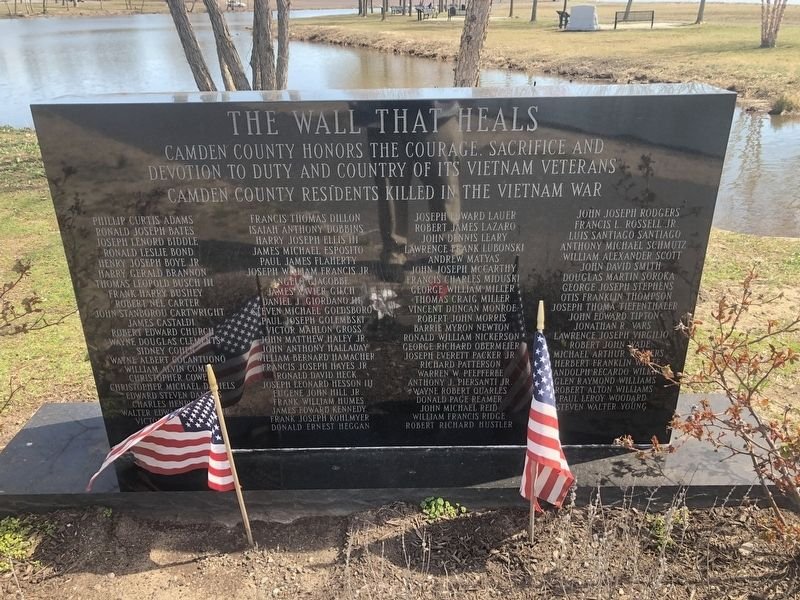
And on the afternoon of February 9, 1968, an Army operations journal recorded the final moments of his life without ever recording his name.
It simply reported that an NCO had been killed.
That NCO was Sergeant Robert Nel Carter.
His life deserves to be remembered for far more than the day it ended.