Into the Rivers: The History of America’s Brown Water Navy in Vietnam
Explore the broad history of America’s Brown-Water Navy in Vietnam, from Market Time and Game Warden to the Mobile Riverine Force, Seawolves, SEALORDS, and Vietnamization.
August 7, 2026

 On December 18, 1965, the United States Navy established the River Patrol Force, designated Task Force 116, beginning what would become one of the most unusual naval campaigns of the Vietnam War. Rather than fighting from aircraft carriers, cruisers, and destroyers operating offshore, these sailors took the war into the rivers, canals, and narrow waterways of South Vietnam. The force that became popularly known as the Brown-Water Navy would eventually include PBRs, Swift Boats, armored landing craft, heavily armed monitors, specialized patrol boats, helicopter gunships, floating bases, repair facilities, and thousands of sailors operating in close cooperation with American and South Vietnamese ground forces.
River warfare in Vietnam was not a new concept. During the First Indochina War, French forces had relied heavily upon river and coastal patrol units to move troops, protect supply routes, and fight Viet Minh forces in areas where poor roads made waterways essential avenues of movement. The South Vietnamese Navy inherited many vessels and practices from that earlier war, including craft originally supplied by the United States as military aid to France. When American involvement expanded during the 1960s, U.S. naval planners drew upon those earlier experiences while creating a much larger and increasingly specialized river force.
The first major American effort to restrict Communist movement by water was Operation Market Time, launched in March 1965 after increasing evidence that North Vietnam was supplying forces in the South by sea. Navy ships, aircraft, South Vietnamese vessels, U.S. Coast Guard cutters, and smaller patrol craft formed a layered surveillance and interdiction system along the South Vietnamese coast. Ships farther offshore watched larger vessels while smaller craft operated closer to shore, stopping suspicious junks and sampans and searching them for weapons, ammunition, personnel, and other contraband.
Among the vessels most closely associated with Market Time were the Navy's 50-foot aluminum Patrol Craft Fast, universally known as Swift Boats. Fast, maneuverable, and heavily armed for their size, Swift Boats were originally intended primarily for coastal interdiction. Their crews investigated suspicious vessels, boarded and searched local traffic, provided gunfire support, and operated in shallow coastal waters where larger Navy ships could not easily maneuver. The U.S. Coast Guard also played an important role in Market Time, deploying Point-class 82-foot cutters whose crews brought considerable experience in maritime patrol and boarding operations.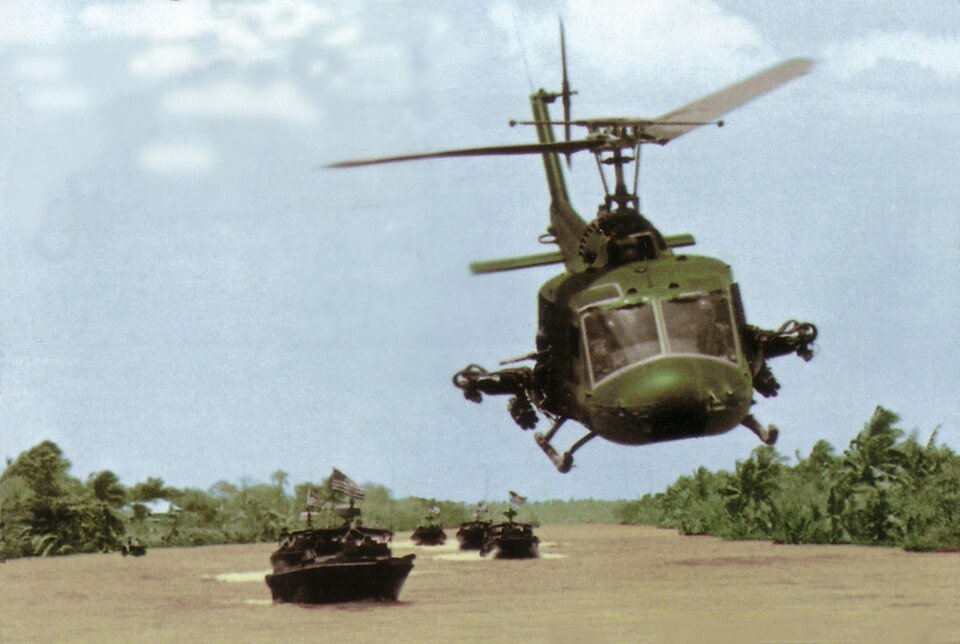
While Market Time attempted to close the coastline, Operation Game Warden carried the naval war into South Vietnam's major rivers. Task Force 116 relied heavily upon the Patrol Boat, River, or PBR, a 31-foot fiberglass craft powered by twin diesel engines and water-jet pumps rather than conventional exposed propellers. Its shallow draft and exceptional maneuverability allowed it to operate in waterways that would have been difficult or impossible for larger vessels. PBR crews stopped and searched river traffic, monitored movement along the waterways, supported ground forces, and attempted to prevent the Viet Cong from using the rivers for transportation and supply.
The PBR became one of the defining vessels of America's river war. Normally operated by a crew of only four men, it carried impressive firepower for its size, most visibly the twin .50-caliber machine guns mounted forward. The boat's speed and water-jet propulsion allowed crews to turn sharply and maneuver aggressively, capabilities that were particularly valuable when an apparently routine patrol suddenly became an ambush. Riverbanks covered in vegetation provided excellent concealment for enemy troops, and PBRs could find themselves under fire from machine guns, rockets, grenades, or other weapons positioned only a short distance from the water.
As the war continued, the distinction between coastal and river operations became less rigid. Swift Boats increasingly moved inland and began operating alongside PBRs and other riverine forces. The waterways of the Mekong Delta were not simply geographic obstacles. They were transportation routes, supply lines, communication networks, and potential avenues of attack. Control of those waterways therefore became an important part of the wider campaign against Viet Cong and North Vietnamese forces.
The most ambitious expression of American river warfare was the Mobile Riverine Force. Formed in 1967, it combined elements of the U.S. Army's 9th Infantry Division with the Navy's Riverine Assault Force, Task Force 117. Rather than merely patrolling the rivers, the Mobile Riverine Force used them as highways into areas where roads were poor, nonexistent, or controlled by the enemy. Army infantry could be transported directly into contested territory while Navy craft remained nearby to provide fire support, command and control, resupply, evacuation, and protection.
 Much of the Mobile Riverine Force was built around landing craft left over from earlier generations of amphibious warfare and heavily modified for service in Vietnam. LCMs were converted into Armored Troop Carriers, commonly called Tango Boats, capable of transporting infantry through hostile waterways. Others became heavily armed Monitors that served as floating fire-support platforms. Command and Communications Boats carried the equipment necessary for Army and Navy commanders to direct operations while moving with the force. The result was an improvised but highly effective collection of vessels adapted specifically to the demands of combat in the Mekong Delta.
One of the few boats designed specifically for the American river war was the Assault Support Patrol Boat, or ASPB, commonly known as the Alpha Boat. Built by Gunderson Brothers Engineering Corporation in Oregon, the approximately 50-foot vessel had a steel hull and aluminum superstructure and was intended for patrol, escort, interdiction, and minesweeping duties. Alpha Boats frequently operated ahead of slower assault formations, searching waterways for threats and helping protect troop-carrying vessels from mines and ambushes. Their heavy armor and armament made them valuable additions to riverine formations, though their crews remained vulnerable in an environment where attacks could come from either bank with almost no warning.
 Supporting such a large river force required far more than combat boats. LSTs, barracks ships, repair facilities, supply craft, medical units, fuel vessels, and communications equipment created a mobile support network that allowed Army and Navy units to operate for extended periods without relying entirely upon permanent shore installations. Ships such as USS Benewah served as floating bases from which sailors, soldiers, aircraft, and river craft could operate deep within the Delta.
Air power became another essential part of the Brown-Water Navy. Armed Navy UH-1 helicopters began supporting Game Warden operations in 1966, eventually leading to the creation of Helicopter Attack Squadron (Light) Three, HAL-3, better known as the Seawolves. Operating from scattered detachments throughout the Delta, Seawolf crews provided close air support for PBRs, river assault forces, Navy SEALs, and ground units. When boats encountered enemy fire from positions hidden along the riverbanks, the arrival of armed helicopters could quickly shift the balance of the fight.
By late 1968, American river operations became even more aggressive under a campaign known as SEALORDS. Rather than concentrating primarily on the major rivers, U.S. and South Vietnamese forces pushed into smaller canals and waterways, particularly near the Cambodian border. PBRs, Swift Boats, river assault craft, helicopters, Navy SEALs, and South Vietnamese forces worked together to disrupt enemy supply routes, penetrate areas previously considered sanctuaries, and make greater portions of the river network dangerous for Communist movement.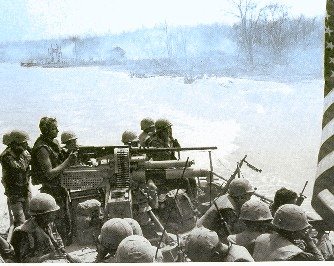
Taken together, Operation Market Time, Operation Game Warden, the Mobile Riverine Force, and SEALORDS represented one of the most extensive naval interdiction efforts of the Vietnam War. Market Time made large-scale infiltration by sea increasingly difficult, while Game Warden challenged enemy movement along the major inland waterways. The Mobile Riverine Force carried American troops and firepower deep into the Mekong Delta, and SEALORDS extended pressure into smaller waterways and areas close to the Cambodian frontier.
These operations did not stop Communist logistics altogether. Weapons, ammunition, and personnel continued to move into South Vietnam through other routes, particularly through Laos and Cambodia. What the naval campaigns accomplished was to make many coastal and river routes increasingly dangerous and difficult to use, forcing Communist forces to adapt their transportation and supply networks.
Beginning in 1969, however, the American role in the river war began to change. Under President Richard Nixon's Vietnamization policy, the United States sought to transfer greater responsibility for combat operations to South Vietnamese forces. The Navy's portion of that effort became known as ACTOV, or Accelerated Turnover to the Vietnamese. American crews trained South Vietnamese sailors while boats, bases, equipment, and operational responsibilities were progressively transferred to the Republic of Vietnam Navy.
Within only a few years, much of the American Brown-Water Navy that had been built so rapidly after 1965 had disappeared as an independent U.S. combat force. Its boats were transferred, its bases changed hands, and its sailors returned to a Navy once again more commonly associated with operations at sea.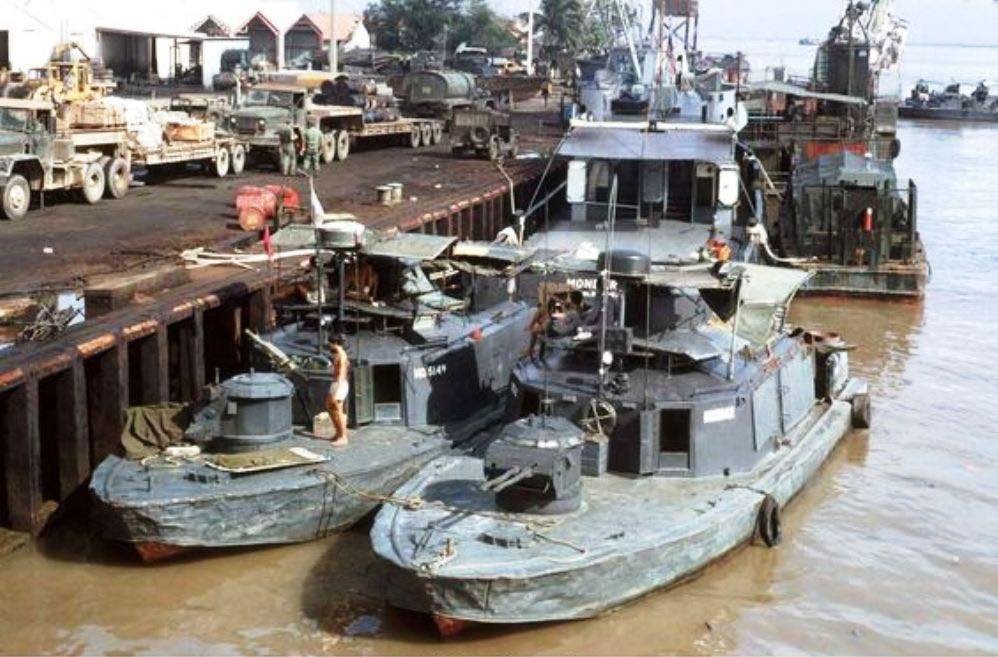
Its brief existence, however, represented one of the most distinctive chapters in American naval history. For several years, sailors fought from fiberglass patrol boats, aluminum Swift Boats, armored landing craft, Monitors, Alpha Boats, and helicopter gunships on waterways where the jungle could begin only a few yards from the gunwale. They fought a naval war without the distance normally associated with naval combat, sometimes facing an enemy concealed directly along the shoreline.
The Brown-Water Navy proved that in Vietnam, control of the water did not end at the coastline. The rivers and canals of South Vietnam were highways, supply routes, avenues of attack, and battlefields in their own right. For the sailors who fought there, the war at sea had moved inland.