History Back in Their Hands: Reconnecting Veterans with the Tools of Their Service
Ghosts of the Battlefield preserves and restores military artifacts, then reconnects veterans with the equipment and memories of their service again.
August 5, 2026

 At Ghosts of the Battlefield, preserving history means more than placing an artifact behind glass. It means protecting the physical objects left behind by earlier generations, restoring those that have been damaged by age or neglect, and finding meaningful ways to reconnect them with the people whose lives they once shaped. Few experiences demonstrate that mission more powerfully than placing a familiar piece of military history back into the hands of a veteran.
During a recent visit to the Virginia Beach State Veterans Home, we brought a selection of historic firearms and equipment from the Ghosts of the Battlefield collection to share with the residents. Spread across the tables were rifles, carbines, bayonets, field equipment, and a belt-fed Browning machine gun representing different periods of American military service. To some visitors, they may have appeared simply to be old weapons. To many of the veterans in the room, however, they were instantly recognizable.
These were the types of tools they had once trained with, maintained, carried, and depended upon. The years separating the veterans from their military service seemed to narrow the moment they reached out and picked them up. The weight of a wooden stock, the shape of a receiver, the position of a sling, and the feel of cold metal beneath the hand awakened memories that had sometimes remained untouched for decades.
Eyes lit up as stories began to emerge. Some residents remembered training ranges, field exercises, qualification days, and the endless responsibility of cleaning a weapon until it passed inspection. Others recalled the people who had served beside them or the places where they had carried similar equipment. There was laughter as familiar details returned, but there were also moments of quiet reflection. Every veteran responded differently, yet each reaction showed that these artifacts still carried a connection to lived experience.
That connection is one of the reasons Ghosts of the Battlefield makes community outreach a priority. Our collection is preserved for the public and for future generations, but it also belongs to the history of the veterans who once used equipment like this. Whenever it can be done responsibly and safely, we enjoy taking selected objects beyond the museum and sharing them directly with those who understand them in a deeply personal way.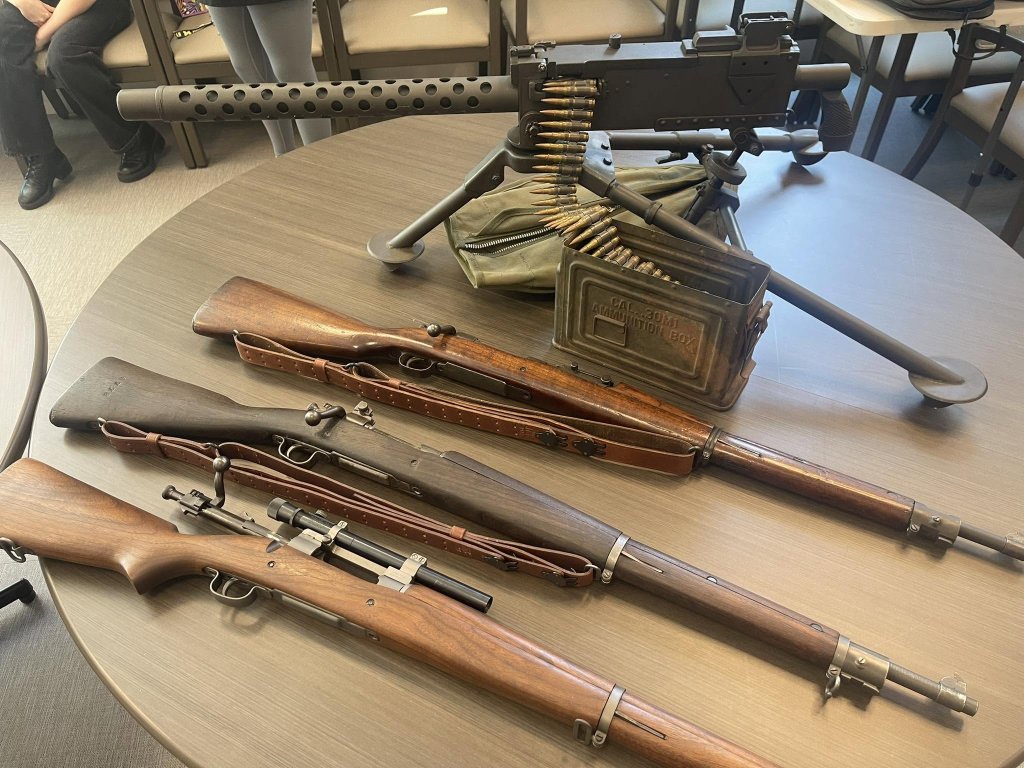
A photograph can show what a rifle looked like. A display label can explain when it was manufactured and where it was used. Neither can fully reproduce the sensation of holding something familiar after many years. The physical weight and texture of an artifact can reach places that written history cannot. It can bring back a voice, a face, a duty station, or a moment shared with men and women who may now exist only in memory.
These visits are not simply demonstrations of military equipment. They are opportunities to listen. When a veteran recognizes an object and begins to speak, the artifact becomes a doorway into a personal history that might otherwise remain untold. A rifle on a museum wall may represent a model, a date, or a conflict. In a veteran’s hands, that same rifle may represent a first day in uniform, a demanding instructor, a close friend, or a defining chapter of life.
The event also reflected another central part of our mission: restoration. Many artifacts enter the Ghosts of the Battlefield collection after years of poor storage, exposure, corrosion, broken components, or simple neglect. Some arrive covered in rust or dirt. Others have dried wood, damaged leather, missing parts, or surfaces that have not been cared for in generations. Each one requires patience, research, and careful work before it can be safely preserved and interpreted.
Restoration is not about erasing every mark of age or making an artifact appear newly manufactured. The wear on a stock, the discoloration of metal, and the creases in a sling are all part of the object’s history. Our responsibility is to stabilize what remains, repair what can be responsibly repaired, and preserve the evidence of service rather than remove it. The goal is not to make history look new. The goal is to keep it from disappearing.
Once restored, these objects can continue to teach. They allow younger visitors to understand the size, weight, and construction of equipment they may previously have seen only in photographs or films. They give families a clearer picture of what their relatives carried. Most importantly, they can be used to honor veterans by showing that the tools of their service—and the stories connected to them—still matter.
 The photographs from our visit show historic weapons arranged carefully across tables, but they capture only part of what happened that day. The most important moments were not contained within the objects themselves. They appeared in the expressions of the veterans who recognized them, in the stories that followed, and in the memories shared among people who understood what those objects once meant.
At Ghosts of the Battlefield, our core mission is to preserve military history, restore threatened artifacts, and ensure that the sacrifices and experiences of American service members are not forgotten. Reconnecting veterans with pieces from our collection is a natural extension of that mission. It allows history to leave the display case, return to the community, and become personal once again.
History should be protected, but it should also be experienced. Sometimes the most powerful thing a museum can do is carefully place an artifact back into the hands of someone who carried one long ago—and then simply listen.
Your purchase helps preserve the stories behind the artifacts. Click here to shop and support Ghosts of the Battlefield.
Help preserve the stories behind the artifacts. Click here to support Ghosts of the Battlefield.