Blue Jeans, Green Faces, and Pantyhose: The Unconventional Gear of Vietnam’s Navy SEALs
Vietnam-era Navy SEALs wore blue jeans and even pantyhose, adapting their clothing to survive the mud, leeches, and jungles of the Mekong Delta.
August 3, 2026

 One of the most recognizable—and often misunderstood—images of the Vietnam War is that of a United States Navy SEAL operating in the jungle while wearing blue jeans. Combined with tiger-stripe camouflage, dark face paint, jungle boots, and weapons such as the Stoner 63 or XM177, the jeans gave Vietnam-era SEALs an appearance unlike that of almost any other American fighting force. To an outside observer, their clothing might appear casual, rebellious, or deliberately theatrical. In reality, it reflected the practical demands of fighting in one of the most difficult environments imaginable. For the SEALs, it was not about fashion. It was about survival.
Navy SEALs conducted many of their most dangerous missions in and around the Mekong Delta, a vast region of rivers, canals, rice paddies, mangrove swamps, mudflats, and dense tropical vegetation. SEAL platoons usually operated in small teams, moving quietly through enemy-controlled territory to conduct reconnaissance, ambushes, prisoner-capture missions, intelligence operations, and sudden direct-action raids. They frequently traveled at night, approaching their objectives by boat before entering the water and continuing through mud, swamps, or thick jungle on foot. These missions demanded stealth, speed, and the ability to remain effective while wet, filthy, exhausted, and surrounded by insects, parasites, and enemy forces. Standard military clothing and equipment did not always perform well under those conditions, so SEALs were often given greater freedom to choose, modify, and arrange their gear according to what worked.
Heavy denim offered several practical advantages in the dense vegetation and muddy waterways of southern Vietnam. Blue jeans were durable and resisted tearing as SEALs crawled through mangroves, thorny plants, and tangled jungle undergrowth. Once broken in, denim fit relatively close to the body, leaving less loose material to snag on branches or equipment and reducing the amount of fabric that could brush noisily against vegetation. The thick material also offered some protection from scratches and insect bites. Unlike military cargo trousers, jeans did not have large pockets that filled with water whenever a man crossed a canal or climbed out of a river. Their simple construction made them practical for men who repeatedly moved between boats, water, mud, and dry land.
Blue jeans were not perfect. Soaked denim could become heavy. Jeans were never an official uniform of the SEAL Teams, but enough men found them useful that they became closely associated with Naval Special Warfare during the Vietnam War. They were often worn with tiger-stripe tops, ERDL camouflage jackets, standard utility shirts, or locally obtained clothing. Some were darkened, modified, or simply faded through repeated missions and exposure to sun, mud, and water. Combined with face camouflage and personally arranged combat equipment, the jeans helped create the unmistakable appearance of the Vietnam-era SEAL.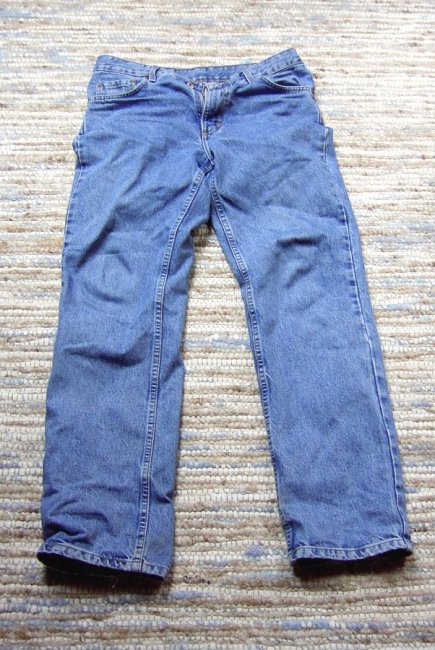
As unusual as blue jeans may have seemed on the battlefield, they were not the most unexpected item worn by some SEALs. Veterans have recalled that many men wore women’s pantyhose beneath their trousers to help protect themselves from leeches. Leeches were a constant problem in the rivers, rice paddies, swamps, and saturated vegetation of the Mekong Delta. A man could move through water or mud and emerge with several attached to his legs without immediately realizing it. Loose clothing offered little protection because the creatures could crawl beneath a trouser leg or enter through an opening around the ankle. Pantyhose provided a lightweight, close-fit to the skin. The tightly woven nylon made it more difficult for leeches to reach the wearer and attach themselves. Because pantyhose were not available through ordinary military supply channels, some SEALs reportedly asked wives, girlfriends, and family members back home to send them. Others tightened their trouser cuffs or placed bands around their ankles to further block leeches and insects. The image of Hendos going into combat wearing women’s pantyhose beneath blue jeans may sound humorous today, but there was nothing humorous about the conditions that made the practice necessary. Leeches caused bleeding, irritation, discomfort, and distraction—problems that could become dangerous during a mission deep inside enemy-held territory. Pantyhose weighed almost nothing, occupied little space, and could be  replaced when damaged. If they worked, that was all that mattered.
The same practical attitude extended to nearly every piece of equipment the SEALs carried. Weapons, ammunition pouches, web gear, knives, radios, and survival equipment were frequently altered or arranged according to individual preference. Every item taken into the field had to justify its weight. Loose straps could become tangled in vegetation, metal equipment could rattle and reveal a team’s position, and unnecessary gear could slow a man struggling through waist-deep mud. The Stoner 63 became one of the most iconic weapons associated with Vietnam-era SEALs because its compact size and considerable firepower suited small-team operations and close-range fighting. Other men carried shortened M16 variants, including the XM177 family of carbines, which worked in boats, thick vegetation, tunnels, and confined spaces. Depending on the mission, SEALs might also carry suppressed weapons, shotguns, captured enemy arms, grenades, knives, and additional ammunition.
 Their habit of covering their faces with green and black camouflage added to their already distinctive appearance. Moving silently through the waterways and jungle at night, they became known as the “men with green faces.” The name reflected the fear and mystery surrounding their operations. Small SEAL teams could appear suddenly, strike an enemy position, seize a prisoner, gather intelligence, and disappear back into the rivers or darkness before opposing forces could organize an effective response. Their faded jeans, painted faces, camouflage shirts, modified weapons, and personally selected equipment made them look less like members of a conventional military unit and more like hunters adapted specifically to the environment in which they operated.
The famous photographs of Navy SEALs wearing blue jeans have become part of the visual history of the Vietnam War. They represent the independence, adaptability, and individuality that became closely associated with American special operations forces. Yet the real story behind the jeans—and the pantyhose sometimes worn beneath them—is more meaningful than the appearance alone. These were not fashion choices made to look different or to build a legend. They were solutions developed by men facing mud, water, insects, vegetation, and a determined enemy. In the Mekong Delta, military regulations and appearances mattered far less than remaining silent, mobile, and alive.
Today, original examples of the clothing, weapons, and equipment associated with Vietnam-era special operations help tell this remarkable story. Visitors to Ghosts of the Battlefield can see many of the items connected to these unconventional warriors and gain a better understanding of how Navy SEALs adapted themselves to one of the most demanding battlefields in American military history. The blue jeans may be what first catches the eye, but the deeper story is one of ingenuity, experience, and survival.