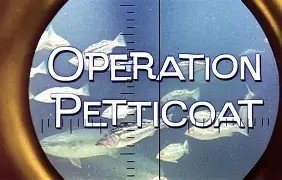
Heather's Screening Room: Operation Petticoat:Mission Creep and More Beneath the Surface
Operation Petticoat uses humor to tell a very real story about mission creep, leadership, and growth inside the chaos of war.
January 6, 2026

 At first glance, Operation Petticoat looks like a light wartime comedy built around a single absurd image, a World War II submarine painted pink. It's easy to underestimate the film because of that joke. But beneath the humor is a surprisingly thoughtful story about leadership, mission creep, and how service reshapes people over time.
The film begins quietly and intentionally. Cary Grant's captain arrives early in the morning, alone, reading through his logbook. This moment matters. The logbook becomes the film's unseen narrator, framing everything that follows as memory rather than chaos unfolding in real time. What we are watching is a story worth remembering, recounted with distance, perspective, and a touch of fondness.
That framing gives the film its warmth. The mishaps, the frustrations, the improvisation, all of it is recalled rather than endured. The humor feels earned, not mocking. Even the infamous pink submarine is not a cheap gag, but a symbol of wartime reality: parts are missing, supplies are scarce, and you make do with what you have because the mission doesn't stop.
This is where Operation Petticoat quietly becomes a study in mission creep. The original task is simple repair the submarine and return her to service. But reality intervenes. New responsibilities are added. Unexpected passengers come aboard. Orders shift. Each decision is reasonable on its own, yet together they expand the mission into something far larger and more complicated than anyone intended.
The film understands something important: mission creep isn't caused by ego or poor leadership. It's driven by necessity. Leadership isn't about preventing it,”it's about managing it.
That management plays out most clearly through the relationship between Cary Grant's captain and Tony Curtis's character. When Curtis first appears, he is in uniform for the wrong reasons. He joined to impress a girl and her family, drawn to the image of service rather than its responsibility. He is clever, fast-talking, and self-interested, and the captain is right to be skeptical.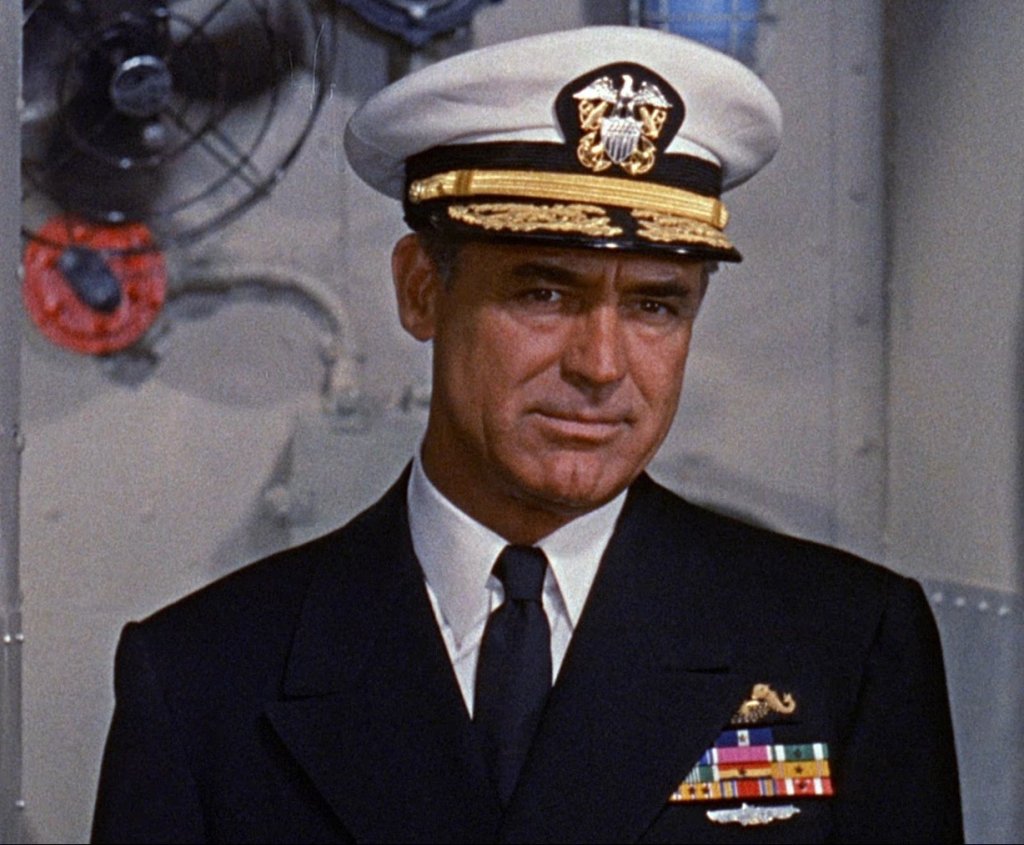
What makes the film work is that it allows growth without erasing personality. Curtis's schemes are unconventional and often irritating, but they work. Over time, his creativity shifts from self-serving shortcuts to problem-solving on behalf of the crew. He doesn't lose his edge; he gains purpose.
Equally important is how the captain responds. He doesn't soften standards or indulge behavior. Instead, he learns how to recognize and use talent, even when it arrives wrapped in frustration. Trust is not given freely, it is earned. This is leadership portrayed honestly: adaptive, observant, and grounded in responsibility.
The ending brings all of these threads together in a quiet, deeply personal way. Cary Grant's captain comes down to the pier to see his boat off one last time, mirroring the reflective opening of the film. There is no ceremony. Just presence.
 Tony Curtis's character is in command, but the submarine is not heading back into combat. She is bound for the scrapyard.
That detail is crucial. The battered, pink-painted boat that carried them through improvisation, mission creep, and survival has reached the end of her service life. Curtis is entrusted with her final voyage not as a joke, but as recognition. He has grown into responsibility, even in closure.
But the story does not end there. Curtis is promised command of the Navy's future, a new nuclear submarine, Sea Tiger. The old boat passes quietly into history while the next generation waits ahead. Experience gives way to progress, and leadership is passed forward rather than claimed.
That final pairing gives the ending its weight. One submarine represents hard lessons, improvisation, and growth. The other represents trust, advancement, and continuity. Curtis's character stands between them, shaped by one and entrusted with the other.
Operation Petticoat endures because it understands something timeless: service is not about where you start, but who you become. Beneath the laughter and pink paint is a deeply human story about memory, leadership, and choosing to carry responsibility forward when the mission, changed though it may be still continues.
And yes ,I Heather, absolutely love this movie