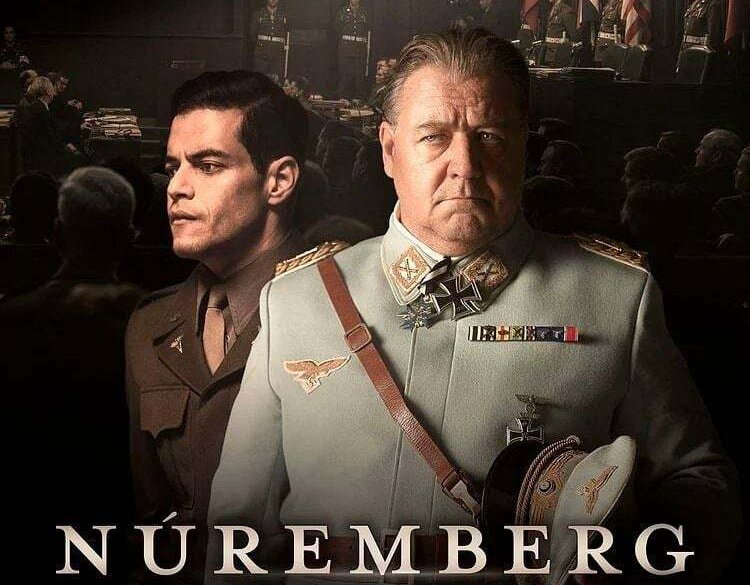
Heather's Screening Room: Nuremberg (2025)
A quiet, unsettling film that pairs historical gravity with subtle performances, forcing viewers to confront how easily evil can feel familiar.
January 12, 2026

Nuremberg is a restrained postwar film that examines what happens after the fighting ends and the world is forced to reckon with unimaginable crimes.
 Nuremberg is set in Germany immediately after World War II and follows the Allied effort to prosecute senior Nazi leaders through the International Military Tribunal. The film centers on the capture, imprisonment, and trial of prominent Nazi officials, with particular focus on Hermann Goering, the highest-ranking Nazi taken alive. While preparations for the trial are underway, U.S. Army psychiatrist Douglas Kelley is assigned to evaluate the mental fitness of the defendants to determine whether they are sane enough to stand trial. Kelley conducts a series of interviews and psychological examinations with Goering and other prisoners. During these sessions, Goering presents himself as intelligent, articulate, and confident, repeatedly asserting his authority and attempting to manipulate those around him. He denies personal guilt for atrocities, framing his actions as necessary acts of state leadership and wartime decision-making. As the tribunal begins, prosecutors introduce extensive documentary evidence, recorded orders, and testimony detailing the crimes of the Nazi regime. The courtroom scenes show the legal structure of the trial, the challenges of applying international law to unprecedented crimes, and the defendants, various responses,ranging from defiance to denial.
Parallel to the trial, Kelley's evaluations reveal that Goering and several other defendants are not insane. Kelley concludes they are psychologically normal, capable of understanding right and wrong, and fully aware of their actions. Goering continues to exert influence over fellow prisoners and attempts to shape how history will remember him. As the trial progresses, tensions rise between the legal proceedings and Kelley's findings. The prosecution relies on clear criminal responsibility, while Kelley's assessments complicate the idea that the defendants were mentally abnormal. The tribunal ultimately reaches verdicts. Goering is convicted and sentenced to death, though the film depicts his continued defiance and belief that history will judge him differently. Other defendants receive varying sentences based on their roles. The film concludes after the verdicts are delivered, showing the end of the trial process but offering no sense of celebration or closure. The focus remains on the completion of the legal proceedings and the unresolved moral weight of the crimes examined.
Nuremberg avoids spectacle. Atrocities are presented through testimony and documentation rather than reenactment. The film emphasizes restraint, moral tension, and the weight of accountability. It asks difficult questions about justice, responsibility, and whether law can meaningfully respond to crimes of this scale.
Rather than offering closure, Nuremberg leaves the viewer with unease. The verdicts are delivered, but the implications remain, suggesting that the danger addressed in the courtroom was not confined to one nation, one ideology, or one moment in history.
Overall, I really enjoyed Nuremberg and that surprised me, because it was not an easy film to sit with. Russell Crowe's portrayal of Hermann Goering was unsettling and effective. He projected the character with such confidence, charm, and humanity that I found myself liking him, even relating to him in moments. By the end, that realization made me feel guilty, and I think that reaction is exactly the point.
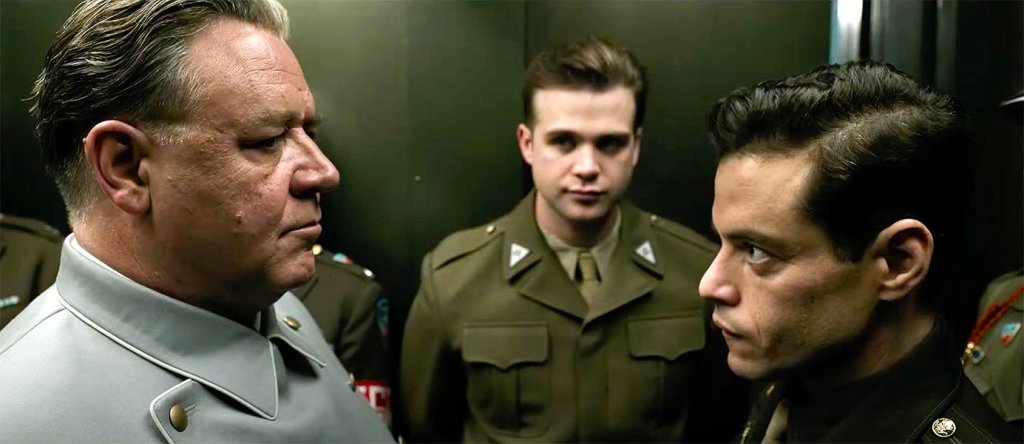
The film succeeds because of its subtlety. Small looks, quiet exchanges, and restrained dialogue reveal far more about the characters than grand speeches ever could. Nothing is spelled out. Instead, the film trusts the audience to notice the nuances and wrestle with what they mean. Each revelation feels earned, and each one peels back another layer of how power, ego, and justification operate.
I'm especially happy that Nuremberg did not become an overly romanticized or Hollywood-polished version of history. It resists spectacle. It refuses to dilute the weight of what is being examined. It doesn't twist hate to be PC. It preserves the integrity of the historical moment, and forces the viewer to confront uncomfortable truths rather than offering easy moral distance. That restraint is what makes the film powerful. It doesn't tell us who to hate. It shows us how easily admiration, familiarity, and charisma can blur judgment. And when that realization lands, it stays with you long after the credits roll. This is not a film that flatters the viewer. It challenges them. And that is exactly why it matters.
This overview only scratches the surface of what Nuremberg is really asking us to confront. Beneath the courtroom proceedings and historical record lies a far more unsettling set of questions about power, responsibility, and human nature. In the companion article, we take a deeper look at those themes, examining why the film is so disturbing, why Douglas Kelley's conclusions were resisted, and why the lessons of Nuremberg still matter. Some stories demand more than a summary. This is one of them.