Heather's Screening Room: Clint Eastwood's Heartbreak Ridge (My Favorite Movie)
My favorite movie. I love Heartbreak Ridge for its character growth, flawed leadership, and the reminder that sometimes you just need an OORAH film.
January 26, 2026


Heartbreak Ridge follows Gunnery Sergeant Thomas "Gunny" Highway, a hard-nosed, highly decorated U.S. Marine nearing the end of his career.
After a bar fight and arrest, Highway is reassigned to a Marine Recon platoon at Camp Lejeune. He discovers the unit is undisciplined, poorly trained, and resentful of authority. Despite resistance from both the Marines and his superiors, Highway imposes strict discipline and intense training, using his combat experience to rebuild the platoon into a functional fighting unit. At the same time, Highway struggles with his personal life, attempting to reconnect with his estranged wife while facing mandatory retirement from the Marine Corps. His old-school methods clash with a peacetime military environment that views him as outdated.
The platoon is eventually deployed during the U.S. invasion of Grenada. In combat, Highway's training proves effective as the unit successfully carries out its mission, rescues American students, and defeats opposing forces. Highway takes command in the field, leading the Marines through live combat and validating his leadership approach.
After the operation, Highway's Marines acknowledge his impact on them as a leader and mentor. The film ends with Highway accepting retirement, having passed on his experience and values to the next generation of Marines.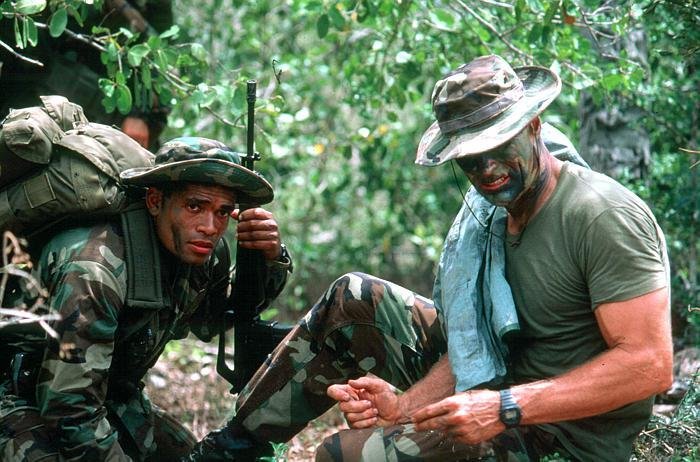
Heartbreak Ridge is one of my favorite movies of all time and honestly, I can't fully explain why. Usually, I can point to the deep psychological layers or themes that hook me, but this one doesn't fit neatly into that box. And yet, I love it.
Gunny Highway is rough, gruff, and unapologetically old school, but beneath all of that, he truly cares about his men. It's shown in small moments, not speeches. When he quietly gives Gonorrhea money for his family and brushes it off as a special gunnery sergeant fund. When he talks to Swede in the helicopter and admits that he's afraid too, and that jumping out of a perfectly good aircraft isn't normal. Those moments matter.
What Gunny really does is build his Marines up. Beyond preparing them for battle, he gives them pride in themselves, pride in their unit, and pride in the Corps. His methods may be harsh, even mean at times, and often dismissed as outdated, but his goal is clear: teach them the skills and mindset they need not just to survive combat, but to be better people. In a time of peace, he teaches them to be the best Marines they can be, always prepared, because you never know when things will change. And when they do change, they change fast.
 There is an old unofficial military expression that seems almost made for this part of the movie: Semper Gumby, Always Flexible. It is funny, but there is a lot of truth buried inside it. Plans change. Equipment fails. People don't behave the way you expect them to. The situation you trained for may not be the situation you actually face. Gunny spends most of the movie preparing his Marines for exactly that reality. He isn't simply teaching them how to follow orders. He is teaching them how to function when everything stops going according to plan.
And Grenada proves the point.
The real Operation Urgent Fury was filled with exactly that kind of improvisation. Communications failed, intelligence was incomplete, different American services were suddenly dependent upon one another, and plans had to be changed on the move. One of the most famous examples involved members of SEAL Team Six surrounded at Government House after losing reliable long-range communications. Lieutenant Wellington T. "Duke" Leonard ultimately used an ordinary civilian telephone to reach Hurlburt Field in Florida and help obtain AC-130 gunship support. Heartbreak Ridge fictionalized the details and gave its version of the telephone call to Lieutenant Ring and the Marines, but the larger idea was very real. Sometimes the plan falls apart and the mission still has to continue. Semper Gumby.
And maybe most of all, Gunny is humble. He wears the Medal of Honor but never talks about it. You can't help but wonder what it cost him to earn it, and what battles he still fights in his own head. That weight, the unspoken kind, is part of what makes this movie stay with me.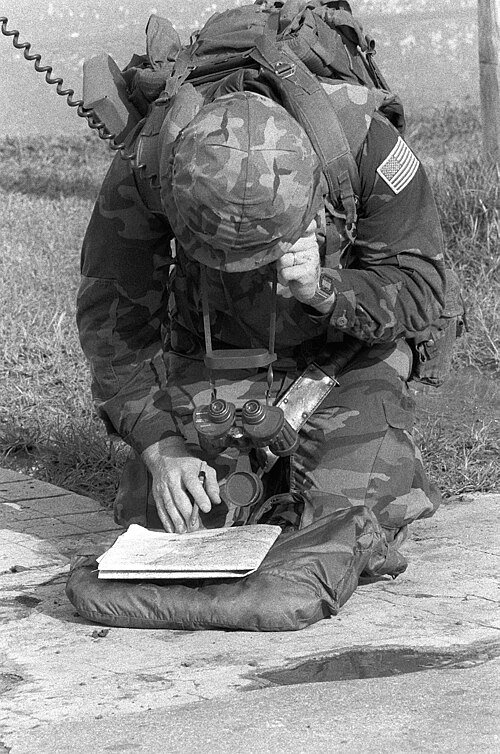
Gunny is trying to grow. His attempts to repair his relationship with his ex-wife aren't graceful or perfect, but they're sincere. Is he flawed? Absolutely. But he's willing to learn, to go against convention, and to risk being seen as weak in order to grow. To me, that's strength. That's a real man. Now, would I want to be married to him? Probably not.
By the end of the movie, I feel for him. His service is ending, and the question looms: what comes next? It's a question service members have faced for as long as there have been wars. I can't help but wonder where Gunny Highway is one year later, five years, ten. Honestly, I don't see a positive, bright future.
As I'm typing this, I think I'm finally seeing why this movie works for me. Heartbreak Ridge doesn't really have layers in its plot. It has layers in its people. The evolution isn't in twists or story turns; it's in how the characters grow, clash, and shape one another over time.
Would I want a whole unit full of Gunny Highways? Absolutely not. On his own, he's too sharp, too rigid, too much. But that's the point. He's balanced by the other Marines, their skepticism, their humor, their resistance, their strengths where he has weaknesses. And they're balanced by him in return. Together, they form something stronger than any one personality ever could.
Maybe that's the real lesson. Not that one way of leading or being is right, but that the strengths of a few, when allowed to coexist, can add up to something great. Growth happens in the friction. Pride comes from shared effort. Identity forms when differences are tested, not erased. And maybe flexibility isn't just about changing a battle plan. Sometimes it means changing yourself, learning from the people around you, and recognizing that you are only one piece of something larger.
Semper Gumby. Always Flexible.
 But on the other hand, maybe I am just overthinking this and sometimes you just need an Oorah movie.
Heartbreak Ridge gave the famous Grenada telephone story to its fictional Marines, but the true account involved surrounded Navy SEALs, a civilian telephone, and an AC-130 gunship. Read what really happened during Operation Urgent Fury.