Holding the Line in Quang Tri – The Story of LCpl Roy Neil Burris
A 19-year-old rifleman of the 1st Marine Division, LCpl Roy Neil Burris faced the relentless violence of northern I Corps during the turbulent months after Tet. He died under devastating artillery fire in Quang Tri Province, holding his position alongside
December 10, 2025

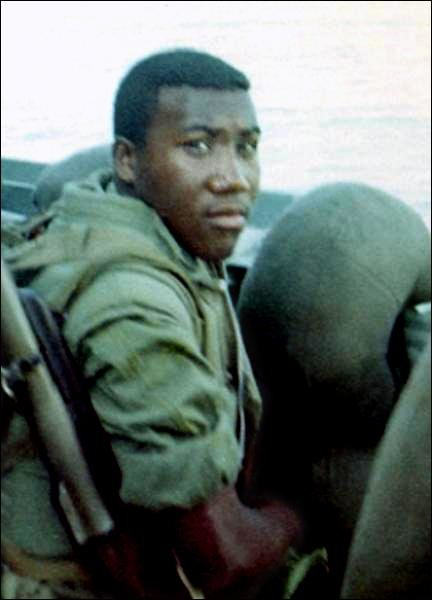 Holding the Line in Quang Tri
 Holding the Line in Quang Tri
LCpl Roy Neil Burris, United States Marine Corps
Some Marines walk into history by storming a hill. Others walk into history by standing their ground while the sky itself seems to fall. Lance Corporal Roy Neil Burris was one of those young Marines — a rifleman of the 1st Marine Division whose war ended not in a dramatic cinematic charge, but in the sudden, deafening violence of incoming artillery, rockets, and mortars. His story is a reminder of the courage it takes simply to endure, to remain in place, and to hold the line when the enemy’s fire rains down from miles away.
Born December 12, 1948, in Dallas, North Carolina, Roy was raised in a quiet Southern community shaped by simple routines, familiar faces, and the steady values that molded so many young Americans of his generation. He grew up in a town where the greatest distances were across neighborhoods and the loudest noises were Friday-night games or the whistle of the mill. No one in Dallas could have imagined that one of their sons would someday die in a storm of steel halfway across the world. But that was the reality of Roy’s path — a path walked by thousands of young men who answered the call of their nation during the Vietnam War.
Early Life – A Boy from Dallas, North Carolina
Roy’s childhood, though not recorded in detail, followed the pattern familiar to many young men from small towns across America. He grew up in a community that valued hard work, loyalty, and honesty. Those who knew him remembered a quiet young man with a steady disposition — someone who did not seek the spotlight but who understood responsibility.
When he enlisted in the United States Marine Corps, he was still just a teenager. The Corps would transform him physically and mentally, but the roots of his character were planted long before he stepped onto the yellow footprints at Parris Island. Those values traveled with him as he boarded a plane that carried him into war.
Becoming a Marine – The Making of a Rifleman
Roy began his Vietnam tour on November 17, 1967. In the span of a few short months, he transitioned from recruit to rifleman, a role that was both simple and unimaginably difficult. A Marine infantryman carried out the essential frontline work of the war — patrolling small villages, clearing trails, maintaining defensive positions, and meeting the enemy face-to-face.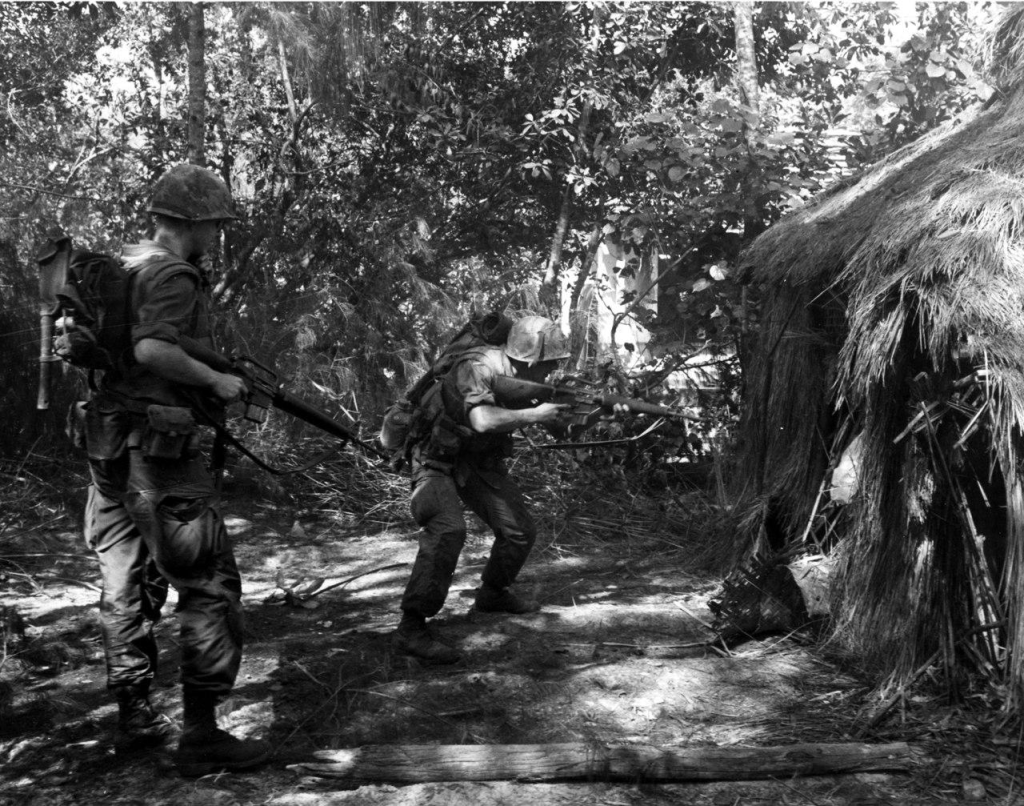
His assignment to M Company, 3rd Battalion, 1st Marines placed him within one of the most storied and heavily engaged units of the Marine Corps. The Marines of 3/1 fought through some of the hardest terrain and against some of the most determined enemy forces of the entire conflict.
For a Marine rifleman, life was measured not in weeks or months, but in moments of intensity: sudden bursts of gunfire, long hours in monsoon rains, the constant ache of carrying too much gear, the smell of mud and gunpowder, and the shared burden that bound squads together into small families.
Northern I Corps – Where the War Hit Hardest
Quang Tri Province was the northernmost battlefield under U.S. control — a region battered daily by enemy artillery and infiltration attempts. T he Demilitarized Zone lay just miles to the north, but the DMZ was anything but "demilitarized." Heavy artillery batteries, rockets, and well-supplied North Vietnamese Army regiments used the zone as a protective shield while they pounded American positions.
Marines in this area faced challenges few other combat troops in Vietnam encountered on a regular basis:
-
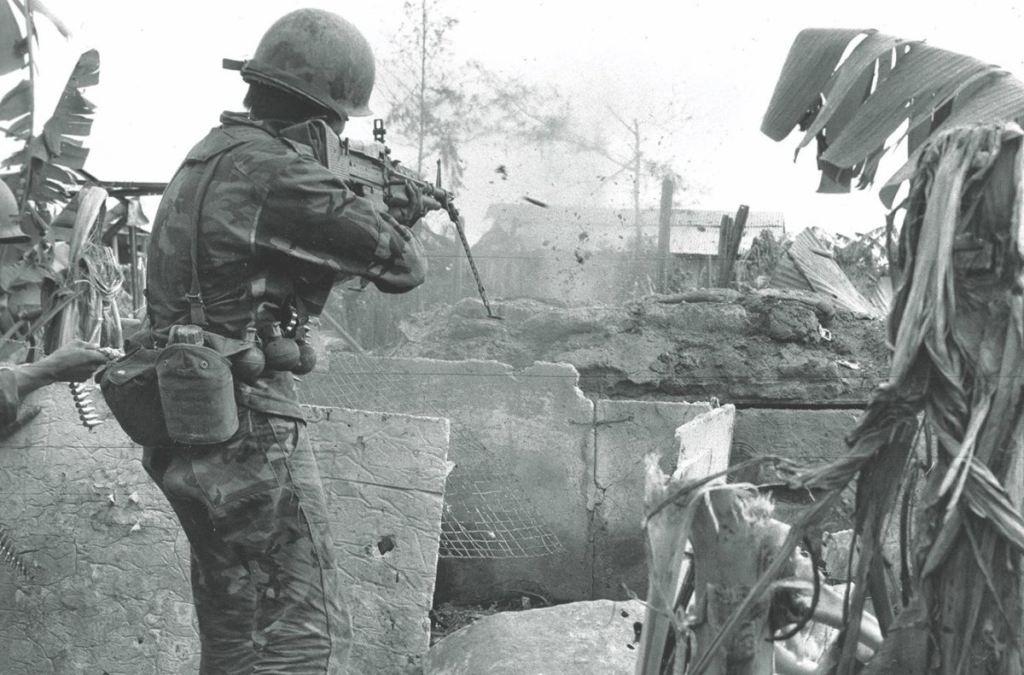
constant long-range shelling from across the DMZ
-
sophisticated North Vietnamese bunker systems
-
terrain that shifted from thick jungle to open sand flats
-
sudden ambushes along well-worn trails
-
weather extremes that limited air and artillery support
For men like Roy Burris, every day began with uncertainty. A patrol might end in a firefight. A quiet afternoon might explode without warning. A sudden whistle in the sky might mark the last second of someone's life.
The War After Tet – January to March 1968
When the Tet Offensive ignited on January 30, 1968, the entire country of Vietnam changed overnight. American and South Vietnamese forces were slammed by simultaneous attacks across more than 100 cities and outposts. Although Tet was ultimately a strategic failure for the enemy, the aftermath was almost as deadly as the initial assault.
Northern I Corps became the epicenter of continued, concentrated shelling. Even after Tet's initial wave passed, North Vietnamese forces regrouped, rearmed, and launched a relentless series of rocket and artillery attacks designed to bleed American strength.
The Marines of 3/1 — including LCpl Burris — bore that weight. They manned positions that were targeted daily. They patrolled areas where every footstep carried risk. They slept lightly, worked hard, and held their ground even when the situation seemed impossible.
It did not matter that they were teenagers. The war did not wait for them to grow older.
The Daily Burden of Marine Infantry Life
The work of an infantry Marine in Vietnam was less about heroics and more about endurance. Roy's days were likely filled with:
-
moving through chest-deep rice paddies
-
hacking through bamboo thickets
-
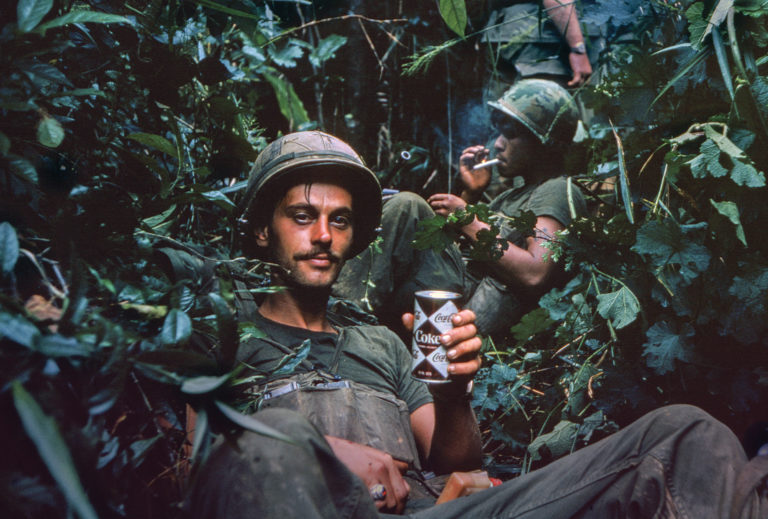
dodging booby traps and tripwires
-
manning fighting holes on defensive lines
-
listening to the distant thud of artillery firing from the north
-
waking up in the darkness to stand watch
For Roy and his fellow Marines, the war was not the dramatic footage someone might see on a newsreel — it was the constant exhaustion in their legs, the ache of loaded gear, the fear of an unseen sniper, and the sharp instinct to dive at the first hint of an incoming shell.
And yet they stayed. They walked the trails. They dug in the positions. They did the job. Because that is what Marines do.
February 27, 1968 – The Day the Sky Fell
On February 27, 1968, hostile forces unleashed a barrage of artillery, rockets, and mortars onto Marine positions in Quang Tri. The enemy often used coordinated fire missions, adjusting their aim based on previous impacts. For those on the receiving end, the bombardment was terrifying and disorienting — a deafening mixture of shockwaves, fragmentation, flying debris, and choking smoke.
In that storm of steel and fire, LCpl Roy Neil Burris was killed.
He was just 19 years old.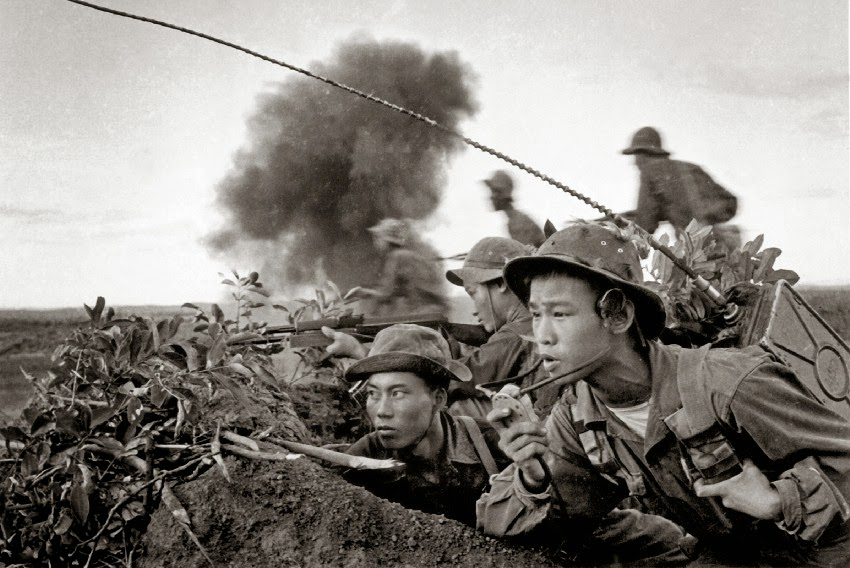
Unlike some battlefield deaths, where Marines fall in close combat or during assaults, Roy’s death came from above — the most unpredictable and uncontrollable danger on the northern front. Artillery does not relent, does not negotiate, does not see the humanity of the young men beneath it. It simply destroys.
But Roy did not face that moment alone. He fell among Marines who knew his voice, his routines, his humor, and his courage. He was among brothers who, in the last seconds before or after the barrage, undoubtedly did what Marines always do: looked for their friends, called out names, and tried to shield one another from the unthinkable.
The Impact of His Loss
Casualty reports from Vietnam often list only a line or two: date, cause of death, location. But behind every line was a lifetime:
-
a family changed forever
-
a mother who never recovered
-
friends back home who wondered what could have been
-
Marines who carried his memory into the decades after the war
In Dallas, North Carolina, news of Roy's death would have moved through the community with the heavy silence that follows tragedy. Someone’s son. Someone’s neighbor. Someone’s friend they expected to see again — gone.
For Mike Company, his death was felt instantly. Infantry units were small, tightly knit, and bonded by the hardest conditions imaginable. Losing a Marine was like losing a part of themselves.
The Legacy of the 3rd Battalion, 1st Marines
The Marines of 3/1 fought through some of the most intense and overlooked operations of the war. Their missions were rarely glamorous — they held ground, patrolled, secured perimeters, and absorbed staggering amounts of enemy fire. They did not seek recognition. They did their duty.
And LCpl Burris was part of that legacy. His contribution to the battalion’s story may not fill textbooks, but it fills the hearts of those who understand what infantry service truly means.
Remembering Roy Burris
Today, Roy’s name is engraved on the Vietnam Veterans Memorial Wall in Washington, D.C., where thousands pause to trace the letters of his name each year. They may not know him, but in that moment, they connect to the young Marine he once was.
At Ghosts of the Battlefield, we ensure his story — not just his name — is preserved. We tell who he was, where he served, how he lived, and why his sacrifice matters.
He is not just one name among thousands.
He is LCpl Roy Neil Burris, United States Marine Corps — a 19-year-old rifleman who held his ground in one of the deadliest places in Vietnam.
His Sacrifice Endures
Roy’s story teaches us that courage is not always loud. Sometimes it is the quiet bravery of a Marine who wakes up each day, straps on his gear, and prepares to face whatever comes — even when that danger is invisible, unpredictable, and deadly.
His name lives on.
His legacy endures.
And as long as his story is told, he will never stand that line alone.