Where No Job Was Safe - Remembering SP5 Jeff Lynn Wenger
SP5 Jeff Lynn Wenger, a cook with the 198th LIB, was killed in Quang Tin Province in 1969. His story reveals the courage of support soldiers who faced frontline danger every day in Vietnam.
December 5, 2025

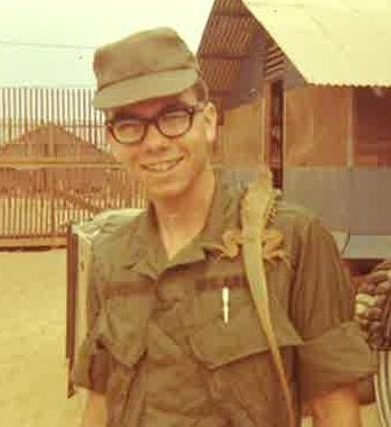 The Independence Soldier - SP5 Jeff Lynn Wenger
 The Independence Soldier - SP5 Jeff Lynn Wenger
Some stories of the Vietnam War come wrapped in the roar of gunfire and the clash of infantry assaults. Others unfold quietly in the background — yet carry every bit as much courage, hardship, and sacrifice. Specialist Five Jeff Lynn Wenger of Independence, Missouri, is one of those stories: a young man whose service reminds us that in Vietnam, there were no rear echelon soldiers. There were only Americans doing their duty, often in places where danger waited for everyone, regardless of job or rank.
Specialist Five Jeff Lynn Wenger answered his nation's call and entered the U.S. Army through the Reserve system. Though formally trained as a cook, he served with the 198th Light Infantry Brigade, supporting the 1st Battalion, 14th Artillery — a role that placed him far closer to the front than most Americans ever realized. In artillery units, cooks worked where the howitzers worked. They lived where the guns lived. And in Vietnam, firebases were among the enemy's favorite targets.
A Missouri Son
Born on November 2, 1948, in the heartland community of Independence, Missouri, Jeff Wenger grew up amid the values typical of Midwestern families of his era — service, humility, and responsibility. Like many young men of the late 1960s, he found himself drawn into a conflict taking place on the other side of the world. He entered the Army through the Reserve system, expecting, perhaps, that his training as a cook might keep him away from the worst fighting.
But Vietnam was unlike previous wars. The concept of a safe zone, a secure rear area, had all but vanished. Firebases, convoy routes, artillery positions, and support compounds were all within range of guerrilla ambushes, rockets, and mortar fire. The front line was everywhere.
On March 25, 1969, at just 20 years old, Wenger arrived in Vietnam.
A Cook in a Combat Zone
To civilians, the job title “cook†may seem far removed from combat. But in Vietnam, cooks were as essential to a battalion's survival as ammunition handlers or medics. They gave soldiers the most fundamental necessity of all — the ability to continue the fight day after day. Hot meals carried morale, which carried entire units.
But cooks did this job under conditions that were often harsh, exhausting, and extremely dangerous. Their work took place in makeshift kitchens assembled inside artillery compounds, surrounded by sandbags, bunkers, and perimeter wire. The smell of diesel fuel mixed with the aroma of heating rations. Helicopters thumped overhead, carrying supplies in and the wounded out. The kitchens never stopped. Neither did the war.
 When the 198th Light Infantry Brigade established or occupied a firebase, the cooks followed. When artillery batteries displaced to support infantry operations, the cooks moved with them — often by helicopter, truck convoys, or rough-cut jungle tracks frequented by mines and ambushes. They worked under the open sky, under monsoon rains, and under fire.
The enemy understood the importance of artillery. They also understood that taking out support personnel could slow or cripple a unit's ability to function. As a result, artillery firebases were high-value targets for the Viet Cong and North Vietnamese Army. Mortar and rocket attacks were frequent. Perimeter probes happened at night. Mines and booby traps were a constant threat around every road and path.
And men like SP5 Wenger, though not carrying rifles as their primary duty, were exposed to all of it.
Life with the 1st Battalion, 14th Artillery
 The 1/14th Artillery supported infantry operations throughout the Americal Division's area of responsibility, particularly in the rugged and dangerous Quang Tin Province. This region was a mix of steep hills, river valleys, remote outposts, and lowland rice paddies — terrain that offered the enemy countless hiding places and movement corridors. Firebases often sat alone on hilltops, isolated except for helicopter supply runs or long, hazardous convoys.
For artillerymen and support troops alike, daily life was a mix of heavy labor, sudden alarms, and long stretches of waiting punctuated by terror. Missions could shift at any moment. One hour the battery might support infantry fighting in the hills; the next, they were firing illumination rounds to protect a patrol in trouble.
Cooks played a role in these rhythms that many Americans never imagined. They were not simply preparing meals. They were unloading supply helicopters, helping fill sandbags, repairing equipment, pulling guard duty, and taking shelter during incoming fire. When mortars struck, cooks ran to the bunkers just like everyone else. When the battery's perimeter came under attack, cooks grabbed rifles and manned fighting positions.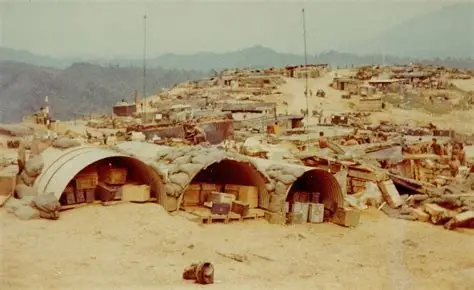
SP5 Wenger was one of thousands of young Americans who discovered in Vietnam that there was no such thing as being “in the rear.†In many ways, he lived the war with the same immediacy as the infantry soldiers he served.
The Dangers of Quang Tin Province
Quang Tin Province was one of Vietnam's most volatile regions during the late 1960s. Running from the South China Sea inland to rugged mountains, it was home to multiple North Vietnamese infiltration routes and strongholds. Firebases throughout this area were constantly harassed. Mines hidden on trails claimed lives without warning. Rockets and mortars fell at random.
For units like the 1/14th Artillery, every resupply — whether by road or helicopter — brought risk. Likewise, every soldier in the firebase lived each day under the shadow of the next incoming round.
On December 5, 1969, that danger became reality for SP5 Jeff Wenger.
December 5, 1969 — The Day the War Came for Him
Specialist Five Wenger died of wounds caused by a hostile explosive device in Quang Tin Province. The nature of his death illustrates the brutal, unpredictable nature of Vietnam. It did not matter that he was not on a patrol. It did not matter that his MOS was cook. The war came to him where he lived and worked — at a firebase, doing his job, supporting the men who relied on him.
He was 21 years old.
A young man from Independence, Missouri — a son, a friend, a soldier — taken by the same violence that claimed riflemen, medics, engineers, artillery crews, and every other specialty imaginable. Vietnam made no distinctions.
His sacrifice stands as a stark reminder that those who served in support roles wore the same uniform, faced the same dangers, and carried the same burdens as those on the front line.
The War Without a Rear
To understand the significance of Wenger's service, one must understand the war's nature. Vietnam blurred the boundaries of conventional warfare. Firebases meant to be secure often became battlefields. Supply convoys turned into firefights. Helicopter landing zones could be ambushed or mined. The enemy attacked wherever opportunity arose, knowing that every American — whether a forward observer or an artillery cook — helped sustain the war effort.
Men like SP5 Wenger kept their battalion alive, quite literally. Hot meals provided strength during long operations, comfort after ambushes, and a sense of humanity amid the chaos. These small acts of normalcy carried tremendous weight. Infantry veterans frequently recalled how much a warm meal meant after days in the field. Cooks brought that small but vital piece of home into the war zone.
Yet they paid the price for this service. Waves of attacks on firebases in 1969 demonstrated that no one was safe. More than a few cooks, clerks, mechanics, radio operators, and drivers died behind sandbags, not front-line trenches — a fact overlooked too often in the public memory of Vietnam.
SP5 Jeff Wenger is among these unsung heroes.
A Name on the Wall — and a Legacy of Service
Today, his name rests on the Vietnam Veterans Memorial Wall in Washington, D.C. To visitors, it is one of the many thousands etched into the stone — a visible, permanent reminder of a generation's sacrifice. But each name belongs to a life interrupted and a family forever changed.
Panel 15W holds the name of a young Missourian who served with honor, far from home, in a job seldom celebrated but deeply critical.
His legacy endures in the memory of his family, in the records of the 198th Light Infantry Brigade, and in the countless living veterans who remember that cooks, clerks, and support soldiers stood right beside them under fire.
Why His Story Matters
At Ghosts of the Battlefield, we honor soldiers like SP5 Wenger because they reflect a truth not always captured in movies or textbooks: every American in Vietnam was part of the war's human cost. Every job carried risk. Every uniform represented a promise to serve, whether behind a rifle, a radio, a howitzer, or a field stove.
Wenger's life and loss invite us to widen our understanding of sacrifice.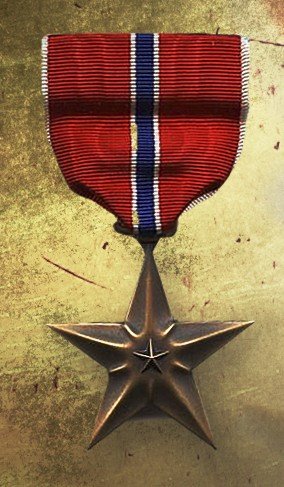
His death illustrates:
-
That courage is not limited to combat arms
-
That duty calls ordinary Americans to extraordinary circumstances
-
That every role in the military contributes to the mission
-
That behind every name on the Wall is a story deserving to be told
War depends on the collective effort of thousands whose contributions rarely make headlines. It is the quiet, unglamorous work — the labor done before dawn, during monsoon rains, under fire, or after exhausting days — that keeps entire battalions functioning.
SP5 Wenger embodied that type of service.
A Soldier Who Served With Honor
He was a Missouri son.
He was a member of the 198th Light Infantry Brigade.
He was a cook who lived the reality of combat.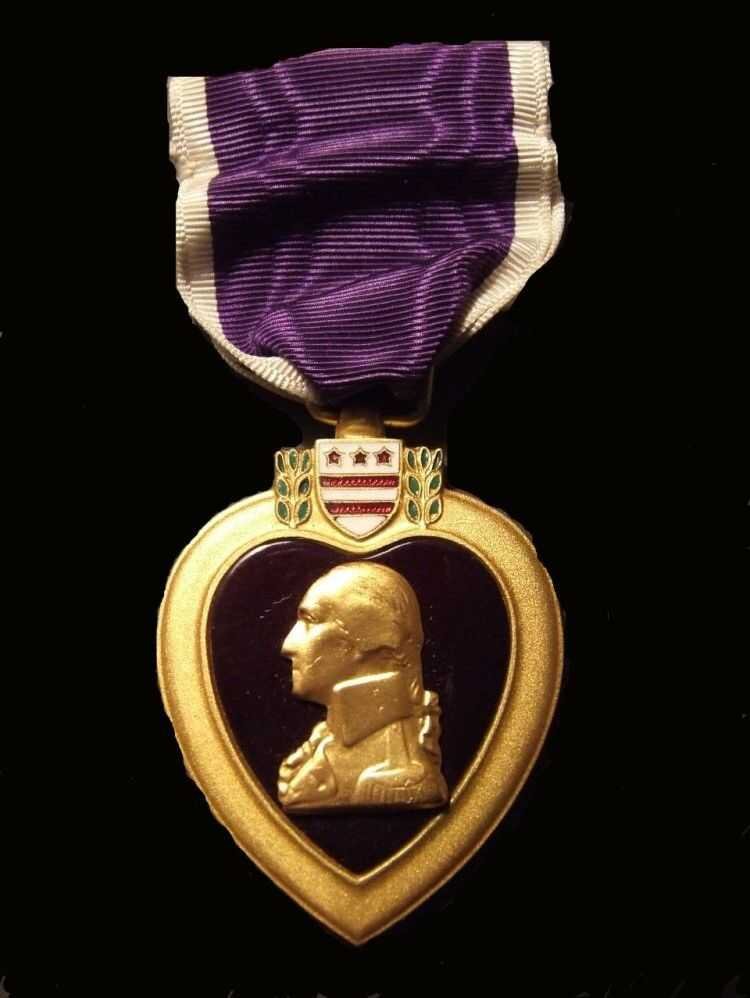
He was 21 years old when the war claimed him.
And above all, he was a soldier who served with honor — a reminder that service is measured not by the job one is assigned, but by the courage with which one carries it out.
SP5 Jeff Lynn Wenger's story strengthens the tapestry of memory preserved by Ghosts of the Battlefield. It teaches us that the Vietnam War was fought by more than infantrymen. It was fought by young Americans from every background and every specialty, united in a single purpose: to stand for their country, their unit, and one another.
His sacrifice will not be forgotten.