The Point Man of Quang Tri - PFC Bruce B. Backeberg
A 19-year-old Marine point man who spotted two enemy ambushes in a single day, saving his company before being killed at the front of the line. A Montana Marine whose courage earned the Silver Star and lives on in the men he protected.
December 3, 2025

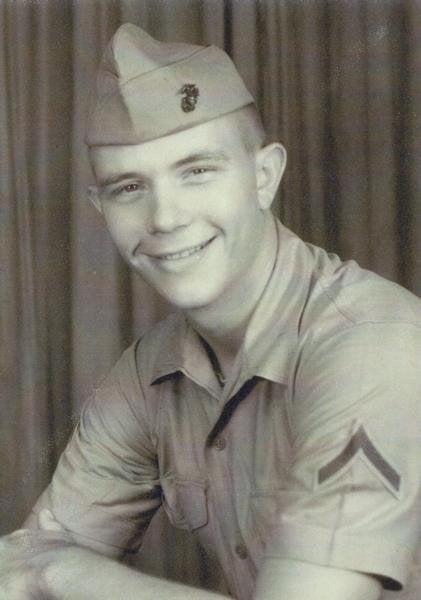 The Point Man of Quang Tri - PFC Bruce B. Backeberg
 The Point Man of Quang Tri - PFC Bruce B. Backeberg
On the high plains of Montana, where winter winds sweep down from the Rockies and the horizon stretches endlessly, a boy named Bruce Bernard Backeberg grew up beneath a sky so wide it felt like it held the whole world. Born December 2, 1946, in Great Falls, he was shaped by the rugged honesty of western life — the kind that prizes hard work, loyalty, and showing up when it matters. These were the values he carried when he answered his nation's call and stepped into the crucible of war.
In Vietnam, those qualities would define him. They would also cost him his life.
Private First Class Bruce B. Backeberg served with Company D, 1st Battalion, 26th Marines, 3rd Marine Division  — a proud regiment with a legacy stretching back to World War II. In 1966, the 26th Marines were heavily engaged throughout the northernmost region of South Vietnam, pushing into the hotly contested terrain of Quang Tri Province. For a young Marine barely out of his teens, it was a world far removed from Montana's open spaces. Dense jungle, sudden silence, and violence measured not in miles but in footsteps defined the battlefield.
For Backeberg, every mission began with a singular burden: he was the point man.
The Burden of Walking Point
In Vietnam, few responsibilities carried more risk, more isolation, or more pressure. The point man was the tip of the spear — the first to see, the first to hear, the first to trigger whatever lay ahead. To walk point meant navigating the unknown with a discipline that bordered on instinct. A point man had to read the jungle as if it were a living thing: a broken twig, a bent leaf, a shadow that seemed out of place. His life, and the lives of everyone behind him, depended on his senses, his judgment, and his willingness to face the enemy alone.
Point men didn't last long in combat units — not because they weren't good at the job, but because the job was designed to kill them.
Backeberg volunteered for it anyway.
In Company D, he became known not only as a steady Marine, but as someone who possessed the rare calm necessary to detect danger before it erupted. He moved lightly. He noticed things. He carried himself with a seriousness that reflected how deeply he understood the stakes. This quiet steadiness earned him the trust of his squad, his platoon, and ultimately, his entire company.
It was trust he would justify on a September morning in Quang Tri.
September 19, 1966 - The First Ambush
On that day, Company D was conducting a search-and-clear operation in a hostile village complex — the kind of mission where every doorway, every field, and every trail might conceal something deadly. The Viet Cong in the region were experienced, disciplined, and expert at crafting ambushes designed to destroy a patrol in seconds.
Backeberg was out front, as always, scanning for the faintest hint of danger.
He found it.
Before the enemy could spring their trap, before the opening burst of gunfire that would have cut into the Marines behind him, PFC Backeberg detected the ambush. In that fleeting moment — the split second between recognition and reaction — he made a decision that defined his legacy.
He charged.
Without hesitation, he rushed the nearest enemy fighter and engaged him in hand-to-hand combat, disrupting the ambush at its most critical point. His aggressive, unexpected assault broke the enemy's plan wide open. What was meant to be a deadly, well-timed attack instead became exposed, chaotic, and vulnerable.
Because Backeberg struck first, Company D gained precious seconds — seconds that allowed Marines to maneuver, return fire, and call in supporting artillery and air strikes. The enemy position, once poised to inflict devastating casualties, was instead shattered.
Men survived that day because Bruce Backeberg acted with instinct and courage that defied self-preservation.
The Second Ambush
Most stories of gallantry end there — with the decisive act, the dramatic moment of heroism. But war offers no guarantee of clean endings. After defeating the first ambush, the company pressed forward. The mission continued. The enemy still held the ground ahead, and once again, the point man stepped into the unknown.
Once again, it was Backeberg.
Later that same day, while leading his Marines through another stretch of hostile terrain, he spotted signs of a second ambush. To those unfamiliar with combat, it might seem impossible that one young Marine could uncover two enemy positions in a single day. But those who walked point will tell you otherwise: instinct is earned, not imagined, and Backeberg had it.
This time, the enemy triggered the ambush almost as soon as it was detected. Gunfire cracked open the jungle. Marines scattered for cover. Backeberg, still positioned at the front, stood exposed to the brunt of the attack.
He returned fire, holding his ground, trying to disrupt the enemy's plan long enough for his fellow Marines to move and respond. He fought the way point men are often forced to fight — alone, ahead of the formation, taking the impact meant for many.
During the fierce exchange that followed, PFC Bruce Bernard Backeberg was mortally wounded.
He died at the front of the line, exactly where he had lived his Marine life: protecting everyone behind him.
Awarded the Silver Star
For his extraordinary courage — for launching the first attack that exposed the enemy ambush, for detecting multiple traps in a single day, for repeatedly placing himself in the most lethal position on the battlefield — Bruce Backeberg was posthumously awarded the Silver Star, the nation's third-highest decoration for valor in combat.
The official citation captures the facts of his bravery, but the truest measure of his heroism lives in the memories of the Marines whose lives he helped save. They remembered a young Marine who never hesitated, never faltered, never backed away from danger when the safety of his brothers depended on him.
A Montana Marine Remembered
Backeberg was just 19 years old.
He had barely stepped into adulthood when he stepped into war, yet his actions reflect a maturity, resolve, and selflessness far beyond his years. He left behind family, friends, and the life he might have lived beneath Montana's vast, sunlit sky. Instead, he became part of a legacy carried by the 26th  Marines, by the brotherhood of Vietnam veterans, and by every infantryman who understands what it means to take the first step into danger.
His name is etched into the Vietnam Veterans Memorial Wall in Washington, D.C. — one name among thousands, yet representing a story all his own. Visitors trace those letters, unaware that the Marine behind them once charged an ambush with nothing but courage and instinct guiding him. But the story endures: a young man from Montana who fought with everything he had to save the men who followed him.
The Legacy of the Point Man
In infantry history, point men occupy a place of profound respect. They are the ones who see danger first and face it alone. Their decisions are quick, often silent, and always consequential. The job rewards the brave and punishes the unlucky, yet infantry units cannot function without them. Every patrol, every movement, every operation begins with someone willing to take the first step into uncertainty.
PFC Bruce B. Backeberg was such a man.
He did not walk point because it was easy. He did it because he understood what was at stake. His actions on September 19, 1966, represent the highest values of the United States Marine Corps: honor, courage, and commitment. His bravery not only shaped the outcome of a single mission — it shaped the lives of the Marines who survived because of him.
The Final Measure of Devotion
When we say that Backeberg “gave his life for his country,†it is not a phrase meant to romanticize sacrifice. It is a literal truth. He gave his life in the act of protecting others. He gave his life in the moment of warning, fighting, and shielding his fellow Marines. He fulfilled the most sacred duty of the point man — to meet danger so others might live.
A Montana Marine.
A fearless point man.
A hero whose split-second bravery saved lives on a jungle trail in Quang Tri.
He gallantly gave his life for his country — and we remember him.