The Day the Perimeter Held: Suối Tre and the Birthday of SP4 Herman E. Anders Jr.
At Suối Tre in March 1967, American artillery and infantry stopped a major enemy offensive. One of the fallen was SP4 Herman E. Anders Jr., remembered today on his birthday.
December 30, 2025

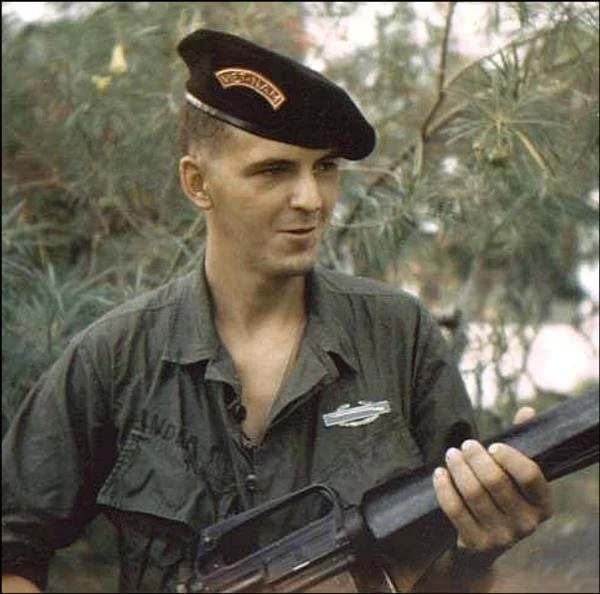 BATTLE OF SUá»I TRE — MARCH 21, 1967
 BATTLE OF SUá»I TRE — MARCH 21, 1967
Remembering SP4 Herman E. Anders Jr. — On His Birthday
The Vietnam War was shaped not only by sweeping operations and grand strategy, but by single days of savage fighting where the outcome balanced on the courage of ordinary Soldiers. March 21, 1967, was one of those days. At a remote clearing near the village of Suối Tre, a thin American perimeter held against overwhelming force, stopping what could have become a devastating enemy breakthrough. The ground was soaked in sweat, blood, and cordite, and when the smoke lifted, the cost was written in names that deserve to be remembered.
Among those names was Specialist Four Herman E. Anders Jr.
Today would have been his birthday.
Operation Junction City: A War of Movement
By early 1967, the war in South Vietnam had entered a new phase. American commanders sought to seize the initiative by striking deep into areas long dominated by Viet Cong main-force units. Operation Junction City — the largest U.S. airborne operation of the war — was designed to do just that.
Launched in February 1967,  Junction City aimed to disrupt enemy headquarters, logistics hubs, and base areas in War Zone C, northwest of Saigon near the Cambodian border. It was an ambitious effort involving tens of thousands of U.S. and South Vietnamese troops, helicopter assaults, parachute drops, and a network of newly established fire support bases meant to project American firepower into enemy-held terrain.
One of those positions was Fire Support Base Gold, carved out of the red earth and jungle seventeen miles northwest of Tây Ninh. Its purpose was simple and deadly serious: provide artillery coverage for maneuvering infantry and deny the enemy freedom of movement in the region.
The enemy had other plans.
Fire Support Base Gold: A Target Marked
Fire Support Base Gold was a magnet. Its guns threatened Viet Cong supply routes and sanctuaries, and its presence challenged enemy control of the surrounding countryside. For the 272nd Viet Cong Regiment, a seasoned and battle-hardened unit, Gold represented both a threat and an opportunity.
In the pre-dawn darkness of March 21, 1967, Viet Cong forces moved into position. They brought with  them recoilless rifles, rocket-propelled grenades, mortars, and the will to overrun the base in a coordinated assault. Intelligence would later reveal that elements of five battalions had been committed to the attack — a massive force by Vietnam War standards.
At approximately 6:40 a.m., American patrols detected enemy movement around the perimeter. The discovery forced the Viet Cong to initiate their attack earlier than planned, but it did not diminish its ferocity.
The battle of Suối Tre had begun.
The Assault Breaks In
Almost immediately, Fire Support Base Gold came under intense fire. Mortar rounds walked across the position. Recoilless rifles and RPGs slammed into bunkers, artillery pieces, and fighting positions. Dirt and shrapnel filled the air as the base shook under the barrage.
By 7:15 a.m., the ground assault was fully underway.
Viet Cong troops surged forward from the east, southeast, and north, pressing hard against the wire. In several sectors, they broke through. Hand-to-hand fighting erupted inside the perimeter as defenders scrambled to plug gaps and repel attackers at close range.
For the men inside the wire, there was no room for retreat. Artillerymen, infantrymen, and support troops alike were forced into direct combat roles. This was no longer a matter of supporting fire — it was survival.
Guns Point-Blank: Artillery in Direct Fire
Among the units at Fire Support Base Gold was the 2nd Battalion, 77th Field Artillery . Trained to deliver fire miles away, these gunners now faced an enemy at point-blank range.
With Viet Cong fighters breaching the perimeter, artillery crews swung their howitzers to direct fire. They loaded round after round — high explosive and beehive ammunition, designed to shred attacking infantry with thousands of steel flechettes.
More than 1,000 rounds were fired in direct support during the battle.
The effect was devastating. Beehive rounds scythed through attacking formations at close range, halting assaults that threatened to overrun the base entirely. Artillerymen worked their guns under fire, exposed to mortars and small-arms fire, knowing that if they stopped, the perimeter would collapse.
Above them, U.S. Air Force tactical aircraft roared in to strike enemy concentrations beyond the wire, while additional artillery units added their fire from supporting positions. Reinforcing infantry units moved to cut off Viet Cong withdrawal routes, turning the battle into a deadly trap for the attackers.
A Battle Measured in Minutes and Lives
The fighting at Suối Tre was relentless and chaotic. Smoke obscured friend and foe alike. Radios crackled with urgent calls for fire missions. Medics moved through shell-torn ground to reach the wounded, often under fire themselves.
For the men on the ground, time lost all meaning. Survival came down to instinct, training, and the Soldier beside you.
By mid-morning, the Viet Cong assault began to falter. The weight of American firepower — artillery, air strikes, and determined ground defense — proved overwhelming. Enemy units attempted to withdraw, only to be engaged again by reinforcing U.S. infantry.
When the guns finally fell silent, the cost was staggering.
The Aftermath of Suối Tre
The battlefield told a grim story.
-
Viet Cong losses: 635 killed, 7 captured
-
U.S. losses: 31 killed, 109 wounded
It was one of the bloodiest single-day engagements of Operation Junction City and a decisive blow against the 272nd Viet Cong Regiment. The attack on Fire Support Base Gold failed, and with it, the enemy's attempt to seize the initiative in the region.
Strategically, Suối Tre demonstrated that large-scale Viet Cong assaults on fortified American positions could be defeated — but only at tremendous cost.
That cost was paid in the lives of young men like SP4 Herman E. Anders Jr.
Herman E. Anders Jr.: A Life Interrupted
Herman Anders Jr. was born on December 30, 1944, in a world still at war. He came of age during a time of uncertainty, shaped by a nation grappling with Cold War tensions and distant conflicts that would soon demand the service of its sons.
Like so many of his generation, Herman answered the call to serve. He became a Soldier of the United States Army and found himself halfway around the world, standing watch on a fire support base few Americans would ever hear about.
On March 21, 1967, at just 22 years old, Herman E. Anders Jr. was killed during the battle of Suối Tre.
There is no grand speech that can capture the weight of that loss. No statistic can explain the silence left behind when a life ends so young. Behind the uniform was a son, a friend, a young man with plans that never had the chance to unfold.
Standing the Line
Suối Tre was not a famous battlefield like Ia Drang or Khe Sanh, yet its importance cannot be overstated. Had Fire Support Base Gold fallen, the consequences for Operation Junction City — and for the Soldiers operating throughout the region — could have been severe.
The men who held the line that morning did so knowing that failure was not an option.
Herman Anders was one of them.
He stood his ground in a fight where the perimeter could not fail, where artillerymen became riflemen, and where courage was measured in seconds under fire. His sacrifice, and that of the others who fell that day, helped blunt a major enemy offensive and saved countless lives beyond the wire.
Birthdays Uncelebrated, Names Remembered
Today would have been Herman's birthday.
There would have been candles, perhaps family gathered around a table, another year marked by quiet moments and shared memories. Instead, his birthday is remembered in a different way — as a moment to pause and reflect on the cost of war and the price paid by those who never came home.
In Vietnam, birthdays were often just another day on the line. For some, like Herman Anders Jr., time stopped altogether.
Why We Remember
Remembering battles like Suối Tre is not about glorifying violence. It is about honoring service, understanding sacrifice, and refusing to let names fade into obscurity.
At places like Ghosts of the Battlefield, we preserve these stories because they matter — because each artifact, each name, represents a human life interrupted by history. Herman E. Anders Jr. was not just a casualty figure in an after-action report. He was a young American who stood his ground when it mattered most.
His name remains tied to a place where courage held firm under fire.