The Artilleryman of the Highlands - SGT Thomas Ray Daniels
Drafted from rural Minnesota, SGT Thomas Daniels served as a field artilleryman in Vietnam's Central Highlands until a tragic vehicle accident claimed his life after just three months in-country.
December 10, 2025

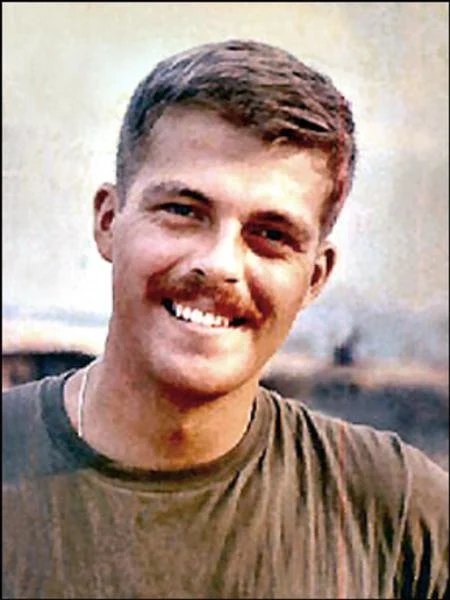 Sergeant Thomas Ray Daniels - The Artilleryman Who Carried the Weight of a War
 Sergeant Thomas Ray Daniels - The Artilleryman Who Carried the Weight of a War
Some heroes fall in the fury of combat. Others are taken in the quiet, everyday dangers of a war that never gave its soldiers a moment of safety. Sergeant Thomas Ray Daniels was one of those warriors — a young artilleryman drafted from Minnesota farmland and sent halfway across the world to the highlands of Vietnam.
Born on December 9, 1946, in Dawson, Minnesota, Thomas Daniels grew up in the agricultural heartland of America. His hometown, a small and close-knit community in Lac qui Parle County, was the kind of place where the seasons shaped the rhythms of life, where work ethic mattered, and where a young man learned early the value of responsibility. Those qualities would define him long before the draft notice arrived.
In the late 1960s, as the Vietnam War escalated and American casualties surged, the Selective Service System reached deeper into communities like Dawson, calling forward men who had never imagined themselves soldiers — men like Thomas Daniels, who stepped into uniform because their nation asked.
Answering the Call — Becoming a Soldier
Daniels entered the Army through the draft and carried that quiet sense of duty with him into training. It was a path followed by hundreds of thousands of young Americans during the Vietnam era — leaving behind fields, factories, classrooms, or job sites to learn the language of soldiering: discipline, teamwork, hardship, and survival.
He was assigned to the Field Artillery, a branch whose importance is often underestimated by those unfamiliar with war. Artillery is the backbone of ground combat power — the “King of Battle,†as it has been known for generations. When infantry units were pinned down, artillery brought them relief. When enemy formations gathered for attack, artillery broke them up. When the jungle swallowed visibility, artillery found the unseen.
Daniels trained as a Field Artillery Crewman, a job requiring intelligence, speed, and physical stamina. Artillerymen had to calculate ranges, load massive projectiles, adjust elevation and deflection, and fire within seconds of receiving coordinates. Mistakes could cost American lives; precision kept entire companies alive.
C Battery, 6th Battalion, 14th Artillery — Holding the Line in the Highlands
On November 19, 1968, Daniels arrived in Vietnam and reported to C Battery, 6th Battalion, 14th Artillery, part of the 52nd Artillery Group operating in II Corps — the rugged Central Highlands.
This region, centered around Pleiku Province, was one of the most strategically important areas of the war. The highlands controlled major infiltration routes from Cambodia and Laos, making them a constant battleground between U.S. forces, ARVN units, and the North Vietnamese Army.
For artillerymen, the highlands presented a brutal list of challenges:
-
Unpredictable weather: Rainstorms turned roads into rivers of mud.
-
Steep terrain: Moving guns required bulldozers, tractors, and an endless supply of sweat.
-
Enemy pressure: NVA forces routinely targeted firebases with mortars and rockets.
-
Isolation: Many firebases sat on remote hilltops, accessible only by helicopter.
C Battery was responsible for supporting infantry and Special Forces elements operating far beyond the safety of major bases like Camp Enari and Camp Holloway. Their howitzers reached deep into the jungle, delivering lifesaving firepower to American units fighting in some of Vietnam's most unforgiving terrain.
For three months, Daniels worked amid the constant grind of artillery operations: firing missions throughout the day and night, resupplying ammo under difficult conditions, reinforcing defensive positions, and enduring the stress of enemy probes and harassment fire.
Artillery life in Vietnam offered no rest. Even when not actively firing, crews were repairing equipment, digging bunkers, moving gun pits, and preparing for the next firefight. Sleep came in short fragments between missions. Mud clung to everything. Thunderous blasts numbed hearing. And yet, these crews were the heartbeat of the battlefield.
Life in the Firebases — The “Hidden Front Linesâ€
Though often perceived as “behind†the infantry, artillery units in Vietnam lived in constant danger. Firebases were prime targets for NVA attacks, and their isolation made them vulnerable. Artillerymen slept beside their guns, their world reduced to sandbags, ammo crates, and the ever-present possibility of sudden attack.
A typical firebase environment included:
-
Layers of concertina wire
-
Guard towers manned around the clock
-
Deep bunkers carved into red clay
-
Noise from generators, radios, and artillery blasts
-
Helicopters bringing ammo, food, mail, and medevacs
-
Men who had learned to live with uncertainty
Daniels, like so many artillerymen, served in this crucible — a place where danger didn't announce itself with dramatic fanfare. Instead, it came quietly, in the form of random mortar fire, mechanical failures, treacherous terrain, and the endless hazards of operating heavy equipment in a warzone.
February 20, 1969 — A Tragic Accident in an Unforgiving War
On February 20, 1969, Daniels was killed in a non-hostile vehicle crash in South Vietnam. The details of the accident are sparse, but the context is clear. Vietnam was a war defined not only by firefights and ambushes, but also by the physical environment itself — where travel was dangerous, vehicles were overloaded or worn down, and roads were little more than narrow cuts through mud and jungle.
Accidents were tragically common. Jeeps overturned on washed-out roads. Trucks skidded into ravines. Equipment rolled under its own weight. Monsoon rain created hazards no training could prepare troops for. A warzone is a place where even routine tasks can turn deadly in an instant.
Daniels had been in Vietnam for just three months. He was 22 years old.
His death, though not caused by enemy action, came in the line of duty, under the strain of relentless operational demands — the kind of sacrifice the public often overlooks, but one that the military and his fellow Soldiers never forget.
The Quiet Losses — The Ones That Haunt Those Left Behind
Accidental deaths like Daniels' carry a unique burden. They strike without warning, without the structure of a firefight, and without the clarity that combat sometimes provides. They leave units grappling with grief and confusion, wondering how a moment so ordinary could suddenly become tragic.
For the men of C Battery:
-
A crewmate was gone
-
A bunk was empty
-
A voice familiar in the radio chatter was silent
-
A place in the gun crew had to be filled by someone who hadn't expected to fill it
These are the wounds that linger — the quiet losses that ripple far beyond the battlefield.
A Minnesota Son — A Soldier Who Did His Duty
Before he was a soldier, Thomas Daniels was a young man from rural Minnesota. He came from fields and small-town streets — places where people know one another, where the seasons mark the passage of life, and where community shapes identity.
Being drafted did not diminish the meaning of his service. He could have resisted. Many did. Others sought deferments. Thousands fled to Canada. Daniels reported as ordered, trained, deployed, and fulfilled every requirement placed upon him.
That willingness to serve — even without choosing the path — speaks to the character of a generation that bore the weight of a turbulent war.
He did not choose Vietnam, but he chose to do his duty there.
He chose to serve the men beside him.
He chose to live with courage until the moment fate intervened.
A Name Carved in Stone — And Carried Forward
Today, Sergeant Thomas Ray Daniels is memorialized on the Vietnam Veterans Memorial Wall, where his name joins more than 58,000 others who never returned home. Visitors from across the nation — including fellow veterans, students, and families — stop to read those names and consider the cost of freedom.
His story reminds us that sacrifice is not defined solely by the way a soldier dies, but by the life he lived, the duty he fulfilled, and the courage he carried into each day of his service.
At Ghosts of the Battlefield Museum, we honor him as:
-
A Minnesota son
-
A drafted soldier who answered his nation's call
-
A field artillery crewman who helped sustain the fight in the highlands
-
A young man whose life ended in service, far from home
A Final Reflection — The Weight of Memory
The war in Vietnam took its toll in many ways — through battles fought in the jungle, through ambushes and firefights, and through tragedies that unfolded without a single enemy shot fired. Each loss shaped the families who waited at home, the units who carried on without their brothers, and the nation still grappling with the legacy of that conflict.
Sergeant Thomas Daniels' story is one of those quiet sacrifices that deserves to be spoken aloud. His service mattered. His life mattered. And his memory continues to bear witness to the cost of war in all its forms.
Today, we remember him with honor:
Sergeant Thomas Ray Daniels
A soldier of the highlands.
A guardian of the infantry.
A young American who gave everything his nation asked of him.