Staff Sergeant Terrence L. Harris — A Leader Lost on Christmas Eve
A Detroit-born infantry NCO with the 1st Cavalry Division, Staff Sergeant Terrence L. Harris served in Vietnam until his death on December 24, 1970. His story reflects the constant danger and quiet sacrifices of war.
December 26, 2025

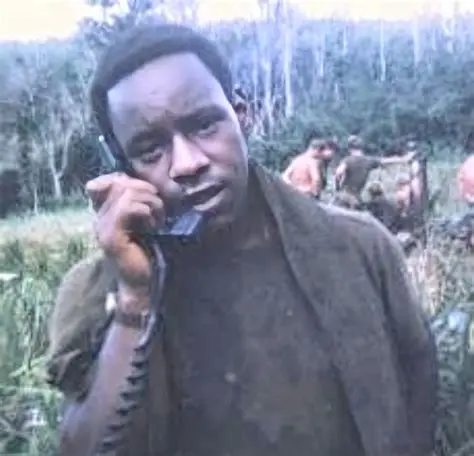 Staff Sergeant Terrence L. Harris
 Staff Sergeant Terrence L. Harris
A Soldier's Burden, A Leader's Watch**
Some men fall in battle under fire. Others fall under the quiet, unrelenting weight of war itself.
Staff Sergeant Terrence L. Harris belonged to the latter—an infantryman whose life ended not in a blaze of combat, but amid the ever-present danger that followed soldiers everywhere in Vietnam.
Born on August 19, 1944, in Detroit, Michigan, Terrence L. Harris grew up in a city shaped by industry, resilience, and working-class pride. Detroit in the post-war years was a place of motion and momentum—assembly lines running day and night, neighborhoods filled with families building futures, and young men raised with a strong sense of responsibility. Harris came of age in a generation that inherited both opportunity and obligation, and when the nation called, he answered.
He entered the United States Army through regular enlistment, choosing service at a time when the Vietnam War was grinding on with no clear end in sight. By the time Harris arrived in Southeast Asia, the war had evolved into a conflict defined by exhaustion, ambiguity, and constant risk—where danger did not always announce itself with gunfire.
Into the Cavalry
Staff Sergeant Harris began his Vietnam tour on June 4, 1970, joining C Company, 5th Battalion, 7th Cavalry Regiment, 1st Cavalry Division. The unit carried a lineage that stretched back to the earliest chapters of the war. The 7th Cavalry had already written its name into history through years of brutal fighting across Vietnam's jungles, mountains, and border regions.
By 1970, however, the nature of the war had changed.
Large-scale engagements were less common, but danger was no less present. Enemy forces relied on ambushes, mines, booby traps, and snipers. Firebases were shelled at random. Patrols moved through terrain seeded with hidden threats. Even moments of relative calm could turn deadly in an instant.
Harris rose to the rank of Staff Sergeant, a clear sign of trust placed in him by the Army. Noncommissioned officers were the backbone of infantry units—men who bridged the gap between officers' orders and soldiers' reality. An NCO did not merely give commands; he enforced discipline, trained young troops, settled fears, and often placed himself between danger and his men.
For Harris, leadership was not theoretical. It was lived every day, step by step, patrol by patrol.
The Weight of the Stripe
 The rank of Staff Sergeant carried immense responsibility in Vietnam. Harris was no longer just responsible for his own survival; he was accountable for the safety, readiness, and morale of those under him. Many of the soldiers he led were barely out of high school—young men who looked to their NCOs for cues on how to move, react, and endure.
An infantry squad leader had to think constantly:
-
Are my men alert?
-
Is their gear serviceable?
-
Is the weapon safe?
-
Is the perimeter secure?
-
Is anyone showing signs of exhaustion or fear?
There were no pauses. No true rest.
Even off the line, danger lingered. Weapons were always close. The environment was unforgiving—heat, humidity, insects, and stress eroded judgment. Fatigue accumulated silently. In Vietnam, the war followed soldiers everywhere, even into moments meant for relief.
Staff Sergeant Harris lived inside that reality.
Phuoc Long Province — A Quietly Deadly Place
By late 1970, Harris and his unit were operating in Phuoc Long Province, a rugged and strategically significant region of South Vietnam. Dense jungle, thick vegetation, and difficult terrain made operations slow and dangerous. The province bordered areas used by enemy forces for movement and concealment, and contact—when it came—was often sudden and violent.
But Phuoc Long was also emblematic of the war's later years: long stretches of tension punctuated by sharp moments of chaos. Mines, accidental discharges, equipment failures, and exhaustion claimed lives just as surely as enemy fire.
Every weapon carried was loaded. Every movement required care. One mistake could be final.
December 24, 1970
On Christmas Eve, December 24, 1970, Staff Sergeant Terrence L. Harris was killed in a non-hostile incident, officially recorded as an accidental self-inflicted injury.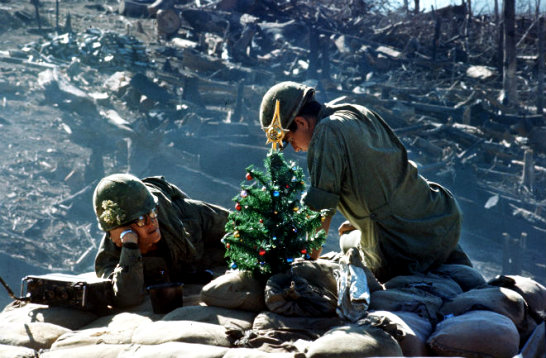
It is a stark and painful classification—one that too often strips away context.
This was not a moment of carelessness in a peaceful setting. It was a wartime environment, saturated with stress, fatigue, and constant readiness. Weapons were tools of survival, handled daily under conditions that eroded even the most disciplined routines. Accidents occurred not because soldiers lacked professionalism, but because war is relentless and unforgiving.
Harris's death came without enemy gunfire—but it came because he was at war.
On a night when families back home gathered around trees and tables, soldiers in Vietnam stood watch, cleaned weapons, guarded perimeters, and prepared for another uncertain day. For Harris, that night became his last.
He was 26 years old.
A Loss Felt in Silence
Deaths like Harris's often passed with little public notice. They did not generate headlines. They did not come with dramatic battlefield accounts. But within the unit, the loss was deeply felt.
A Staff Sergeant was not easily replaced.
His absence would have been immediate—felt in the empty space where a leader once stood, in the quiet realization among younger soldiers that someone who had guided them would not be returning. The routines continued. Patrols still went out. Orders were still given. But something fundamental was missing.
For the Army, it was a line in a report.
For his men, it was the loss of a steady presence.
For his family in Detroit, it was a knock on the door that changed everything.
A Son of Detroit
Back home, Detroit lost one of its own.
Harris was not a famous figure. He did not live long enough to build a family of his own or to grow old telling stories of the war. Like so many Vietnam veterans, his service existed largely in the shadows—known deeply by those who served beside him, but scarcely recognized by the wider world.
He was a son, likely a brother, perhaps an uncle or cousin—someone whose life was rooted in community and connection before the Army carried him halfway around the world. His death did not come with a parade or ceremony. It came quietly, wrapped in official language that could never convey the human cost.
Remembering What Matters
It is tempting to define service members by the manner of their death. But doing so misses the truth.
Staff Sergeant Terrence L. Harris should be remembered for:
-
Stepping forward to serve when the nation was divided.
-
Earning the rank of Staff Sergeant through leadership and competence.
-
Leading soldiers in one of the most demanding environments imaginable.
-
Carrying the burden of command without recognition or fanfare.
-
Paying the ultimate price in a war that spared no one from danger.
His death reminds us that Vietnam claimed lives in many ways—not only through firefights and explosions, but through the grinding reality of sustained combat operations.
Why His Name Endures
There are thousands of names like Harris's—men whose stories are not etched into popular memory, but whose service formed the foundation of the Army's mission in Vietnam. Each name represents a life interrupted, a future denied, and a sacrifice made far from home.
To remember Staff Sergeant Harris is to acknowledge:
-
The unseen dangers of war
-
The responsibility carried by NCOs
-
The cost borne by families who waited
-
The reality that every casualty matters
His service deserves remembrance not because it ended tragically, but because it was given fully.
Closing Reflection
Staff Sergeant Terrence L. Harris did not make it home.
He did not grow old.
He did not receive public acclaim.
But he served. He led. And he stood watch when others slept.
That is enough to earn remembrance.
His name deserves to be spoken.
His service deserves to be honored.
And his story deserves to endure—so that the quiet sacrifices of Vietnam are never forgotten.