PFC Jesse Lewis Adams: A LRRP Warrior Who Never Came Home
Nineteen-year-old Jesse Lewis Adams of Rock Hill served with the elite LRRPs of the 1st Infantry Division before being killed in Vietnam—just weeks before his son was born. His sacrifice echoes through generations.
November 21, 2025

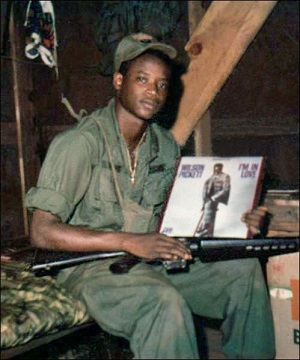 PFC Jesse Lewis Adams — Rock Hill's Fallen Son
1st Infantry Division, F Company (LRRP)
Killed in Action: November 21, 1968 — Binh Duong Province, South Vietnam
Jesse Lewis Adams was only nineteen when he raised his right hand and entered the United States Army—one of thousands of young American men who stepped forward during the Vietnam War, but one whose story remains uniquely and powerfully tied to family, sacrifice, and the silent courage of a soldier who volunteered for one of the most dangerous roles the U.S. Army could offer.
When Jesse Adams arrived in South Vietnam on July 8, 1968, he stepped into the world of the Long-Range Reconnaissance Patrols—the LRRPs. These elite, small-unit teams operated not behind the lines, but deep beyond them. They were the eyes and ears of the 1st Infantry Division, inserted silently by helicopter into remote areas, moving like shadows under triple-canopy jungle, observing enemy units, tracking supply routes, calling for artillery or airstrikes, and disappearing long before the North Vietnamese Army (NVA) or Viet Cong knew they were there.
It was a job made for the few, not the many.
LRRP soldiers carried their lives on their backs, relying on stealth rather than strength, patience rather than firepower. A six-man team could operate miles from friendly forces, often for days at a time. Every snapped twig risked detection. Every radio transmission could reveal their presence. And at night, when the jungle swallowed light and sound, they learned to sleep in shifts—if they could sleep at all—knowing that the enemy was always close.
For a young man from Rock Hill, South Carolina, this was baptism by fire.
A Son of the Carolinas
Born on September 10, 1949, Jesse Adams grew up in a community where family, faith, and responsibility weren't abstract concepts—they were part of daily life. Rock Hill was a textile town, a place where neighbors knew each other, where Sunday dinners mattered, and where young men often learned early what it meant to work, contribute, and take care of those around them.
Those who knew Jesse remembered a young man with a quiet strength—someone who didn't need to command attention to leave an impression. He had a grounded, determined character, shaped by the values of his hometown and strengthened by the love of a young family who believed they had their whole future ahead of them.
When he enlisted, he did so with purpose. He would serve, he would do his duty, and he would come home. That was the plan.
But Vietnam had plans of its own.
Into the Fire: Company F (LRRP), 52nd Infantry
When PFC Adams was assigned to Company F (Long Range Patrol), 52nd Infantry Regiment, he entered a fraternity unlike any other in the Army. These teams were predecessors to what would later become the Rangers of the modern era. Their missions required intelligence, marksmanship, camouflage, survival skills, adaptability, and absolute trust in the soldiers beside them.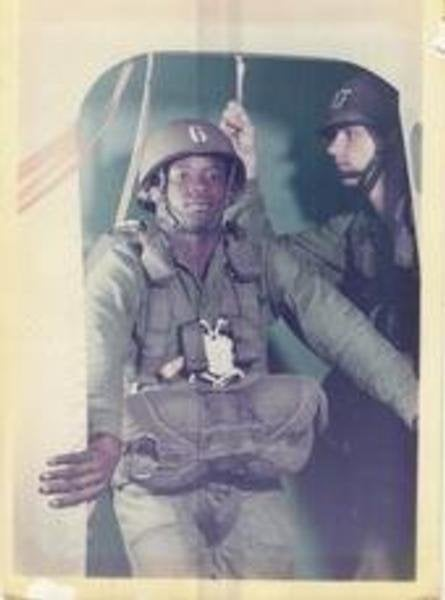
LRRPs lived by rules that could not be broken:
-
Move slow, even when your instincts scream to run.
-
Speak never, communicate only by touch or hand signal.
-
Leave no sign—no food wrapper, no footprint, no careless mark.
-
Know that help may be minutes away… or hours… or never.
In Binh Duong Province, where Jesse operated, the enemy wasn't scattered—it was everywhere. The region was home to infiltrating Viet Cong units, hardened NVA forces, subterranean tunnel networks, sudden ambushes, and dense vegetation that closed around a man like a living wall.
LRRP missions often involved “snooping and pooping‗inserting quietly, observing, then extracting before detection. But more than once, teams were compromised. Sometimes by chance. Sometimes by trackers who sensed their presence. Sometimes by the inevitable unpredictability of a war fought in terrain that concealed the enemy too well.
It was this world—a world of uncertainty, skill, courage, and extraordinary hardship—that PFC Jesse Adams walked into.
A Life Interrupted
On November 21, 1968, PFC Adams was conducting operations in Binh Duong when enemy forces engaged his team. During the fight, Jesse sustained multiple fragmentation wounds—injuries that proved fatal. At just nineteen years old, his war, his mission, and his future came to a sudden and devastating end.
He died doing what LRRP soldiers were known for:
Facing danger head-on so that others did not have to.
The loss reverberated instantly through his unit. LRRP teams were family—men bound by shared danger, shared hardship, and a shared understanding of how fragile their existence was. Every empty seat on an extraction helicopter was a wound. Every folded map missing a name was a reminder. Jesse's death was felt not only by his teammates, but by the entire LRRP community.
But it was his family who felt the deepest blow.
For them, the world shifted irreversibly.
A Child Who Would Never Know His Father
PFC Jesse Adams had something waiting for him back home—something he talked about, dreamed about, planned for.
A child.
While he served in the jungles of Vietnam, his young family in Rock Hill was preparing to welcome a baby into the world. They wrote to him. They shared hopes. They imagined a reunion where Jesse would hold his newborn son and start a life built around peace rather than war.
But the letter that arrived was not the letter they expected.
Jesse's son was born after his father was killed in action.
He never had the chance to hear Jesse's voice, feel his embrace, or understand the pride that drove him to serve. For that child, his father would become a shadow remembered through photographs, medals, and the stories passed down by those who knew and loved him. His father existed as a memory preserved on paper—forever young, forever nineteen, forever the soldier who did not make it home.
This is one of the quiet, lasting tragedies of the Vietnam War:
children who grew up never knowing the fathers who died before they were born.
And in this way, Jesse Adams' sacrifice became a wound carried across generations—a reminder of the cost of war not in numbers, but in families.
The High Cost of LRRP Operations
To understand Jesse Adams' service is to understand the extraordinary danger that LRRP teams faced.
 LRRPs suffered some of the highest casualty rates of any American units in Vietnam. Their missions were rarely large engagements; instead, they were small, deadly incidents that could unfold in seconds:
-
A patrol compromised by a single sound.
-
A point man spotting movement a half-second too late.
-
A claymore detonated by an unseen tripwire.
-
An enemy patrol drifting silently through the underbrush.
LRRP soldiers were often the first to make contact—and sometimes the first to fall. The courage required to step forward and assume these duties cannot be overstated.
When Jesse Adams moved through the jungles of Binh Duong, he did so with the knowledge that each mission might be his last. And still he went. That is the measure of his bravery.
Rock Hill's Fallen Son
News of Jesse's death struck Rock Hill with painful clarity. Communities like his were especially impacted by Vietnam because each loss was deeply personal. These weren't distant names—they were classmates, neighbors, church members, sons of textile workers, boys who had played football on the same fields where younger kids now practiced.
Rock Hill would lose more sons before the war was over. But Jesse's death, with a child on the way, left a particular ache—one of those stories that became part of local memory, spoken quietly in living rooms and church halls for years afterward.
His name is now etched into the Vietnam Veterans Memorial in Washington, D.C., joining more than 58,000 others. But in Rock Hill, his memory is more than stone. It's part of the town's history—its sacrifice, its grief, and its pride.
A Legacy Preserved
Today, more than five decades after his death, PFC Jesse Lewis Adams remains a symbol of the best qualities of American service members: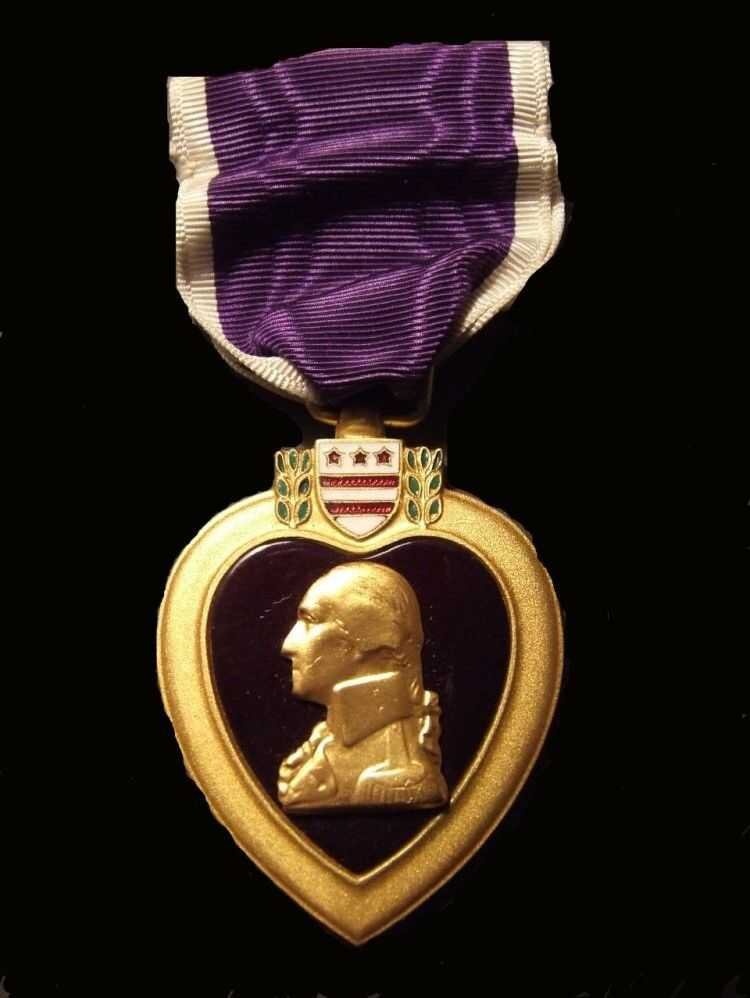
-
Courage, shown in volunteering for LRRP duty
-
Dedication, shown in the missions he carried out far from home
-
Sacrifice, given freely for his country and his brothers in arms
-
Love, expressed in the family he left behind and the child he never met
His story endures because it reflects the human side of war—the dreams interrupted, the families forever altered, and the heroes who never lived long enough to grow old.
At Ghosts of the Battlefield, we preserve the stories behind the uniforms and the names. We honor the men who walked into danger because duty called them to do so. And in telling Jesse's story, we ensure that his memory remains alive not only for his family, but for everyone who seeks to understand what the Vietnam War truly cost.
PFC Jesse Lewis Adams served in one of the most dangerous roles of the Vietnam War, walking point far beyond the wire so others could live. His courage, his sacrifice, and the life he never got to finish will always be remembered.
He was a father who never came home, a warrior who gave everything, and a son of South Carolina whose legacy will never fade.