Only 20 Years Old: Corporal Wesley Roy Potter and Vietnam's High Cost
Drafted into the U.S. Army and sent to Vietnam in 1968, Corporal Wesley Roy Potter was killed in action at just 20 years old. His story honors the sacrifice of America's infantrymen and the families who bore the cost of war.
January 23, 2026

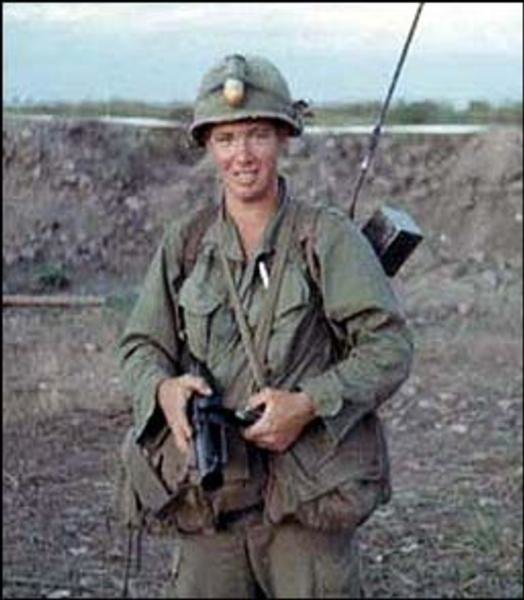 Corporal Wesley Roy Potter: A Michigan Son Lost in the Jungles of Vietnam
 Corporal Wesley Roy Potter: A Michigan Son Lost in the Jungles of Vietnam
Corporal Wesley Roy Potter answered his nation's call and paid the ultimate price in the jungles of Vietnam. His story is one shared by countless families across America—young men pulled from hometown streets and familiar faces, placed into a faraway war, and asked to endure circumstances few could truly imagine. But within that broad history, Wesley Potter remains an individual: a son of Alma, Michigan, an infantryman of the 199th Light Infantry Brigade, and a soldier who never made it home.
At Ghosts of the Battlefield, we work to ensure that names do not become statistics. We preserve stories. We honor service. And we speak the names of the fallen so future generations understand the real cost of war.
Early Life in Alma, Michigan
Wesley Roy Potter was born on July 27, 1948, and raised in Alma, Michigan—a small, close-knit community in Gratiot County. Places like Alma shape people in quiet ways. They teach responsibility early. They teach the value of a handshake, the importance of family, and the expectation that you carry your weight when times are hard.
To understand men like Wesley, you have to understand that the world he grew up in was not built around constant attention or celebration. It was built around doing what was right, showing up, and not complaining. That background mattered when he put on a uniform. Those values followed him halfway around the world.
As Wesley came of age, the United States was changing rapidly. The 1960s were marked by national upheaval—civil rights struggles, cultural shifts, political division, and a war that seemed to grow larger each year. Vietnam was not a distant headline for long. It became personal for families across America as the draft reached into towns like Alma and placed young men into an uncertain future.
Drafted into the U.S. Army
Wesley Potter was drafted into the United States Army and trained to become a Light Weapons Infantryman. For many drafted soldiers, the transition was abrupt: civilian life one month, military discipline the next. The tra ining was designed to create infantrymen capable of moving, fighting, and surviving in harsh conditions. It was physically punishing, mentally exhausting, and relentless by design.
Infantry training also carried a deeper message. It prepared soldiers to function under pressure, to trust the man beside them, and to keep moving forward when instinct begged them to stop. By the time Wesley deployed, he would have understood a hard truth shared by infantrymen across wars: on the ground, the mission is carried by ordinary men asked to do extraordinary things.
Arrival in Vietnam: September 7, 1968
Corporal Potter began his tour in Vietnam on September 7, 1968. The war at that time was in a brutal, grinding phase. The Tet Offensive earlier that year had shown just how widespread and determined the enemy could be, even in areas considered relatively secure. After Tet, combat continued across South Vietnam, and American units remained engaged in constant operations.
Wesley was assigned to D Company, 5th Battalion, 12th Infantry Regiment, 199th Light Infantry Brigade.
The 199th Light Infantry Brigade—often remembered by its nickname, the “Redcatchers‗operated primarily in the III Corps Tactical Zone, the region surrounding Saigon and stretching into provinces that saw intense and frequent contact. The terrain varied from jungle to open fields and villages, but the threat remained constant: ambushes, snipers, mines, and sudden, violent engagements.
For infantry companies, Vietnam was a war of movement. Days were defined by patrols. Nights were defined by perimeter security, listening posts, and the uneasy awareness that darkness did not bring safety—only uncertainty.
The Role of a Light Weapons Infantryman
As a Light Weapons Infantryman, Wesley's job was not glamorous, but it was essential. Infantrymen in this role carried the weapons that gave a squad its fighting strength. They endured the heaviest loads—ammunition, gear, water, rations, and sometimes extra equipment that kept the unit alive and mobile.
 More importantly, they went where the danger was. Infantry did not have the luxury of distance. They had to close with the enemy, search terrain that could hide an ambush at every step, and remain alert in conditions designed to wear men down.
In Vietnam, there was rarely a clear “front line.†Contact could happen anywhere—on a trail, near a hedgerow, in the edge of a village, or in the middle of thick vegetation where visibility dropped to only a few feet. The battlefield could transform instantly from silence to chaos.
That reality shaped every patrol. It shaped every conversation between soldiers. It shaped how men slept, how they carried themselves, and how they learned to read the land for signs of danger that most people would never notice.
Combat in Hua Nghia Province
On January 20, 1969, Corporal Wesley Roy Potter was operating in Hua Nghia Province, South Vietnam, when he was killed by hostile small arms fire. He was 20 years old.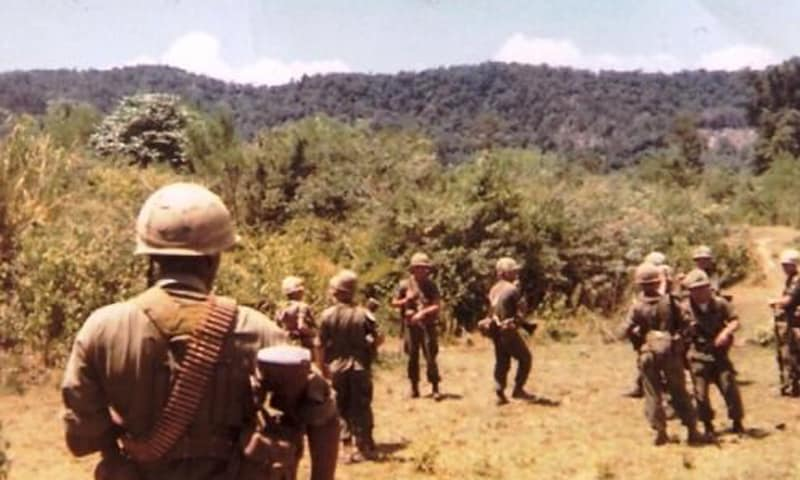
Hua Nghia Province was part of the contested region near Saigon and was frequently the site of combat operations. Units operating there faced a dangerous mix of guerrilla tactics and well-planned enemy engagements. Small arms fire—rifles, machine guns, and ambush fire—was one of the most immediate and lethal threats faced by infantrymen on patrol. In Vietnam, engagements could erupt without warning, and the difference between life and death could be measured in seconds.
The details of Wesley's final moments may not be fully preserved in public memory, but the meaning of his loss is unmistakable. He died doing his duty, in a war zone, far from home, alongside other soldiers who depended on one another for survival.
That fact alone deserves remembrance.
The Cost Carried Home
When a soldier is killed in Vietnam, the moment does not end in the jungle. It travels home.
In Alma, Michigan, Wesley's family would have received the terrible notification that countless families know too well. The shock arrives first. Then disbelief. Then a grief that changes shape over time but never truly disappears. There is no preparation for hearing that a son is gone. There is no script for what comes after.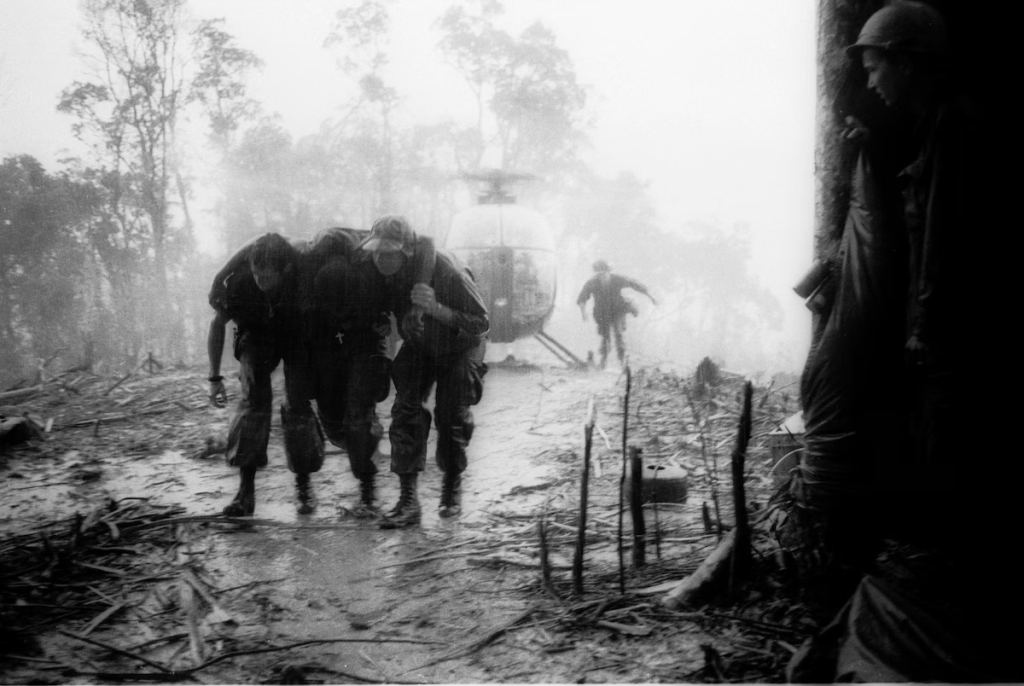
Gold Star families carry a weight that most of the world never sees. They live with the absence at holidays, at birthdays, at milestones that were meant to be shared. They carry it in quiet moments—when a song plays, when a memory surfaces, when time moves forward without the person who should still be there.
For communities like Alma, the loss is communal as well. A young man raised on those streets and in those schools is suddenly gone. A familiar face becomes a photograph. A name becomes a memory. And the town must reconcile the painful truth that war is not something that happens “somewhere else.†It reaches into every corner of the country.
Remembering Corporal Potter as a Person
It is easy, decades later, to speak in general terms about Vietnam. The numbers are overwhelming. The operations blur together. The politics remain complicated.
But remembrance begins where history becomes human again.
Wesley Potter was not simply an infantryman. He was a young man born in 1948, raised in Michigan, drafted into the Army, sent to Vietnam in 1968, and killed in 1969. He had a life before the war. He had people who loved him. He had a future that ended too soon.
When we remember him, we honor that full truth.
We also honor the men who served beside him—those who carried on after January 20, 1969, with one more empty space in formation. Every unit remembers its losses. Every veteran carries names that still surface in quiet moments, decades after the war ends. For those who walked the same trails and felt the same fear, remembrance is not abstract. It is personal.
Why His Story Matters Today
At Ghosts of the Battlefield, we believe that the purpose of preservation is not to romanticize war—but to confront it honestly. To remember the courage it demanded, the sacrifices it required, and the families it changed forever.
Corporal Wesley Roy Potter's story matte rs because it reminds us that history is made of individuals. It reminds us that service is not theoretical. It is lived out in real places, under real fire, by real people—many of them barely out of their teens.
It also reminds us that remembrance is a duty of its own.
If we do not speak these names, if we do not tell these stories, they fade. And when sacrifice fades into silence, the nation loses part of its soul.
Wesley Potter deserves better than silence.
A Final Salute
Corporal Wesley Roy Potter served his country as an infantryman in the 199th Light Infantry Brigade. He deployed to Vietnam on September 7, 1968. He was killed by hostile small arms fire on January 20, 1969, in Hua Nghia Province, South Vietnam. He was 20 years old.
He is remembered in Alma, Michigan. He is remembered by those who honor Vietnam's fallen. And he will be remembered here—by name, with respect, and with gratitude.
Rest in honor, Corporal Potter. Your watch has ended, but your legacy endures.