Michael Patrick Anderson: Barely Out of High School, Lost to War
Drafted at 18, Specialist Four Michael Patrick Anderson of Queens, New York, was killed in action in Vietnam at just 19 years old while serving as an infantryman with the 4th Infantry Division.
December 18, 2025

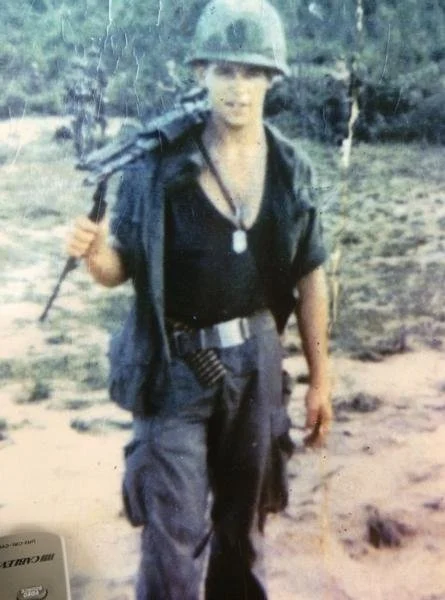 A Generation Sent to War
 A Generation Sent to War
Some Soldiers came to Vietnam barely out of high school, yet were asked to fight with the resolve of men far older. They arrived with youthful faces, unfinished dreams, and futures still forming, and were immediately placed into a war that demanded maturity, discipline, and courage without compromise. They carried rifles and rucksacks, but also the weight of expectation — from their families, their units, and a nation at war.
Specialist Four Michael Patrick Anderson was one of those young infantrymen — a New York son who carried a light weapons load into a conflict that would not spare him.
A Queens Upbringing
Michael Patrick Anderson was born on December 18, 1948, in Flushing, New York, in the borough of Queens. It was a place shaped by working families, veterans of the Second World War, and neighborhoods built on routine, responsibility, and quiet patriotism. Queens in the 1950s and 1960s was a borough of  movement — subways rattling beneath city streets, elevated tracks overhead, and families commuting daily toward opportunity.
Michael grew up in a generation that inherited postwar optimism but lived under the shadow of Cold War tension. Television screens brought news of global conflict into American living rooms, and by the time Michael reached his teenage years, Vietnam had become an unavoidable presence in national life.
The Draft and the Call to Serve
Like so many young men of his era, Michael did not volunteer fo r Vietnam — he was drafted through the Selective Service System. The draft reshaped lives overnight, removing choice and replacing it with obligation. For those selected, resistance was rare and often futile. Service was expected.
Michael entered the United States Army and trained as a Light Weapons Infantryman, one of the most dangerous roles in Vietnam. Infantrymen were the point of contact — the men who moved forward on foot, absorbed first contact, and fought the war face to face.
Training for a Different World
Infantry training prepared Soldiers for discipline and tactics, but nothing could truly replicate the realities of jungle combat. Michael learned to carry his rifle as an extension of himself, to move cautiously, to trust orders, and to rely on the men around him. He trained knowing that his assignment placed him at the front edge of danger.
After training, his orders came.
Vietnam.
Arrival in Country
On October 8, 1967, Michael Patrick Anderson arrived in Vietnam.
He was 18 years old.
The heat, humidity, and noise were overwhelming. Helicopters churned the air constantly. Artillery thundered in the distance. The jungle loomed thick and unforgiving. From the moment he stepped off the aircraft, the war became real.
Assigned to the 4th Infantry Division
 Michael was assigned to B Company, 1st Battalion, 35th Infantry Regiment, part of the 4th Infantry Division — the “Ivy Division.†The division was heavily engaged in central Vietnam, operating in areas where terrain favored the enemy and punished the unwary.
While the 4th Infantry Division is often associated with the Central Highlands, its units fought bitterly in Quang Nam Province, an area marked by dense jungle, rugged hills, and entrenched enemy forces.
The Brutality of Quang Nam
Quang Nam Province offered no safe ground. Visibility was often limited to a few yards. Trails were narrow and frequently booby-trapped. Villages shifted loyalties, and enemy forces blended seamlessly into terrain and population. The jungle concealed danger at every turn.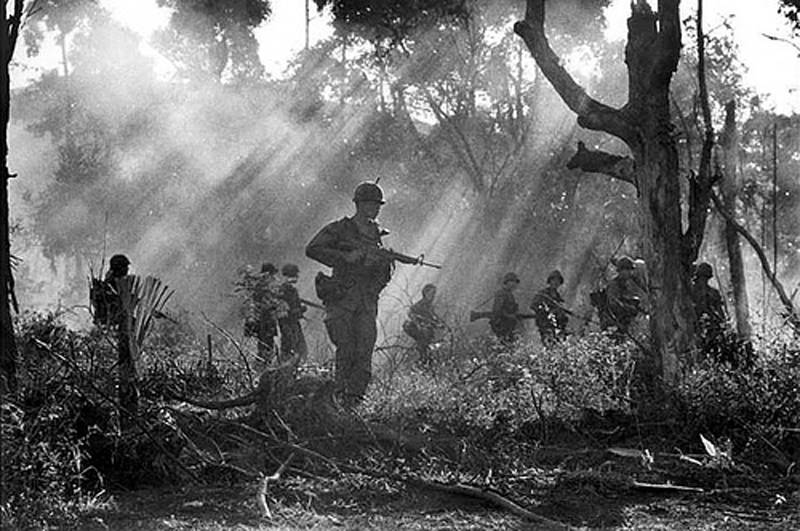
For infantry companies like B Company, daily operations meant patrols through hostile territory, constant vigilance, and the knowledge that contact could come at any moment — sudden, violent, and close.
Life as a Young Infantryman
Michael Anderson was still adjusting to combat life. Just months earlier, he had been a teenager in New York. Now he was navigating jungle trails, scanning treelines, and learning survival through experience rather than theory.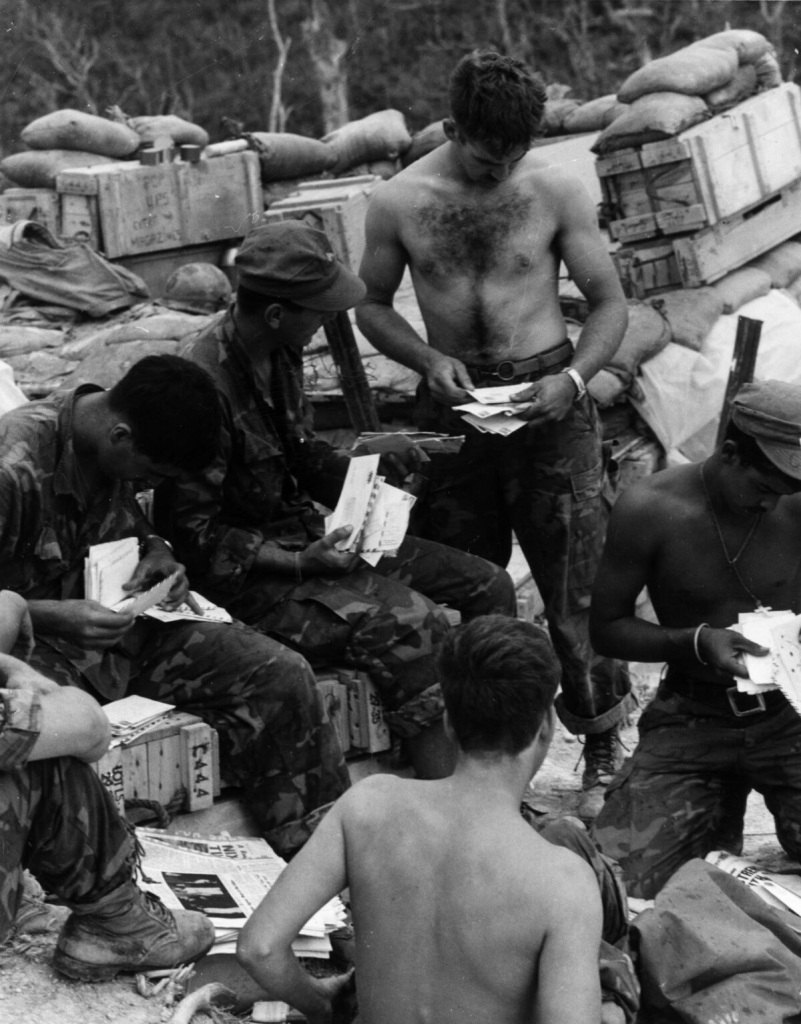
Infantry units formed tight bonds quickly. Trust between Soldiers was absolute and necessary. Age became irrelevant. What mattered was reliability under fire, awareness, and the ability to keep moving when fear threatened to take hold.
Letters from home became lifelines. Thoughts of Queens — of family, familiar streets, and an interrupted future — followed him through the jungle.
The War Escalates: Tet 1968
As 1967 turned into 1968, the war intensified dramatically. In late January, the Tet Offensive erupted across South Vietnam. Enemy forces launched coordinated attacks nationwide, striking cities, bases, and installations previously considered secure.
Quang Nam Province became a zone of heightened act ivity. Infantry units were stretched thin, responding to increased enemy movement and sustained combat operations. Fatigue set in, but patrols continued. The jungle offered no pause.
February 10, 1968
On February 10, 1968, Specialist Four Michael Patrick Anderson was killed in action by hostile small-arms fire.
The official record is brief and impersonal. It does not describe the sounds of gunfire echoing through the trees, the confusion of contact, or the intensity of close-range combat. It does not capture the final moments of a young Soldier doing his duty under fire.
Michael had been in Vietnam for just four months.
He was 19 years old.
The Reality Behind the Record
Michael's death reflects the stark reality faced by so many young Soldiers in Vietnam — men drafted into war before adulthood had fully taken hold, trained quickly, deployed rapidly, and tested under conditions few could have imagined.
Infantrymen bore the brunt of the conflict. They walked point, secured landing zones, swept villages, and absorbed enemy fire. Their courage was rarely dramatic, but constant — measured in steps forward taken despite fear, exhaustion, and loss.
A Family's Loss
 At home in New York, Michael's family received the notification that shattered their world. A son who had left as a teenager would not return. His future — education, career, family, ordinary milestones — ended in a distant jungle halfway around the world.
Their grief joined that of thousands of American families who paid the ultimate price for a war fought far from home.
Remembering Michael Patrick Anderson
Today, Michael Patrick Anderson is remembered not as a statistic, but as a person.
A Queens son.
A draftee.
An infantryman of B Company, 1st Battalion, 35th Infantry Regiment.
A Soldier of the 4th Infantry Division.
He stood in harm's way because his country asked him to serve. He carried his rifle, trusted his fellow Soldiers, and fulfilled his duty until the end.
A Life That Still Matters
Michael's life was brief, but it mattered. His service was honorable, defined by responsibility rather than choice. His death stands as a reminder of the true cost of war — paid not only in battles and strategies, but in young lives lost before they had truly begun.
In remembering Specialist Four Michael Patrick Anderson, we remember all those like him — young Soldiers who left home as boys and faced war as men, many of whom never returned.
His life was short.
His service was honorable.
His memory endures.