Lance Corporal Kenneth Lee Chappell — A Marine's Last Stand in Quang Tri
LCpl Kenneth Lee Chappell of Henrico County, Virginia, served with L Company, 3/1 Marines in Quang Tri Province. He was killed by enemy fire near Than Tham Khe on December 27, 1967, at just 20 years old.
November 20, 2025

 Kenneth Lee Chappell — A Marine's Last Stand in Quang Tri
A Life From Virginia Carried Into the Fire of Vietnam
War has a way of sweeping young men from quiet American streets into landscapes of chaos and uncertainty. Across half a century, the names on the Vietnam Veterans Memorial whisper reminders of lives cut short, of futures unrealized, and of sacrifices made far from home. Among them is Lance Corporal Kenneth Lee Chappell, a young Marine rifleman from Richmond, Virginia—whose path carried him from Henrico County to the jungles and ridgelines of Quang Tri Province, one of the most unforgiving battlefields of the entire Vietnam War.
Today, his story is preserved not only in military records, but through the care of institutions like Ghosts of the Battlefield, which work to ensure that the legacy of each fallen service member is remembered with honesty, dignity, and the depth it deserves. This is the life, service, and sacrifice of Kenneth Lee Chappell—a Marine who stood his ground in some of the war's harshest terrain, and who gave his life beside the men he called brothers.
Early Life in Virginia
 Kenneth Lee Chappell was born on November 20, 1947, in Richmond, Virginia. He grew up in Henrico County, a region defined by generations of working families, deep roots, and a strong sense of community. Like many boys of the post-war era, he came of age during a time when duty, service, and patriotism were woven into the fabric of childhood. His teachers and neighbors remembered him as quiet, good-natured, and respectful—the kind of young man who carried responsibility with sincerity rather than show.
In the mid-1960s, as the conflict in Vietnam escalated and nightly news broadcasts brought scenes of jungles, helicopters, and battlefield reports into American living rooms, many young men felt the weight of the nation's call. Kenneth Chappell was one of them. At a time when many hesitated, deferred, or avoided service altogether, he chose to enlist in the United States Marine Corps—the branch known for demanding the most and giving nothing for free.
He was just nineteen.
Becoming a Marine
 When Kenneth stepped onto the parade deck at Marine Corps Recruit Depot Parris Island, he entered a world built on transformation. Every recruit was broken down, reshaped, and reforged into something harder, stronger, and more capable than before. He learned the fundamentals of discipline, marksmanship, small-unit tactics, and the unforgiving standards of Marine life.
But the heart of his training was rifle proficiency. Marine Corps doctrine is famously clear: every Marine, regardless of specialty, is first and foremost a rifleman. For Kenneth, this identity would become literal. When he completed infantry training, he received his MOS—0311 Rifleman—and orders that would send him halfway across the world into a war that was escalating in scope and ferocity.
Deployment to Vietnam
Kenneth began his Vietnam tour on March 12, 1967. From the moment he stepped out into the humid air of Da Nang, he entered a conflict defined by ambushes, search-and-destroy missions, rugged terrain, and an enemy that rarely fought in the open.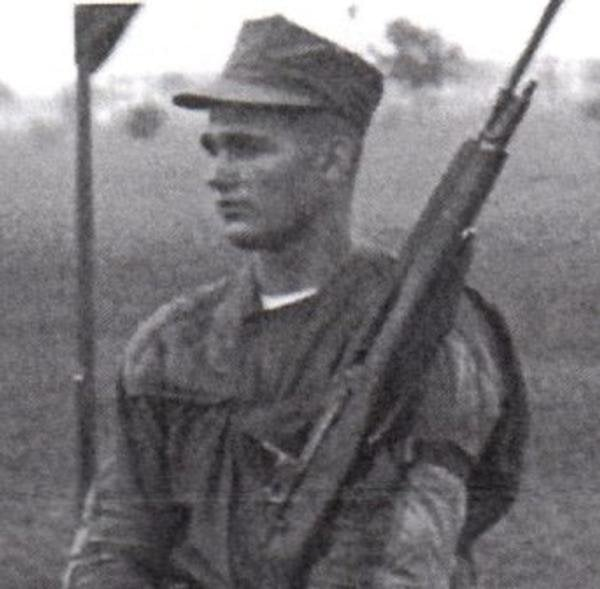
He was assigned to Company L (Lima Company), 3rd Battalion, 1st Marines—part of the 9th Marine Amphibious Brigade. The 3/1 Marines had already carved out a reputation for unyielding grit in operations around Quang Tri, Khe Sanh, Con Thien, and the heavily contested border regions near the Demilitarized Zone. They operated in dense jungle one day, rice paddies the next, and knife-edged ridgelines by nightfall. Their mission was relentless: seek out the enemy, engage him, and deny him sanctuary.
Lima Company represented the backbone of the battalion's combat power. Riflemen like Kenneth carried the weight of the war—literally and figuratively. They patrolled daily, humped radios, ammo, and M16 rifles through heat and monsoon rain, and slept in foxholes carved into mud. Their days blurred into a rhythm defined by sweat, vigilance, and the knowledge that danger lurked in every thicket, every shadow, every stretch of quiet where the jungle seemed too still.
This was the world Kenneth Chappell entered. And it was the world where he would give his life.
Quang Tri Province: The Deadliest Ground in Vietnam
By late 1967, Quang Tri Province had become a crucible. Its proximity to the DMZ made it a funnel for North Vietnamese Army (NVA) regulars and a staging ground for infiltration into the South. The Marines had been fighting bitter engagements throughout the year in places like Gio Linh, Cam Lo, Camp Carroll, and Con Thien—names that would become etched into Marine Corps history.
Than Tham Khe, the valley where Kenneth would spend his final days, lay within this contested region. Dense vegetation, steep hills, and hidden enemy bunkers made it one of the most challenging environments Marines encountered. It was territory the NVA knew intimately, and they defended it fiercely.
By December 1967, the NVA was preparing for the massive Tet Offensive that would erupt weeks later. They increased pressure across the northern provinces, testing American lines, disrupting operations, and seeking to inflict casualties in preparation for the coming nationwide assault.
Marines in Quang Tri felt the tension. Patrols grew more dangerous. Enemy contact increased. The jungle itself seemed alive with movement and whispers of what was coming.
Lima Company, 3/1 Marines in the Field
 Lima Company spent the last weeks of December on aggressive operations around Than Tham Khe—pushing through thick foliage, clearing trails, probing for enemy activity, and holding ground in a region where the NVA was determined to maintain a presence.
These were not large, sweeping battles. They were smaller actions—brief, sudden, and lethal. Moments when a patrol would be moving quietly one second and ambushed the next. When a distant crack of rifle fire would erupt into chaos. When Marines dove for cover, returned fire, maneuvered under pressure, and tried to survive terrain that offered few advantages.
This was the environment Lance Corporal Chappell faced on the morning of December 27, 1967.
The Final Engagement
On December 27, Lima Company maneuvered in the Than Tham Khe area to disrupt enemy forces and maintain pressure on NVA elements attempting to move through the valley. The enemy, knowing the terrain and fighting from well-concealed positions, opened fire.
Kenneth Chappell was struck and killed by hostile small-arms fire.
The fight was sudden. Close. Violent. A familiar story in the 3/1 Marines, whose riflemen often confronted the enemy at distances measured in feet rather than yards. Kenneth died in the line of duty, leading from the front as riflemen always do—exposed, essential, and carrying the weight of the fight.
He was just 20 years old.
His fellow Marines remembered him not for the manner of his death, but for the way he lived among them: steady, loyal, courageous, and unyielding in a place where survival itself was an act of daily discipline.
A Loss Felt at Home
The telegram that arrived in Virginia shattered a family and rippled through the community that had watched Kenneth grow from boyhood into manhood. Holiday decorations still hung in windows. Families were preparing to welcome the new year. And then came the message no family ever forgets.
He would never again walk the streets of Henrico County. Never again see the riverbanks of home. Never again share simple moments with those who loved him.
His body returned to a quiet cemetery in Virginia, far from the jungle valleys where he fell. But the story of his service—and the reasons he gave his life—have remained part of the long memory of the Vietnam War.
The Legacy of Lance Corporal Chappell
The Marine Corps remembers its fallen. Every name, every rank, every unit—all form a lineage of service that stretches back to 1775. Lance Corporal Kenneth Lee Chappell stands among those who carried this legacy into the crucible of Vietnam.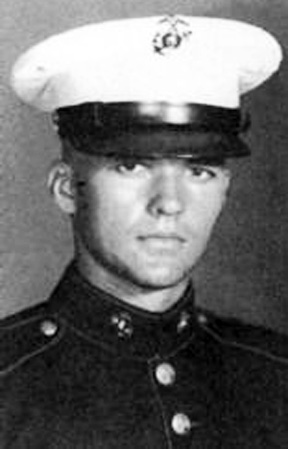
His story is more than a casualty report. More than a date and a place. More than a line on the Wall.
 He was a young man from Virginia who chose to wear the Eagle, Globe, and Anchor when his nation called. He marched through the swamps of Parris Island, took his place in a rifle squad with the 3/1 Marines, and fought in terrain that tested even the most seasoned veterans.
He gave his last full measure not in some sweeping, cinematic battle, but in the reality of small-unit combat—where courage is quiet, deadly, and constant.
He served with honor. He fought with courage. And he died beside Marines who knew the price of the ground they held.
Why He Must Be Remembered
Institutions like Ghosts of the Battlefield exist for Marines like Kenneth Chappell. His generation is passing. The photographs are fading. The families who once told their stories are aging. And the danger is not that the history of Vietnam will be forgotten, but that the individual lives within it will slip away unnoticed.
Kenneth deserves more.
Through research, restoration, and telling his story with depth and dignity, we reaffirm what his service meant—and what his loss cost.
He was one of thousands. But he was also one.
He mattered.