Into the Missile Storm: The Final Mission of Maj. Thomas Waring Bennett, Jr.
In December 1972, during Operation Linebacker II, Major Thomas Waring Bennett, Jr., a decorated B-52 bomber pilot, flew into the most dangerous airspace of the Vietnam War and did not return, giving his life in the war's final days.
December 23, 2025

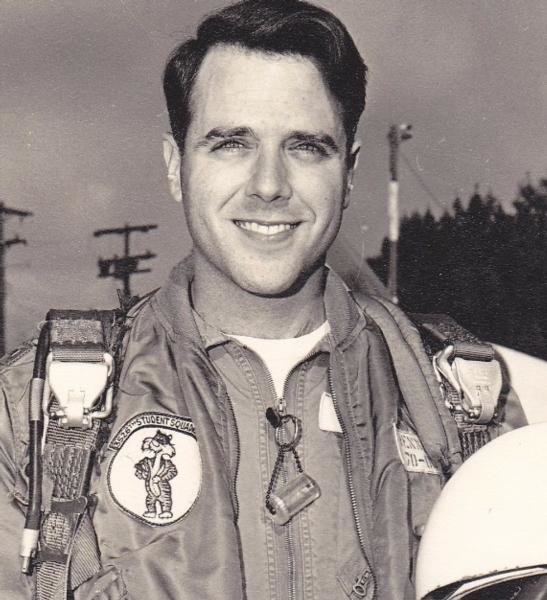 Some wars end not with silence, but with thunder.
In December 1972, that thunder came from high above North Vietnam — carried on the contrails and shockwaves of B-52 Stratofortresses flying into the most heavily defended airspace of the Cold War. It was a sound meant to compel an enemy back to the negotiating table, but it was also the sound of young airmen accepting almost unimaginable risk. Major Thomas Waring Bennett, Jr. was one of the men who flew straight into it.
Major Bennett served as a bomber pilot with the 22nd Bomb Wing (TDY), 307th Strategic Wing, under Strategic Air Command.
Thomas Waring Bennett, Jr. was part of a generation shaped by the Cold War — men who trained for a nuclear conflict they hoped would never come, while being called upon to fight a conventional war that dragged on year after year. By the time he was flying combat missions over North Vietnam, Bennett was no novice aviator. Strategic bomber pilots were among the most rigorously trained airmen in the U.S. Air Force, selected not only for flying skill, but for discipline, judgment, and the ability to function under sustained pressure.
B-52 crews were not lone pilots chasing glory. They were tightly integrated teams: pilot, copilot, radar navigator, navigator, electronic warfare officer, and gunners — each man responsible for a piece of the aircraft's survival and the success of the mission. When a Stratofortress crossed the coastline into North Vietnam, every crewman knew that no single person could save the aircraft alone. Survival depended on trust, coordination, and adherence to the plan.
By late 1972, the Vietnam War had entered its final, bitter phase. Peace talks in Paris had stalled. The Nixon administration sought a decisive action that would force North Vietnam to accept terms and end the conflict. The result was Linebacker II — a concentrated bombing campaign aimed at military, industrial, and logistical targets in and around Hanoi and Haiphong.
What made Linebacker II unique was not only its scale, but its method. B-52s were designed to deliver nuclear weapons against the Soviet Union, not to penetrate layered air defenses over a small, heavily defended country. Yet they were chosen precisely because of their payload, range, and psychological impact.
North Vietnam understood this. Over years of war, they had built the most sophisticated air defense network outside the Soviet Union: radar-guided SA-2 Guideline missiles, anti-aircraft artillery, fighter interceptors, and a command-and-control system refined through experience. By December 1972, Hanoi was ringed with missile sites.
The cost was expected. The losses were accepted before the first aircraft launched.

During Linebacker II, North Vietnamese forces fired more than 1,200 surface-to-air missiles. Fifteen B-52s were destroyed. Crews were killed, captured, or vanished in hostile territory.
Major Bennett was one of those lost.
He did not fall in a swirling dogfight or above jungle canopy. He was lost in the thin air above Hanoi and Haiphong — where strategy, sacrifice, and steel collided at 30,000 feet. He was one of 33 B-52 crewmen killed or missing in action during Linebacker II — airmen who accepted the mission knowing the risks, knowing the odds, and knowing that turning back was not an option.
The Distinguished Flying Cross is awarded for heroism or extraordinary achievement in aerial flight. An Oak Leaf Cluster signifies that the recipient earned the decoration more than once — a testament to repeated exposure to combat danger and sustained excellence under fire. In Major Bennett's case, the award
 reflects not a single dramatic moment, but a pattern of service: flying into hostile airspace, executing missions despite enemy defenses, and returning to fly again. It speaks to the unglamorous heroism of bomber crews — men who rarely saw the enemy, yet faced some of the deadliest threats of the war.
To earn such recognition in the final days of Vietnam is to stand among a small fraternity of airmen whose service helped shape the war's conclusion, even as it claimed their lives.
He did not live to see the ceasefire. He did not walk off the flight line into peacetime. His war ended in the dark sky over North Vietnam, amid missile flashes and contrails.
For the families they left behind, there was no strategic victory — only loss. For their comrades, there was the hollow knowledge that the mission succeeded, but at a price paid by friends who never returned.
Major Bennett's service represents that final cost — paid by bomber crews who were asked to do something their aircraft were never originally designed to do, against defenses specifically built to destroy them.
It was a mission that demanded precision without flexibility, courage without escape, and obedience in the face of overwhelming danger.
Today, Major Thomas Waring Bennett, Jr. is more than a name in a casualty list or a line in an after-action report. He was a pilot, a crew commander, a decorated airman — and one of the last Americans to give his life in the skies over Vietnam.
At Ghosts of the Battlefield, we preserve these stories not as abstractions, but as human legacies — reminders that wars are ended not only by treaties and negotiations, but by men who climb into aircraft knowing they may not come back.
Major Bennett flew into history on a contrail of fire and resolve.
He will not be forgotten.
History survives because people choose to preserve it. Help us keep these stories alive.