Into the Darkness: The F-111 Aardvark, Missing Airmen, and the Final Flight of CAPT Ronald D. Stafford
A cutting-edge strike jet meant to outfly danger instead vanished again and again in the Vietnam night. Among its missing is CAPT Ronald D. Stafford, whose unexplained loss still stands as one of the war's most haunting mysteries.
November 21, 2025

 Operational History of the F-111 Aardvark in Vietnam
 Operational History of the F-111 Aardvark in Vietnam
With Special Emphasis on CAPT Ronald D. Stafford, USAF (MIA)
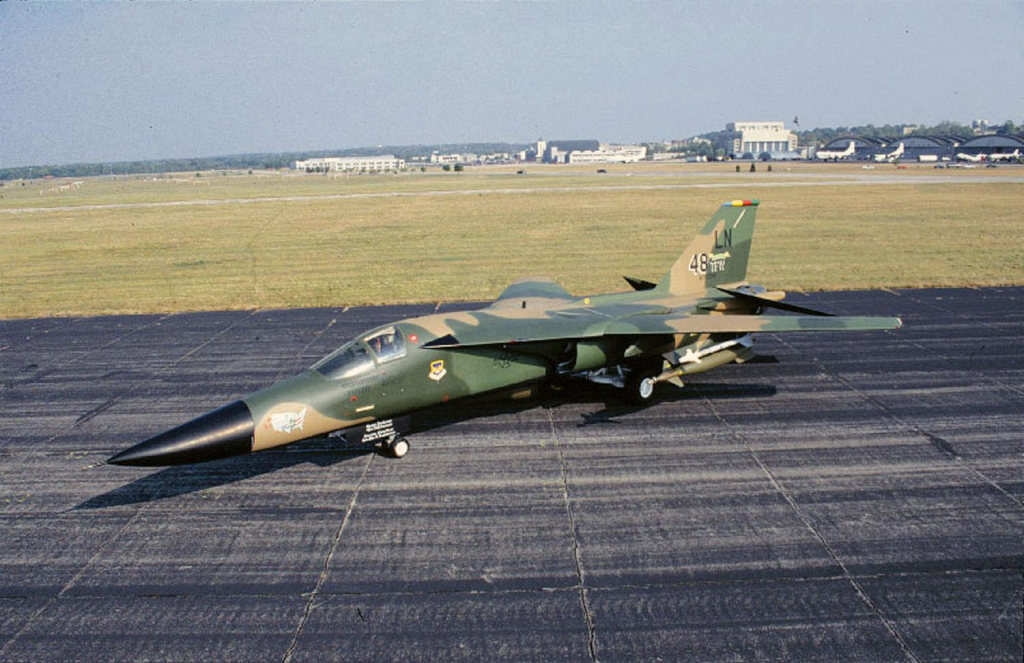
When the General Dynamics F-111 Aardvark first thundered into the Vietnam War, it embodied the cutting edge of American airpower—variable-geometry wings, terrain-following radar, afterburning turbofan engines, and a cockpit built around the promise that two aviators could fly alone into the most defended territory on earth and return in one piece. It was an aircraft designed not simply to fight, but to outthink enemy defenses: to fly low enough to stay under radar, fast enough to outrun missiles, and precise enough to put bombs on target in conditions that normally grounded the rest of the tactical force.
But the Aardvark entered Vietnam as both marvel and question mark. Between 1968 and 1973, the F-111 performed nearly 3,000 combat missions—yet it also suffered a string of tragic losses that challenged engineers, commanders, and families waiting at home. The aircraft would eventually become one of the most capable strike platforms in the world, but in the crucible of Vietnam it was still a developing weapon system, pushed to the limit every time it skimmed the treetops or thundered over the black water of the Gulf of Tonkin.
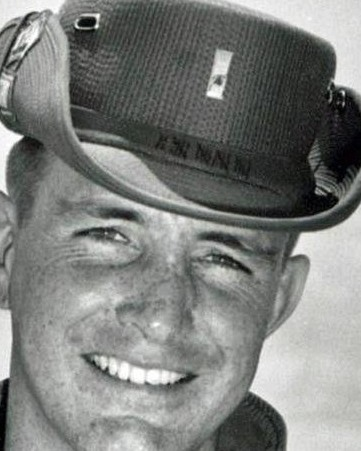
At the center of this story stand the aviators—men like CAPT Ronald D. Stafford and CAPT Charles J. Caffarelli, who vanished without a trace during a nighttime low-level mission on November 21, 1972. Their loss, like so many F-111 tragedies, unfolded in silence: no radio call, no beacon, no survivors. Just absence, and the questions that came after.
Their story, and the broader story of the Aardvark's Vietnam operations, is one of innovation, bravery, and sacrifice in a war that demanded all three.
The Aardvark Arrives: Promise and Uncertainty (1968)
The F-111 was conceived for a very specific wartime environment. North Vietnam had developed one of the densest, most effective integrated air defense networks in the world. Soviet-supplied SA-2 Guideline surface-to-air missiles, radar-directed anti-aircraft guns, and a growing number of MiG fighters made high-altitude bombing increasingly deadly.
To counter this, the Aardvark was built to pierce the defenses in a new way:
-
Variable-sweep wings allowed the aircraft to fly slow for takeoff and landing, then sweep fully back for high-speed penetration.
-
Terrain-Following Radar (TFR) enabled the jet to automatically fly at extremely low altitude—sometimes just 200 feet above the ground—without pilot input.
-
Internal weapons bay and low-drag profile gave the aircraft extraordinary speed at low level.
-
Night and all-weather capability made it a truly 24/7 strike aircraft.
Operation Combat Lancer, launched from Thailand in March 1968, was meant to demonstrate the F-111's revolutionary potential.
Instead, it revealed the limits of a system rushed into combat.
 On March 28, 1968, MAJ Henry MacCann and CAPT Dennis Graham disappeared on a night strike near Dong Hoi. There were no clues. No mayday call. No wreckage. In less than two months, three F-111s vanished, including one in Laos that left behind only questions.
The losses shook the Air Force. Engineers determined that a series of structural, hydraulic, and radar issues contributed to the crashes. Meanwhile, families waited without answers, and rumors spread about “the vanishing aircraft†that seemed to fall out of the sky without explanation.
Combat Lancer was halted. The fleet returned stateside for modifications. But the promise of the F-111 was too great to abandon—and the air war in Vietnam was intensifying.
Return to War: The Aardvark's Second Debut (1972)
When the F-111 returned to Southeast Asia in the fall of 1972, the strategic landscape had shifted. Operation Linebacker—America's major air campaign to halt the North Vietnamese Easter Offensive—demanded nighttime, all-weather precision strikes against bridges, supply routes, troop concentrations, and critical infrastructure.
This was the kind of mission the Aardvark was built for.
Over the next six months:
-
F-111s struck over 600 targets with a level of accuracy few aircraft could match.
-
They attacked heavily defended airfields, SAM sites, and bridges that B-52s and F-4s could only approach under specific conditions.
-
Their low-level, radar-guided attacks allowed them to hit targets even in monsoon conditions.
North Vietnamese officers later admitted that the F-111's unpredictable routing and low altitude made it extremely difficult to detect and track.
But the second deployment also brought new losses. Some were attributed to mechanical issues. Others simply vanished. And at least one was shot down by what returning POWs later called a “golden BB‗a single, lucky burst of ground fire that struck a critical system during a low-level run.
The Fate of CAPT Ronald D. Stafford and CAPT Charles J. Caffarelli
The story of CAPT Ronald Dale Stafford is inseparable from the legacy of the Aardvark in Vietnam.
Born April 10, 1943, in Illinois, Stafford grew up with the kind of determination and technical curiosity that drew many young men to aviation. He joined the Air Force and rose through the ranks as a committed and highly skilled aviator. By 1972, he was an experienced F-111 pilot stationed at Takhli Royal Thai Air Force Base, flying with the 430th Tactical Fighter Squadron.
His navigator, CAPT Charles J. Caffarelli, was equally respected—a calm, capable weapons systems officer whose job was to manage the radar, navigation, and attack systems during the most dangerous phases of flight.
On the night of November 21, 1972, Stafford and Caffarelli launched on a low-level strike mission over the coastal region between Hue and Da Nang. The Aardvark's flight profile placed them just above the ocean surface, moving at high speed, often with no margin for error.
Sometime during that run, the aircraft vanished.
There was no:
-
Emergency transmission
-
Radar beacon
-
Debris field
-
Parachute
-
Oil slick
Search-and-rescue crews scoured the region, but nothing was found.
Vietnam was a land where aircraft could disappear into jungle, mountains, or sea with terrifying ease. The Aardvark's speed and low altitude meant that a malfunction—hydraulic, electrical, radar, or structural—left almost no time for escape. And if the jet broke apart or struck the water at high speed, recovery of remains or wreckage was unlikely.
Stafford and Caffarelli were listed as Missing in Action.
Their families waited for answers that never came.
The Human Cost: Eight F-111 Crews Lost
Stafford and Caffarelli were not alone. Throughout the war, the F-111 community endured losses that were both technically baffling and emotionally devastating.
Selected F-111 Losses in Vietnam
-
MAJ Henry MacCann & CAPT Dennis Graham - disappeared March 1968 near Dong Hoi; MIA
-
LCDR David Cooley & LTC Edwin Palmgren - lost April 1968 in Laos; MIA
-
MAJ William Coltman & 1LT Robert Brett - missing near Yen Bai; MIA
-
CAPT James Hockridge & 1LT Allen Graham - lost near Cho Moi; remains recovered 1977
-
MAJ Robert Brown & MAJ Robert Morrissey - lost in Laos; Brown recovered 1995
-
LTC Ronald Ward & MAJ James McElvain - ditched in Gulf of Tonkin; MIA
-
CAPT Sponeyberger & 1LT Wilson - shot down by ground fire; later released as POWs
In total, eight F-111 crews were lost or captured.
Many vanished without conclusive explanation, reinforcing the sense that the Aardvark flew at the very edge of what technology could survive in Vietnam's chaotic, lethal air environment.
A Jet That Flew Alone
One defining characteristic of the F-111 was its solo mission profile.
Unlike F-4s, F-105s, or B-52s—which operated in formations or strike packages with escorts, jammers, and Wild Weasels—the F-111 usually flew alone, at night, at low altitude.
That meant:
-
No friendly aircraft saw them go down.
-
No voice traffic revealed trouble.
-
No radar track showed a final descent.
-
No escorts could circle the crash site.
For families, this meant years—sometimes decades—of not knowing.
For CAPT Stafford's family, silence became the final battlefield.
Understanding the Risk: The “Golden BB†Factor
The F-111's designers did not anticipate the brutal reality of Vietnam's low-altitude environment. The aircraft flew so low that:
-
Any mechanical failure was catastrophic.
-
A bird strike could destroy an engine.
-
A radar glitch could fly the jet directly into a hill.
-
A burst of 12.7 mm anti-aircraft fire could sever control lines.
When CAPT Sponeyberger and 1LT Wilson returned from captivity in 1973, their account stunned many in the Air Force:
They believed their jet had been brought down not by a missile or radar-directed gun, but by a single burst of automatic fire—a random strike that happened to hit something vital.
Technology had limits. And sometimes, the odds favored the man in the tree line with an old machine gun.
The Aardvark's Redemption
After Vietnam, the F-111 matured into one of the finest strike platforms ever built.
It served with distinction in:
-
Operation El Dorado Canyon (1986)—the raid on Libya
-
Operation Just Cause (1989)
-
Operation Desert Storm (1991)—where F-111Fs destroyed thousands of Iraqi targets with precision-guided bombs
The aircraft's lethality, survivability, and precision earned respect worldwide. Its troubled debut in Vietnam became the foundation for decades of success.
But the price of that progress was paid in 1968-73.
Paid in wreckage.
Paid in unanswered questions.
Paid in the names that remain missing.
Men like CAPT Ronald D. Stafford.
Legacy: Missing, but Not Forgotten
Today, the story of the F-111 in Vietnam is inseparable from the men who flew it. Their missions were some of the most dangerous of the war—solo nighttime attacks into heavily defended territory at altitudes that left no room for error.
 CAPT Stafford and CAPT Caffarelli represent the very heart of this legacy.
 Their loss symbolizes:
-
The bravery of aviators who trusted unproven technology
-
The courage of crews who flew alone into darkness
-
The enduring grief of families who never received answers
-
The cost of innovation in a war defined by extremes
At Ghosts of the Battlefield and in research circles across the country, Stafford's name endures. He remains one of the more than 1,500 Americans still listed as Missing in Action from the Vietnam War—airmen, soldiers, Marines, and sailors whose stories continue to echo long after the fighting ended.
The F-111 Aardvark eventually fulfilled its promise. But in Vietnam, that promise came at a tremendous human cost. The men who flew it paid that price with courage and dedication, trusting in their aircraft, their training, and each other.
CAPT Ronald D. Stafford's final flight remains unknown, but his legacy stands firm—etched in memory, honored in history, and carried forward by all who still seek the missing.
Their sacrifice is written not in the wreckage that was never found, but in the silence that followed—and in the promise that they will never be forgotten.