FINAL MISSION OF CPL JAMES WOODWARD
ow a Routine Operation Became a Deadly Struggle for Survival on the Jagged Spine of Mutter's Ridge
December 11, 2025

 The silence that settled over Mutter's Ridge at 1630 was not peace — it was the hollow, ringing quiet of a battlefield drained of its fury but still thick with death. Smoke drifted upward in slow spirals from shattered tree lines and collapsed bunkers. The sharp tang of explosives mixed with the earthy smell of churned mud. The Marines of 2/4 — Companies F, G, and H — moved cautiously across ground they had fought upward toward all day, checking positions, treating the wounded, and marking the dead. What remained of the North Vietnamese force had withdrawn into the jungle shadows, leaving behind a labyrinth of bunkers, firing ports, and spider holes that testified to the strength and preparation of the enemy they had faced.
For the Marines, December 11, 1968, was supposed to be another aggressive push along Mutter's Ridge — violent, perhaps, but not unprecedented. Mutter's Ridge had been contested for years, seized and lost and seized again by U.S. Marines and the NVA in a grim cycle of bloodletting. But the fight these Marines had walked into was something altogether different: a fortified complex where every contour favored the defenders, every vine concealed danger, and every approach invited a crossfire.
And among the Marines who fought there — among those who ran ammo, who charged bunkers, who extracted the wounded, and who refused to break under impossible conditions — was Corporal James Woodward.
The Road to December 11th
Cpl. Woodward had been with the battalion long enough to understand exactly what Mutter's Ridge represented. Marines joked grimly that the ridge “didn't like people" and more than a few swore it had a personality of its own — a cruel one. The terrain was treacherous, the vegetation thick in some places and stripped bare in others, leaving Marines exposed on one slope and blind on the next. Many who fought there compared it to landing on the moon one moment and hacking through a jungle nightmare the next.
For days prior to the main engagement, Woodward's battalion had taken sporadic mortar and sniper fire. Patrols vanished into the greenery, returning with intel that suggested enemy movement but never enough clarity to pinpoint the scale of what waited for them. Woodward, like many Marines, suspected that something bigger lay ahead. The NVA weren't running — they were luring.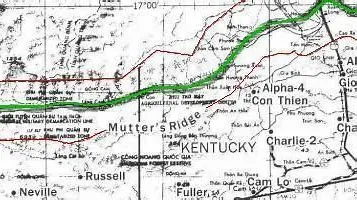
When the order came on the morning of the 11th for Company F to seize high ground and H Company to aggressively patrol and reinforce as needed, Woodward readied his gear with quiet efficiency. He was known among his peers for being calm under pressure, a Marine who wasted no motion. Younger Marines watched how he checked his magazines, cinched his straps, and slung his rifle. He wasn't older than most, but he carried himself like someone who had already lived a lifetime on patrol.
Into the Teeth of the Fight
The initial enemy mortar barrage that struck Company F was the first sign that the day would be far bloodier than anticipated. As Company F pushed forward, Woodward and the Marines of H Company listened to radio traffic that grew increasingly urgent. The terrain separating the two companies — steep, uneven, and choked with vegetation — meant that sound carried unpredictably. One moment the ridge seemed quiet; the next, there was the faint, distant crackle of rifle fire.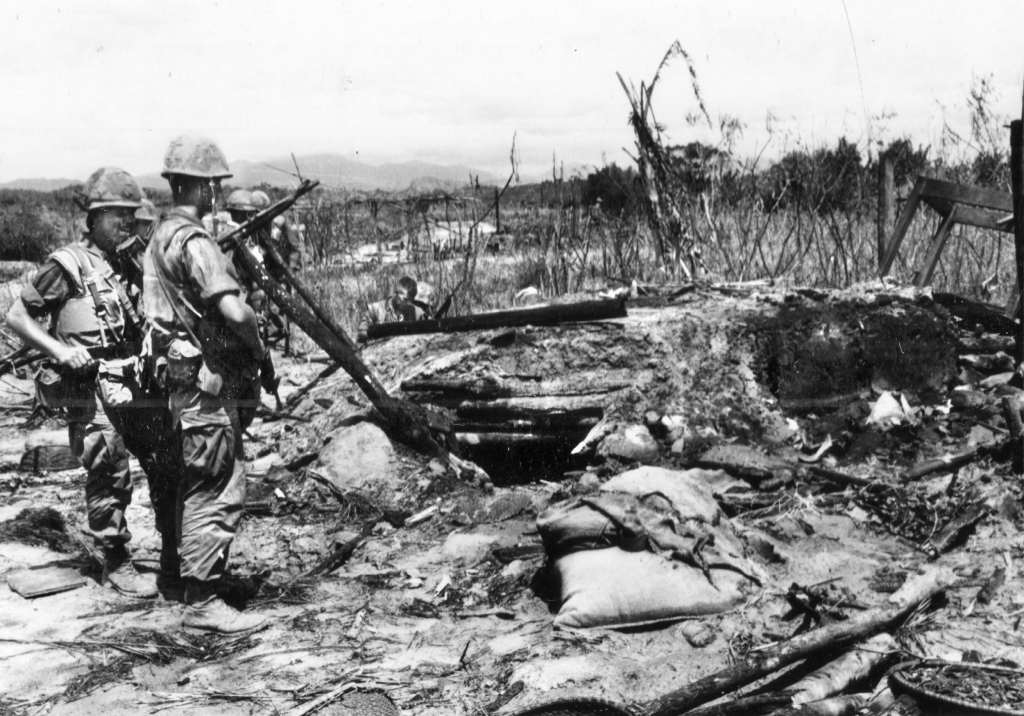
When H Company received the order to move, breakfast was abandoned, packs were thrown on, and Woodward fell into formation with his platoon. The ascent was brutal. Marines slipped on loose shale, dragged each other up, and fought to maintain spacing as the ridge narrowed and visibility dropped. But beneath the exhaustion was adrenaline — they knew their fellow Marines were in trouble.
When they crested the ridge, nothing could have prepared them for the sight that met them: bodies exposed along the crest, Marines desperately firing from shallow depressions, smoke drifting across the ground like a low fog. Sporadic bursts of gunfire kicked up dirt near the wounded. The fight was still active, still lethal.
Woodward took all of this in within seconds — the casualty locations, the angles of incoming fire, the available cover. He moved without hesitation.
A Battle Fought at Arm's Length
As H Company surged forward into the fight, Woodward and his fellow Marines entered a world where engagements were often measured not in yards but in feet. The enemy bunkers were so well camouflaged that Marines sometimes saw only muzzle flashes — brief, bright needles of light — before diving for cover. The air was thick with dust and splintered foliage. Grenades arced overhead in both directions, thudding into the earth with concussive force.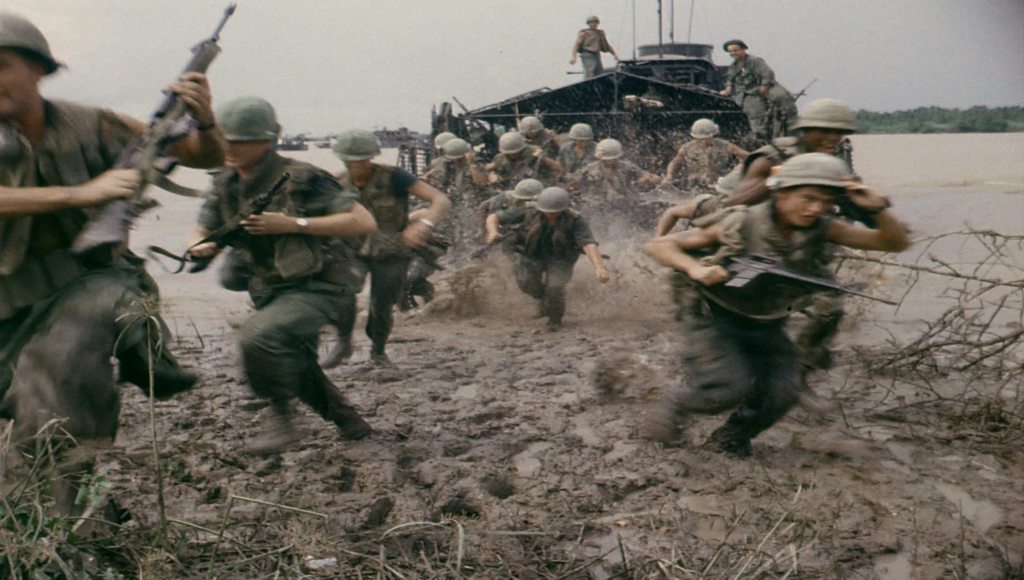
Woodward's squad was tasked with pushing across a section of the ridge that offered almost no concealment. Rounds snapped past at chest height, and the Marines were forced to advance in short bursts, hugging what little cover existed. At one point, an enemy position opened fire from an angle that threatened to pin down the entire platoon. Woodward maneuvered with two other Marines to flank it, using a shallow fold in the terrain as their approach route.
The fight devolved into a chaotic, brutal exchange — grenades into firing ports, return fire erupting from unseen holes, dirt spraying as bullets hammered the ground inches away. When the position finally fell silent, Woodward emerged covered in dust and debris, breathing hard but alive. The path forward was open — for now.
The Final Push
As the battle stretched into the afternoon, casualties mounted. The sun climbed higher, turning the ridge into a shimmering oven of heat radiating off bare earth and shattered rock. Medics worked frantically, dragging Marines to makeshift casualty collection points and improvising splints, tourniquets, and pressure dressings. Helicopters circled overhead, searching for safe landing spots that rarely existed.
Woodward remained in the thick of the fighting, helping to clear bunkers, pulling wounded Marines back behind cover, and laying suppressive fire whenever a squad became pinned. His movements were purposeful, committed — he was the kind of Marine who led even when he wasn't asked to.
During one late-afternoon attempt to locate a still-active enemy firing position, Woodward and several Marines advanced down a narrow draw along the ridge. The firing had slackened, suggesting the enemy might be withdrawing, but the Marines knew better than to trust the quiet. The NVA were masters of using silence as bait.
It was during this movement that Woodward was struck.
Enemy fire erupted suddenly from a concealed position ahead and slightly below their line of advance. Instantly, Marines dove for cover, returning fire toward the flashes. Woodward, caught in the initial burst, collapsed where he stood. Those near him shouted for a corpsman, but the incoming fire made movement nearly impossible.
Two Marines crawled toward him, low to the ground, pulling themselves forward with their elbows. The corpsman followed, exposed to fire as he closed the distance. When they reached Woodward, it was clear he was gravely wounded. Despite their best efforts — dressings applied under fire, attempts to stabilize him, radio calls for immediate evacuation — his wounds were catastrophic.
Cpl. James Woodward died where he had fought: on the sharp spine of Mutter's Ridge, amid comrades who refused to leave him behind.
The Aftermath
 When the ridge was finally secured and the enemy's withdrawal confirmed, Marines began the grim work of recovering their dead. The bodies of fallen Marines were gathered with reverence, their helmets placed beside them, their rifles laid across their chests. Some Marines wept openly; others stared silently into the jungle, their faces streaked with grime and grief.
Woodward was carried from the battlefield by men who knew him — men who had shared rations with him, laughed with him, trusted him with their lives. The ridge that had claimed him had claimed many of them, too — not in death, but in the quiet, invisible way that combat etches itself into a man's memory.
The cost of the battle was recorded neatly in after-action reports:
13 Americans killed.
31 wounded.
Seven enemy dead found on the ground, seven more confirmed.
But paper could never convey the true price. Mothers would receive telegrams. Brothers would shoulder the void. Platoons would feel the empty place where a friend had stood the day before. And Mutter's Ridge — that scar of earth in Quang Tri Province — would carry another layer of ghosts.
Legacy of the Fight on Mutter's Ridge
The battle of December 11, 1968, was not the largest or most publicized engagement of the Vietnam War. It didn't reshape policy or alter strategic maps. But for the Marines who fought it, and for the families of those who died there, it remains a defining chapter of courage, brutality, and sacrifice.
Cpl. James Woodward's final mission exemplifies the realities of Vietnam — a war of sudden violence, unforgiving terrain, and small-unit actions that demanded extraordinary bravery from ordinary young men. His actions on Mutter's Ridge place him among the thousands of Marines whose names seldom appear in textbooks but whose legacies echo quietly through the generations.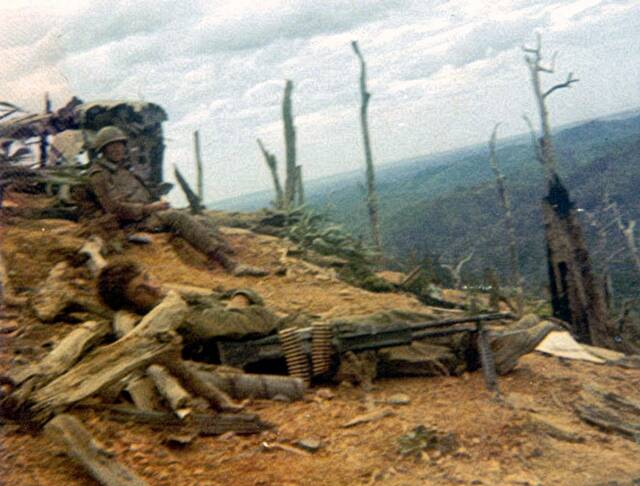
When historians study the Vietnam War, they often focus on major operations, political decisions, and shifting strategies. Yet the war was ultimately shaped by moments like these: a Marine advancing uphill into the teeth of an enemy bunker; a corpsman crawling toward a wounded comrade under fire; a platoon leader descending a slope to save men he refused to leave behind.
Mutter's Ridge stands today as one of the conflict's most haunting landscapes. Overgrown now, reclaimed by Vietnam's relentless greenery, it hides the scars of battle beneath layers of vine and soil. But for those who served on December 11, 1968, the ridge exists forever in memory — not as a place, but as a moment suspended in time, lit by muzzle flashes and bound by brotherhood.
Remembering Cpl. Woodward
Every Marine who fell on Mutter's Ridge had a story. Cpl. Woodward's is one of determined courage and devotion to his fellow Marines. He fought through hellish terrain, engaged a dug-in enemy, and continued pushing even as the cost around him mounted. His final moments were spent doing what Marines have done since the Corps' earliest days — advancing toward the sound of the guns, refusing to abandon his mission or the men beside him.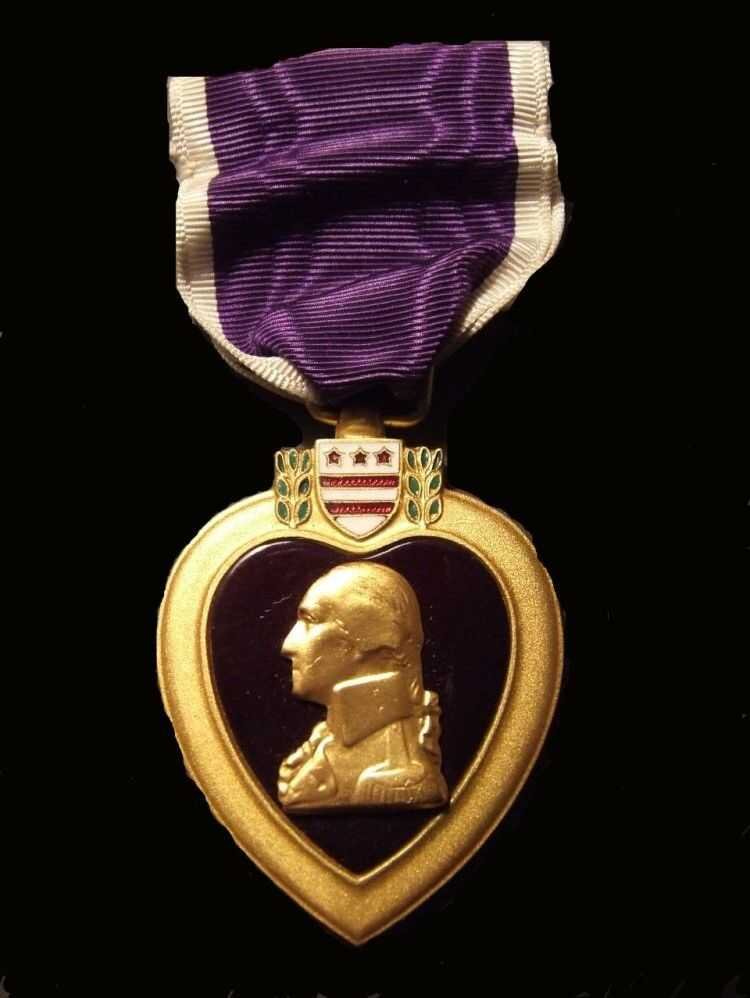
Today, his legacy is honored not only in casualty rolls or historical summaries but in the living memory of those who continue to tell the story of that ridge, that day, and those Marines. Through museums, oral histories, battlefield studies, and the quiet reflections of families who lost sons and brothers, Woodward's name endures.
His sacrifice — and the sacrifice of every Marine who fought on Mutter's Ridge — stands as a testament to the spirit of 2/4 and to the price of the ground they took, inch by agonizing inch.
The fighting at Mutter’s Ridge was only part of the ordeal. Discover how Vietnam’s monsoon weather
made survival there even harder.
History survives because people choose to preserve it. Help us keep these stories alive.